




Of Brewers and Coopers: How Barrels Make their Way from Distillery to Brewery
The use of barrels in brewing has transformed craft beer, bringing depth and complexity to styles like barrel-aged stouts. Explore the history, trends, and impact of barrel aging on the beer industry.
 Story by:
Brett Cortelletti
Story by:
Brett Cortelletti
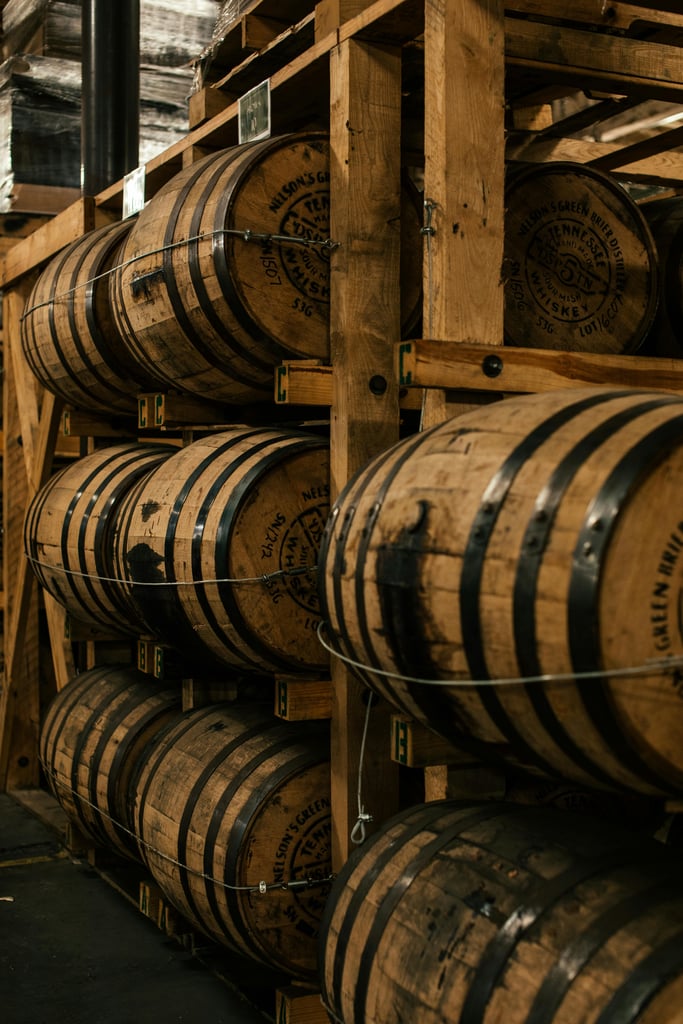
Around ten years ago, an emerging beer style quickly became one of the most sought-after among enthusiasts: the barrel-aged stout. While beer has been stored in barrels for centuries, the act of aging beer in previously used spirits barrels to impart new flavors is a recent phenomenon, with a surprisingly straightforward genealogy.
It all began around 1994, when Booker Noe, master distiller at Jim Beam, gave Greg Hall of a fledgling Goose Island Brewpub an empty barrel from his distillery, which was filled with Goose Island’s 1,000th batch of beer. Hall chose to fill the barrel with an imperial stout, setting a precedent for decades to come.
While the experiment was immediately ruled a success by the few that were able to try it, it would take years for the style to take off. Notoriously, the progenitor of barrel-aged stouts was disqualified from the 1995 Great American Beer Fest for not fitting into any of the pre-established style categories (there would be no mention of wood-aged beer in the BJCP Style Guide until 2004).
This friendly exchange for a celebratory batch gradually became a legend of the Chicago beer scene, and in 2005 came the official release of Goose Island’s Bourbon County Brand Stout (as we know it today). In the following decade, two industries would revolutionize; one that brews the beer, and another that supplies barrels to age it in.

An Industry Revitalized
Barrels have been around for thousands of years, so it’s no surprise that industries have evolved to supply and repurpose the vast number of barrels churned out by wineries and distilleries. Specifically, there has always been a high supply of used bourbon barrels, as bourbon must be aged in ‘fresh’ American oak barrels, thus for every barrel of bourbon produced, the emptied vessel can never be used for bourbon again. Historically, these barrels have been used for everything from aging other spirits to being repurposed as furniture. However, the growing demand for barrel-aged beers resulted in an increased demand for used spirit barrels.
A prominent figure in the barrel recycling industry (aka used barrel cooperage) is Kentucky Bourbon Barrel. Founded in 2012, right as barrel-aged beers were gaining traction as a mainstream style, KBB has made significant strides in the industry. The company has since expanded its catalog to include wineries and distilleries across the globe. In 2017, Kentucky Bourbon Barrel joined the Independent Stave Company’s family of cooperages, further solidifying its position in the market.
Just as the average consumer doesn’t wonder how breweries source their barrels, Noah Steingraeber, KBB’s head of sales for the past eight years, also hadn’t considered such an industry existing until he was working in it. Reflecting on his own career path, he remarked, “It’s kind of an obscure thing to even think about, I had zero clue that this was a thing until a friend offered me a job selling wine barrels in Colorado” (before landing a job with KBB two years later). In the time since, he’s learned (and taught his clients) a substantial amount: “People think that a barrel’s just a barrel, and while that’s true to an extent, you need to have a reputable provider.”
In an industry driven by hype and flashy trends, Steingraeber is acutely aware of the weight of reputation: “Procuring good barrels is very important on our end, because it’s a reflection of who we are.” This reputation has amassed KBB some high-profile clients including Goose Island, Founders, Bottle Logic, and Sierra Nevada, among others. If you have an affinity for barrel-aged beers, you’ve probably consumed something aged in a barrel directly sourced through Steingraeber.
Empty One Out, Pass it Around
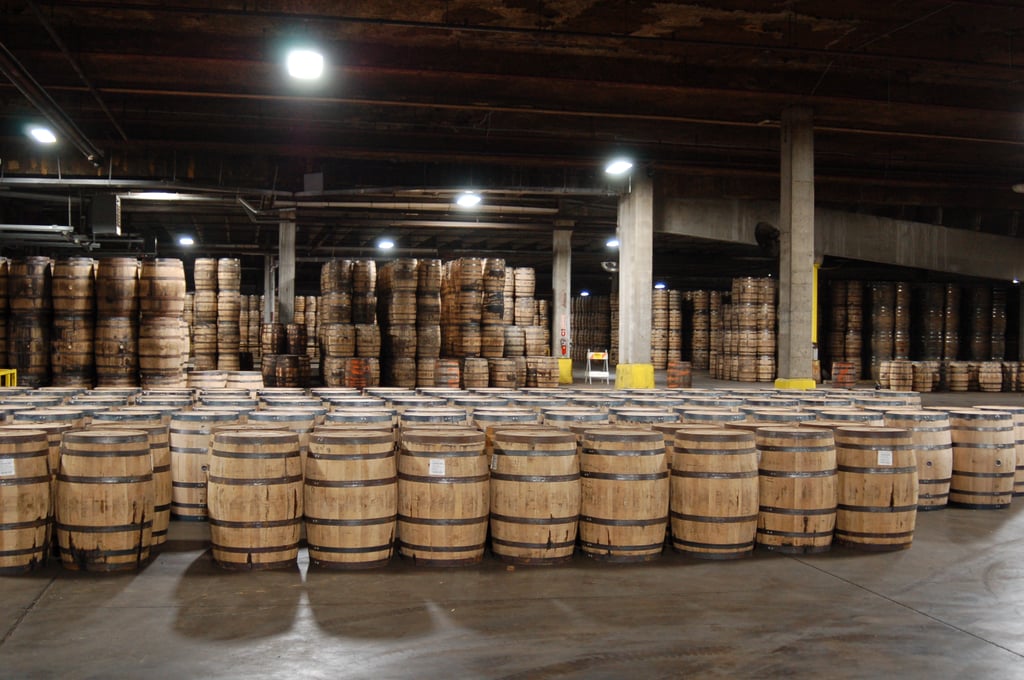
As it turns out, there’s more to acquiring a used spirit barrel than knocking on a distillery’s door and asking nicely. A majority of the second-hand market for barrels is run through companies like KBB. They’re the ones reaching out to distillers and other producers and buy their product by the truckload. As Steingraeber summarizes, “The distillers will empty the barrels, load them onto trucks and take them to our facility. They arrive within 24 to 72 hours of being emptied. We’ll unload the barrels one-by-one onto a conveyor where they get processed and inspected.”
Of the barrels taken in, only the highest quality ‘select’ barrels are sold to brewers, at prices ranging from $35 to $500, depending on the barrel. Compared to aging spirits, beer is substantially more susceptible to infection, and even minor damage to a barrel can result in a ruined batch months or years into the aging process.
When it comes to marketing and selling the acquired barrels, Steinbraeber humbly admits, “I’m probably the worst salesperson ever, I don’t really push barrels on people.” This is mainly because brewers tend to already know what they want, and more often than not, the demand for ‘rare barrels’ far exceeds the supply.
Stave Some For Me
Reflecting on recent sales trends, Steingraeber is not hesitant to admit that the industry is in a slump among breweries: “2013 to 2018 was the prime time for [barrel sales], 2018 was the peak and then during 2019 with COVID is when it started falling off… Brewers that used to buy full truckloads at 280 barrels per truck are now buying 15 barrels.” While there are many potential explanations, there is no doubt that trends in craft beer begin with explosions in popularity followed by a steady plateau.
Simply put, the phrase “barrel-aged” alone simply does not have the same grip on consumers as it once did, and consumers are increasingly interested in exactly what barrels their beers were aged in, with an emphasis on rare and exclusive barrels. A quick example would be the demand for Pappy Van Winkle Barrels: “It’s so hard to just get a bottle. One barrel can produce up to 200 bottles, but I only get one barrel, and a lot of people don’t seem to comprehend that. It’s so hard to get a Pappy bottle let alone the barrel. I feel like I’m on repeat with some brewers.”
When it comes to sourcing these high-demand barrels, “It’s kind of luck of the draw. I do have relationships with these distillers and can request these barrels, but they’re only released a few times a year.” Just as KBB and other used barrel cooperages vie for the limited number of in-demand barrels, breweries are in a similar position, competing for a finite supply of premium barrels from said cooperages.
While there isn’t a formal process that determines who gets what, Steingraeber readily admits that it helps to “have a good relationship with your supplier and stay in constant communication.” The more often a brewery orders from a cooperage, the more likely it is that the cooper might mention: “While I’m talking to you, something just came in that you might be interested in.”
I Distilled it My Way
As Steingraeber was quick to acknowledge, the industry’s dip in sales is, in part, due to the emergence of “local craft distillers.” Not only do they offer an opportunity to collaborate with local businesses, but they can also solve logistical issues, as shipping a barrel is not cheap: “[It] can be half the cost,” in some cases.
An interesting case study can be found in Ology Brewing out of Tallahassee, Florida. While Ology has always featured barrel-aged beers as a part of their catalog, they began their own distilling operations in 2020. Being one of the few breweries to carry both a brewing and distilling license, they’ve seized the unique opportunity to age their beers in the same barrels used to finish their spirits.
As Ology’s owner Nick Walker recounts, the decision to use their own barrels for aging began “almost immediately” after the first barrel was emptied, “barrels aren’t cheap to ship,” he rationalized. This was the best way to get the most out of each one.
While many interesting beer/barrel combinations have come out of this, one of the most unique products can be found is their Symbiotic Relationship series, in which a beer is aged in one of their spirit barrels while a spirit is aged in the corresponding beer barrel (rum and barleywine in the first iteration, bourbon and an imperial stout in the second). The idea came about when Walker and his colleagues were trying to decide what to do with a recently emptied rum barrel: “We thought it would be fun to flip-flop. Symbiotic Relationship is a perfect name for it too, because everything is working together.” With this creation, the spirit-to-beer pipeline has come full circle, but there is still plenty of room for innovation.
As Steingraeber optimistically points out, there is much more to barrel aging than the traditional bourbon barrel and imperial stout combination. New barrels are constantly being experimented with and consumers are eager for new combinations, whether it’s a chardonnay-aged saison or a hot sauce barrel-aged taco gose, barrels, beer, and the wondrous combination of the two, barrel-aged beers, have all earned their place in the cellar.


Conversations (0)
No comments yet.