




Beer Etiquette: Tasting Like a Sommelier, Without the Fuss
Forget beer snobbery—this guide breaks down tasting into five sharp steps, from glassware to retronasal aroma, with zero pretension.
 Story by:
Beer Blog
Story by:
Beer Blog
He takes beer so seriously that people do to wine. It does not imply a rigid ritual; it is just a matter of slowing down to an extent of paying attention to what is in the glass. When a room is noisy, he carves out quiet slots of attention, two or three concentrated minutes per pour, to ensure that the smell and feel of the stuff does not get lost in conversation. It is not about impressing anyone, but rather going halfway with the brewer.
He prepares the background before he opens anything. Bottles and cans are held on their backs and the sediment is left in place; chilly but not icy, lagers between 4 and 7C, lots of ales between 8 and 12C. He selects clear and slightly tapered glassware to trap aromatics. In the immediate vicinity, there is a plate of plain crackers and a glass of still water. When he is in a busy taproom, he will request short tasting slots or develop a short flight to allow the palate to re-adjust across styles. None of this is complicated; it’s just good manners to the beer.
The Simple Kit That Makes Tasting Easier
- Right glass, right job. Tall and narrow for crisp lagers; a tulip or snifter for aromatic ales; a sturdy tonic for general service.
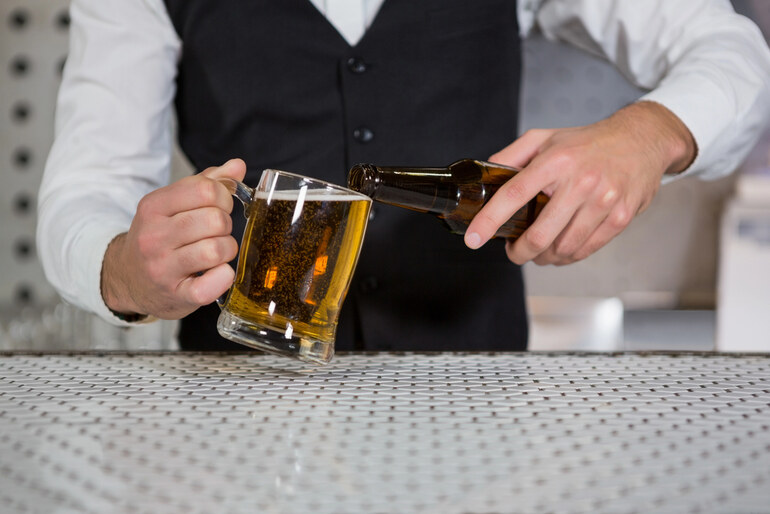
- A steady pour. Start with the glass at 45°, finish upright to build a fine head that carries aroma.
- Temperature discipline. Cooler for lighter styles, a touch warmer for malt-forward or stronger beers.
- Neutral palate aids. Still water and plain crackers, no citrus, mint, or spice getting in the way.
- Good light. Natural or white light helps judge color and clarity honestly.
He always begins with sight. A hazy hefeweizen should look like a sunrise in a glass; a pilsner should sparkle. Color hints at malt choices, from straw to copper to deep espresso, and the head tells a story, too. Tight bubbles that hang around often signal healthy proteins and careful carbonation.
Then he checks the aroma without rushing it. He keeps the glass in the stem or the base to make sure that the warmth does not change, swirls a little, and then sniffs for a moment before making a more serious breath. He is hearing malt tones (fresh bread, biscuit, caramel), hoppy notes (citrus, pine, stone fruit, floral), yeasty notes (clove, banana, pepper), and process notes (smoke, oak, a touch of acidity). Whenever he finds papery oxidation, or buttery diacetyl, he does not think it to be drama, but data, precious evidence of age or service.
Structure expresses itself in flavor. His thinking is in three stages: attack, middle, and finish. It should be more of a conversation than an argument between sweetness, bitterness, and acidity. Carbonation is texture, vivacious in a Koelsch, gentler in a stout, and alcohol ought to warm a person instead of burning him. Balance does not imply bland; a West Coast IPA can be bitter and held strong but still poised should the malt spine hold.
A Five-Step Tasting Flow That Works
- Look. Color, clarity, head, and lacing.
- Nose. Two light sniffs, pause, then one deeper inhale.
- Sip. A modest first sip to prime the palate; a second to judge structure.
- Hold and breathe. Let it coat the tongue; exhale gently through the nose to catch retronasal notes.
- Finish. Notice aftertaste, length, and whether the next sip calls you back.
Etiquette matters. He keeps notes discreetly, listens before offering opinions, and invites others to describe what they taste in their own words. Flights run from delicate to intense, so lighter styles aren’t bulldozed by roast or bitterness. Between markedly different beers, he takes a minute with water and a cracker instead of plowing ahead.
The variety of beers comes in food pairings. Lagers in effervescence slice straight through fried foods; witbiers are welcoming to salads and citrus-oriented food; saisons go hand in hand with soft cheeses and roasted vegetables; dark stouts suit chocolate and char. He does not stick to strict rules and thinks in verbs rather: cut, complement, contrast.
Service and cellaring will prolong the experience. Not all beers are impatient, but robust ales, mixed-fermentation bottles, and barrel-aged releases have the potential to pay off after waiting, provided that they are kept cool and dark. He opens them without theatrics, just a calm pour that wakes aroma without stirring the sediment. For a home session, he labels glasses, schedules tasting slots by style family, and keeps the pace humane.
Common mistakes are easy to prevent. Strongly perfumed hand lotion can hijack aroma; frosted glassware mutes flavor; chewing mint or spicy snacks before a careful pour will scramble the palate. He avoids squeezing citrus into wheat beer by default, sometimes fun, often unnecessary.
He thinks about service quality, too. If a pint tastes off, he asks for a small re-pour from a different line or a fresh can and speaks with staff respectfully. Clean draft systems and smart rotation are the backbone of good beer; good bars welcome polite heads-up, and good guests deliver them kindly.
In mixed company, he keeps the focus on enjoyment. Technical language helps when it clarifies, not when it shows off. He’ll say “bread-crust malt” or “grapefruit pith bitterness” if that helps a friend find the note; otherwise, “toasty” and “bright” do the job just fine. The goal is shared discovery, not a vocabulary test.
He concludes with the same point as he started: beer etiquette is nothing more than attention and kindness. Certainly, with clean glasses, a good sense of temperature, and a bit of time to concentrate, anyone can become a gourmet and make a dining table a great place to be. The reward is not a spot score; it is a happier recollection of what you drank and who you were with, the snap of a pilsner, the cocoa warmth of a stout, how a saison is like sunshine. Give the beer some respect, and it returns the details.


Comments 0
No Readers' Pick yet.