






Tips for Using PVC Products to Brew Great Beer
Learn about PVC tubing types, sizes and cleaning processes, and discover the advantages of reinforced and unreinforced PVC tubing in the brewing process.
 Story by:
Beer Blog
Story by:
Beer Blog
The beer business has grown considerably in the U.S. since craft beer began. According to data, there are about 9,709 breweries in the U.S. That’s compared to 1.1 million dedicated home brewers who brew beer as a hobby or pastime.
Your beer quality depends on several factors, including the tubing you use. Using incorrect tubing for brewing beer can lead to poor taste, an overly hazy brew or a malfunctioning brewing process.
Typically, you want to use PVC tubing for low-temperature processes. Here’s what you need to know about PVC tubing and how to use it effectively to brew beer.
The Essentials About PVC Tubing for Brewing Beer
There are two common types of tubing used for brewing beer: silicone tubing and PVC tubing. While you can essentially use a single type of tubing for most of the process, most brewers use PVC and silicone tubing for specific sections of the process where they each provide greater advantages.
Silicone is a much more expensive option than PVC tubing. However, it is more heat resistant, making it ideal for transferring hot wort. However, you can still use CPVC piping, which features a slightly different chemical makeup that makes it heat tolerant up to 200 degrees.
PVC piping is ideal for chilling processes below 140 degrees. This includes draining, discharging and path transfer of non-critical fluids.
The biggest disadvantage of unreinforced PVC tubing is that it is prone to curling at the end. Therefore, you should always buy an extra foot of it to account for the curling.
The Two Main Types of PVC Tubing Used to Brew Beer
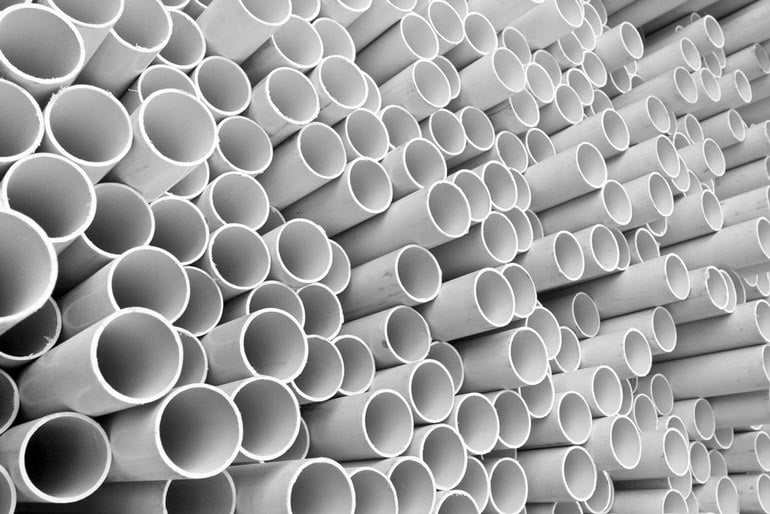
Typically, you can get PVC for brewing beer in two main types. These are unreinforced PVC tubing and reinforced PVC tubing.
Unreinforced PVC Tubing
This is often the cheapest and most basic PVC tubing you can buy. It is available in most hardware stores, with some brands explicitly marked as “food-grade.” Often, you should go with the food-grade option.
Unreinforced food-grade PVC tubing is often rated at a maximum temperature of 175oF. Therefore, it is ideal for chilling processes and unadvised for transferring hot wort. It poses little risk of leaching since the tubing is only used for transfer – the beer doesn’t sit long in it.
Unreinforced PVC tubing should be replaced if the inside becomes dirty and can’t be cleaned or if there’s a plastic flavor in your beer. For the latter, you should consider switching brands.
Reinforced PVC Tubing
This type of PVC tubing is stiffer than unreinforced ones, with a higher temperature tolerance. However, it can still fail at handling very hot wort, typically above 200 degrees.
Reinforced PVC tubing is often ideal for high-pressure and commercial draft beer applications. It doesn’t offer homebrewers that much value.
The Pros of PVC Tubing in Brewing Beer
Reinforced and unreinforced PVC tubing offer several benefits when brewing beer. They include the following:
For unreinforced PVC tubing:
- Glass-like clarity for visual contact
- Lightweight, flexible and abrasion-resistant
- Economical
- NSF-51 listed
- Can be bought in an antimicrobial formulation
- DEHP, Phthalate and BPA free
For reinforced PVC:
- Less kinking
- Supports higher pressure
- DEHP, Phthalate and BPA free
- NSF-51 and NSF-61 listed
The Best PVC Tubing Size for Brewing Beer
The best PVC tubing size for a brewery depends on where it will be connected to. Typically, this can be the end of a bottle filler, racking cane or metal barb.
In most cases, more than one size tubing will fit your application. Using clamps or hot water, you can fit slightly oversized or undersized PVC tubing.
Hot water expands the ends of slightly undersized PVC tubing, allowing you to push it into the racking cane or barb. Worm clamps tighten slightly oversized ends of PVC tubing, creating a snug and leak-free connection.
Worm clamps are still advisable to secure every connection and avoid leaks.
Larger tubing allows for faster transfer of liquid. However, you can easily develop bubbles if the tubing is too large.
Narrower tubing transfers liquid slowly, but you’ll get fewer air bubbles. This is crucial in chilling processes since you don’t want to aerate your beer.
For your pump, you should ensure the tubing matches the PSI rating of the pump to avoid bursts and leaks, apart from being the correct fit.
How You Can Clean Your PVC Tubing for Brewing Beer
Cleaning your PVC tubing is essential to maintaining a high quality of brewed beer and avoiding contamination or infection. Cleaning the tubing typically involves the following steps:
Sterilize the Tubing
Sterilizing your tubing in a brewery is essential to preventing infections. Single-celled organisms reproduce rapidly, with bacteria doubling in population every four to twenty minutes. Therefore, if your brewery’s tubing remains unsterilized for a long time, it will develop plenty of bacteria.
You should thoroughly rinse the tubing using a strong cleaner. However, ensure that the cleaner suits your tubing and avoid highly scented variants that will leach their scent into your beer. Percarbonate cleaners are the most preferred option.
Soak the PVC Tubing in a Cleaning Solution
Rinsing the PVC tubing does little to remove hard stains of hops, yeast and other stuff stuck in it. You often won’t notice the stains until your equipment falls out of good condition.
The best way to deal with these hard stains is to soak the tubing. You should soak the PVC tubing in a strong cleaner for at least 20 minutes or overnight. A hot PBW solution is highly recommended for this job.
Wash the PVC Tubing Thoroughly
Once the stains have softened, you can thoroughly rinse the tubing to remove all stains and any remaining cleaning solution. You should not need additional equipment if you have performed sterilization and soaking correctly.
Nonetheless, line and tubing brushes can make the process much easier.
Dry the Tubing
You should properly dry the PVC tubing before storing it. Moist conditions encourage the growth of bacteria and other harmful microorganisms, forcing you to restart the cleaning process.
To thoroughly dry the PVC tubing, leave it hanging in a U-shape, with the ends facing down, overnight or for a couple of days until completely dry. Curl up the dry tubing and store it in a dust-free container.
Source Your Materials from a Trusted Brand
PVC is a viable material for tubing in your brewery. Ensure you’re using the right type of PVC at every stage of the process for the best results. Get in touch with a professional and learn which brands you should use in your process.
Author Bio: Mark Ligon is the Marketing Manager at Commercial Filtration Supply, a provider of industrial filtration products at discount prices. Mark enjoys writing about various liquid filtration applications, and he believes educating customers on liquid filtration best practices ensures they have the best experience possible with the product they decide on.


Comments 0
No Readers' Pick yet.