



How Football Traditions Influence Global Matchday Beer Culture
 Story by:
Sports Blog
Story by:
Sports Blog
On matchdays, football is rarely just ninety minutes and a whistle. It stretches into streets, squares, pubs, and fan zones, where beer becomes part prop, part chorus, and part social glue. The way supporters drink before, during, and after games says as much about local history and regulation as it does about the teams on the pitch. From Munich’s Oktoberfest to English “dry stands” and Japanese roving beer vendors, football keeps giving brewers and fans new ways to interpret the same old ritual: meet, drink, sing, and watch.
Germany: From Fanmeilen to Oktoberfest
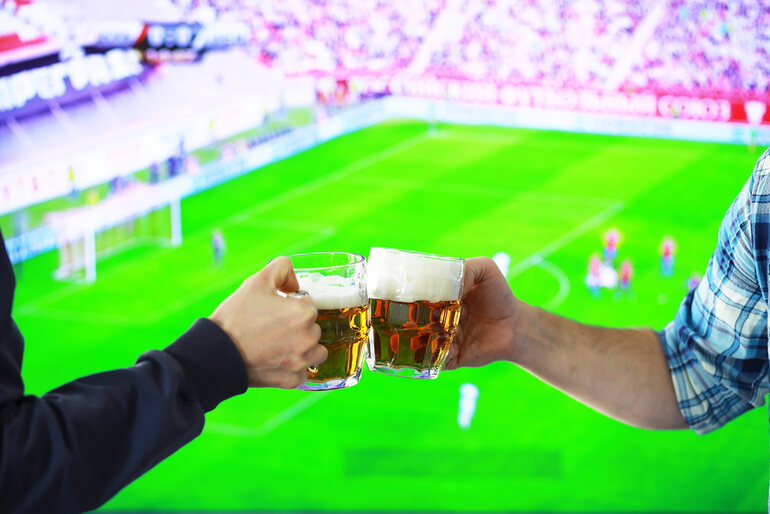
Germany is the center of the myth that football and beer are partners. The clubs in the Bundesliga have a history of sponsorship with the large breweries. In Germany, an example of this is Bayern Munich, and celebrations of titles there are usually followed by the players being doused in wheat beer instead of champagne. During tournaments such as Euro 2024, fans descended on “Fanmeilen” in host cities with Bitburger as an official beer partner, enjoying plenty of beer during football matches as pints flowed freely in designated zones. Whether it’s a classic stein or a simple beer glass, the vessel itself has become part of the visual language of German matchday culture.
The connection is most vivid each autumn when FC Bayern visits Oktoberfest in full traditional dress, posing for photos with steins before returning to the business of the league. Around six million litres of beer are consumed in and around the festival’s tents in a typical year, and football clubs treat the event as an unofficial extension of their season launch. At Bundesliga matches themselves, supporters are normally allowed to drink in their seats. However, local authorities can impose bans on high-risk fixtures, a contrast that visiting fans from England notice immediately.
England: Pubs, Dry Stands and the Law of 1985
In England, the relationship between football and beer runs through the pub more than the stadium. Many clubs grew out of breweries or working men’s clubs; John Houlding, a brewer, founded Liverpool FC after a dispute at Anfield in the 1890s, intertwining beer money and football from the start. But inside top-level grounds, drinking has been tightly regulated since the hooliganism crises of the 1980s. The Sporting Events (Control of Alcohol etc.) 1985 Act makes it illegal to drink alcohol “in view of the pitch” at Premier League, EFL, and National League matches, forcing spectators to finish pints on concourses or in hospitality boxes out of sight.
Recent debates in Parliament and the football press show how contested that line has become. MPs and former ministers have called for trials lifting the ban, pointing to women’s game pilots and rugby comparisons. Creative protests have even seen fans hoisted by crane above stadiums to drink legally while watching EFL matches from 50 metres up, underlining the sense that the law is more symbolic than practical. Discussions around international football tournaments have also influenced opinions, highlighting how fan culture and regulations differ abroad. For now, however, the classic English matchday still runs pub–turnstile–pub, with beer culture gathered around the ground rather than inside it.
MLS and the Craft Beer Revolution
In North America, soccer’s modern growth has coincided almost perfectly with the craft beer boom. Major League Soccer clubs are increasingly partnering with local breweries to produce matchday lagers and club-branded ales. The Columbus Crew’s collaboration with Land-Grant Brewing on Glory American wheat ale is a long-standing example, while Anheuser-Busch serves as a founding partner and official beer sponsor for expansion clubs such as St. Louis City SC. An Austin FC deal with Yuengling, promoted as joining “America’s oldest and largest craft brewery” with a young MLS side, shows how marketing leans into community and identity rather than just mass volume.
Japan and Quiet Stadium Rituals
Japanese football offers a very different model: beer is permitted in J-League grounds, and roving vendors with portable kegs weave through the stands, topping up plastic cups. Travel guides of Ajinomoto Stadium and FC Tokyo focus more on manners than drunkenness: do not spill beer down the stairs, clean up your mess, and do not disturb the family spirit. Fans are known to carry a bento box and blend drinks sold in the stadiums with canned beverages to create a casual picnic ambiance that is a stark contrast to the canned pre-kick-off drinking in some European regions. This approach highlights a global football connection, showing how shared passion for the game can take different forms while still bringing fans together. The shared experience is just as strong, but the volume, literal and figurative, is turned down.
Data, Screens, and a New Kind of Matchday Ritual
Beyond terraces and taprooms, football’s modern beer culture increasingly lives on screens as much as in glasses. Fans roll through sophisticated statistics, running odds, and dashboards of their beloved statistic and live comments in a bar, holding a phone in one hand and a pint in another. For this audience, betting programs (Arabic: برامج المراهنات) can feel like an extension of the same analytical curiosity that drives conversations about pressing schemes or expected goals, providing structure to minor bets based on the results of matches or on the goal-scorers.
Regarded as entertainment over revenue, these services are also another dimension of a common drama on a global matchday, which already spans from brewery tours to fan fests and back. The elements that get repeated in all these cultures are simple: there is a game, there is a crowd, there is a drink, and there is a story to share it with. Beer, as is the case with football, is merely a container; the meaning is the feeling of belonging infused into it.


Comments 0
No Readers' Pick yet.