


Champagne Through The Eyes Of A Beer Connoisseur
 Story by:
Wine Blog
Story by:
Wine Blog
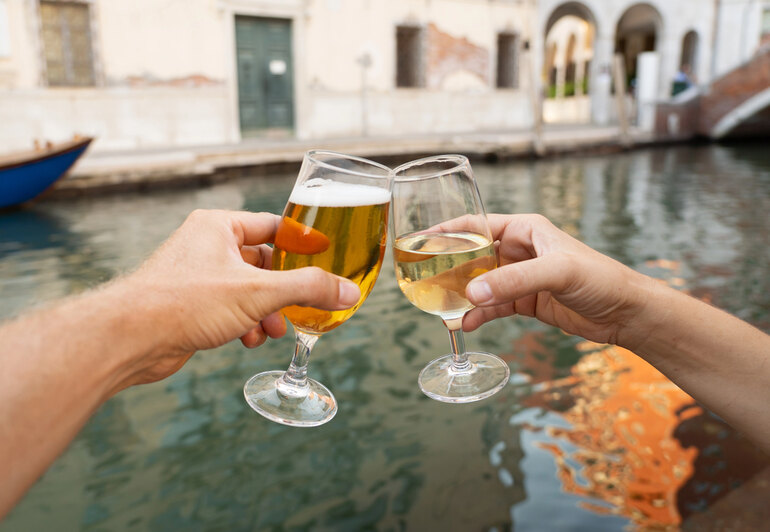
To most craft beer consumers, interest usually shifts out of hops and malt into the details of how flavor is formed. The culture behind beer is based on fermentation techniques, mouthfeel, balance, and sense of place, and it should be those principles that determine the appreciation of great sparkling wines. Any approach to Champagne with the mentality of a brewer leads us to well-hewn grounds–A structure that is made by fermentation, the texture that is made by time, and the character that is made by origin. This common ground helps to invite the beer drinkers to venture into the sparkling wine as not a step out of the box, but as a continuation of the same virtues they hold to be so-called in the glass.
By looking at champagne from this perspective, it becomes clear that there are more than remarkable similarities to high-level brewing. Champagne is more than just a drink to celebrate. It is a crafted drink that is figured by accuracy, patience, and technical expertise, which resonates well with the mature beer drinkers.
What Makes Champagne Familiar To Beer Lovers
Beer and champagne are seemingly two opposites, but they have some basic principles in common. These two are dependent on fermentation as the essential creative process. The two require that yeast behavior, temperature, age, and balance be controlled. And both do give patience and technical rigor, depth, and complexity. In the bottle, Champagne goes through a secondary fermentation where natural carbonation is generated, similar to bottle-conditioned beers.
The technique produces small bubbles, a stratified aroma, and a rich mouth feel that is bound to be instantly reminiscent of Belgian ales, saisons, or barrel-aged beers. Another similar value is the emphasis on balance. Similar to the bitterness, sweetness, and acidity that should be harmonized in beer, champagne is also in search of freshness, structure, and texture. A well-made champagne never relies on sharpness alone. It develops roundness, length, and subtle oxidative notes over time.
Understanding Champagne Styles Like Beer Styles
Viewing Champagne as a type and not as an expression assists the consumers of beer in perceiving its diversity. Champagne has a wide range of styles, which is not defined by only one flavor. Other bottlings are more inclined to crispness and mineral-led freshness, a trend that is recognizable to some of those who are fond of clean and dry beers. Others age and develop weight and complexity, providing layered textures, which are familiar to those who are fond of beers that are created over a period of aging and a long fermentation period.
Such crucial decisions as the length of aging, the choice of grape, and blending determine the outcome, just as process choices determine the beer styles. Another dimension is dose, which influences balance as well as mouthfeel instead of sweetness alone. The lower levels are more defined, whereas the slightly higher levels smooth the edges and make it more popular. This is what makes Champagne an easy companion at the table, adapting to different moods and foods as the styles of beer are used deliberately, as opposed to habitually.
Champagne At The Table For Fermentation-Focused Palates
Beer connoisseurs often value food pairing as much as the drink itself. Champagne excels in this area thanks to its acidity, effervescence, and textural finesse. The bubbles refresh the palate, while the wine’s structure supports complex flavors. Champagne performs particularly well with dishes that challenge still wines. Fatty textures, umami-rich ingredients, and salty components are balanced effortlessly by carbonation and acidity. This makes champagne a powerful tool at the table rather than a simple aperitif.
Why Carbonation Changes The Tasting Experience
Carbonation heightens aroma release and cleanses the palate. In champagne, the bubbles are finer and more persistent, creating a smooth sensation rather than aggressive fizz. This contributes to a tactile experience that beer drinkers often find compelling.
Lee’s Aging And Flavor Depth
Extended aging on lees introduces bread, nut, and brioche notes that mirror flavors found in yeast-forward beers. These autolytic characteristics give champagne its savory dimension, appealing to drinkers who enjoy complexity beyond fruit-driven profiles.
Champagne Recommendations For Curious Beer Enthusiasts
To those who like beer and enter the realm of Champagne, some of the styles will be more familiar and welcoming. Structural, dryness, and length-centered bottles tend to strike the most, and are not as overtly sweet. Lengthening the lees further gives the aged savory bread-like flavor, and the lower dosage expressions emphasize the minerality and accuracy. Consistency and restraint are also important, particularly to people who prefer to be subtle, rather than brave.
Food-oriented champagnes, rather than the ones that are intended just to be consumed in times of celebration, are also more welcoming. These attributes impart to the consumers of beer the same qualities they demand of quality brew in the beer market, such as careful fermentation, regulation, and an apparent sense of mission in the glass at the end.
Rethinking Champagne As A Fermented Craft Beverage
The perception of a champagne through the prism of the brewing culture redefines its image. And it is not a luxury symbol that has lost any connection with craftsmanship, but rather a product of technical perfection and mastery of fermentation. Champagne is like great beer in the sense that decisions are taken at each level, starting with the creation of base wines, up to the aging and blending.
This view calls upon beer lovers to sample the champagne similarly to how they sample new breweries or experimental styles. Rather than the labels or occasions, a middle-level is centered on mouthfeel, balance, and finish. Champagne is a reward for slowness in tasting. It warms a little in the glass, and the aromas change, the texture being more expressive. This is a dynamic experience because complex beers unveil new depths as one drinks them.
A Refined Exploration Beyond Hops And Malt
Champagne is a thoughtful sequel for every beer lover, whose senses have to be diversified. Its sources of fermenting, the management of yeast in the long run, and its versatility at the dining table give any brewing company or ardent drinker a platform to critically evaluate beer and even more. Champagne is considered to be deeper than one might have imagined, given the carefulness and attention that one applies to brewing. It is naturally integrated into the culture of craft to add to it new textures, fragrances, and meanings that connect with a committed brewing firm and its viewers. In drinkers who are not content with predetermined categories, it is rather about the continuation of the discovery and not the labeling.


Comments 0
No Readers' Pick yet.