


Does Beer Make You a More Confident Punter? Here’s What the Stats Tell Us
 Story by:
Casinos and Gambling Blog
Story by:
Casinos and Gambling Blog
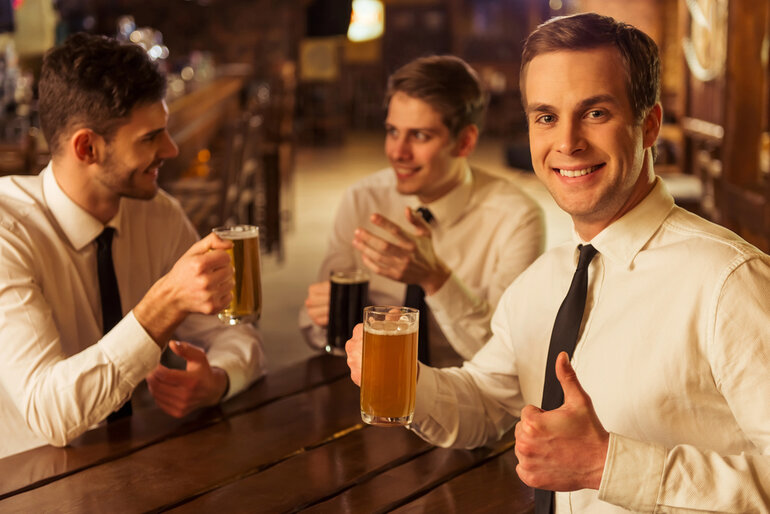
Beer and betting often share the same space, from sports bars on game night to casual card tables with a pint nearby. That pairing raises a fair question: Does drinking improve your edge, or simply boost confidence? The culture of beer has an atmosphere-based and a socially connected message, and a relaxed environment may have an impact on the way individuals take risks. It has been found that moderate consumption of alcohol can also boost confidence and reduce inhibition, which influences gameplay in blackjack and poker games. To beer lovers, it is easy to understand that change is necessary to maintain attention on the experience, the beer, the company, and the environment,t and not to confuse the bravery with the expertise.
Beer, Inhibition, and Perceived Confidence
Alcohol increases confidence in people. This is mainly because alcohol reduces inhibition and increases sociability. Behavioral psychology studies have shown time and again that a small amount of alcohol reduces self-consciousness in people, which is why even a simple Glass of beer can make social interactions feel easier and more relaxed. In controlled laboratory experiments, it was established that individuals after taking a moderate supply of alcohol scored higher than individuals in a control group who did not consume alcohol in areas of confidence when making decisions. They were, however, not always better at performing.
There are casino games where there is uncertainty in the decisions made by players. Blackjack is a game that involves making choices such as a hit, stand, split, and doubling down, which is a probability-based game. Poker is a game that involves chance and mental dexterity, such as opponent reading. Confidence is also involved in such games since even a slight rise in confidence may lead to a person making a bigger bet in such games as blackjack or poker, but it will not influence the odds of the location.
What the Data Shows
A significant amount of literature has been devoted to the study of the effects of alcohol on risk-taking behavior. In experiments where participants engage in a simulated gambling game, even small levels of alcohol (blood alcohol concentrations of 0.04% to 0.06%) increase risk tolerance. A commonly cited study on the effects of alcohol on decision-making is that alcohol-intoxicated participants tend to prioritize immediate rewards and downplay long-term consequences, which is known as “alcohol myopia.” In the context of gambling, this might mean trying to recoup losses or making riskier bets than initially intended.
Probably, a correlation exists between alcohol use and gambling behavior, which has been supported by surveys of recreational gamblers. When conducting mixed-method research on gamblers in casinos, the alcoholic participants placed a higher bet on average per round than the non-alcoholic participants. It is, however, important to add that this is simply a demonstration of correlation and not causation. It is also a possibility that personality traits, e.g., sensation-seeking, may be the reason behind both drinking and more dangerous betting behavior.
Confidence vs. Competence at the Table
The difference between feeling confident and making statistically accurate decisions is significant. Casino games have a fixed mathematical edge. In blackjack, for example, the house edge can be kept below 1% with appropriate use of basic strategy. Making improper decisions, typically due to impulsive action caused by emotional responses, can increase the house edge substantially.
Experimental research on cognitive processing with alcohol has demonstrated statistically significant effects on working memory, reaction time, and analytical reasoning abilities at moderate levels of intoxication. These cognitive abilities are particularly relevant to card counting strategies, probability calculations, and betting probability assessments. A player might feel more confident after a few beers, but there can be a small impact on cognitive accuracy. The outcome can vary depending on the individual and the amount consumed.
Social Dynamics in Casino Gaming
Beer’s impact is not limited to personal cognitive processes. Casino gaming is a social activity in some cases. For example, in a poker room or a live dealer game, sociability is a component. Drinking has been found to stimulate speech and alleviate social apprehension. This could have a positive impact on the gaming experience. Poker is a game in which the player’s presence at the table is an important component. Drinking could stimulate sociability, which could have a positive impact. Experienced players have often been quoted as saying that the ability to observe is a skill required to win in the long term.
This is a skill requiring concentration. Data within the industry indicates that drink service is an important element of non-gaming land-based casino venues, and it is a source of strong non-gaming revenue and improves the overall atmosphere. When it comes to beer, that is addressed by the place of a well-poured pint in defining experience. Players often recreate that same lounge ambiance in their living rooms, grabbing a chilled pint from a well-stocked beverage fridge and settling in to enjoy the game, even when playing online.
Personality, Sensation-Seeking, and Overconfidence
It should be noted that not all people react in the same way to beer. In psychological profiling studies, it has been determined that sensation-seeking and impulsiveness are correlated with alcohol consumption as well as gambling. People who have a higher tendency in this direction may have a more pronounced feeling of increased confidence after drinking beer.
Moreover, it has been determined that there is an “illusion of control” phenomenon in gambling situations. Gamblers have a tendency to overestimate the control they have over random outcomes. Drinking alcohol tends to heighten this cognitive bias. In a simulation study in which participants played slot machines, it was determined that participants who drank alcohol overestimated the control they had over the outcomes in slot machines.
It should be noted that it is equally important to recognize the fact that a majority of recreational gamblers have a moderate tendency to drink alcohol without exhibiting dramatic changes in behavior. In a survey study in which a majority of people in the population were asked about gambling behavior in casinos, it was determined that a majority of people in the population drank alcohol in moderate amounts without considering gambling as a means of income.
The Balance Between Enjoyment and Judgment
From a statistical point of view, beer does not increase mathematical probability or change the odds in a house game. What does change, especially in modest amounts, are a person’s mood, attitude towards confidence, and desire to participate in a social situation. These are not necessarily beneficial to the gaming experience. According to cognitive science, even a small amount of impairment can influence a complex cognitive ability. In a skill-based casino game, the best results require a strict strategy and emotional control. Confidence, especially when not based on a rational probability assessment, can lead a gamer to take greater risks, but again, chance and probability are still in control.
What the Numbers Ultimately Suggest
So does beer make you a more confident punter? Yes, at least, statistically speaking, in their own opinion of themselves. Studies have proven that moderate drinking boosts subjective confidence and risk-taking. Nonetheless, there is no evidence of equivalent increases in the accuracy of decisions or gambling results. The correlation between beer and betting revolves around experience, not better performance. From everyday pours to the Most Expensive Beers ever crafted, a tasty brew has the ability to relieve stress, spark conversation, and make the dinner table more enjoyable, shaping the atmosphere that surrounds the game.
The chances do not, however, vary. The greater the consumption of alcohol, the lower the concentration and judgment. To beer lovers, the price is in the taste and the social environment, not anticipating a sharper outcome at the table. Ultimately, the data explains itself: beer does not alter the probability, but the perception of confidence of a gamer. Confidence can be able to influence the play style; it does not change the odds.
Comments 0
No Readers' Pick yet.