



From Cellar to Glass: A Craft Drinker’s Guide to Wine Storage and Proper Serving Temperatures
 Story by:
Wine Blog
Story by:
Wine Blog
Careful keeping is already spoken of by beer lovers! They realise that a hop-forward IPA doesn’t get as hoppy when it’s stored at too high a temperature for too long, and that a barrel-aged stout is better served by being left at a cool temperature for a long time. Wine is like that, but requires higher standards. In the world of beer, it is the awareness of temperature and handling that is indicative of a larger appreciation for how every detail of storage and service can make a difference to flavour, aroma, and the ultimate beer experience.
The most critical part of the process that determines the success of a bottle’s performance, or whether it looks tired, flat, and devoid of nuance, is getting the right wine storage temperature. Fortunately, these ideas flow over into the cellar from the beer refrigerator. Light is the enemy. The fuel is heat. Ideal conditions are needed to achieve a stable. Here are a bit more details on the proper ways to store wine, the ideal storage temperature for each wine, and how to serve wine at the correct temperature to “showcase” it.
Why Wine Storage Temperature is More Important than You Realise
Wine is a “sealed glass chemistry experiment. Acid, colour compounds, and tannins soften, and esters develop across months and years. All those reactions are temperature-dependent. If the bottle is pushed too hot, then the reactions occur in undesirable ways, giving cooked fruit and tropical fruity flavours, and a flabby mouth. If it’s held too cold for too long, development slows down, and the wine becomes a closed bottle and tight.
The Science of Heat and Time
A bottle kept at 75°F (24°C) will age about twice as fast as a bottle kept at 55°F (13°C). It may seem benign, but “ages faster” doesn’t always mean “ages better.” Even if the wine is tightly corked, heat promotes oxidation, since heat causes the wine to expand and contract, which means that tiny amounts of air are allowed to get in and out of the bottle. This is why, during the summer, a case of wine in the hot garage can become an entirely different wine come fall.
Humidity, Light, and Vibration.
While temperature is the main concern, it is also accompanied by three other parameters. Air humidity of 60 – 70 per cent. A consistent 58°F is preferable to a cellar with a swing of 52°F to 62°F from one season to the next. The rules get a bit more relaxed for short-term holding, which is for wines that will be consumed within a couple of months. Temperature stability also has its importance in the beer storage process, particularly if the intent is to store beer until it is needed for consumption with freshness and consistency, but with a moderate amount of flexibility for a short period of enjoyment. Aromatic compounds, and this is why most high-quality bottles are sold in green or amber glass. Even low-frequency vibrations like a home refrigerator are believed to disrupt the sediment and disrupt the slow molecular settling that fine wine requires.
The Ideal Temperature Ranges for Wine Storage
When it comes to long-term cellaring, the opinion of sommeliers and winemakers is not that far off. But what kind of temperature do you need for wine in the cellar? The classic explanation is that it is 55°F (13°C), which is a “natural temperature” for a deep cellar in temperate regions. So, in reality, anything from 50°F to 59°F (10°C to 15°C) will give wine a great keeping quality, as long as the temperature fluctuates little.
Long-Term Cellaring vs. Short-Term Holding
If it’s a bottle that will be aged for 5 years or longer, its stability is more critical than where it lands. A cool 58°F is preferable to a temperature that varies from 52°F to 62°F throughout the year in a cellar. The rules are relaxed for short-term storage (wines to be consumed in a few months). Therefore, a dedicated wine cooler in the kitchen is quite suitable for everyday wines: a constant 45°F to 65°F will do no real harm over weeks and even months.
Red Wine Storage Temperature:
The long-term storage rules for red wine temperature are the same as for all other foods, approximately 55°F. The mythology of keeping reds at room temperature is a product of a time when rooms were much colder than today’s homes, which are heated and cooled. A modern living room that is 72°F is just too hot for any red that is meant for more than one season.
White, Rosé, and Sparkling
Sparkling, rosé, and white wines are stored at the same temperature as reds, 55°F. They do not differ in their method of serving. Keep whites in the kitchen fridge for weeks at a time, which may affect their aromatics and will cause the cork to compact over time. One zone at 55°F is used for all colours of wine in the rack for wine cellar temperature control.
Building a Storage Setup That Actually Works
There are a few houses that are built with a stone cellar with a front bedrock that is cut into a hillside, so most of the celery enthusiasts have to make their own. They can be from a basic closet on a north-facing wall to a fully equipped, and even temperature and humidity-controlled, room. In between are the best bet for serious drinkers: a dedicated machine where the temperature, humidity, and light remain constant and need no intervention on a day-to-day basis.
Choosing the Right Appliance
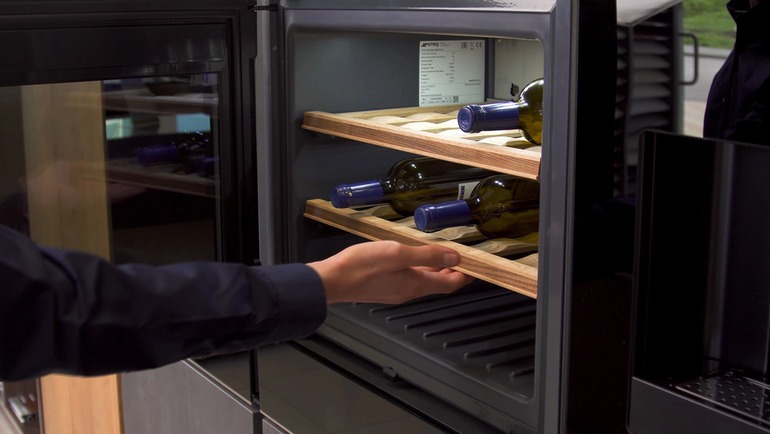
The setting of the temperature should be based on the purpose of the wine fridge, whether for storage or serving. A single zone unit for ageing only at 55°F is recommended; but two zone units are becoming more common that include one for ageing and a 2nd zone for serving temp for whites and sparkling. If you prefer to collect both old and ready-to-pour bottles, it’s a great investment to get a toasting cup that has both features. A purpose-built wine fridge eliminates the guesswork, with stable thermostats, UV-protected glass, and humidity control engineered specifically for wine rather than food.
Placement and Maintenance
Regardless of the storage location, avoid those locations where the sun is in the middle of the day, where heat is generated by ovens, dishwashers, and where there is constant vibration, as in laundry rooms. Bottles are sealed with a natural cork that must be stored on its side in order to avoid letting the cork dry out and become useless. Synthetic caps and closures are able to store upright as they please.
Serving Temperatures: Where Storage Meets the Glass
Storage is half the equation. Serving temperature is what the drinker actually experiences, and it is the variable most often mishandled. Too cold and the wine goes mute. Too warm and alcohol dominates while fruit fades.
Red Wines
Red wines typically are best served at a temperature much lower than most “room temperature” recommendations. These lighter red varieties (Beaujolais, Pinot Noir, and Gamay) prefer to be served almost straight out of the cellar at temperatures ranging from 55°F to 60°F. Full-bodied reds, such as Cabernet Sauvignon, Syrah, and Barolo, benefit from temperatures between 62°F and 68°F. Any red is hot on the palate and is rough; it is almost certainly served too hot. Most of these issues have cleared up in 20 minutes after refrigerating.
White, Rose, and Sparkling.
Full-bodied whites, such as oaked Chardonnay or white Burgundy, will appreciate 50-55°F, while crisp whites, such as Sauvignon Blanc, Albariño, and unoaked Riesling, will appreciate 45-50°F. Rosé wines also fall into the sweet and crisp category. Sparkling wines and champagne should be kept between 43°F and 48°F, which is cold enough to preserve the bubbles without compromising the wine’s aromatics. Understanding these serving temperatures is essential in both packaging and hospitality, where proper storage and presentation can greatly enhance the overall wine experience.
Quick Reference
- Warm: 43-48 Fahrenheit (5-8 Celsius).
- Warm rosé: 50°F to 55°F
- Full-bodied Whites: 50°F to 55°F
- Light reds: 55°F to 60°F
- Medium reds: 60°F to 65°F
- Full reds: 62°F to 68°F
Expert Tips for Getting It Right at Home
A simple modification most wine drinkers can make is to purchase a simple wine thermometer that can be attached to the neck of the wine bottle. Feeling the temperature is not a reliable method, and the glass has an enormous difference between 62°F and 68°F. Another hint: Remove reds from storage 30 minutes before serving and refrigerate whites. Whites should be allowed to come to room temperature from refrigeration, and reds should be allowed to cool from room temperature. In almost every instance, meeting in the middle is a bad idea – both from the client’s perspective and from the webmaster’s.
If you’re collecting seriously, you can spot patterns over the course of a few weeks (and potentially months or years) that would not have been apparent on a day-to-day basis, just by using a wireless sensor and recording temperatures. Most homes have more than the expected fluctuations, and it’s often daily differences greater than 5°F that really make wines age unevenly. It’s a long-term investment that primarily benefits in the long run, and one that will become more noticeable when bottles are opened. For beer storage, the same consistency in the environment highlights the importance of consistent conditions over time to ensure freshness and flavour stability, and how this applies to any product preservation that is the focus of maintaining the quality in each product.
Frequently Asked Questions
A wine cooler is great for long-term storage, but that does not mean your regular kitchen fridge is completely off-limits. The real difference comes down to temperature, humidity, and how long you plan to keep the bottle.
If you had a Wine Cooler, could you have a Wine in the Regular Kitchen Fridge?
Yes, a few days or a week; no real consequence. In addition, it is not an ideal humidity or temperature for preserving the food. The dry air takes moisture out of the cork, vibrations from the compressor disrupt the sediment, and aromatic compounds become less strong with time. If you are looking for longer-term storage, then having a dedicated wine storage will be a better option.
What happens if the Wine is too Hot on the Trip and/or in Storage?
A bottle will not spoil if a few short days or hours are exposed to 75°F or 80°F, provided that it is restored to the proper temperature promptly. Damage can be expected when temperatures exceed 85°F. If any of these symptoms are present, such as a cork pushed up, leakage around the capsule or cooked/stewed fruit taste in the glass, the bottle is likely spoiled. Damaged wines are irreparable.
What is the Maximum Length of Time Wine can be stored at Serving Temperature before it goes bad?
Most wines will not be damaged by a few days of exposure to temperatures in the cooler end of the range, 55°F to 60°F. Bottles kept on the shelf for weeks and months at common refrigerator or counter temperatures (above 65 °F) will age faster, thus reducing the length of the drinking period. It’s okay for wines that will be consumed in the short-term. If the bottle is to be matured, put it in proper storage as soon as possible.


Comments 0
No Readers' Pick yet.