



The Taproom Has Become Sport’s Most Intimate Grandstand
 Story by:
Beer Blog
Story by:
Beer Blog
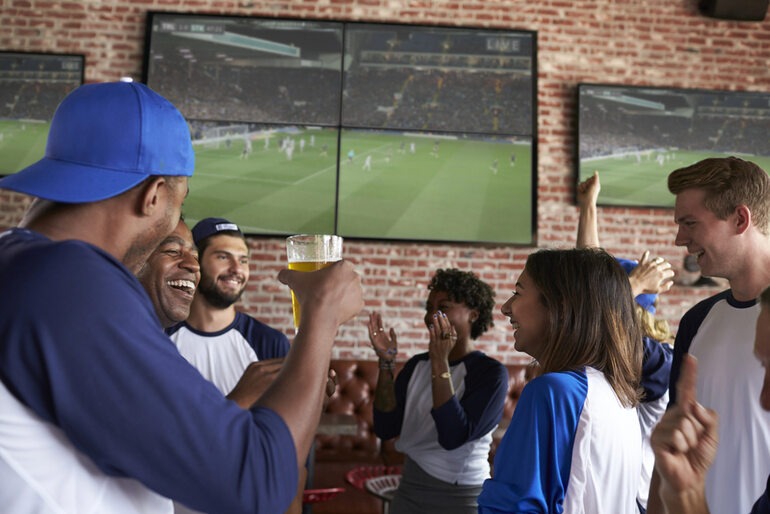
A stadium gives sport scale; a taproom gives it texture. The screen is close enough to catch a defender’s hesitation, while the beer carries a name tied to the neighbourhood. That combination explains why craft beer and sports remain a natural pairing even as fans gain more ways to watch at home. The appeal is not simply alcohol plus television. It is a paced social format built around tension, short breaks, and conversation.
Get the room or service rhythm wrong, however, and the evening becomes a crowded bar with a match in the background. Get it right, and the beer, conversation, and shared excitement can give the fixture its own character. That difference is where the social value begins, turning a busy match night into an experience people associate with the brewery long after the final whistle.
A Pint Gives the Match Clock a Social Rhythm
Beer works with live sport because neither experience needs constant explanation. A pale ale can sit on the table while attention shifts from the glass to a counterattack, replay, or disputed call. Halftime then creates a natural service window, which is much easier for staff to manage than a room ordering at random.
The Screen Is Only One Piece of the Room
The strongest taproom events are programmed rather than improvised. One large screen with clear sightlines usually beats several televisions competing for attention, and commentary should be audible without flattening every conversation. Operators also need to publish which match will receive sound; silent schedule changes frustrate supporters who chose the venue for a particular fixture.
A workable game-night setup normally covers four details:
- A visible match schedule and confirmed broadcast access;
- Seating that does not force standing customers into service lanes;
- A halftime staffing plan for the sharpest order spike;
- Water, food, and alcohol-free beer are displayed as clearly as the main tap list.
These decisions are commercial, not decorative. Brewers Association figures show that US craft volume fell 4% in 2025, while brewpubs recorded the smallest decline among the major business models at 1.7%. Hospitality therefore carries more weight when wholesale volume is under pressure.
The Second Screen Adds a Different Kind of Tension
The break between periods is long enough for a short digital session but too brief for slow onboarding. A high theoretical RTP does not predict a brief run because variance dominates over a small number of spins. Players assessing online casino games should therefore check round speed, volatility, published RTP, and autoplay controls rather than judging the artwork. Clear stake controls and a visible history make the experience easier to fit around a fixed match schedule. The useful design choice is knowing exactly when a round starts, settles, and ends. Live-dealer play follows another tempo because the table runs in real time.
Blackjack and roulette still carry a house edge, while side bets usually price risk differently from the main wager. A customer opening a live casino during a pre-match wait can see the betting window, dealer procedure, and result sequence rather than relying on a simulated reel. Stable video and an uncluttered bet panel matter more than cinematic camera cuts during a moving round. The format works best as a focused session with a preset stake ceiling, not as background noise. Basketball markets bring the second screen back to the sporting action. A short favourite is not automatically safer because the price already reflects much of the perceived advantage.
Prices listed as MPBL odds can move when a lineup changes, foul trouble alters a rotation, or live pace departs from the pre-match model. Possessions, rebounding, and free-throw rate supply more context than one scoring run. The sensible bankroll method is to define a fixed unit before tip-off and resist increasing it as the taproom gets louder. Keeping that discipline matters in a lively beer setting, where the energy of the game, conversation, and another round can easily influence decisions. A measured approach keeps the focus on the numbers rather than the excitement building around them.
Local Identity Beats Generic Sponsorship
Craft beer gives a viewing night something a standard sports bar setting often lacks: a specific sense of place. A brewery can pour a collaboration made with a nearby supporters’ group, name a tasting flight after local geography, or invite a food vendor whose service speed suits halftime. None of those ideas require an expensive rights package if trademarks and broadcast rules are respected.
The sport also broadens the brewery’s audience. Regulars may arrive for the beer and stay for basketball; supporters may come for the fixture and discover a saison they would not order elsewhere. That crossover matters in a market where the Brewers Association estimated craft retail sales at $28.0 billion in 2025 but still recorded a 2.8% annual decline.
A Good Game Night Knows When to Slow Down
Noise, queues, and alcohol strength all become harder to manage late in a close game. Staff needs authority to pause flights, serve water quickly, and keep aisles clear without interrupting the atmosphere. Published last-order times remove an argument from the final whistle, while food availability helps the room maintain an even pace. The final operational test is simple: could a newcomer follow the match, understand the tap list, and reach the bar without pushing through a crowd? If the answer is no, another screen will not fix the room.
Better sightlines, honest scheduling, and disciplined service will. A well-planned beer selection can support that flow too, giving guests something worthwhile to explore without turning the bar into another bottleneck. The best taprooms understand how to balance atmosphere, selection, and service without overwhelming the guest experience. When the room works for first-time visitors and regulars alike, the match becomes part of a broader brewery experience rather than the only reason to stay.


Conversations (0)
No comments yet.