






Why the Hardest Part of Making the Next Batch May Be Removing the Last One
 Story by:
Beer Blog
Story by:
Beer Blog
Production run may seem complete until all the containers give the “Go” signal, even though the machine is still working. The only thing left to be seen is the beginning of another beer’s history in a brewery store, oftentimes after all the beer has been gone. There’s one area companies have trouble with: the clean appearance versus the actual cleanliness. Residue doesn’t sneak up from a corner of a tank or bend of a pipe; it just waits until the next batch arrives to have an impact on the flavor, aroma, or consistency of the batch.
Getting the next run right often depends less on what’s about to go into the equipment and more on what was actually removed from it beforehand. That single detail shapes everything that follows once production starts back up again.
Cleaning Equipment Without Taking It Apart
Disassembling tanks and piping between every production run isn’t practical for most facilities, especially ones running multiple batches in a single day. Taking equipment apart, scrubbing it by hand, and reassembling everything eats into time that production schedules rarely have to spare.
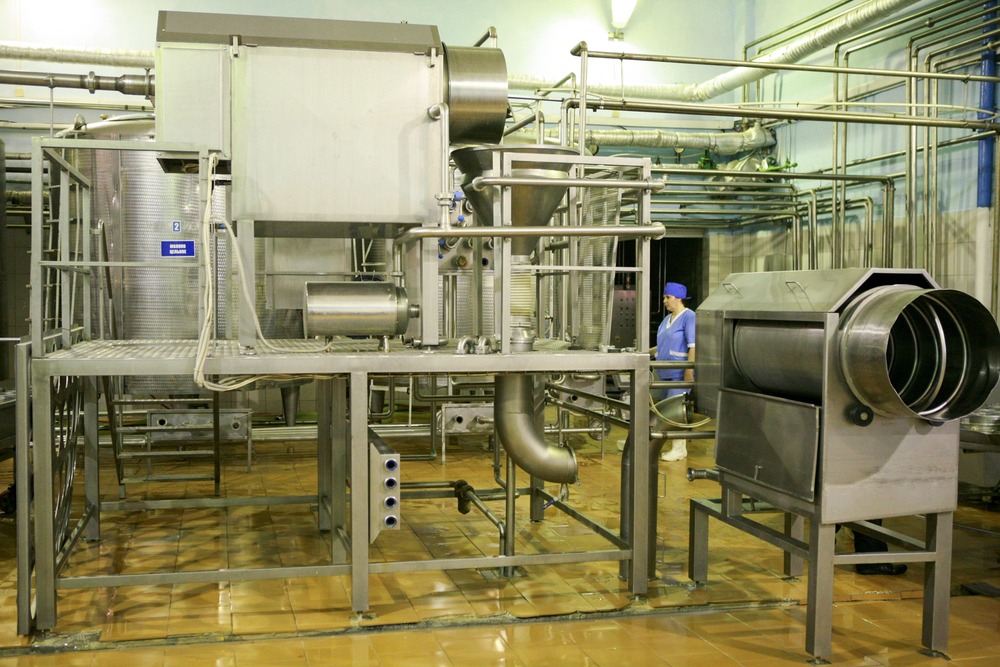
That’s the problem industrial CIP systems are built to solve, circulating cleaning solutions directly through tanks, pipes, and valves without requiring the equipment to be broken down first. Internal surfaces get cleaned in place, exactly the way the name suggests.
That approach saves more than time on any single cleaning cycle. It removes the risk that comes with manual disassembly, where a missed section or an improperly reassembled fitting can undo the benefit of a thorough cleaning in the first place.
Yesterday’s Batch Can’t Become Part of Today’s
That carryover becomes especially serious when production switches between different products or formulas on the same equipment. A trace of one ingredient showing up somewhere it doesn’t belong can compromise an entire batch, even in amounts too small to notice by sight.
Facilities running frequent product changeovers face this risk more often than most, since every switch reopens the same question. Getting the equipment fully clean between runs isn’t a formality; it’s what keeps one product from quietly becoming part of another.
Cleaning Is Really a Combination of Forces
Effective cleaning rarely comes down to a single factor working alone. Chemical concentration matters, but so do temperature, time, and mechanical action. Finding the appropriate combination can be the hardest part of project planning, especially when the product, soil, equipment, and cleaning chemistry all require different conditions.
In tanks, the geometry, size, coverage, flow, and pressure of the spray device must be determined by the geometry and soil loading to ensure that cleaning solution is delivered to the required internal surfaces. The velocity and turbulence of the cleaning solution are also crucial in pipe cleaning, since these factors are necessary to remove residue from the internal surfaces of the pipes and to reduce poorly cleaned surfaces. Time brings it all together, too, because even with the right chemical at the right temp, the contact time is the key to success. Realizing that a cycle has to be shortened in order to save a few minutes in order to save time may lead to extra contamination or reworking costs down the road.
The Cleaning Cycle Has to Be Repeatable Too
But one good clean does not mean much if the next clean is mediocre. Just like thoroughness, consistency is required on a day-to-day basis with all facilities that may be required to produce and clean in exactly the same sequence each day.
By using automatic monitoring, the gap can be filled by measuring parameters like temperature, flow, conductivity, and cycle duration, instead of memory bits and seconds, so long as a certain step should last. It is possible to spot small problems and correct them well upstream before they become larger issues downstream. Like manual processes, that consistency is particularly useful from one shift to the next and from worker to worker; change comes easier when consistency is there. Much of this random variability is eliminated in a repeatable cycle, leaving more room for the creative side of brewing and even art at home without compromising production standards.
Clearing the Path
Making the next batch successfully depends on more than fresh ingredients and properly calibrated equipment. What gets removed from tanks, pipes, and valves before production starts back up often matters just as much as what goes into them afterward.
That’s easy to overlook from the outside, since a clean-looking surface doesn’t always mean a clean surface underneath it. The real work of preventing contamination happens in the parts of the process nobody sees once the next batch is running.
Breweries that treat cleaning as a core part of production, rather than an afterthought squeezed in between batches, are better positioned to address drainage challenges and prevent issues that can affect the flavor, consistency, and quality of the next beer before those problems become difficult to correct.


Comments 0
No Readers' Pick yet.