




From Craft Beer to Craft Jerky: How Beef Jerky Brands Are Borrowing the Brewery Playbook
Beef jerky brands are adopting the craft beer playbook with hyperlocal collaborations, premium pricing, direct-to-consumer sales, and limited releases.
 Story by:
Chris Guest
Story by:
Chris Guest
The craft beer revolution changed everything, and now beef jerky brands are stealing the same playbook that transformed drinking in America. What started as gas station snack food has transformed into a premium category worth over $6 billion, with many jerky makers lifting strategies directly from successful breweries.
Think about it: craft beer exploded from a handful of breweries in the 1980s to over 9,000 today. The jerky world has followed the exact same trajectory—moving from three dominant players in convenience stores to hundreds of small-batch producers competing for premium shelf space at Whole Foods and beyond. Thanks to platforms like Jerky Brands online, which showcase these innovative makers and deliver the best products straight to your door, jerky lovers have unprecedented access to quality and variety.
Local Collaboration Becomes Jerky Gold
Craft Beer Jerky out of Kansas City might have the most obvious name in the business, but their strategy screams craft brewery logic. Founded in 2018, they don’t just make jerky—they partner with local breweries like Boulevard Brewery and 4 Hands Brewery, actually marinating beef in craft beer for 24-48 hours.
“We want customers to enjoy jerky flavored with beer from local breweries in their area,” the company explains. Sound familiar? It’s hyperlocal positioning—the same strategy that drove craft beer’s early success—just applied to dried meat.
Their founder puts it bluntly: “Craft Beer Jerky exists because we got tired of the same old big brand jerky on the market. Same 3-4 brands with basically identical flavors. Just like beer was several years ago.” That’s not marketing speak, that’s craft brewery philosophy applied to protein snacks.
Premium Ingredients Meet Direct Sales
Country Archer (now simply “Archer”) became the poster child for this brewery-to-jerky translation. They grew 600% from 2015 to 2017, hitting $21.1 million in revenue by treating jerky exactly like craft beer: premium ingredients, transparent sourcing, and stories that go beyond: “It tastes good.”
Their grass-fed, antibiotic-free approach mirrors craft beer’s obsession with ingredient quality. They run their own production facility instead of using co-packers (classic craft brewery control mentality). Plus, they’ve built a direct-to-consumer business that bypasses traditional retail markup—exactly what breweries did with taproom sales.
“Growing the overall category benefits everyone,” says VP of Marketing Jeff Wong, emphasizing transparency and sustainability.
Taproom Strategy Goes Protein-Forward
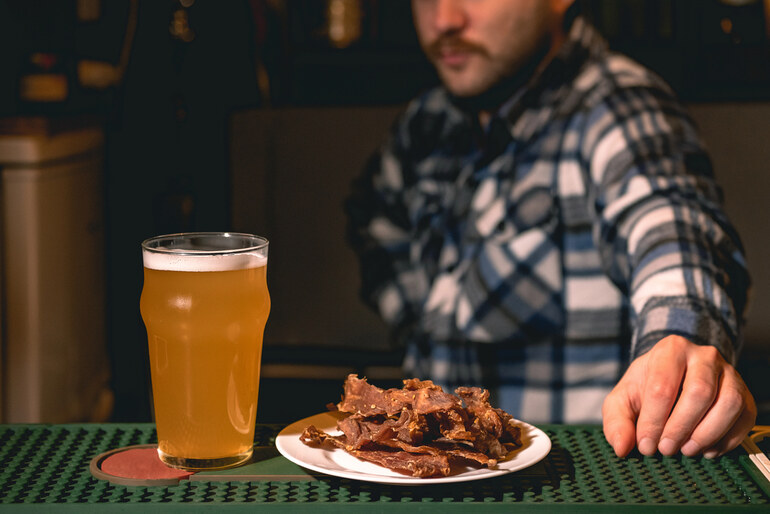
Brewpub Jerky flipped the script entirely, creating jerky specifically for brewery taprooms. Their whole business revolves around getting products into craft beer venues, creating a perfect symbiosis.
“We make gourmet beef jerky designed to taste great with beer,” they explain, positioning themselves as the jerky world’s designated driver. They’ve launched a “Beer Drinkin’ Carnivore Club” subscription service because if you’re borrowing from craft beer, why not steal their recurring revenue model too?
Duke’s Small Batch Smoked Meats takes this further with actual brewery collaborations, partnering with Karbach Brewing Co. in Houston. Their founder discovered pairing beer and jerky at a local craft brewery, then built an entire company around recreating that experience.
Heritage Storytelling Gets the Craft Treatment
People’s Choice Beef Jerky has operated since 1929, making them an elder statesman in the world of dried beef. But watch how they frame that heritage: “This isn’t just what we do, it’s who we are. Four generations of family tradition. Small batch production in downtown LA. A “kitchen” instead of a factory.”
It’s the same authenticity narrative that craft breweries use against macro producers. They’ve created “Test Kitchen Small Batch” and “Tasting Kitchen” specialty lines—limited releases that generate the same buzz as some breweries’ barrel-aged imperial pastry stouts.
The pricing follows craft beer logic too. While Jack Link’s sells for $1.50-2.00 per ounce, these craft jerky brands command $2.50-4.00 per ounce. Just like craft beer taught consumers to pay more for quality, jerky brands prove people will spend premium dollars on better ingredients and better stories.
Farm-to-Table Meets Meat Processing
Field Trip Jerky basically applied the farm-to-table movement to jerky, emphasizing 100% grass-fed beef and zero artificial ingredients. Their flavor innovations—Everything Bagel jerky, anyone?—Mirror craft beer’s experimental approach to traditional styles.
This clean-label focus isn’t just marketing. Industry data shows 68% of consumers now check nutrition labels, specifically looking for absent preservatives, MSG, and artificial flavors. It’s the same health-conscious trend that drove craft beer’s rise among millennials.
Limited Releases Create Hype Cycles
Craft beer perfected manufactured scarcity through limited releases, barrel-aged specials, and seasonal offerings. Jerky brands have also consciously adopted this playbook. Archer Jerky does chef collaborations. Righteous Felon creates “characters” for each flavor, like craft breweries name their beers. People’s Choice drops limited-edition Test Kitchen releases.
These aren’t products—they’re events. Just like beer nerds line up for the latest triple IPA release, jerky enthusiasts now follow their favorite brands on Instagram, waiting for the next small-batch drop.
The Numbers Support Brewery-Style Approaches
Market fundamentals back this brewery-inspired strategy. The global jerky market should hit $8.76 billion by 2030 and continue to grow by 6.6% annually. Premium segments outpace conventional varieties, while direct-to-consumer sales grow at 7.3% CAGR—the fastest distribution channel.
Notably, the demographics align perfectly. Millennials represent 35% of craft beer consumers, and 89% have purchased “better-for-you” snacks recently. The customer overlap between craft beer and craft jerky isn’t coincidental; it’s the same people seeking identical values across categories.
Bonus: Find the Best Beef Jerky, All in One Place
Jerky Brands is a leading online platform that links and unites consumers of jerky to the finest small batch and craft producers nationwide in the beef jerky world of tomorrow. Through a carefully selected assortment of the finest jerky brands, they offer an enjoyable opportunity for consumers to experiment with different tastes and high-quality ingredients, all with convenient home delivery.
Jerky Brands strives to be a company that works towards helping revolutionary jerky manufacturers and getting their quality products to more people with speed and convenience. Their online store is a jerky lover’s paradise, especially for those who want to get more variety than what the big-ticket brands provide.
These are some of the popular jerky brands you can find on the website:
- Field Trip Jerky – Jerky labeled as clean-label, containing grass-fed beef and flavors like Everything Bagel
- Righteous Felon – The character-driven branding jerky with sturdy flavor combinations and a narrative behind it
- Mountain America Jerky – A whole-muscle cut, preservative-free hickory smoke-flavored handcrafted jerky
- Brooklyn Biltong – Dried biltong, authentically South African style, air-dried using 100 percent grass-fed beef, nitrate-free
- Fusion Jerky – Gluten-free jerky with flavors such as Japanese BBQ and Basil Citrus
- Divine Bovine – Craft, grass-fed beef jerky with a focus on natural ingredients and sustainability
- Pan Mushroom Jerky – Made with marinated mushrooms(!), this savory snack is ideal for the vegan lifestyle
- Wicked Cutz – Spiced, smoky jerky using high-quality meats and flavors including Sweet & Spicy and Garlic Jalapeño
Connecting fans to a range of brands, Jerky Brands simplifies the process of finding the finest available jerky variants in the online space and allows them to resonate with the core elements of the craft beer revolution, such as authenticity, quality, and community.
Jerky + Craft Beer = A Meaty Match Made in Beery Heaven
The most successful jerky brands aren’t copying surface-level craft beer tactics; they’re embracing the complete philosophy. Transparency over marketing speak. Quality over quantity. Community over mass market appeal.
Craft Beer Jerky’s mission statement captures it perfectly: they want “to help the jerky industry become like the craft beer industry.” That’s not just an aspiration but rather a proven roadmap.
The craft beer revolution taught everyone that customers will pay a premium price to obtain goods that suit their values. Jerky companies are getting this point, and create thriving, profitable companies by approaching dried meat as craft beer: high-quality ingredients, engaging histories, and direct contact with customers beyond the price and mass distribution.
In the case of beef jerky brands, the brewery playbook should inspire, but it also serves as a blueprint for survival in a market where it is not possible to become the cheapest anymore. Thriving brands make jerky feel less like a gas station impulse purchase and more like craft beer: something worth seeking out, something worth paying more for, and something worth discussing.


Conversations (0)
No comments yet.