





An Inconvenient Booze: The Fight Against Forever Chemicals in Beer
 Story by:
Alexander Robino
Story by:
Alexander Robino
A study published April 24 in Environmental Science & Technology has found there may be more acronyms in your IPA than you realize — a veritable alphabet soup of chemicals.
A class of synthetic chemicals, per- and polyfluoroalkyl substances (PFAS), are present in beers nationwide, with some exceeding U.S. Environmental Protection Agency limits for drinking water. Many refer to them as “forever chemicals.”
“Beer is the third most popular beverage in the world, following only water and tea,” the study noted.
It is made primarily from water, malt from grains (usually barley), hops, and yeast — all of which are potential sources of contamination, along with water, tubing, containers, and cleaning supplies.
What are PFAS?
PFAS are widely used in firefighting gear and industrial materials used in a range of everyday products. However, this comes at a significant cost to the environment and people’s health.
PFAS get their moniker from the fact that they don’t break down. They accumulate in the body and sewage. They are also carcinogenic.
An additional source of exposure is fertilizer that contains “biosolids,” or treated sewage. Some farmers apply this soil amendment to their land. Then it’s permanently in their dirt and thusly, their crops and our beer (let alone the rest of our food supply). The process simply cycles from there.
How Bad is the Contamination?
PFAS concentrations varied significantly, with some of the highest levels detected in samples from Chatham County, North Carolina (among other places around the country). The study clarified that their research team “purchased 23 canned beer types in North Carolina stores in August 2021,” and “confirmed brewing location for the purchased cans.”
Among the chemicals found were PFMBA, PFNA, and PFBS, all of which are chemicals with known health risks.
Researchers tested a range of beers and found that “at least one PFAS was detected in almost all beers analyzed,” suggesting the contamination is widespread and not limited to areas near known PFAS sites.
Beer brewed in areas with known elevated PFAS levels in municipal water had “15 times the odds” of containing detectable PFAS compared to commercially popular brands from areas without such known contamination.
One variant of forever chemicals, perfluorosulfonic acid (PFSA), was the most common of PFAS among the beers analyzed.
“PFSAs pose greater health risks,” the report stated. PFOS and PFHxS, both commonly linked to firefighting foam, were found in especially high levels in areas near military bases and fire training sites.

Photo Credit: DiscoA340/Wikimedia Commons
One Chatham County Town Confronted Water Concerns
Pittsboro — a town of about 5,000 in Chatham County, and rumored to be near a secretive facility that may have inspired the hit show Stranger Things — is home to five breweries, two distilleries and a meadery. All rely on the municipal water supply, which is now under scrutiny.
When the April study was released, Pittsboro’s town manager began reaching out to business owners with the findings.
“Our town manager here in Pittsboro texted me to say, ‘Hey, the story hit the wires. You may want to take a look at it,’” said Michael Pipkin, owner of Havoc Brewing Co. who has a master’s degree in brewing science. He feels the contamination is partially the brewer’s burden.
“We pay for the water we receive, so both from the advocacy and customer relations standpoint, it’s on us to ensure that the product we’re getting — that we then make a product from — is high quality.”
He feels the situation is partially the government’s burden to bear, but also insists, “We have a great partnership with our local city.”
Town Manager John Franklin assured Pipkin that Pittsboro had already taken steps to address the issue. The town had been working for years to get ahead of PFAS contamination, prompted by earlier reports brought on by upstream pollution, which resulted in the town suing over 20 companies, including 3M and Dupont.
Pittsboro invested $3.5 million to purchase and installed a granular activated carbon system for its municipal water supply in 2022, sourced from the Haw River, using leftover funds from the federal Coronavirus State and Local Fiscal Recovery program.
“Essentially, what we installed was two 28-foot-tall Brita filters,” said Colby Sawyer, the town’s director of communications and emergency management. “We went from some pretty high PFAS levels in the town to virtually none, a non-detectable level.”
Granular activated carbon (GAC) is a filtration method that uses carbon in granular form to remove contaminants from water.
Pittsboro also participated in a pilot program testing new filtration tech that uses nanotechnology to not only capture PFAS and other contaminants but destroy them on contact. The system has been tested in several locations across the state and was a topic of discussion among lawmakers at the General Assembly in June.
“We should probably start seeing in the next couple years a lot of nanotechnology treatment processes going in around the state of North Carolina,” said Sawyer.

Action at The Business Level
Some brewers have been making personal strides in the push for an efficient cleaner product, such as Stirling Steffen and his wife, Ilana, who own Trademark Brewing in Long Beach, California.
Steffen said, “Our slogan that we’ve been batting around is, ‘We make great beer, but we make it better.’”
He says this not in the spirit of competition, but rather in the fact that they produce a good final product.
He considered the local water supply to be high quality. Still, he grew up in the California era of five-minute showers, low-flow showerheads, and other home reduction efforts, so he was conservation-minded when the company started out. They decided to make an investment upfront in the name of water and energy efficiency, as well as quality.
“Our primary piece of equipment was about three times more expensive than it otherwise needed to be,” said Steffen.
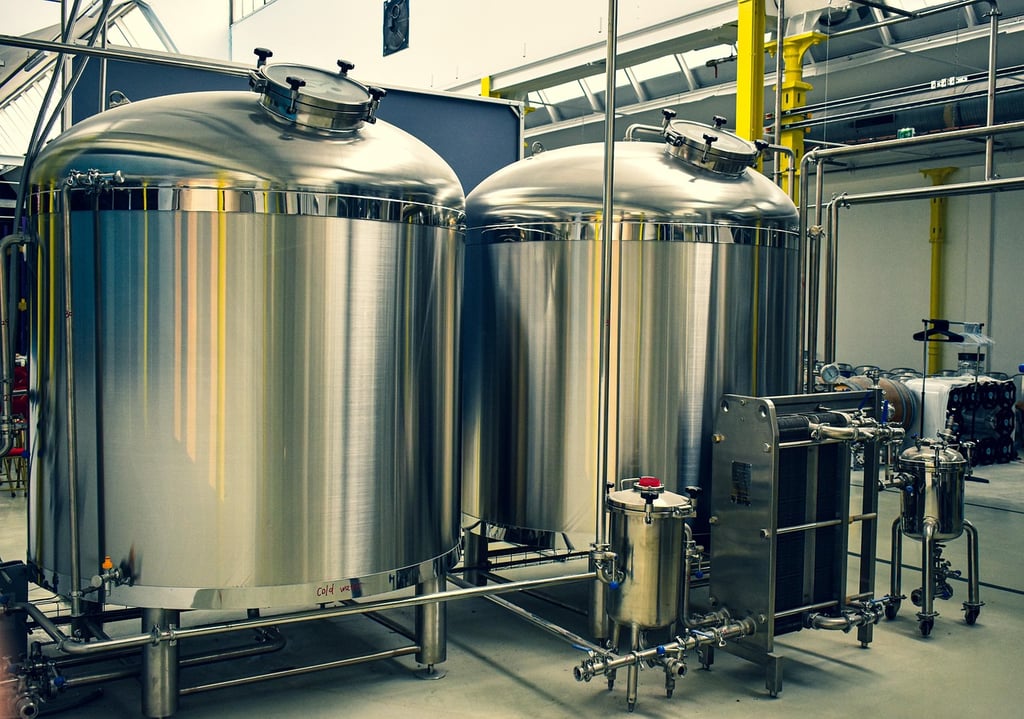
The equipment at Trademark Brewing allows the team to use only a fraction of the water typically required in the brewing process. It features a five-stage filtration system, including a mash filter.
“Every drop of Coors has been made this way for the last 40 plus years,” Steffen points out. “A lot of the beer in Europe is made this way.”
He acknowledged that this setup was a personal choice and gamble; it wasn’t feasible for every brewer.
“I don’t want to throw my peers under the bus if they’re not able to have the same efficiencies that we might,” he said. “They’re doing the best they can. Trust me. No one’s being wasteful ’cause it’s fun.”
He stressed, “I wouldn’t fault anyone for saying, ‘Hey, I just can’t take this risk on CapEx right now.’”
On the broader question of personal versus government responsibility, Steffen believes both play a role, that people need to be aware of what they’re putting in their bodies, but also that “municipalities need to be taken to task wherever possible.”
He added that cities often face limitations due to budgets and bureaucratic red tape, but he still supports transparency.
“There should be as much disclosure as possible,” Steffen said. “Our municipality — I don’t know if they ‘blast it out,’ but I can pull up a water report.”
Steffen was intrigued by Pittsboro’s use of nanotechnology in its water treatment efforts.
“That sounds like a watershed moment,” he said. “That could be a game changer for not just people like me, but you’re talking about an affordable, accessible solution.”
One of the most important and revered craft breweries ever, Sierra Nevada Brewing Co., has promoted a long-standing environmental commitment. The company declined to be interviewed for this article, but provided a written statement acknowledging the study:
“We are aware of the recently published study… The water that we bring into both our facilities for brewing beer meets all drinking water standards and is below EPA limits for all criteria, including PFAS… We support the continued evolution of water quality standards through our active participation with NRDC’s Brewers For Clean Water.”
It’s been a few centuries since Americans considered beer a healthy option. Presently, the federal government is rumored to still be deciding whether it considers any amount of beer to be “safe” to drink. Despite awareness of the risks, most drinkers still want to know exactly what they’re ingesting.
April’s study concludes that PFAS in beer varies from can to can, even within the same six-pack, and represents a “global concern.”
The company said it works with two municipal water systems — in Chico, Calif. and Asheville, N.C. — both of which monitor and report water quality data, including PFAS.
Is My Beer Forever Tainted?
Across America, local brewers and town leaders alike are navigating the path to cleaner beer, and that starts with cleaner water. Many innovations are already underway to improve the situation, but there is still work to be done.
Whether you’re a businessman, a politician, a consumer, or a citizen, said Pipkin, “Having a very clean starting ingredient for beer is maybe the most important thing that we can do.”


Conversations (0)
No comments yet.