


Independent Craft Breweries vs. Macro Breweries
 Story by:
Jonathan Ingram
Story by:
Jonathan Ingram
Denver, Colorado – Is it possible for a large corporation to acquire passion and, as a result, market share when it comes to making beer?
That was a key question at this year’s Great American Beer Festival where hundreds of brewers driven by passion and thousands of their beers vied once again to earn a medal by combining the classic and creative.
The night before this year’s doors opened to welcome 60,000 festivalgoers, GABF founder Charlie Papazian recalled the first festival in 1982 at a hotel in Boulder, which drew about 800 people. When the hotel’s owners first found out about that inaugural festival, he said, they tried to cancel it. It was one of many battles to come with corporate culture.
A guest on the Brew Night Show hosted by Marty Jones, Papazian also recalled one of the classically creative beers from earlier days. “Odell made an IPA that won the GABF gold in 2007 and then came back and won it again at the World Beer Cup in 2008,” he said. “That was the first IPA that had that hoppy and floral quality to it. That really started it all when it came to IPAs.”
The new methods and approaches to making IPA have been growing steadily just like the crowds at GABF, the popularity of IPAs and the craft beer segment in general. But is it possible for a macro brewer to acquire the sort of passion behind recipes like the one that sprung from the minds at Odell and helped fuel a revolution?
In private discussions and at the Brewers Association’s media luncheon Q & A, the ongoing acquisition of smaller craft breweries by macro brewers was a hot topic. The purchase of SABMiller by AB InBev was in the air, but the acquisition of smaller American brewers was much more on people’s minds.
Paul Gatza, director of the BA, pointed out that the acquisitions in the previous 12 months by macro brewers was but one of several ways brewers are seeking growth or paying back original investors. He cited private equity, partial buyouts, buy-ins by other craft brewers and employee stock ownership plans as the more predominant alternatives.
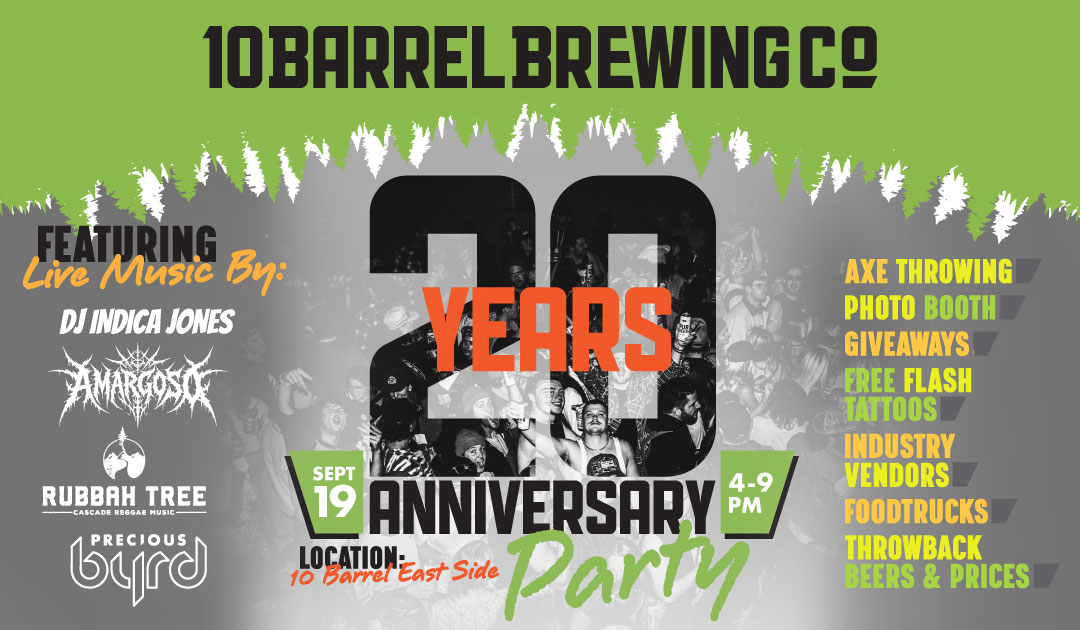
But the high profile of recent deals, which include noted IPA makers 10-Barrel Brewing Company, Elysian Brewing and Golden Road Brewing, still posed a looming question. Can a passion for brewing creativity be acquired in a way that results in a significant increase in market share for the buyer?
Gary Fish, founder of Deschutes Brewing, isn’t surprised by the macro takeover strategy. Fish and his company, of course, are among recent converts to Employee Stock Ownership Plans in the beer business, which help thwart takeovers.
“It had to happen,” said Fish. “It’s a natural response. Anheuser-Busch has billions of dollars and they’re getting their clocks cleaned by these little brewers that they can’t control. Their world is all about control. Well, how do they control them? They can buy them for a rounding error on their balance sheet.
“And why not?” he continued. “They don’t understand passion. They’re consumer goods people. They’re brilliant at what they do. They’re the best in the world. What they don’t do is passion.”
Like others, Fish remained cautious about the influence on market share that acquisitions will have in the long run. Also among the cautious was Bart Watson, the chief economist for the BA. He acknowledged that the battle cry of 20 percent of the market by 2020 by brewers who fall under the BA’s definition of craft may not happen. His primary point was that the 20/20 goal was as much about market planning as a specific sales target. If craft does double its market share in the next five years, goes this line of thinking, how many hops will be needed to make those beers? How will the market in general and hop farmers in particular prepare for that – even if the BA craft market share doesn’t quite get to 20 percent?
While Watson did not mention specifics, this position also seemed to recognize that the large barrelage from Lagunitas, after soaring sales of its hoppy IPAs, will no longer be tallied by the BA due to recently cutting a deal with the multi-national macro brand Heineken.
Others are cautious about the change in the craft brewing landscape as well. “Time will tell,” said Boston Brewing’s Jim Koch when asked about the loss of craft brewers to macro ownership and whether those big brewing operations will be able to take back some of the share of the American beer market lost to smaller brewers.
“I think there is a profound difference between an independent brewer where passion and freedom is found, the craft beer culture,” said Koch. “(The macros) are different. But don’t underestimate the power of money and marketplace clout.”
Eric Wallace, co-founder of Left Hand Brewing Company and chairman of the marketing committee for the BA, remains unconvinced that macro acquisitions of smaller brewers will change the beer world.
“I think that remains to be seen,” said Wallace, who pointed out that the barrelage being acquired by macros isn’t exceeding the barrelage it is giving up in market share annually. “I’m personally somewhat dubious. Once you’ve established that you’re for sale, how far will you go? How much control do these acquired entities have and how much force can they bring to bear to make you do things you may not agree with?”
Fish pointed out that so far the acquired breweries seem to have a relatively free operating hand. “From what I’ve seen, they’re leaving them alone and not trying to make them efficiency experts.”
During last year’s GABF, I visited with Pete Coors in his office and got his take on what’s happening in craft. This year I sought a follow-up interview, but he was traveling and not available for another conversation.
Interestingly, the alternating chairman of MolsonCoors is committed to developing new craft-style beers in-house such as the Blue Moon brand and the relatively new Colorado Native, a brand from the AC Golden brewery housed at the massive Coors facility in Golden, Colorado, which won a gold at last year’s GABF.
Blue Moon, where head brewer Keith Villa is nothing if not passionate, sells in the neighborhood of two million barrels annually. Colorado Native is currently sold only in Colorado with an annual output of roughly 14,000 barrels, but it remains to be seen if Coors will try to scale up the production of the beer. Meanwhile, the production facilities of traditional macro beer are being scaled down by the joint MillerCoors operation, a sure sign that the sale of traditional American premium lagers has peaked and growth for macros will have to come from elsewhere – possibly even smaller breweries.
The bottom line is that there’s a passion for making creative, flavorful beer that’s driving the market and that the previously existing market, otherwise known as the status quo, was dominated by those who preferred a passion for making money by dominating with a single style of mass-produced lager beer.
Guinness has recently brought a Nitro IPA to the North American market. Pabst Brewing Company already distributes Ballantine IPA widely in 12-packs. Does this mean Anheuser-Busch will join them and start selling a mass-marketed IPA in the next few years? Woe be unto me to predict precisely where the business of American beer is headed, no pun intended. But clearly the strategy lines are drawn more sharply than ever.

Comments 0
No Readers' Pick yet.