



From Lifeline to Liability: The Looming Crackdown on THC Beverages
 Story by:
Eric Griffin
Story by:
Eric Griffin
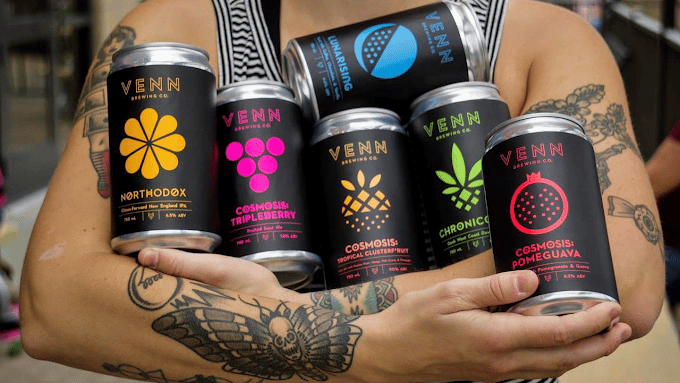
As craft beer and breweries see a historic decline heading into the heart of 2026, hemp-derived THC beverages have stepped in and seen a huge surge in popularity. In fact, a large number of breweries have adopted these into their own portfolios, and, for many, it’s been nothing short of a saving grace for their small businesses. However, a looming federal deadline as well as regulatory uncertainty are threatening to unravel what’s become one of the industry’s fastest-growing survival strategies, and many business owners are scrambling to figure out what’s next.
A New High: THC in Craft Beer
It was during 2023 and 2024 when we really saw the breakout moment for THC-infused drinks in breweries and retail markets. Examples of experimentation with cannabis-infused beer goes all the way back to 2015, but between fluctuating popularity and legislative roadblocks, it never really gained a strong foothold until recently.
The 2018 Farm Bill is really what shifted the tide. The primary action for the 5-year package was in legalizing industrial hemp by removing it from the Controlled Substances Act. This allowed for it to be cultivated as an agricultural commodity. This landmark decision understandably led to huge retail expansion and a boom in hemp-derived low-dose THC products. Beyond this, these products could now also be transported across state lines, considerably easing the logistics for breweries with regional or national distribution networks.
In short, what we’ve seen over the last few years has been a very fast moving convergence of craft brewing and cannabis innovation, fueled as much by necessity as by opportunity. But now just as this nascent category has risen to all time highs, a regulatory cliff looms ahead. A November federal deadline threatens to outlaw any beverage containing more than 0.4mg of THC, redrawing legal boundaries and forcing the industry into a potential inflection point. What happens next won’t just determine the future of THC beverages, but it could quite literally reshape the future of countless breweries who have participated in this new category, relying on its success for their survival.
The Deadline Everyone is Watching
As November 12, 2026 approaches, many in the industry have already dubbed the date as “Hemp D-Day”. So what even is this federal deadline? It’s actually the effective start date of a bill signed into law back in November of last year as part of a broader government funding package. This law, the Continuing Appropriations, Agriculture, Legislative Branch, Military Construction and Veterans Affairs, and Extensions Act, 2026 (H.R.5371), will introduce sweeping restrictions on hemp-derived cannabinoids, effectively placing most low-dose intoxicating hemp THC beverages and edibles currently on the market in legal jeopardy.
In the case of THC beverages, drinks containing more than 0.4mg of THC per drink would become illegal under the newly proposed rules. While it would force the shutdown or reformulation of many existing products, it hasn’t come without a fight.
There is active legislative effort to push decision-making authority back to individual states, rather than maintaining a strict federal standard. Bipartisan interest has been shown in resolving the issue, most notably from figures like Amy Klobuchar and Rand Paul. A proposed bill would allow state-level regulation instead of federal preemption. All of that said, the outcome is very much uncertain, and there has been significant concern that the regulatory clarity may not arrive in time.
Structural Strife
As if the tightening of the regulatory landscape wasn’t enough, the structural realities of the U.S. alcohol industry present an equally significant set of constraints that could restrict how far THC beverages are ultimately able to scale even if progress is made before Hemp D-Day arrives.
The U.S. alcohol market utilizes a 3-tier system – brewer to distributor to retailer. So even if a product is legal in one state, it cannot just be sold in others by default. So in going back to the legislative efforts looking to push authority to the states, progression on this front doesn’t necessarily put breweries in the clear. Understandably, distributors have become increasingly risk-averse, beginning to avoid hemp/THC beverages entirely. While the primary reasoning has been due to the potential illegality of the products, they also want to avoid the subsequent logistical headache of distribution restrictions even if authority is given to the states.
Beyond this, insurance costs are expected to rise significantly. This means that if ultimately these products retain legality within the market, they could be deemed economically unviable anyways due to the associated premiums.
Uncertainty & Risk
Distributors haven’t been the only ones looking to stay away from THC in the wake of these looming uncertainties. Across the board, stakeholders have described the situation as a “wait and see” environment. The lack of regulatory clarity has driven hesitation from insurers and retailers as well. While unintentional, breweries may be exposed to business-level risk, where legal shifts could threaten not just hemp products but entire brewery operations as well as the well-being of the entire underlying business.
Taken together, this broad hesitation has created a holding pattern across the entire ecosystem. Distributors, insurers, and retailers have effectively been sidelined by this uncertainty. To be clear, this has not become an issue around rejection or opposition of THC beverages, but instead a shared recognition that the category is operating ahead of the regulatory clarity needed to sustainably support it. So the question becomes not whether the category should exist, but rather what a sustainable framework for long-term survival would look like.
Industry Perspective
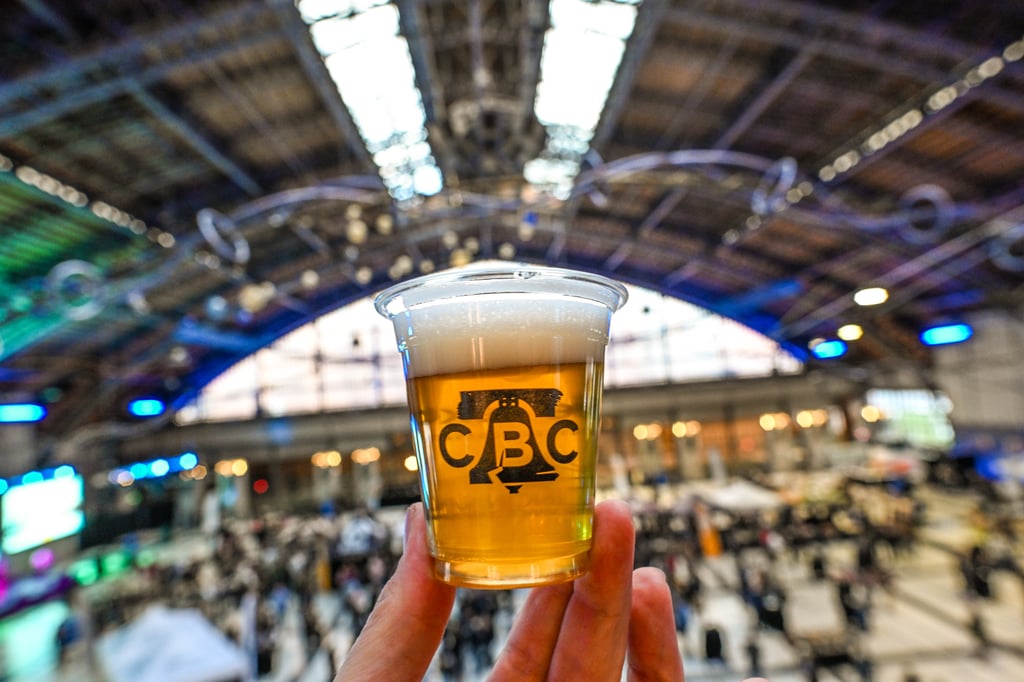
At the 2026 Craft Brewers Conference, there were some incredibly insightful takes on this topic from a well-varied panel. Titled Hemp Beverages and the Future of Drinking, the panel outlined a practical roadmap for breweries, including regulatory conditions, product safety, labeling best practices, sales, distribution, and marketing strategies to build trust. Representing the discussion was Surly Brewing Founder and President Omar Ansari, Barnes Beverage Group representative Shauna Barnes, Christopher Lackner from the Hemp Beverage Alliance, and Marc Sorini of the Brewer’s Association.
Our clients understand that distribution channels are likely to narrow as November approaches, and legislative pathways for a pre-November solution continue to close. While we remain hopeful that there will be a delay or new regulatory framework in place before then, we are also advising clients to prepare for a worst-case scenario. That preparation includes proactive supply-chain planning, developing non-dosed product options to keep brands relevant, and ensuring sufficient separation between their hemp brands and alcohol brands to mitigate risk under TTB and state ABC regimes. We also expect many brands to explore alternative marketing and sales strategies, including intrastate commerce and dispensary sales, while the industry waits for a permanent solution or a beverage-specific carve-out. If you operate in this space, we strongly encourage you to engage with your legislators and make clear the real impact a ban would have on your business.
The general consensus of the panel confirmed that support for the category exists, but doesn’t change the underlying problem. “We continue to hear that Congress wants to create a regulatory framework instead of a ban. Our members are hopeful that Congress will act swiftly to save the thousands of jobs and small businesses that this category has created, ” said Christopher Lackner, founder and president of the Hemp Beverage Alliance. Beyond that, stronger regulation and clearer guardrails are needed, and long-term viability depends on structured oversight.
The Brewers Association (BA) views the status quo as chaotic and unsustainable for such socially sensitive products, and urges federal and state lawmakers to enact legislation establishing clear and transparent regulatory structures that protect the public while offering a pathway for commerce in cannabis and hemp products.
What Comes Next?
Structural and regulatory pressures are converging, and breweries and industry stakeholders are being forced to think beyond near-term compliance and more toward longer-term survival. What’s next will undoubtedly be a marathon rather than a sprint, where shifts in distribution models, de-risk exposure efforts, and potential policy disruptions all need to be discussed and planned for in order to shape a sustainable future.
But the bottom line is that the industry is in a precarious position. There is no clarity from regulators, brewery businesses hang in the balance during the interim, the entire sector is operating essentially in the blind, and looming dead ahead is a very real risk of an abrupt and significant policy shift by Q4 of this year. Is this inevitably a doom and gloom scenario? Are we just waiting to watch this entire category of beverages collapse overnight? The only widely agreed path to stability involves the above-discussed bipartisan federal agreement to preserve state flexibility while also setting clear safety standards.
But if that doesn’t work? Maybe this moment instead represents an inevitable “prohibition-era inflection point” for hemp-infused beverages in alcohol. Innovation, regulation, and survival all forced to collide. What is now a fast-emerging category could shift just as quickly into a contraction or collapse, not because demand disappears, but because the rules finally catch up all at once. For now, the industry waits.



Conversations (0)
No comments yet.