




The Evolution of Non-Alcoholic Craft Beer: From a Necessary Compromise to a Fine Art
 Story by:
Beverages Blog
Story by:
Beverages Blog
There’s a major paradigm shift going on with brewing. Until now, the only individuals who were allowed to sell non-alcoholic beer were drivers or those with medical reasons. In today’s world, Non-Alcoholic Craft Beer is a culture, and people want to experience beer differently, with some special ingredients and superior brewing skills. Craft beer is defined by more than drinkable brews; there are more breweries that are increasingly creating more interesting and complex brews that are introducing new avenues into the creativity of craft brewing. The desired outcome is a full hop flavor while watching a game, on the weekend, or at a game. Pinco kazino in parallel, without feeling the heaviness of alcohol. This is no longer a compromise, but a conscious choice in favor of a quality product and a clear mind.
Why Classic Non-Alcoholic Beer Had a Bad Reputation
Traditional methods of removing alcohol, which large corporations used for decades, literally destroyed the taste of the drink. Thermal pasteurization and vacuum distillation of past generations’ evaporated alcohol, along with volatile aromatic compounds of hops. As a result, breweries received a sweetish liquid with a pronounced taste of boiled wort. This repelled the audience of the beerconnoisseur.com website, which is used to bright IPAs, dense stouts, and sour sours. Craft breweries had to rethink the entire technological chain to prove that a non-alcoholic drink can be a masterpiece.
A Technological Breakthrough That Changed the Rules of the Game
Modern brewers no longer brew regular beer to then remove alcohol from it using destructive methods. Instead, they control the fermentation process from the very beginning. The main change occurred due to biological discoveries and new yeast strains.
Here are three main methods that allow preserving the original profile of the drink:
- Special strains of saccharomycetes. These yeasts can ferment only simple sugars (glucose, fructose), ignoring maltose. As a result, fermentation naturally stops when the alcohol level barely reaches 0.3-0.5%, but the drink retains its full body.
- Membrane filtration or reverse osmosis. Beer is passed through special filters under high pressure. Alcohol and water molecules are separated from the flavor and aroma base, after which water is returned to the concentrate. This is an expensive but most delicate method.
- Interrupted fermentation by sharp cooling. The wort is quickly cooled to freezing temperature, which paralyzes the yeast before it can produce a significant amount of ethanol.
Thanks to these approaches, Craft Beer without degrees received the same density, stable foam, and rich taste as traditional counterparts. Now, evening relaxation, when you launch Pinco online for entertainment and excitement, is accompanied by a high-quality drink that is in no way inferior to the classics with Dry Hopping.
Flavor Palette of New Releases
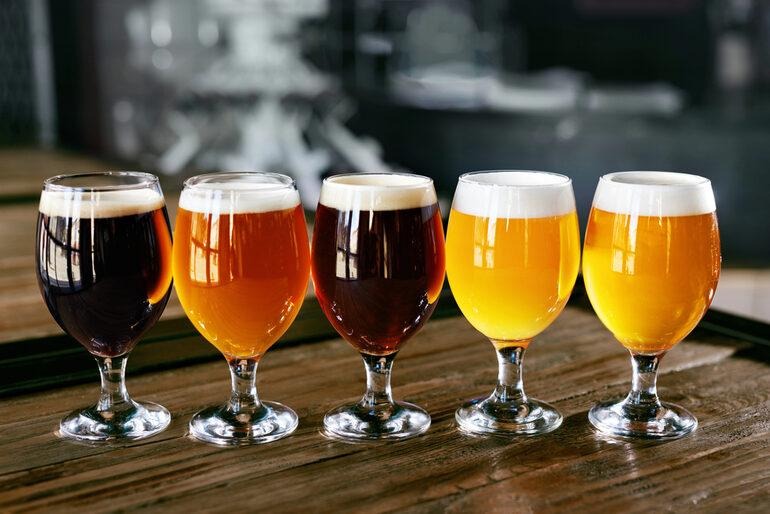
The modern assortment is not limited to pale lagers. Breweries boldly experiment with complex styles, turning production into Fine Art. Imperial stouts are available with a non-alcoholic warmth, which is helped by the density of the malt body and burnt sugars. Imperial stouts have come out in non-alcoholic versions with coffee, lactose, and chocolate flavors. As a result, hazy and New England IPAs with double dry hopping (DDH) have gone on to be popular choices, where the essential oils of Citra, Mosaic, or Nelson Sauvin hops are ideally used to hide the attributes of the non-alcoholic base. Today, traditional gose and lambics, such as from Germany, are also being born with alcohol-free variations, sometimes even with a natural fruit puree, like raspberry, passion fruit, or calamansi. The revisions help to highlight the developing and evolving nature of the craft beer scene and improve the overall taste of the brew.
| Beer Style | Technological Feature | Flavor Profile | Optimal Time for Consumption |
| Hazy IPA | Special yeast + DDH | Citrus, tropical fruits, soft bitterness | Active summer day, picnic |
| Pastry Stout | Use of lactose and oats | Cocoa, caramel, dense texture | Evening relaxation, dessert |
| Raspberry Gose | Spontaneous sour fermentation | Sour-salty, berry, refreshing | After a workout or while playing at Pinco |
| West Coast IPA | Deep membrane filtration | Pine, resin, pronounced dry bitterness | Dinner with meat dishes |
As seen from the market analysis, each style has its unique advantages that satisfy the demands of even the most demanding beer geeks.
New Philosophy of Consumption: Balance and Mindfulness
The popularity of high-quality non-alcoholic craft is closely linked to the changing lifestyles of urban residents. Thirty-year-olds don’t want to give up the next day to get a night out. New rules of the game are set by the trend of a healthy lifestyle, concentration, and productivity. Meanwhile, no one is ready to abandon rituals, pub socialization, and gastronomic pairings.
It’s an easy-to-follow concept of moderation that fits a craft drink easily. This can be consumed with a business lunch, at a meeting with partners, or at home to relax after a long day. Watching a sporting event, giving yourself a light Pinco session, and having a glass of aromatic non-alcoholic Pale Ale brings a complete feeling of celebration and relaxation without all the negative impact of the morning after on the body.
Challenges for Brewers and the Future of the Industry
Despite the obvious success, creating flawless non-alcoholic craft remains a difficult task. Alcohol in beer serves not only as a carrier of strength, but also as a preservative and flavor enhancer. Without it, the drink becomes vulnerable to bacterial contamination, so breweries are forced to invest hundreds of thousands of dollars in sterile bottling lines and tunnel pasteurization. There is also the problem of balance. In the absence of alcohol, malt sweetness can become too intrusive, so masters are forced to work filigree with bitter hop varieties and wort acidity. It’s actual engineering and cooking, and it makes brewing into a greater art. As people increasingly demand innovative products that cater to their evolving tastes and lifestyles, the next level of innovation could be functional craft beer brewed with adaptogens, nootropics, and vitamins to provide exciting new beer experiences.


Conversations (0)
No comments yet.