






World Class Beer Highlight: Oude Geuze Boon
 Story by:
Jim Dykstra
Story by:
Jim Dykstra
World Class Beers always come with a story, and Brouwerij Boon Oude Geuze Boon has more than most. This is not just a pale, lively Belgian classic with a 98 rating from our judges. It is a beer tied to murky etymology, political folklore, lambic survival, patient blending and the kind of complexity that can only come from time.
Read on to learn more about gueuze, Brouwerij Boon and why this elegant, restless beer has never really gone out of style.
Style History
The word “gueuze,” which you’ll still find with multiple spellings, supposedly first appeared in a French text from 1829, as “geuze-bier”. Its origin comes with about as much clarity as the bottom of a lambic bottle.
Some cite a long-lost Brussels brewery on Geuzenstraet called La Bécasse. Others favor its similarity to the Old Norse geysa, meaning “gush,” as gueuze did during its lively fermentation. The most substantive of these historic hypotheses cites a political origin:
Given the uncertainty surrounding gueuze’s origin, Belgian historian Marcel Franssens recounts the following with some reluctance:
“It is very well documented that in the 19th century, in the small villages of Pajottenland and Zennevallei, brewers were very active in local politics and frequently there was even a Catholic and a liberal (in the Belgian meaning of this word) brewer who presented himself as candidate [for] mayor. The name of ‘Geus’ [denoting political rebels] was allocated usually to the liberals because the Catholics were considered [to be] representing the ‘establishment’.”
Supposedly, the brewing of beer took on an anti-establishment political association which was quickly lost in the haze of time… or gueuze-filled nights. While its origin is unclear, its modern revival is well documented.
A Boon Appears
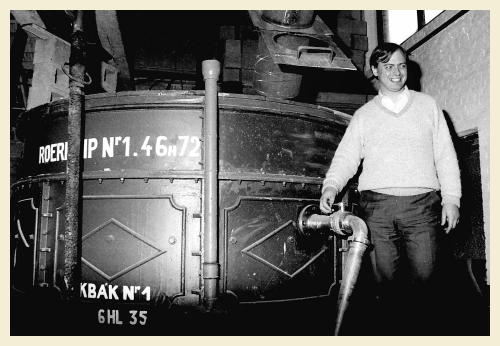
Brouwerij Boon’s story is inseparable from the broader survival of gueuze, and that story starts with Frank Boon, a passionate lambic and gueuze brewer who came up in a time when René De Vits, one of few remaining master geuze blenders, saw little future in the style. Frank became an independent geuze blender in 1975, marking the start of Brouwerij Boon.
Boon began blending in a small cellar in Halle and later moved operations to Hondzocht, part of Lembeek, a location chosen for its perceived etymological relation to lambics. In 1990, Boon’s new brewhouse produced its first brew, described by the brewery as the first new lambic brewhouse built in more than 40 years. From here, Boon became synonymous with the style, even going so far as to give a presentation called “All About Gueuze” to the European Beer Consumers Union in 2025.
Modern Description of Gueuze
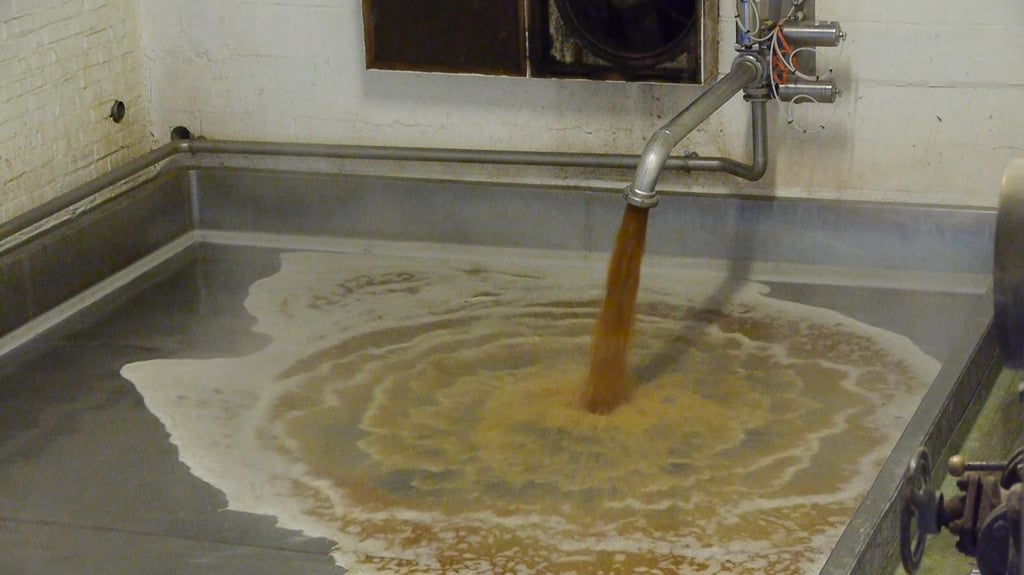
Gueuze is a layered, complex beer style that takes shape over significant time. Its history is similar. To make a gueuze, you need lambic, itself a multi-faceted beer style. Traditional lambics are open fermented, often in a shallow vessel known as a coolship (or koelschip), allowing naturally occurring yeast to mingle with the wort, resulting in a liquid reflection of the landscape. Historically, that landscape was in the Senne Valley and Pajottenland of Belgium.
Over months and years, with informed care, the myriad elements that emerge in the developing beer become a patently unique blend of acidity, barnyard funk, oak, leather, and more. While that may not sound like an ideal combination, the result is profound. And that’s just the start.
The BJCP describes gueuze as traditionally made by blending one-, two- and three-year-old lambic. Young lambic contributes fermentable sugars, and older lambic contributes the wild character associated with local terroir. Blending is every bit as important as brewing, requiring a knowledgeable blender to piece together the character of a gueuze.
About Oude Geuze Boon
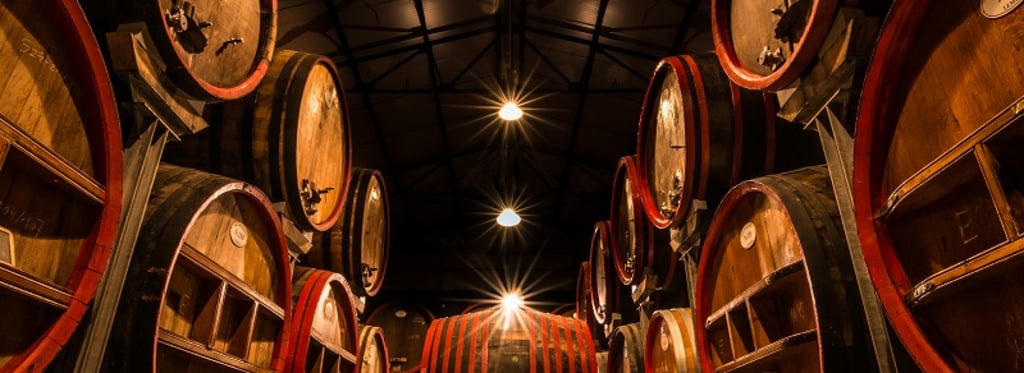
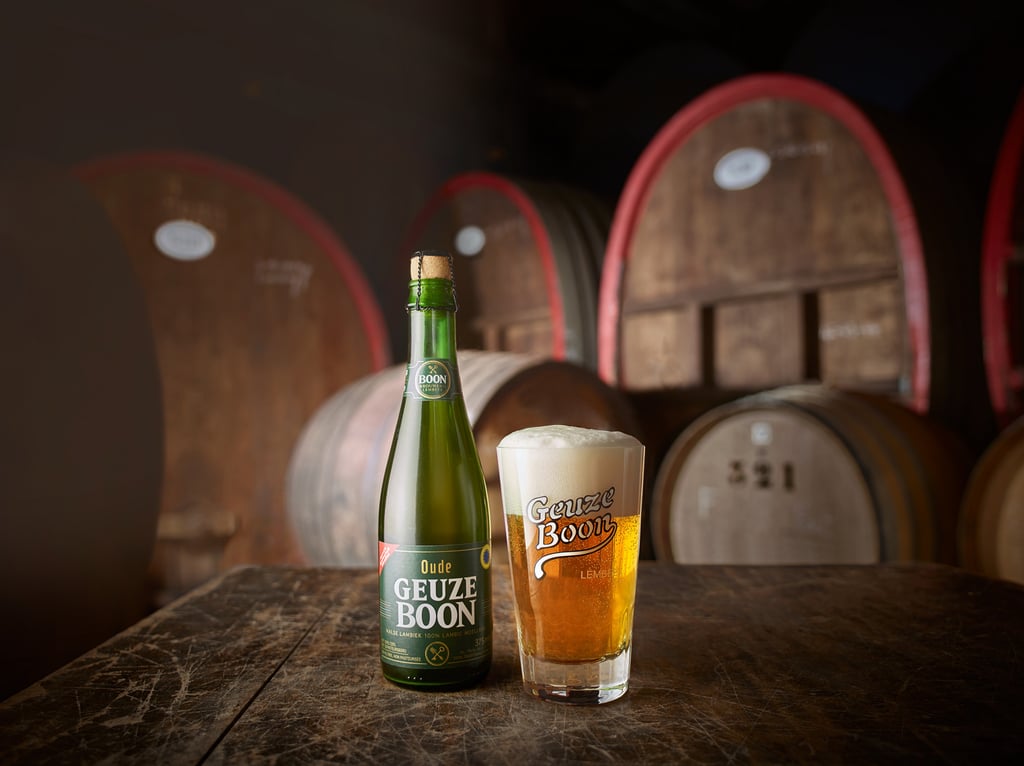
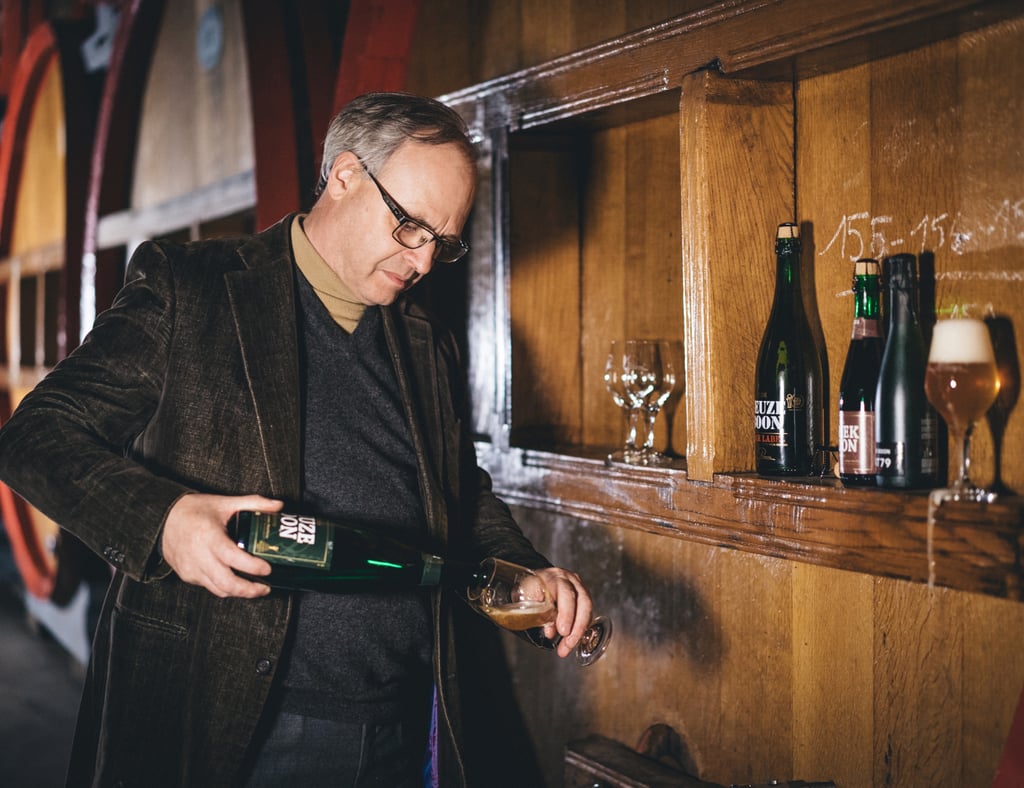
Brouwerij Boon states that Oude Geuze Boon has been made since 1975 and describes it as a traditional, unsweetened, and unfiltered oude geuze. Its lambic is brewed from 60% malt and 40% wheat, matured entirely in oak barrels, blended from lambics aged one, two and three years, then bottle-conditioned for several months to create its sparkle and complexity. It also notes that “Oude Geuze” carries the EU Traditional Specialities Guaranteed designation, indicating a standardized traditional method.
The beer pours a pale amber-gold reminiscent of honey. The carbonation is lively and restless, a fine-beaded insistence that pushes aroma up from the glass. Expect grapefruit, apricot, oak, light nuttiness, mineral brightness and that unmistakable lambic signature that can read as cellar, hayloft, old wood, lemon peel, damp stone or clean horse blanket depending on your personal catalogue of evocative agricultural adjectives.
Brouwerij Boon emphasizes the beer’s mild tartness, rounded texture, citrus, apricot, oak, wood, vanilla and nuts, with a long dry finish. On first pour, it is quite crisp. As it warms, notes of fruit, wood, and soft wheat-malt character emerge one after another.
What The Judges Thought
The Beer Connoisseur judge Jim Koebel found earthy, musty, spicy and peppery aromatics balanced by acidity on the nose. In the glass, he noted an orange-gold hazy pour with an off-white head “crackling as it falls.” The first sip brought sharp acidity, sweet but attenuated malt support, toast, high carbonation and a “tart, feral finish”. Koebel also noted that the beer becomes more floral and lactic as it warms, with grapefruit and honey emerging over time. His final impression was a “wonderful” beer which typified “both art and craft.”
At 7% ABV, Oude Gueuze Boon is flexible, strong enough to stand alone and balanced enough to pair with a variety of dishes including oysters, crab cakes, roast chicken with lemon, or even sushi.
Why Oude Geuze Boon Still Matters
Oude Geuze Boon is a brew for all seasons, and it has never gone out of style. Between its lively carbonation, layered acidity, oak-aged depth and unmistakable lambic character, this is a beer built from patience and preserved through craft. It is pale, Belgian and deeply traditional, but there is nothing slight about it.




Conversations (0)
No comments yet.