





What Hit Frequency Means On A Slot And Why It Matters
 Story by:
Casinos and Gambling Blog
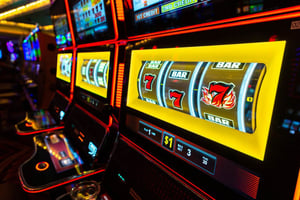
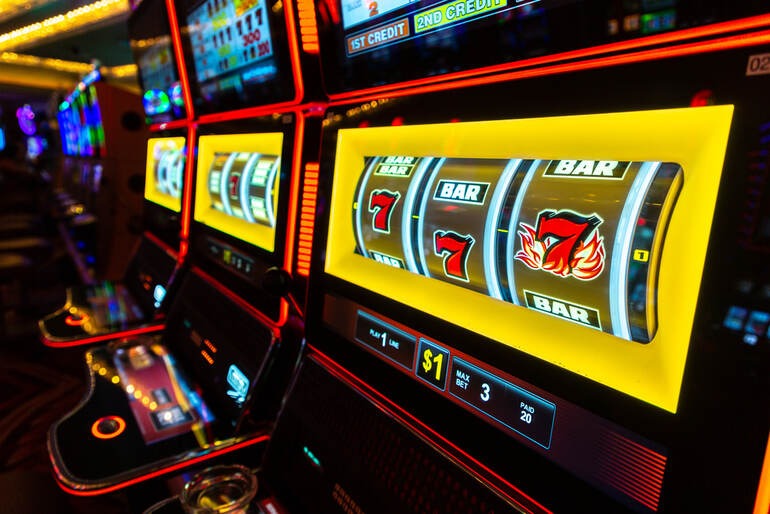
Imagine a slot machine that pays every time you hit it about once every 4 spins. It may appear to be a game where your cash has a fair probability of being likely to last. However, it’s not the same to get regular payouts as to make profits. It is possible to get a series of smaller payouts that are less than the amount you wager and lose money during a session. This is due to the number of hits recorded. It determines the frequency of games that give a payout, in addition to the amount.
While having an understanding of this number can help in making decisions about the game, it does not mean that the game will always pay. To delight in other differences, such as the details presented here, if you know craft beer, that way gives readers more to savour of these differences in the manner of products and the way consumers evaluate them. For both games and brews, it’s possible to gain insights into the “big picture” by dissecting the illusion of a single number. Even if it’s a brew or a game, there’s always value in breaking down the smoke to see the fire.
The Number Behind One Spin In Four
A slot’s hit frequency is the percentage of spins that result in a payout, even if it’s a one-chip or a 50-chip return. Even if the payout is less than the amount wagered, it still counts as a “hit.” For example, a machine with a 25% hit frequency is expected to produce a winning payout roughly one-quarter of the time over the long run. Players who want to understand these mechanics without wagering real money can also explore free-to-play slot options, which offer a way to experience the games for entertainment.
The percentage drops from 10% to approximately one winner for every 10 spins attempted. However, numbers vary from one game to another. According to the Addictions Foundation of Manitoba (AFM), several slots have hit rates as low as 3%. The rate of a video poker game can be in the neighborhood of 45%, but nearly half of the wins are a whiffle-stopping return of the player’s initial wager.
Where Hit Frequency Comes From
Although these reels can be unpredictable and random, they have a mathematical set that determines what combinations can form both payouts and setups. Each combination is expected to have a specific position in that model, and there are only specific combinations that pay. The number of paying combinations is divided by the number of possible combinations to determine the hit frequency. There are 35,640,003 combinations of the pokies at Dolphin Treasure, cited in the research as one of the pokies mentioned, which is mentioned by the Australian Gambling Research Centre. Multiple factors affect the distribution of those results in the game:
- Symbol Weighting: Symbols on virtual reels can be worth more points, which determines their probability of landing together in a paying combination.
- Low-value symbols: Their values of 10, J, Q, K, A can be rewarded with relatively low jackpot rewards in return for occurring on many cards. This gives more winning outcomes with less of an impact on the return.
- Lines and ways: More winning lines and ways mean more chances for the spin to offer a winning combination.
- Wilds and scatters: Wild symbols replace other symbols, and scatters can be responsible for winning without forming a pay line pattern.
- Bonus budget: When you give more of the potential reward to free spins or bonus spins, you’d have less for regular payouts during the main-game of the game.
This is why it’s not always possible to match RTP for the same experiences. One game’s rewards may be smaller and regular, and the other’s rewards may be plentiful but irregular, possibly consisting of a higher proportion of the game’s rewards sent to the player in bonus rounds.
Five Things Hit Frequency Tells You
Hit frequency is much more usable when looked at in conjunction with simple probability and RTP. They can offer people a clearer understanding of how a slot distributes its average payouts to various pay lines. One machine can have lots of payouts for small pay lines; the other can have fewer winning pay lines, but pay out more on average.
Not every developer publishes a hit rate, so finding the figure can require some searching. At an online casino such as staycasino, players can inspect the game’s rules or help menu to check whether the percentage is available for the RTP version being played. It is also sensible to set a loss limit in the account settings before beginning.
- How Long Dry Spells Can Run
A low hit frequency means there are greater possibilities of running three non-paying spins. The chances of an even 25% machine resulting in ten paid spins in a row are about 5.6%. Assuming a hit frequency of 15%, the likelihood that the same sequence is increased to approximately 20%. There is nothing unusual about these runs. They are embedded into the probability setup of the game, especially if payouts are less frequent.
The probability of not winning any spins on one spin does not increase when playing the next spin. A losing streak is greater with longer sessions. With a hit frequency of 25%, there is about a 96% chance of experiencing at least 1 run that lasts 10 or more spins over a total of 200 spins on the game.
- How The Base Game Will Feel
The hit frequency of games tends to provide more of an active base game, as games with more frequent hits offer more of a base-game experience. Combinations involving pays come along a lot, but most of these tend to give out small amounts. The balance of the player can shift and change multiple times over the course of a game, but in small increments.
If you have a lower hit frequency, you get a different pattern. It can have multiple spins that have no payoff, and the payouts are often greater than might be in a more frequent game. Some players are more interested in regular activity and regular payouts; others are more attracted by less frequent payouts. Neither preference affects the value of that game mathematically.
- How Big The Average Hit Is
The paying spin average value can be determined using the RTP and hit frequency. RTP divided by the hit rate yields the average payout for a winning spin, in terms of the wager amount. For example, a slot that pays 40% of its spins and has a 96% Return to Player (RTP) has an average paying spin value of 2.4 times the spin. If you’re willing to put up with the lower hit frequency, you can adjust the RTP up to 96%, and the average goes up to about 6.4 times the stake.
This is because there are fewer paying outcomes that the expected return is ultimately distributed across. Average does not imply that it will be near equal with the majority of payouts. In comparison, there may be a small number of big wins which make up a large percentage of the return, compared with a lot of ordinary paying spins which offer much less.
- How Much Of The Return Sits In Bonuses
Some slot machines rely heavily on bonus rounds to deliver a significant portion of their overall returns. Similarly, when a large share of the payout percentage is allocated to special features, the regular paytable may offer fewer winning combinations. Understanding how bonuses contribute to a game’s payout structure can help players interpret these differences. Let’s take a machine with a return-to-player (RTP) rate of 96%. If bonus features account for 30% of that expected return, the base game would contribute approximately 66 cents for every dollar wagered.
The base game would then be about 67 cents for every dollar that is bet when rounded, or approximately 66 cents per dollar wagered. As a result, a game that is never going to play a bonus game could provide a more disappointing payback than the RTP indicates. That is because the advertised percentage is that of features that may not happen during the specific time of play.
- How Quickly A Budget Moves
The number of times payouts occur will alter the player’s money movement in their session. A game with frequent small wins could break streaks of bad luck so frequently that they go down even more slowly. As a result of having fewer paying combinations in this situation, the payout balance may decrease for extended periods of time only to hit a big payoff now and then. Nevertheless, even if the RTP is the same, and the same number is thrown for both games, the expected payout per spin is the same for the two games. That “expected amount” is not affected by the frequency of the payouts.
It’s just the sequence of scores that’s different. Players with a set amount to bet can be interested in discovering how mobile or fixed paylines may impact their bankroll within a wagering session. With the budget defined, there’s more money available for other forms of entertainment, like a trip to the local brew-pub, sampling hot off the press seasonal beverages, or a pint with friends. To keep focused on the entertainment and not take over the free time, people should be able to make more intentional choices.
Next To RTP And Volatility
Hit frequency is often discussed alongside RTP and volatility, but these figures are not different names for the same thing. Each describes a separate aspect of how a slot operates:
| Measure | What it tells you | What it leaves out | Example |
| Hit frequency | The proportion of spins that return some amount of money | even if the payout is greater than the original stake or how much a particular win pays | A 25% hit frequency means approximately one spin in four produces a payout |
| RTP | The theoretical percentage of total wagers returned across a very large number of spins | How regularly payouts occur or how evenly returns are distributed | At 96% RTP, a game theoretically returns 96 cents for every dollar wagered over the long term |
| Volatility | How widely payout amounts can vary and how unevenly results may be distributed | The exact proportion of paying spins, since volatility is commonly shown as a rating | A high-volatility slot may have long stretches with little or no return, interrupted by occasional large payouts |
Volatility is commonly described as low, medium or high. Hit frequency is usually more precise because it is expressed as a percentage when the developer makes the information available.
Losses Disguised As Wins
Not every hit on a slot machine translates into a profit for the player. Even when the payout is less than the original bet, the reels may still display a winning combination, accompanied by flashing lights and celebratory sounds. This is known as a loss disguised as a win. An expert’s guide to winning can help players better understand these payout patterns and set realistic expectations rather than treating every winning animation as a financial gain. In a 2010 study republished in Addiction, Mike Dixon’s team at the University of Waterloo examined this effect using Lobstermania. The results showed that only 15.6% of spins produced actual monetary wins, while 17.1% returned less than the original stake and 67.3% resulted in ordinary losses.
Of the outcomes whose associated successful feedback was larger than the other, over half of these were a loss. For spins in total, 18.4% was in disguise while 14.2% was actual profit. In addition to skin conductance, a measure of physiological arousal, the researchers explored this measure. When it comes to the perception of a loss, the responses from the participants were about equal to those of a “true” win. The study has been conducted on non-experienced gamblers, though, so the results cannot be considered generalisable to all gamblers.
Similar effects have been found in Australia through research. An Australian Gambling Research Centre study in 2017 showed that, up to 2017, this kind of reinforcement can be seen on multi-line games twice as often as compared to a single-line game. NSW’s GambleAware service has also raised awareness of how machines can reward for negative outcomes, such as financial loss. While some people prefer smaller, more frequent payouts, it is crucial to realize that the gambling machine’s winnings do not equal its presentation. When the balance is down, sounds and animations can help create a rewarding result. It would be more accurate to determine the amount that you make/break on the spin.
Understanding Payouts and Keeping Gambling in Perspective
The hit frequency determines how often a given slot will pay, but it doesn’t indicate if the payout is outside the amount of the bet. Additionally, it does not tell you the worth of a specific winning combination. This can be useful to look at along with RTP to help understand average payoff values, longer voids, and how bonus features contribute to the game’s overall payout. There isn’t any uniformity regarding the number of money winners and the theoretical long-run cost, as a machine that pays money more often could have the same RTP as a machine that doesn’t as frequently.
The main difference is how the payouts are distributed. Hit frequency is therefore more suitable for gauging the nature of a game and setting realistic expectations. A higher frequency does not necessarily mean better financial returns. For instance, a millionaire slot tournament may attract attention with its competitive atmosphere and prize potential, but it’s important to approach such events with entertainment rather than financial gain in mind. Gambling Help Online offers free and confidential counselling and support for people who need help with their gambling. If you love visiting breweries or having a cocktail after work with friends, keeping these social activities separate from gambling can also help maintain a healthy balance. Knowing when something stops being fun is essential to preserving the enjoyment and value of your leisure time.
FAQ
Understanding hit frequency can help you make better sense of a slot’s payout pattern, but what should you actually consider a good hit frequency? Let’s look at what the numbers tell you.
What is a good hit frequency on a slot?
There is no single good figure, since a low hit frequency usually comes with larger wins, though many players prefer games that pay on roughly one spin in four or more for a steadier session.
Is hit frequency the same as RTP?
No. (Hit Frequency) is the percentage of spins that result in a win; RTP is the theoretical percentage of wagered money that will be returned over time. Slots with a relatively low RTP can pay out more often.
Does a high hit frequency mean you win more?
Not necessarily. A higher hit rate means that the odds of winning are higher, whereas there are some small winnings that might come in fewer numbers. Therefore, the player would be able to get regular winnings in spite of the fact that the general total count is lower.
Where can I find a slot’s hit frequency?
Some producers may offer that in a game’s help, rules, or technical document. Others don’t share it. If no percentage is available, RTP and volatility information can give a general overview of the payout habits of the game, but not a direct indication of the hit frequency.


Conversations (0)
No comments yet.