





What Bartenders and Servers Really Need From Taproom Workwear
 Story by:
Beverages Blog
Anyone working a Friday night behind a brewpub bar knows what the position entails; it’s a combination of hospitality, logistics, and endurance sport. The tenth time you pour and the next time you wipe and carry, and yet again the explain part to tell them the difference between a hazy IPA and a West Coast, and finally the swap part when the pale ale comes out, kicking when you didn’t expect it.
All the while, you can be wearing clothes that can be a help or a hindrance in the job. Even if it’s spilled lake water or running around all day, the staff at a busy taproom needs the type of clothes that can withstand the demands of the job. Looking fancy isn’t a criterion for good workwear for a taproom team. It’s about making smart, practical selections that allow for convenient access to tools, comfortable long work shifts, and a stylish appearance at grab-and-go.
Why Workwear Matters Behind a Taproom Bar
Serving beer is a dirty job. Serving beer is dirtier than they think. Foam rolls out over the edge, a tasting flight drips, and trays come back sticky. A server can walk around the room dozens of times per hour, and a bartender walks, bends, and lifts for most of the shift. Slowly, if they get a hold of someone, clothes that function in an office die a death in that office. Light colors show off even the tiniest splashes of stout; thin fabrics stain and wear; tight clothes limit your freedom of movement.
But at the taproom, the face of the brewery is the people involved in the service. As more breweries turn into neighborhood gathering places, the staff behind the bar are responsible for making every patron feel at home. When the people pouring their beer wear work gear that is the same color as the glassware, and the lines are fresh, it signals to customers that the staff is not playing with their beer.
Aprons That Earn Their Place
In the majority of beer bars, the apron bears the heaviest burden of work. One that is good provides protection from any drip while leaving the essentials easily accessible. There’s a need for: an opener for the beer bottle; a pen; a bar towel; possibly a wine key for the buyer of cider. The servers must have an order pad, a card reader, or a telephone, and some straws or coasters. Even if you choose, the style will depend on the job. Servers who move quickly and want to access their pockets quickly will find it useful.
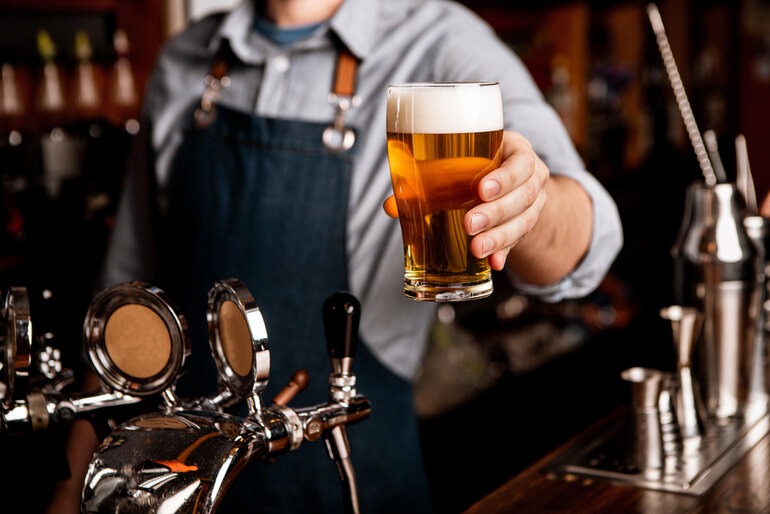
Bib and crossback aprons provide full coverage for bartenders pouring, lining, and cutting wheat beers. When worn for 8 or 10 hours, crossback straps distribute the pressure on the shoulders better rather than on the neck. Material matters too. Both Canvas and denim will remain durable through the day’s abuse and, as they get older, will look great. If you’re looking for a complete team, collections of restaurant uniforms from Chicago-based Stock Mfg. Co. are a useful reference point, since the company lists waist, bib, crossback, denim, canvas and bistro aprons alongside shirts made for hospitality work.
Founded in 2012 as a family business, Stock presently creates custom uniform programmes for restaurants, bars and hotels. If you’re running a comparison, make sure to ask about the placement of the pocket. If the pockets end too deep, you spend a lot of time digging for them, and if the pockets are too low, you lose the pen in the pocket. Some reinforced stitching at the pocket corners is desirable, as is the zone in which an apron most often fails first.
Shirts and Fabrics That Handle a Long Shift
Shirts come next. Taproom shirts should be long-lasting and breathable while also being forgiving of the occasional drop of spittle on your shirt. When considering different outfit options, Chambray and Oxford cloth are popular fabric choices because they look neat and put-together without appearing too formal. They also do a better job of concealing small marks than plain white poplin. It’s a more important feature than some owners realize. A bartender who reaches up for a glass from the top shelf or leans into the cold room needs enough room in the shoulders and back to move comfortably. Fabrics with a little stretch can follow the body’s shape without restricting movement, while quality materials hold their shape through repeated washing. Colour is another key decision. Dark shades like navy, gray, black, and indigo do a better job of hiding beer and food stains.
Short sleeves or lighter weaves are a real added comfort in a warmer room, like a kitchen in a brewpub, or in July on a patio. Fit should be fitting for the entire taproom team. Even if you serve drinks and have a bar by you and are serving fresh pours, or you’re running a busy tasting event, and staff is coming and going, comfortable workwear is your best choice for everyone. Look for a wide fit, depending on male and female cuts, if you are aiming to have a uniform program all your employees can wear with confidence. With the staff trying on materials before ordering, there is no worry of unnecessary cost that is incurred, and everyone feels that they are part of the decision.
Branding a Taproom Team Without Looking Stiff
Personality is a cornerstone of craft beer, and workwear can do the same. Many breweries attach a small logo to aprons, or the color of the apron to the label; some will distinguish different apron styles based on the roles of the people wearing them; and/or provide a cross-footing label. An identifiable uniform surely counts in event photographs, and it pairs nicely with the kind of brewery promotion ideas that bring people in for trivia nights and festivals.
The key is to be relaxed. The chambray shirt and canvas apron with an unobtrusive logo say “we know our beer” without necessarily imposing corporate attire. Branding also plays a role in a brewery’s overall “narrative.” Hands-on craft and local roots are important ways in which independent brewers establish their identity, and the Brewers Association is a good place to read more about how small and independent brewers present themselves and their industry. Staff uniforms are one more place to carry that identity from the label to the bar.
Making Workwear Last
Even the most-needed uniforms require maintenance. Empty washbasins and change shirts after each job; dried beer and food grease are much harder to lift later. Cold water preserves colours, and avoiding the use of fabric softener preserves the structure of canvas and denim fabrics. Good food safety includes clean workwear, and the National Restaurant Association offers ServSafe training that covers personal hygiene for front-of-house and kitchen staff alike. It also enables spares to be kept on site. An unbroken apron that hangs in the office also helps one person’s spill not ruin another person’s day.
Last but not least, involve your staff in deciding what the best workwear is to get. Those who wear aprons and serve craft beer, brew pints, and haul in supplies all day can easily find out where pockets are useful, what fabrics are not comfy, and what aprons don’t stay on. When it comes to providing direction on what to do next for your next order, it’s hands-on mentoring. Having confidence and feeling comfortable in what they wear will help ensure that taproom staff take pride in their appearance and in what they are doing.


Conversations (0)
No comments yet.