





Rauchbier Revival: American Brewers are Taking on a Historic German Style
Smoked, sippable, and steeped in tradition—rauchbier is Germany’s boldest beer export, and it’s gaining serious traction in the U.S. thanks to craft pioneers like Alaskan Brewing and Wolf’s Ridge.
 Story by:
Brett Cortelletti
Story by:
Brett Cortelletti
Rauchbier, or smoked beer, is a historic style of beer that is brewed with malts roasted in a wood-fired kiln. The smoke from the burning wood seeps into the malts, and the beer brewed with it maintains a distinct, smoky aroma and flavor. The style itself is strongly associated with Bamberg, Germany, where rauchbier has been brewed for centuries. Most notably, there is Schlenkerla Rauchbier, the oldest and largest brewery that produces rauchbier. For years, the only way for most Americans to try rauchbier was to track down a bottle exported by Schlenkerla, but as demand for the style grows, more and more brewers in the United States are trying to brew it themselves.
If the combination of beer and smoke sounds strange, don’t knock it till you’ve tried it. A well-made rauchbier can be a surprisingly delicious treat, with malt sweetness balanced out by a deep but smooth smoky finish. The style is the perfect accompaniment for a cool, summer-night bonfire or a crisp autumn day.
Smoking it Stateside
One early pioneer on the American frontier of rauchbier can be found in Alaskan Brewing’s Smoked Porter. First brewed in 1988, this beer uses alderwood-smoked malts to brew a roasty and robust porter with a lingering smoky finish. The beer was an immediate hit, winning the silver medal in the “Porter” category at that year’s Great American Beer Fest (GABF). The beer is still brewed today as a highly anticipated winter seasonal release. While this bold beer established that there is a demand for beers with smoky characteristics in the U.S., it’s still unlike a traditional German-style rauchbier, which generally uses lager as a base style.
A rauchbier can only be as good as the smoked malts that it’s brewed with, which has often left American breweries with limited options. Some breweries, such as Alaskan Brewing, opt to smoke the malts themselves. While this can lead to fantastic results, amateur attempts at this historic malting process can sometimes lead to beers that are aggressively smoky, lacking the delicate balance of a traditional rauchbier, with “ashiness” being a common off-flavor.
The safest bet is to leave it to the professionals and import malts that were smoked by artisans in Germany. However, given the gradual rise in the style’s popularity, some American maltsters have taken the process into their own hands. One notable example can be found in Briess’ Cherry Wood Smoked Malts, which are grown and smoked in the United States. On the experimental front, there is also Sugar Creek Malt Co., which makes small batches of smoked malts using the wood of just about any source imaginable, from peach and plum trees to coffee plants and the staves from bourbon and rum barrels.
While the ingredients to make a good smoked beer are more readily available than ever, the style still remains a rare sight on draft lists, and it’s even less common to be distributed in cans and bottles. Unusual styles like rauchbier are the sort that brewers love to make, but they are also among the toughest to market and sell. As a result, when they are brewed, it is often in the form of small-batch taproom exclusives, rarely getting distribution outside of the brewery.
Wolf’s Ridge Buchenrauch: A Case Study
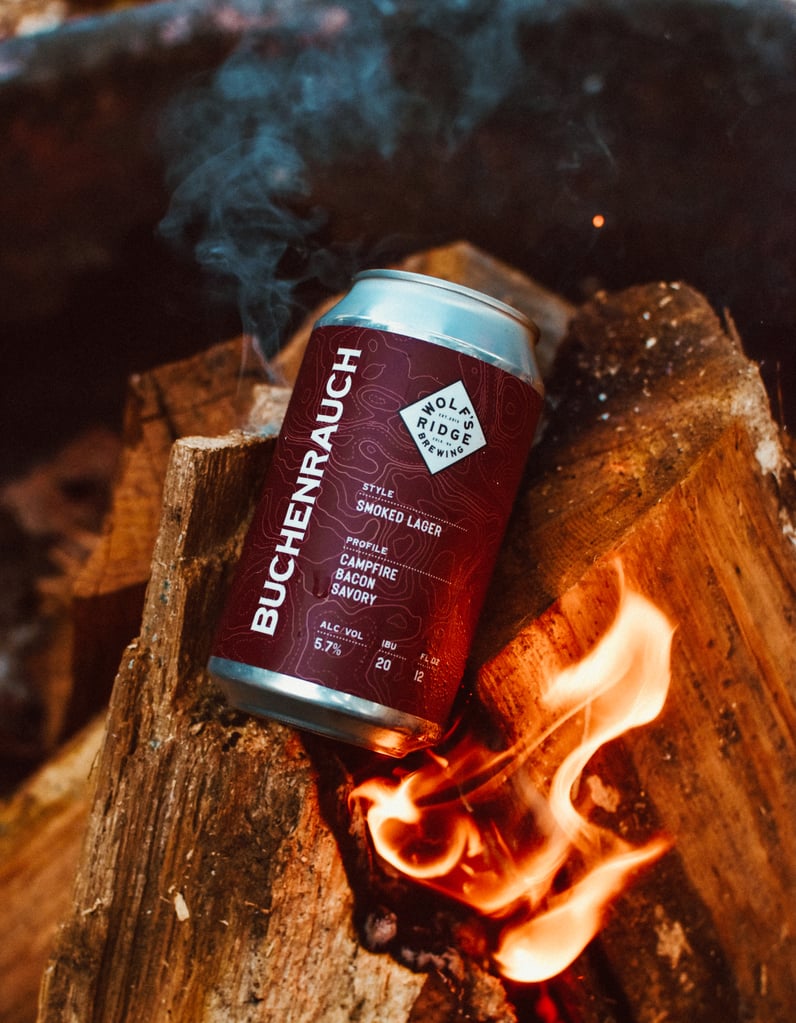
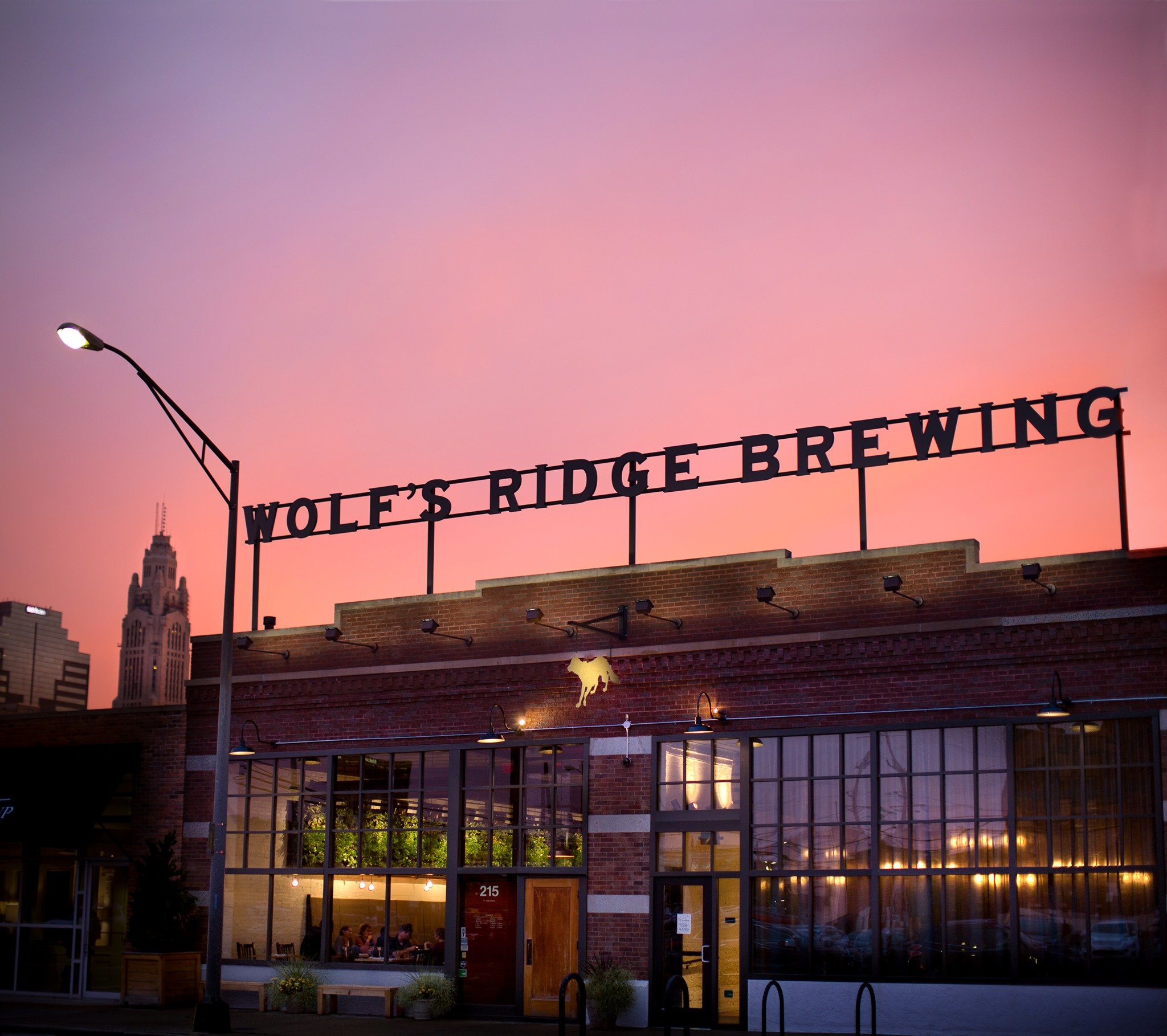
One success story for the style can be found in Wolf’s Ridge Brewing out of Columbus, Ohio. They have been brewing Buchenrauch, a traditional rauchbier, since 2014 as an annual release, and it took home the bronze medal for the Smoked Beer category at the 2020 GABF.
Rauchbier had been on the radar for Francis Kunkler, the master brewer at Wolf’s Ridge, ever since he tried his first one while traveling in Germany: “I immediately fell in love with it. I had never tasted anything that was so complex and so substantial. I’ve always loved smoked meats, but the ability to drink something that tasted like that… it’s like I was meant to drink it. Every time I see one anywhere, I have to order it.” Still, others at the brewery were reluctant to invest time and money into what was, at the time, an incredibly obscure beer style. Leading up to the first batch, “It was an uphill battle trying to convince them [to brew a rauchbier]. I felt like Sisyphus.”
From a quality perspective, the first batch was an instant success. Kunkler, who studied German literature in college, noted that a deep reverence for the German brewing tradition was key to the beer’s success: “Our head brewer at the time was really into German beer and he did a lot of research, reading old German brewing recipes that had been translated into English.” Wolf’s Ridge uses beechwood-smoked malt and just a touch of oak-smoked wheat, but to prevent an overwhelmingly smoky flavor profile, only 40 to 60% of the grains used are smoked.
While the beer was good enough to impress a discerning lover of rauchbier, there was still the matter of marketing and selling an unfamiliar style. The beer was originally released as a taproom exclusive. A select number of beer enthusiasts would order it on sight, excited to see a rauchbier out in the wild. Curiosity was also often a selling point, as some drinkers were eager to try a style that they’d never heard of before. Kunkler recounts that some customers would even smell the smoky aroma emanating from the glasses of other bar patrons, and that’s what would get them to give the style a try. Still, the beer sold slowly on draft, and sometimes the kegs would need to be changed out before all of the beer was finished. While this would be an indication for some breweries to call it quits, Wolf’s Ridge had another idea: packaging it for sale.
Looking back, Kunkler recalls, “we started bottling it for sale and saw a lot more success.” Years later, they switched to cans, which “sold like crazy.” As Kunkler notes, rauchbier is “a very polarizing style for the average drinker.” While some would turn their nose up at a beer that includes the word “bacon” in its tasting notes, other would fall in love at the first sip and order several six-packs to go. Once they began packaging and distributing the beer, it started making its way from the taproom to specialty bottle shops, and even onto the shelves of grocery stores across the state.
Wolf’s Ridge is also known for their culinary approach to beer, incorporating their products into a wide variety of foods that are served in the taproom, from beer cheese to IPA-infused cotton candy. Few styles are as rich for culinary innovation as rauchbier, which is already likened to food by many of those who drink it. Recounting past culinary experiments using Buchenrauch, Kunkler recounts everything from rauchbier-braised pork to “campfire ice cream” which infused the smoky brew with ice cream that was served alongside pilsner-infused marshmallows and graham crackers that were made from the grains that were used to brew the beer, “We utilize it in every possible way that we can.” Unsurprisingly, rauchbier is the head chef’s favorite style of beer.
Unfortunately, Buchenrach did not get released last year, but this year, Wolf’s Ridge’s take on the historic German rauchbier is ready to make its triumphant return. Currently, they are preparing to begin brewing a 30-barrel batch of it (that’s nearly 1,000 gallons). Not only is the beer going to be returning to shelves, but it is also getting renewed interest from the marketing department, as they are the process of redesigning its labels.
As Kunkler sees it, the American beer scene is more prepared for rauchbier than ever. The style already has a “cult following” of beer nerds who will drink it at any chance they get. Alternatively, those who aren’t familiar are getting increasingly curious. On the production end, as ingredient prices continue to rise, more and more brewers are seeking out styles that rely less on obscene amounts of hops and more on “traditional styles.” With rauchbier, no flavor is lost at the expense of adding fewer hops. While some drinkers can’t get behind drinking a campfire in a pint glass, others will gladly finish their pint and order several more rounds for themselves. Simply put, if you brew it, we will come.

“The American beer scene is more prepared for Rauchbier than ever.“
– Francis Kunkler, Master Brewer at Wolf’s Ridge Brewing



Comments 0
No Readers' Pick yet.