




How Breweries Choose Refrigeration for Fresh Craft Beer
Consistent, high-quality refrigeration is the key to preserving the flavor and aroma of delicate craft beer, ensuring a perfect pour every time
 Story by:
Beer Blog
Story by:
Beer Blog
Craft beer cannot sit warm. Since it’s rarely pasteurized and often unfiltered, it degrades rather quickly when the temperature is too high or even sufficiently cold but inconsistent. In short, it’s more fragile than mass-produced beer. Sure, it’s also objectively better (yes, we said objectively), but also undoubtedly more fragile. This is the reason why you should consider the refrigeration that you choose.
And it is the same regardless of the size of your brewery or taproom: proper cooling and storage of your beer influences the shelf life of your beer as well as how it tastes before and after it’s cooled all the way to the customer’s perception.
Why Craft Beer Requires Cold (And Consistent) Storage
Mainstream beers are literally produced with long-lasting shelf lives and fantasy loads, thus it is easier to keep them stable. Fresh craft beers, on the other hand, usually prioritize character over convenience, so they’re trickier to work with. They use the dry-hopping or cold crash processes, which are also great when they want to create intense aromas, yet which make the beer very susceptible to temperature changes. Both oxygen and heat are flavor killers.
Case in point: a study found that flavor-related complaints could be traced to poor storage or handling after packaging. That includes what happens once it leaves your fermenter, but before it hits a customer’s glass.
However, even point momentary exposure to supra-optimal temperatures (60-70 o F) is capable of hastening the deterioration of the taste of IPAs, haze hit styles, and hop-forward beers. That is why it is necessary to maintain beer at the temperatures of 34-38 0 F all the time. We can easily understand that it is easier said than done, but it is not impossible.
What to Think About When Choosing Refrigeration
Once a cool fridge comes into play, the question, regarding craft beers, is not only how cold it should be, but it needs to be how quickly a hot batch of craft beers comes down and how accurately that line will be maintained?
Walk-in coolers are what you require when you require a lot of space to keep kegs, cans, and bottles, as well as a layout that enables you to turn around the stock, and also run deliveries without causing fluctuation in temperature. But any unit will do. You also need to pay attention to the compressor location, insulation type, and door sealing, as these can all affect temperature retention when the cooler’s in use all day long.
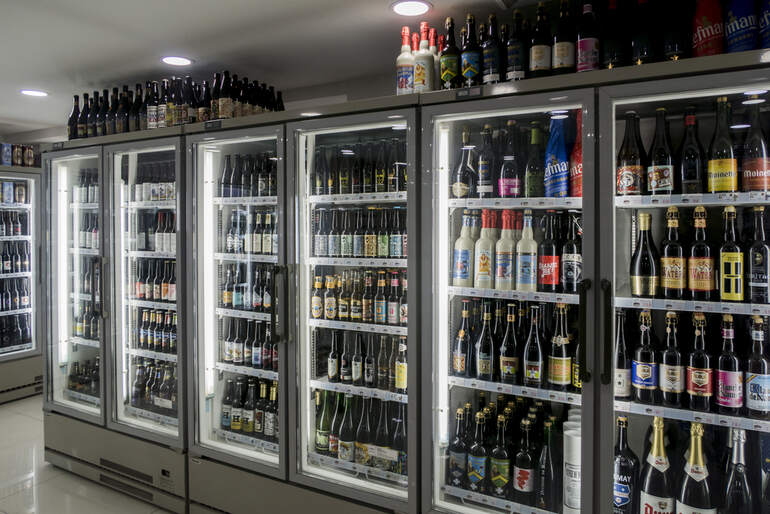
What about smaller setups or taprooms? They can make do with reach-in fridges. They’re best for tighter back-of-house spaces or for areas behind the bar. As a bonus, glass-door merchandisers also double as visual inventory when you want to highlight a few rotating taps. This said, these units still need to hold temperature within 1–2 degrees. You want minimal fluctuation here, especially with hazies or saisons.
Does Your Fridge Actually Change the Taste?
Yes, and not just over weeks. Temperature inconsistency within a single day can lead to changes in perceived bitterness or aroma (not the good kind), especially in unfiltered or hop-laden beers. If you use a walk-in, but the glycol system doesn’t run consistently (or there are hot spots from poor airflow), you can expect some parts of a keg to taste stale before others.
This is why we’re big fans of refrigeration units that integrate smart sensors. They can track air circulation, humidity levels, and compressor cycles, so they give a lot of insight into how stable the internal environment really is.
Commercial Coolers and Equipment Built for the Job
If you’re equipping a new space or retrofitting to scale up, we strongly advise against cutting corners on cooling. Models built specifically for foodservice or brewery-grade environments offer tighter controls, easier maintenance access, and stronger durability under high use.
One well-known option is the RestaurantSupply True fridge lineup, which is designed with commercial brewery and restaurant demands in mind. These fridges are NSF-rated, hold precise temperatures, and have forced-air systems to avoid stratification (which you’ll notice fast with unfiltered beer). They’re also well-supported, so maintenance and parts don’t become an issue when your taproom’s slammed on a Friday.
Also worth noting: modern walk-ins can now be paired with remote monitoring systems. So, for example, in case your power dips at 3 am and as a result the temperature of the beer rises, you’ll know on time, meaning before your product suffers. That’s especially important if you’re brewing high-ABV or specialty releases that can’t be redone on the fly.
What About Cold Chain Logistics?
Now, what if your beer’s leaving the building? In that case, your refrigeration decisions don’t stop at the cooler door. More and more breweries now invest in small refrigerated vans or coordinate cold chain delivery with trusted distributors. Warm truck rides undo everything you controlled in-house, so you want to be really careful here.
That means vetting partners who understand time-temperature sensitivity, especially for hop-forward or wild-fermented styles. It also means tracking temperatures during transit, not just assuming everything arrived cold. A few hours of heat exposure can mute aromas, create off-flavors, or even trigger refermentation in the can.


Conversations (0)
No comments yet.