








Is a Portable Power Station Your Home’s Backup Power Solution?
Ditch the loud, dirty gas generator: Portable power stations are the future of home backup power, offering silent, clean, and reliable energy for any outage.
 Story by:
Technology Blog
Story by:
Technology Blog
It’s a growing phenomenon in an age of more erratic weather, with power outages rising 64 percent in the last decade, according to federal data. For homeowners, these interruptions are more than just inconvenient; they threaten food storage, medical equipment, and work-from-home arrangements. The traditional generator has long been the easy answer, but all too often, it is riddled with drawbacks such as noise, maintenance, heavy fuel consumption, and environmental pollution. That’s where portable power stations come into play: silent, fumeless backup power options that are changing the world of home energy resiliency.
These contemporary dynamos provide instantaneous, clean power without the messy gas storage or the complicated installation. With power blackouts a regular occurrence and increasing frequency and duration, knowing whether a portable power station can safeguard your home has never been more important. Such devices offer reliable backup power when the grid goes offline, allowing homes to stay connected and comfortable. For beer nuts, there’s some practical utility there too, keeping your brews cold, or keeping your kegerator (or home bar lights) running when the power is out.
Understanding Portable Power Stations: Beyond Basic Charging
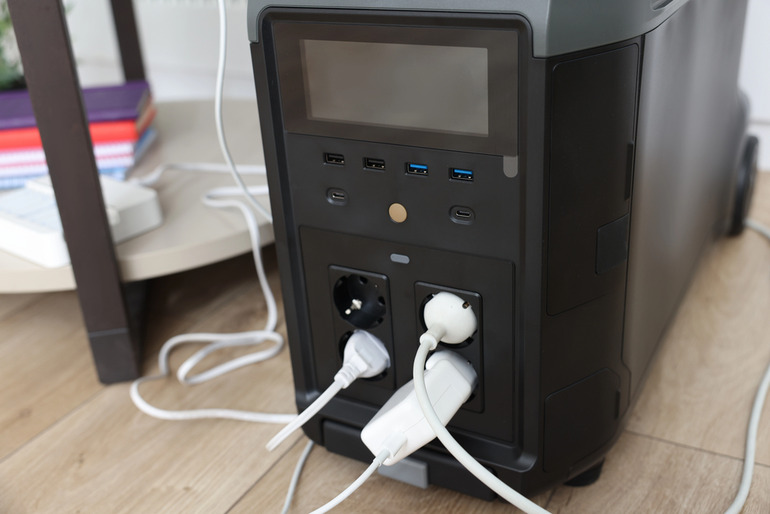
Portable power stations are a massive upgrade in backup power, combining high-capacity lithium batteries, pure sine wave inverters, and multiple outlets in a small, ready-to-go package. And unlike old gas generators you may be used to that need outdoor storage, sparing trips to the gas station, or kept up with noisy and messy mechanical maintenance, these quiet beasts are clean and only need occasional attention. If normal power banks are up to snuff in charging your phone and laptop, these portable power stations carry a whole lot more capacity and output, enough to even power large appliances and power tools.
The technology works with advanced battery management systems that check temperature, prevent overcharging, and maximize power delivery. Contemporary models of these banks have LCD readouts so that one can see not just the available charge capacity, but also the state of charge in and out, and even the current draw, and so these devices are just as user-friendly to the tech-averse as some number of AA cells used to be for boomers. The combination of muscular output and simple usage is why portable power stations are becoming a more common and attractive home backup power source, a middle ground between everyday battery packs and a permanent whole-house system.
Why Homeowners Need Backup Power Solutions
However, recent statistics by the U.S. Department of Energy demonstrate a very disturbing situation; blackouts now require 81 percent more time than they did in 2000, and in some regions they may last over 24 hours. In these disturbances, homeowners are struggling with life-and-death issues rather than just inconvenience. A non-functional fridge can cause hundreds of dollars’ worth of spoiled food in hours, and powerless basement sump pumps during storms can lead to disastrous results, making the features and benefits of reliable backup power more critical than ever.
Outages during winter are especially dangerous as the weather drops and pipes risk being frozen, which can lead to thousands of dollars in repair expenses. Although most house owners start with miniature chargers, they are pitifully insufficient to supply power to necessary home appliances. The naked truth is that with climate change making weather extremes more extreme, and aging power infrastructure flailing to keep up, having a reliable back-up power supply has become not only a luxury, but an inherent part of home preparedness in the 21st century.
Key Features for Home Backup Power Stations
Think of capacity and power output as the heartbeat of any backup station; without them, you won’t know if it can actually keep your home running when it counts.
Capacity and Power Output Essentials
Two key specs define a power station: watt-hours (Wh) for storage capacity and watts (W) for output. For example, 1000Wh can run a 100W device for about 10 hours, though efficiency is usually 85–90%. Motorized devices like fridges need 3–7 times their rated power at startup, so surge capacity matters. For basic home backup, 2000–3000Wh is usually enough, while whole-home use may require 6000Wh or more. Brands like EcoFlow now offer scalable systems, expanding from 3.6kWh up to 25kWh to grow with household needs.
Charging Flexibility and Solar Integration
The power station of today boasts a variety of charging features. Wall charging by AC provides power that is not subject to weather conditions, so it can be used immediately, whilst also being compatible with solar for infinite off-grid power, a development that mirrors wider innovations in the power industry. These stations can charge mobile phones and vehicles through 12V ports as backup during emergencies, though solar requires voltage and current-matched panels to the station’s input limits.
A solar array that will produce 50-100% of the station’s rated output power daily, so it can operate in extended outages. That steady stream of power feels more like a morale boost: It’s not just keeping things running that matters; it’s that the beer fridge, or in some cases, the home bar, is cold and the contents ready to drink in the event of a blackout, which is now a manageable pause in the routine, not a stressful disruption.
Portability and Safety Considerations
The higher the capacity, the heavier the weight, as most home-friendly units are from 30-70 pounds. Built-in handles and wheels become a necessity once you hit 40 pounds. For safe operation, you must have good ventilation 6-12″ above the canopy. anticipate UL 2743 certification and enhanced Battery Management Systems (BMS). It is rated for indoor use; however, it can also be used outdoors as long as it is in a dry, covered location, away from a water source.
Practical Applications for Homeowners
In short-term scenarios (4-12 hours), you will be able to keep your appliances: fridge (150W), lighting (20W per room-LED), internet (30W), and occasional use of the microwave (1000W) in operation with an average portable power station. Over time, using your power station with solar panels creates a sustainable power station cycle, morning charging from the sun powers evening use, avoiding partial charging during the day and draining during the night.
Individuals who rely on medical equipment, in particular, benefit from these systems, as modern power stations can power CPAP machines (30–60W) for several nights to oxygen concentrators (400W) for many hours. These real-world uses highlight the positive side of the impacts of electric power sector innovations reaching households. Other homeowners boost their setup by linking power stations with critical circuits through transfer switches, to power hardwired sump or well pumps in the event of storms.
Choosing Your Ideal Power Station: Step-by-Step Guide
A diagnostic audit of your appliances is the place to start when choosing the right power station. Determine how much power you will need by adding up the devices you intend to power and the power requirements in terms of watts of each device, and then multiplying the total power requirements by the hours you plan to run them. Don’t forget your surge requirements, particularly air conditioners, refrigerators, and the like, which draw (3 – 7) times their rated watts at start-up.
Battery chemistry is a major determinant of longevity. LiFePO4 batteries last for 3500+ charge cycles and are more robust (in terms of safety) than NMC, which only gets 800 cycles, but are also more expensive to buy initially. For brands, look for ones that are covered by extended warranties that should be at least five years and offer local service networks. Pair your budget with capacity requirements by starting with only critical loads powered, but with the option to add more later.
Securing Your Home’s Energy Future
As power cuts rise, portable power stations have become an attractive option to common generators for home emergency power backup. They offer a unique combination of quiet running, emissions-free operation, and low-maintenance service for common annoyances found in gasoline options. When you shop for a system, you want to try and match your power station capacity with your essential loads, with some room to expand for the future.
With the technology’s swift maturation (in the form of fast-charging and solar integration), they’ve now become more powerful and more equipped to support whole-home backup power. With extreme weather and grid instability ahead, portable power stations act like a personal electric power plant, giving homeowners flexible, sustainable energy. Assess both immediate and long-term needs to choose a system that keeps everything running.


Conversations (0)
No comments yet.