


Pair the Beer to the Pace, Not the Table
 Story by:
Beer Blog
Story by:
Beer Blog
The usual version of this question is about flavour. Something dark and rich for the poker table, something crisp for a night out, and so on. That is the wrong axis. The variable that actually decides whether a beer works alongside a game is pace: how often you have to make a decision, how much of your attention the game takes, and whether anything in the structure gives you a natural moment to put the glass down. Sort games that way and the pairings fall out almost automatically, and the answers are not the ones you would guess from style alone.
Four Kinds of Game, Only One of Which Is About Flavour
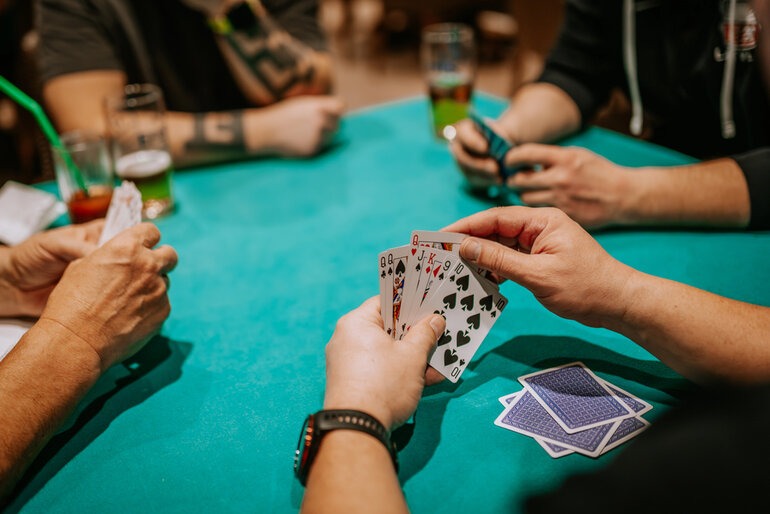
Casino games sort into four groups once you stop thinking about them by table shape and start thinking about them by tempo. Blackjack and video poker demand a decision on every hand, and both reward correct play heavily enough that inattention is genuinely expensive: basic strategy on a favourable blackjack table keeps the house edge near half a percent, and drifting away from it is the quickest way to hand that back. Poker is longer and different again, because you are playing the other players rather than the house, and the edge you are protecting is your own read on a table that keeps shifting over several hours.
Roulette and baccarat sit at the far end of the same scale, with one decision per round and no strategy to forget, which is why a European single-zero wheel at 2.7% plays identically whether you are concentrating or not. Craps and live dealer tables belong in a third group because they are paced by somebody else entirely and run on the dealer’s rhythm rather than yours. Then there is the fourth category, with no imposed pace at all. Crash gambling is the purest example of it: a multiplier climbs from 1.00x; you take the number on screen, or you do not, and the next round begins the moment you decide it should.
Rounds resolve in seconds. The format and its variants are covered by iogames. Space, and what makes crash games worth singling out here is that nothing in the structure creates a pause. That single fact matters more for what belongs in your glass than any question about which game you actually enjoy, because every other format on the floor hands you natural breaks, and this one hands you none.
Sustained-Decision Games: Low, Clean, Repeatable
For anything demanding a decision every thirty seconds across hours, you want a beer engineered for volume rather than contemplation. Czech pale lager is close to the ideal answer. Four or five percent, properly bitter but scrubbed clean by the finish, and built by a brewing culture that expected people to drink several over an evening. A Munich helles does the same job from the malt side, and an English mild at 3.5% does it while barely registering.
The style to avoid is the one most people reach for: a high-IBU West Coast IPA. Not because it is bad, but because hop bitterness accumulates on the palate, and by the third glass you are tasting less and concentrating worse. The style guidelines are useful here for the bitterness ranges alone, since they let you pick something in the 20 to 30 IBU band deliberately rather than by accident. Poker deserves one extra note. It is the longest format on the floor, and the most socially demanding, and the players who last are the ones treating the beer as pacing rather than as the point.
Passive Games: This Is Where the Good Bottle Goes
Roulette, baccarat, and slots ask almost nothing of you cognitively. One bet, one resolution, repeat. Which means your attention is available, and this is the only context on the list where a genuinely complex beer makes sense. A barrel-aged imperial stout you want to spend forty minutes with, a gueuze whose acidity keeps changing as it warms, a well-aged barleywine.
These are beers that reward the kind of attention a passive game leaves spare. The pairing logic is inverted from what people assume. The big contemplative bottle does not belong at the poker table where you are working. It belongs where the game is doing the entertaining, and the beer can be the thing you are actually thinking about.
Dealer-Paced Games: Something You Can Put Down
Craps and live dealer tables run on a rhythm you do not control, and craps in particular involves standing, moving, and reaching across a table. That argues for two things. A beer you can abandon for three minutes without it going flat or warm, which points toward higher carbonation and lower serving temperature. And a glass you can set down safely, which is a real consideration and the reason a can or a sturdy shaker beats a delicate stemmed glass in a crowded space. A crisp Kölsch, a gose, a pilsner. Anything that tolerates interruption. This is not the moment for a snifter of something at 13%.
Unpaced Formats: The Beer Has to Supply the Structure
Crash games and the other fast round-based formats are interesting cases because nothing external creates a break. At a table, the shuffle is a pause. In a tournament, the blind level is a pause. A deal-changingis a pause. Rounds that resolve in seconds and restart on your input remove all of them, which means whatever rhythm exists has to come from somewhere else.
A beer can genuinely do that job, and low ABV is the point rather than a compromise. Something at 3 or 4% that you finish and then deliberately go and replace creates a break in a format that has none. A 12% barrel-aged stout does the opposite: it sits there for an hour while nothing else marks time either.
Palate Fatigue Is the Real Constraint
One piece of underlying science that explains most of the above. Bitterness compounds accumulate. Hop resins coat the palate and are not cleared by the next mouthful of the same beer, which is why sensory panels work with water and plain crackers and why they taste in a deliberate order. After roughly ninety minutes of high-bitterness beer, most people’s ability to discriminate has dropped sharply, whatever they think.
The practical rules are simple and hold anywhere. Go light to dark, low alcohol to high, low bitterness to high, and never back the other way. Drink water between, not instead. If you are running a long session, put the interesting beer early while your palate still works, or save it for after and give it your full attention. The Brewers Association publishes sensory guidance built for professional panels, and almost all of it downgrades cleanly to a kitchen table or a card room.
Match the Pace, Then Pour
Long, decision-heavy game: low ABV, clean, repeatable. Passive game: bring the bottle you actually want to think about. Dealer-paced and busy: something that tolerates being put down. No imposed pace at all: let the beer create one. And the pairing instinct most people start with, matching richness to occasion, is the least useful signal available. Match the tempo instead.


Comments 0
No Readers' Pick yet.