




When Beer Meets Biotech: Exploring Fermentation-Driven Functional Brews
Biotech is brewing a renaissance as functional beers packed with probiotics and adaptogens redefine wellness in a pint glass.
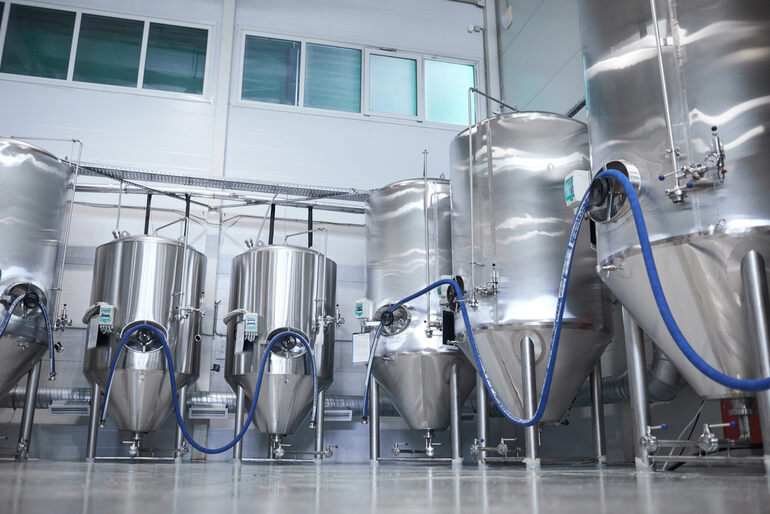
 Story by:
Beer Blog
Story by:
Beer Blog
In recent years, functional beers have gone from a niche interest found in fancy health food shops to an item available to the general public. Beers aren’t always associated with the wellness market, but many manufacturers are also exploring this angle.
In this article, we’ll cover what functional brews are and the increasingly complex technology involved in producing them. The rise of biotech has opened up new possibilities for the industry and for consumers. We’ll also try to predict what the future may hold for the intersection of science and beer production.
The Evolution of Brewing: From Ancient Fermentation to Modern Biotech
The process of fermentation dates back thousands of years. Archeological evidence also supports the use of grains, fruits, or other vegetable materials to make alcoholic beverages in ancient Egypt. Wild yeasts or known strains were used in traditional beer brewing, and there was virtually no scientific manipulation over the final product.
With industrialization came standardized practices and mass production. The use of modern technology introduced a new trend, meaning precision production. This allowed manufacturers to select yeast and bacteria with the desired traits and introduce enzymes that shape the flavor.
What Are Functional Brews?
“Functional brews” are beers (or beer-like beverages) that offer health benefits, primarily in terms of gut health, mental clarity, nutrient supplementation, recovery, and stress reduction. These beers also pack all of the complexity of flavor that is expected from artisan beers. Functional features include:
- Probiotics: Beneficial bacteria or yeasts for gut health. These beers can also be stored for a much longer time without compromising on the flavor and quality. Saccharomyces boulardii is the bacterium with the best results in this regard.
- Adaptogens, nootropics, or botanicals: For cognitive or stress-related benefits. These effects are accomplished by adding ingredients such as Lion’s Mane mushrooms, ashwagandha, and L-theanine.
- Vitamins, minerals, and antioxidants: Are ingredients of hops and beers, and can have an overall positive health impact if the beers are consumed in moderation. The effects are similar to those when these ingredients are obtained from fruits or vegetables.
- Low or non-alcoholic: Versions, which have much fewer calories and don’t have the effects of drinking alcohol, which are associated with traditional beer. These effects are achieved without compromising the taste.
How Biotech is used to Create Functional Brews
Biotech has several roles in making functional brews. These include:
Precision Fermentation
Biotech labs are selecting or engineering yeast or non-Saccharomyces yeast strains that can withstand hops, tolerate alcohol (in low-alcohol beers), and produce beneficial metabolites. Breweries are collaborating with universities and, therefore, creating non-conventional yeast that produces non-alcoholic and probiotic beers.
Nutrient Fortification without Sacrificing Flavor
It’s easy enough to add minerals and other nutrients to beers, but doing so usually compromises flavor. Biotech is used to achieve these without having the trade-offs with flavor. This is done by stabilizing active compounds or encapsulating them. Further research is being conducted on how polyphenols, melatonin, and bitter acids behave when mixed with beers.
Innovation in No-Alcohol Brews
There are two ways to produce such beers: by using strains that don’t produce alcohol at all or by removing the alcohol once the beers are produced. Both methods are being refined and improved in biotech labs.
Sustainability & Waste Reduction
Reducing the carbon footprint created during beer production has become increasingly important to a large portion of customers. This is done by introducing engineered microbes to the process. When these are used, less energy is required to produce the beer, since the manufacturing requires less grain.
Consumer Demand & Market Trends
There’s a growing trend among young customers for healthier beers. Every research out there shows that Gen Z drinks much less alcohol than any previous generation and that they are living healthier lifestyles. However, the brewing industry still wants to offer something to this demographic.
Increasingly enough, younger generations of consumers find their thrill seeking elsewhere. For instance, gambling is much more prominent among this generation, and according to experts from Webopedia, some of the best crash gambling sites are visited mostly by younger players. These sites allow players to make a wager using crypto and without providing personal data. Crash games are fast, thrilling, and based on luck alone.
Younger beer drinkers are also very much open to the idea of using scientific discoveries to improve the product and add new features and qualities to it. This is especially true when it comes to non-alcoholic beverages.
Challenges and Controversies
There are still challenges and controversies related to the role biotech plays in innovating beer production, mostly because the technology is new and the public and regulatory agencies are not yet ready for it.
It’s challenging to officially claim that beers made with biotechnology will have health benefits, as regulatory agencies require such claims to be substantiated, and rules on probiotics vary from one jurisdiction to another. Still, discussions around innovation often tie back to the economic impact of beer production, since consumer demand and industry growth are closely linked to how new products are regulated.
It’s not clear how scalable the products are. The cost of research and development for such beers is much higher than for ordinary ones, and it’s not always economically feasible to turn a product made in a research lab into a commercial one.
There’s also some skepticism in the general public towards biotech-driven products. It’s less prominent among younger customers, but they are just a part of a larger beer-drinking demographic.
Beyond the Brewery
Biotech is used to change and improve beer production using the latest technology. That way, beers are sold as lifestyle products and even as a health product. This is a venture into a new market for beer manufacturing, which focuses on the youngest demographic of consumers. They are tech-savvy, open to innovation, drink less alcohol, and care about their health.
This approach to beer production isn’t without its obstacles. The users aren’t accustomed to the new beer production methods, and the regulations aren’t prepared for the latest biotech innovations. There’s also an issue of scaling and selling the new product, but there’s a lot of interest and room for it in the market.


Comments 0
No Readers' Pick yet.