



Exploring the Top Hard Beverage Trends of 2023
Kombucha, Tequila and Cocktails Lead the Way
 Story by:
Jim Dykstra
Story by:
Jim Dykstra
Welcome to 2023. The future is here, promising greater variety and customization than ever before. Forgetting beer, what other buzzworthy trends are shaping the consumable landscape? Read on to discover what caught the attention of the public in 2022, and where we are heading.
Health-Conscious Options
We are seeing a unilateral shift towards greater health consciousness in the U.S. Reasons are manifold and more than can be adequately addressed here but suffice it to say that if a product can be marketed as “good for you” or even just “better for you,” its chance of success is increased.
Kombucha is a perfect example, expected to expand at a compounded growth rate of 15.6 percent from now until 2030, tripling its market size and bringing it to nearly $10 billion in sales. Its main draw, of course, is the healthy gut bacteria contained within. In the kombucha category, cans are on the rise (better for the environment), as is zero-sugar (better for you).
Hard kombucha accounts for less than 2 percent of market share but is expected to grow at a higher compound rate of 23.5 percent in the same period. Hard kombucha benefits from appealing to alcohol and kombucha drinkers alike, offering a healthier alternative to booze and a buzzier option for the ‘booch-obsessed.
Adjuncts are easily infused, allowing for a broad range of creativity, including anything from mint, blueberry, elderflower, coffee, rosewater and hops. Such a wide flavor range makes it a great option for cocktails as well.
Booze Radley
Tequila is having a moment in the sun, and it’s nothing to mock. In 2021, over 60 percent of worldwide tequila sales were in the U.S., and tequilas saw more growth than any other segment behind RTD cocktails. Geography is a big factor, thanks to the United States’ proximity to Mexico. Lest anyone forget, Hispanics accounted for 19 percent of total U.S. population in 2020 and are the country’s fastest growing demographic group. Further, over 60 percent of the 62.1 million U.S. Hispanics indicated that they were either born in Mexico or can trace their ancestry back to our neighbor country. California recently joined New Mexico as the two states with a majority Hispanic population, and almost every state is seeing an increase in its Hispanic demographic. It should be no surprise that we see an increase in tequila preferences, especially since it’s much easier to import across the border than overseas.
Where interest waxes, premiumization follows. There seems to be an infinite ceiling for tequila quality, and it’s easy to understand the progression from blanco, reposado and añejo. Once the consumer is hooked, brands can offer “trade ups” in quality. The popularity of margaritas helps drive interest as well, as do celebrity brands, from early adopters like Sammy Hagar’s Cabo Wabo to more recent additions from trusted American authorities The Rock and Kendall Jenner, the market is expanding at a rate in tune with their respective biceps and backsides.
Tequila’s dominance has also helped popularize agave-adjacent drinks like mezcal, raicilla and agave nectar for mixing. As interest in the style grows, expect greater breadth and depth of variety from all things agave.
Hot Cocktails
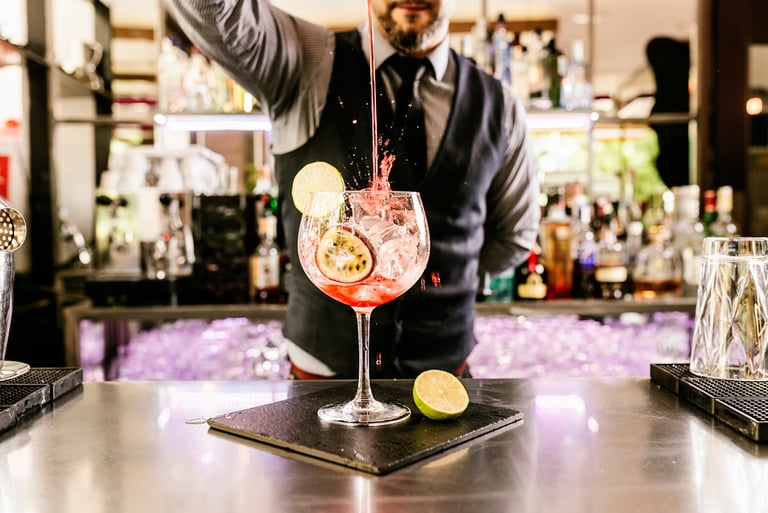
Cocktails were on fire in 2022, and not just ones of the Molotov variety. Despite rising prices, which have been steadily ascending towards the $20 mark, demand is strong. Martinis have emerged as an antidote to pricier, more elaborate concoctions, though they’re not immune to excess, as the rise in popularity of espresso martinis has shown. Since standard martinis require just a few ingredients, they stand out as a moderately more affordable option while avoiding the raised eyebrows that come with ordering an “Aunt Roberta”, considered to be the strongest cocktail in the world. For those interested, an Aunt Roberta consists of 100 percent alcohol, combining gin, vodka, absinthe, brandy and blackberry liqueur. Shaken, not stirred.
Overnight Viral Trends
If we’ve learned anything in the past couple years, it’s to not underestimate virality. “TikToktails” are helping to drive Gen Z toward aesthetically pleasing concoctions they’ve seen online. With more than 3.5 billion downloads worldwide, the reach of this platform can’t be understated.
BuzzBallz have rocketed in popularity thanks to TikTok, among other top trends like candy cocktails, cotton candy cocktails, mimosas and rainbow cocktails (layered drinks.) Note the visual theme.
Though many TikTok users are underage, the short, sequential format is ready-made for #ginfluencers to indoctrinate the populace. The recent debut of the Netflix show “Drink Masters” isn’t hurting either. Speaking of ready-made, how about Ready-To-Drink Cocktails (RTD)?
RTD Cocktails
We love our convenience in America, so it was just a matter of time before cocktails would find their way into a prepackaged form. The road was easy, having already been paved by hard seltzer and canned wines. Total volume sales of spirits-based RTD cocktails have increased 226 percent from 2016 to 2021, making it the “it-girl” of the beverage world.
COVID helped popularize RTDs as well, with lockdowns forcing consumers to learn to be their own bartender, or bring them home in a pre-packaged form, which also promised “low touch.”
This brings forth what may be the most forward-looking trend in this review – automated drink makers. Yes, we’re talking about robot bartenders.
Robot on the Rocks
Labor is undergoing a profound shift, and automation is poised to take over far more responsibility than we might realize. Consider the Coca-Cola Freestyle, first introduced in 2009, and now pouring more than 14 million drinks around the world. Is there any reason to suspect that this can’t be imitated in the cocktail space? Cecilia doesn’t think so.
Who’s Cecilia, you ask? She’s the world’s first interactive robot bartender, introduced in 2022 and capable of mixing drinks, recommending them and even telling jokes. Cecilia is essentially a cocktail version of the Freestyle combined with AI voice recognition technology and a digital avatar. You can walk up, order a drink verbally or by touchscreen, and “she” will tell you if she’s missing an ingredient, suggest alternatives or actually do her job and deliver the drink through a slot. It’s early days, but she’s capable of 120 drinks an hour when working properly, which significantly outstrips the 60-90 range a professional human bartender can crank out in the same amount of time. And she doesn’t scowl!
Cecilia isn’t alone. News headlines from 2022 also invite us to Meet BRILLO, an endearing moniker short for “Bartending Robot for Interactive Long-Lasting Operations.” BRILLO actually has arms attached to a bow-tied torso, and a lifeless face rivaling any real bartender worth their salted rim. The goal is to train BRILLO to study your face and speech patterns to determine what sort of interaction you’d like to have, and to remember your drink preferences. After all, rapport is the key to return customers.
While it’s early days for robot bartenders, that doesn’t mean you shouldn’t expect to see them soon. Development on Cecilia and BRILLO began just a few years ago, and AI is prone to exponential leaps forward. Bringing them to market is less a matter of “if” but rather when this technology can be refined and packaged at an attractive price point.
Visuals and Aesthetics
Readers may notice an emphasis on visual presentation in drinks, and though subtle, this trend is fundamental and powerful. Often, how something is presented trumps its substance.
Of course, this applies to packaging. Consider the prominence of “unboxing,” which raises the opening of a container to an act of ritual, witnessed communally.
We’ve already mentioned BuzzBallz. The name highlights the product’s two greatest attributes. Expect a desire for interesting shapes, tactile elements and more engaging, interactive packaging to increase along with compact, shelf-stackable units.
As TikTok trends have shown, bright colors and “spectacle” cocktails are gaining popularity. Think flaming or smoking drinks, colored salts, shaped ice… Drinkers crave an experience, and occasionally, flashy status symbols that draw attention to themselves.
Low- to No-ABV Cocktails
If the rise of non-alcoholic beers is any indication, we can expect cocktails to follow suit. A quick online search can bring you zero-proof bourbons, gins and more, along with Best-Of lists of the summer’s hottest sub-10 percent cocktails, which often utilize liqueurs and aperitifs in place of traditional bases.
Reasons why are pretty straightforward – increased health consciousness, having the path blazed by NA beers, desire for greater customization and a tipping point of acceptance for teetotalers. Alcohol alternatives like cannabis, CBD and Delta-8 are also a smoking gun.
CannaBliss
Ubiquitous, is cannabis. Roll down your windows on the interstate or walk around an apartment complex and take a whiff. Legalization has grown to 21 states, Guam, the Northern Mariana Islands and D.C. Another 10 states and the U.S. Virgin Islands have decriminalized its use.
Emerging products are hard to keep up with. On top of CBD and Delta-8, we now have cannabinoids such as CBG, THC-A, THCV, and Delta-10. The DEA quietly confirmed in early 2022 that cannabis seeds fall under the legal definition of hemp and can be sold openly without criminal liability.
Online sales and delivery of cannabis products are increasingly viable, as is personal growing thanks to power-saving LEDs. Beverages, tinctures and edibles of all kinds are available, which isn’t exactly news. Cannabis- or CBD-infused spirits, seltzers, at-home mocktail kits and cooking ingredients are commonplace. The global cannabis beverage market is expected to reach $2 billion by 2026, and those numbers have caught the attention of Molson Coors. The conglomerate’s cannabis-infused Truss Beverage Co. line revealed 15 new cannabis drinks in Summer 2022.
Perhaps what’s more noteworthy is the general shift in public tolerance for all things weed, and consequently, its visibility. 2022 saw a rise in cannabis-related advertising, and on the flip side, “Don’t Drive High” billboards are now as common as texting and drinking public service announcements. Note that the billboards aren’t saying “Don’t Be High” because that battle has already been lost. Policing proactively edible, drinkable and vape-able weed is nearly impossible and increasingly unlikely.
Final Thoughts
So where does all this leave us? Variety and creativity continue unabated. Convenience in packaging and delivery are increasingly common. Health consciousness grows as we home in on ingredient source and quality, and as fitness trackers shudder and chime when we don’t reach our prescribed 5,000 steps a day. We like shiny, smoky drinks and engaging packages.
Shifts in demographics, both age- and ethnicity-related, are impacting consumer choices, as evidenced by TikTok ‘n tequila. Weed is everywhere. And robots will soon take over. The future is bright, at least in the polished, metallic sense. Here’s hoping we embrace the good change, without forgetting that all the flashing lights and celebrity-endorsed products are ultimately not what’s important. Drinking, smoking, and all the life in between, is about connection. That means being together, looking each other in the eyes, and listening to what someone else has to say. Now pass the joint, Cecilia.

Comments 0
No Readers' Pick yet.