






Chinese Americana: Historical Sandwiches and Beer Pairings
 Story by:
James Tai
Story by:
James Tai
The level of culinary enthusiasm and creativity in the food world over the past quarter century has brought some iconic offerings into the mainstream. Items such as kalbi tacos in Los Angeles and the Cronut in New York City were born from their creators, Roy Choi and Dominique Ansel, respectively, bringing their personal food traditions to bear on local mainstays. The results were exciting Korean/Mexican and French/American interpretations that might not have seemed like the likeliest of collaborators.
It is a far different approach from the one taken by immigrant diasporas in earlier generations, when many communities were made to feel unfamiliar in almost every capacity, including what they ate. There was pressure on certain ethnic communities to have their restaurants provide more culturally accessible dishes that made sense to the American palate at the time.
This included Chinese restaurants, which not only modified regional Chinese staples for a more “Western-friendly” palate at affordable prices, but also changed their serving methods to appeal to local diners. One strategy was to convert certain dishes into sandwich form, an idea that took hold in different parts of the country.
Truly Chinese American in creation and hyper-regional in nature, these esoteric bits of Americana are slowly being lost, with only a handful of establishments still serving this piece of edible history today. Here are three examples that survive.
St. Paul Sandwich
St. Louis, Missouri
The origins of the St. Paul Sandwich are widely attributed to Steven Yuen, who owned Park Chop Suey in St. Louis during the post-World War II era. Confusingly named after his hometown before relocating to St. Louis, the St. Paul Sandwich consists of an Egg Foo Young-style base with fried beaten egg, bean sprouts, diced onion and a protein of choice. The St. Paul also comes with familiar American toppings such as lettuce, tomato, dill pickle discs and a slathering of mayo atop either two slices of white bread or a hamburger bun.
The sandwich itself is reminiscent of a combination of familiar dining experiences. Part school lunch sandwich packed by Mom, part Denver omelet and part Chinese takeout, it’s a straightforward choice that is really built around the protein, which stands as the most prominent flavor aspect of the meal. Char Siu, or Chinese Five Spice Roast Pork, is a popular choice here.
Pair It With: Harvey’s Sussex Best Bitter
The bready, biscuity malt elements in Harvey’s Best Bitter pick up and extend the attributes of the white bread, giving it a more assertive expression to better balance out the Egg Foo Young-based patty. The sweetness of the Char Siu binds with low-level caramel flavors in the beer, while its gentle carbonation allows the textural contrast of the crunchy bean sprouts and onion to lead rather than become overwhelmed by a fizzier alternative.
Chow Mein Sandwich
Fall River, Massachusetts
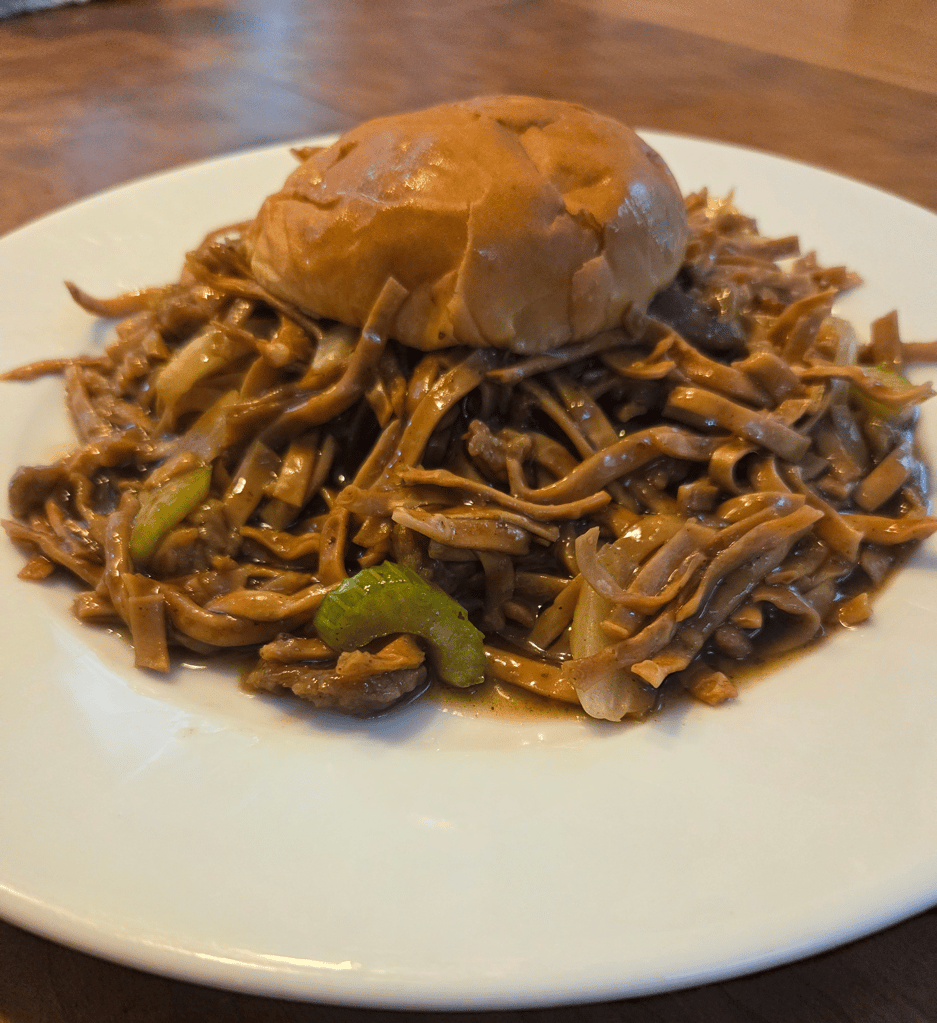
The town of Fall River, Massachusetts produces what might be the loosest interpretation of a sandwich on this list. Created for the residents of this textile manufacturing hub in the early 20th century, the Chow Mein Sandwich is effectively a serving of chow mein noodles topped with a soft hamburger bun. Rumor has it that it started as a straightforward order of chow mein with bread on the side to sop up the gravy, but the restaurant ran out of bread and simply substituted the aforementioned bun, thus beginning a hyper-regional idiosyncrasy.
Meant to be eaten with a fork and knife, it comes with either soft or crunchy egg noodles, sliced celery and onions, and a peppery, soy-based gravy. This lends a moderately high salinity to the sandwich profile. Choosing the velveted beef option, among the standard alternatives of chicken, pork and shrimp, brings a toothsome character to the experience.
Pair It With: O’Hara’s Irish Red
The combination of buttercrunch toffee and low levels of roast in O’Hara’s Irish Red amplifies some of the beef flavors by providing an unctuous backbone and Maillard-like dynamics, respectively. Earthy hop notes give some depth to the flavor spectrum of the chow mein, while a subtle tangy finish in O’Hara’s balances out the umami-laden pepper-and-soy gravy presented on the plate.
Chop Suey Sandwich
Salem, Massachusetts
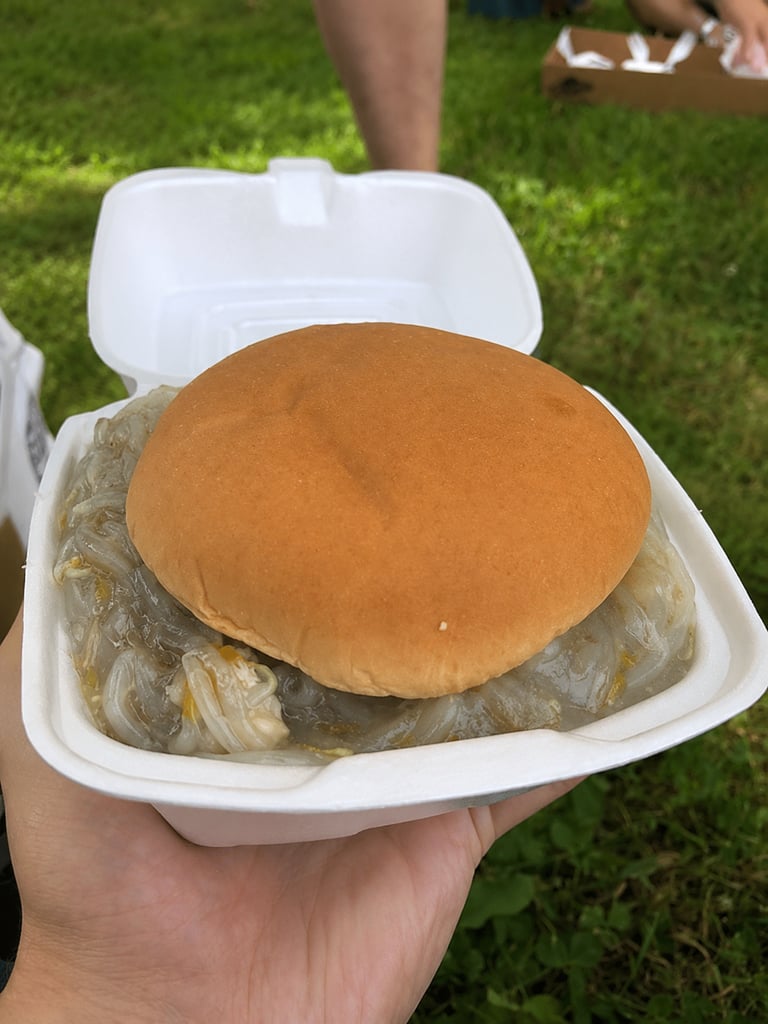
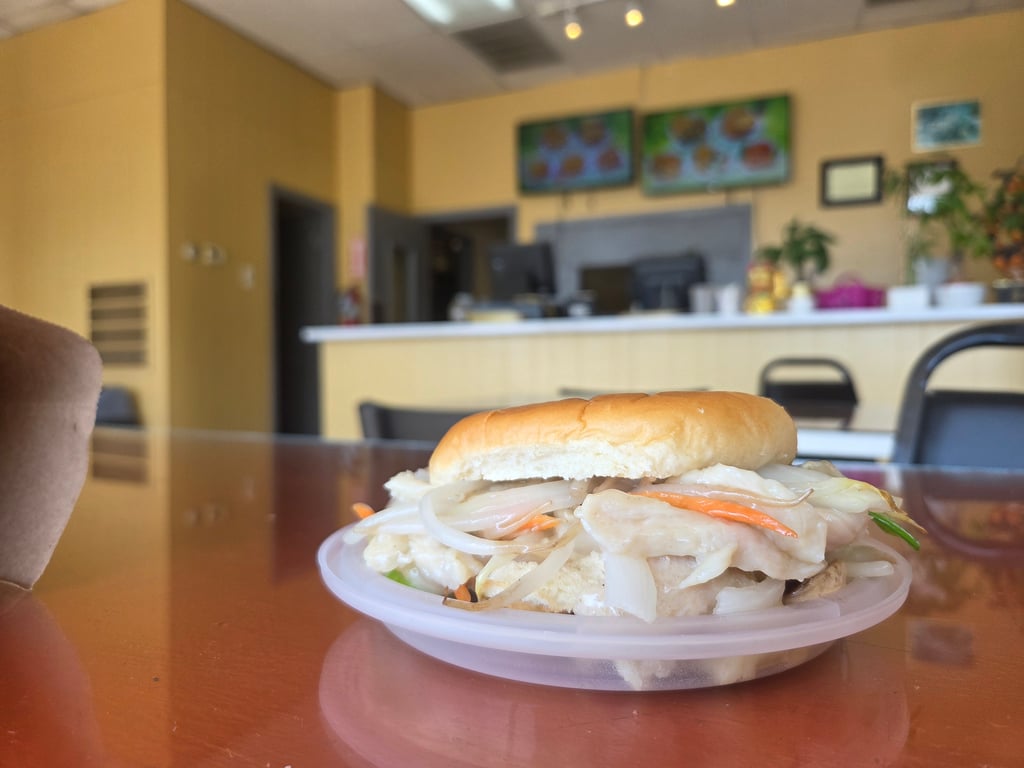
About an hour’s drive north from Fall River, the historic town of Salem has its own contribution to the Chinese American sandwich canon. A dish popular enough to reach as far as Coney Island, New York and Manchester, New Hampshire in its heyday, the Chop Suey Sandwich is composed of various vegetables tossed together and placed atop a bun. One of the few places in Salem still serving this historic meal, Meilee Express, features only one choice on its sandwich menu: a standard version with chicken, celery, snow peas, mushrooms, carrots, bean sprouts and a cornstarch-based gravy.
This version of the Chop Suey Sandwich presents a range of textural contrasts: the snapping crunch of the vegetables, tender chicken, viscous cornstarch-based sauce and pillowy soft bun. It is almost as if this sandwich is made so the diner can season it to their own liking. We take advantage of this by using beer as our choice for adding personal character to the sandwich.
Pair It With: Westmalle Extra
A Belgian Single like Westmalle Extra feels quite appropriate to align with the Chop Suey Sandwich, as it brings elements that accentuate, not obfuscate, the ingredients in the sandwich. Contributions of clove, nutmeg, low-level wildflower honey and powdered sugar effectively “dress” the sandwich while retaining its subtly expressed character. Moderately high carbonation aids in scrubbing the viscous cornstarch slurry from the palate, while a lily-like floral hop character brings proportionately recessed aromatics to the pairing.
Preserving a Regional Bite of Chinese American History
Created more for pragmatic than gastronomic considerations, these esoteric examples of American culinary history face an uncertain future. Perhaps someone will come along to bring their own culinary culture and tradition to these dishes and evolve them into having their own smash burger moment. Or perhaps these offerings will become relegated to historic re-creations from a time gone by.
Regardless, the importance of highlighting these hyper-regional dishes and their impact on their communities cannot be discounted. Acknowledging them through their individual stories gives these Chinese American creations the respect they deserve.


Conversations (0)
No comments yet.