




Inside the Cellar at Horus Aged Ales
The Patient Extremes of the Brewery's Convocation Program
 Story by:
Eric Griffin
Story by:
Eric Griffin
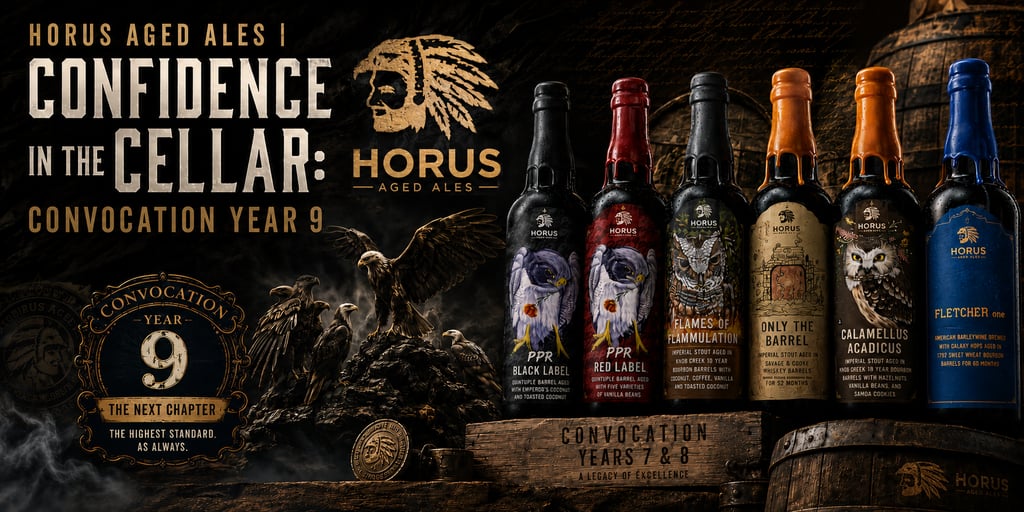
With Convocation Year 9 officially underway as of June 1, it’s a fitting time to look back at several beers that helped define what members have come to expect from Horus Aged Ales.
Over the past two membership cycles, sole Horus owner Kyle Harrop has continued to explore the outer edges of barrel-aging, adjunct integration, and long-term cellar development. From imperial stouts spending more than four years in oak to multi-barrel projects and collaboration releases built around patience more than immediacy, Convocation Years 7 and 8 offered a concentrated look at the brewery’s current identity.
The six beers featured here represent more than individual releases. Together, they offer a snapshot of a brewery working in a very specific lane: high-ABV, barrel-driven, often adjunct-heavy beers made for a highly committed audience. That approach is not for every drinker, nor is it meant to be. These are limited, club-driven releases that can be difficult to obtain, and the intensity of the styles involved naturally narrows the audience. Still, for those who follow Horus closely, these bottles help explain why expectations remain high as Year 9 begins.
The Horus Story So Far

The Horus Aged Ales origin story begins back in 2015, when founder Kyle Harrop turned a homebrewing obsession into one of the more quietly influential small-batch operations in American craft beer. Based out of Oceanside, California, Harrop has never fit the traditional brewery mold. Instead of building a taproom or anchoring to a single production space, Horus has remained intentionally nomadic, leaning into a “gypsy” or contract brewing model that prioritizes flexibility, barrel selection, and long-aged experimentation over scale or footprint.
That approach has always been both the challenge and the draw. Without a physical home base in Southern California, Horus releases have historically been difficult to obtain, often arriving in tightly allocated drops that move through a small but highly committed audience. Over time, that scarcity helped build a reputation rooted as much in patience and trust as in barrel character or blend complexity.
It wasn’t until 2018 that Harrop transformed the community commitment he’d built into something formal: The Convocation. The program was created to give dedicated supporters more direct access to releases and the broader evolution of the brewery. Each year of Convocation has functioned less like a typical beer club and more like an ongoing narrative, tracking Harrop’s experiments, barrel programs, and stylistic shifts in real time alongside the people who have followed Horus from its earliest days.
The Road Ahead
Now, in 2026, eleven years after Horus Aged Ales first began, the project sits in a rare position within modern craft beer: still small by design, still deeply experimental, and still capable of generating outsized anticipation with every new release cycle. The Convocation community, now spanning multiple years of shared releases and evolving priorities, reflects that continuity.
What started as a niche access program has effectively become a long-running chronicle of Harrop’s work, marking not just where Horus has been, but how far a deliberately constrained, barrel-driven brewery can push itself while remaining outside the traditional system.
For this tasting, six releases from Convocation Years 7 and 8 were evaluated as a way to examine the brewery’s recent approach to extended aging, adjunct use, collaboration, and cellar-driven construction. This is not a broad buying guide, as most of these bottles are limited releases tied to specific windows of availability. Instead, it is a look at how these beers reflect the direction of the program heading into its newest year.
The Beers
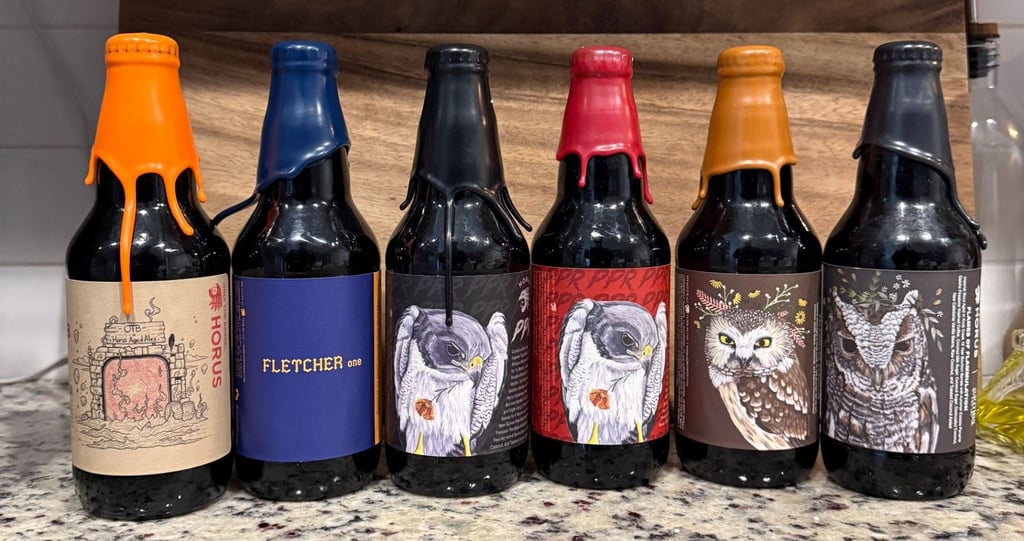
The lineup spans both Convocation Year 7 and Year 8, and includes six bottles.
Flames of Flammulation | Release Date: September 10, 2024
Imperial Stout aged in Knob Creek 18 Year Old Bourbon Barrels with Auromar Estates Panama Geisha Firestone Washed Coffee, Coconut Milk Sugar, Coconut Sugar, Desiccated Coconut, New Caledonia Vanilla Beans, Raw Coconut, and Toasted Coconut Added. Collaboration with Brujos Brewing.
Calamellus Acadicus | Release Date: October 1, 2024
Imperial Stout Aged in Knob Creek 18 Year Bourbon Barrels with Comoros Vanilla Beans, Hazelnuts, and Samoa Cookies Added. Collaboration with Troon Brewing.
PPR (Red Label) | Release Date: November 2024
Quintuple barrel-aged Imperial stout with various different varieties of vanilla. This is not a blend. It went from barrel one to barrel two to barrel three to barrel four to finally barrel five. The beer spent its first fourteen months in Evan Williams Bourbon barrels. After that, it spent ten months in Larceny Bourbon barrels. Then, it spent nine months in Old Fitzgerald Bourbon barrels. After that, it spent eight months in Henry McKenna Bourbon barrels. Finally, it spent its last six months in Elijah Craig 23 Year Old Bourbon barrels with Papua New Guinea Planifolia vanilla beans, Peruvian Planifolia vanilla beans, and Réunion Island vanilla beans.
Fletcher One | April 6, 2025 (10th Anniversary Release #2)
American Barleywine Brewed with Galaxy Hops aged in 1792 Sweet Wheat Bourbon Barrels for 60 Months. Collaboration with Anchorage Brewing.
PPR (Black Label) | Release Date: April 27, 2025 (10th Anniversary Release #9)
A part two release of the crowd-favorite quintuple barrel-aged Red Label PPR, this beer matches the same specs as outlined above for its November 2024 predecessor. However, for the Black Label, Emperor’s Coconut and Toasted Coconut were added.
Only The Barrel | Release Date: April 30, 2025 (10th Anniversary Release #10)
This single-barrel Imperial Stout was noted by Harrop as being the most labor-intensive thing he had ever made, aged in Savage & Cooke Whiskey Barrels for 52 Months. The release was a collaboration with premier disc golf retailer OTB Discs out of Stockton, California, and the whiskey barrels used for this beer originated from them. While also the final release for Horus’s 10th Anniversary, Only the Barrel was also in celebration of the 2025 Champions Cup, which occurred the same week as the release.
The Reviews
Before getting into each glass, it’s worth noting that these beers are best understood as snapshots of how Horus approaches time, oak, adjuncts, and intensity within the Convocation program.
Flames of Flammulation | 13.8% ABV
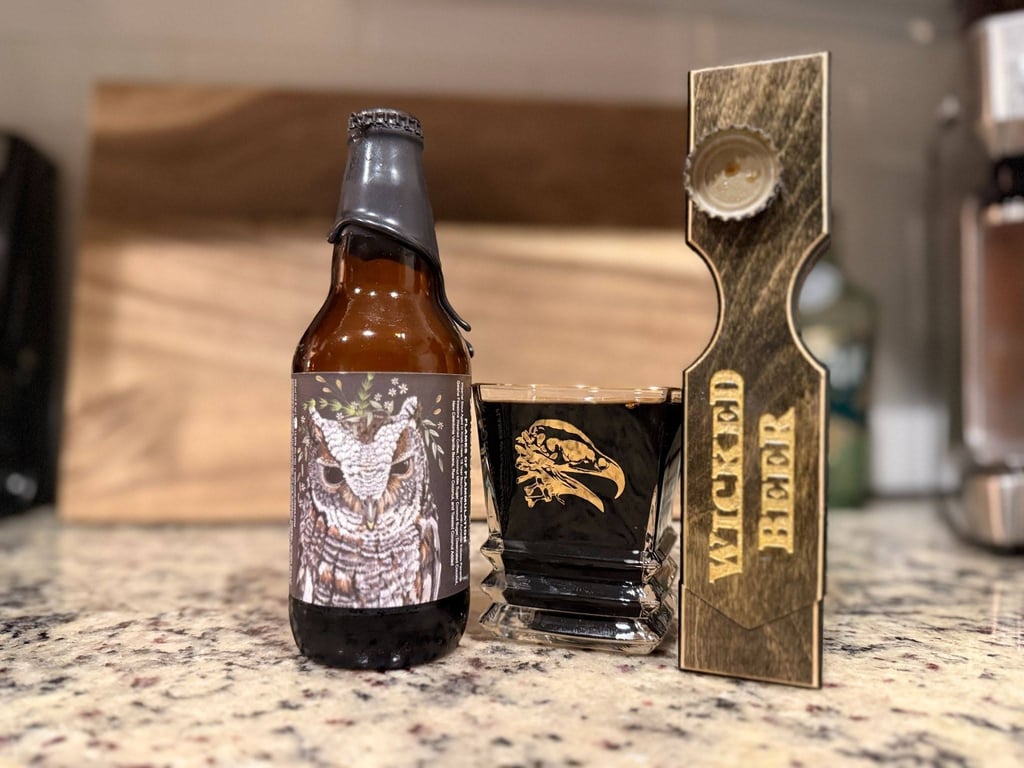
Pitch black pour with virtually no agitated carbonation as the liquid cascades into the heavy metal-inspired pagoda-base Horus glass. The only visible floaters are the occasional drifting fleck of coconut.
The nose offers a strong balance of barrel depth and pastry richness. Notes of bourbon-soaked dark chocolate, toasted brown sugar, coconut macaroons, and a hint of Luxardo cherry unfold in succession. With time in the glass, the underlying vanilla comes forward, lifting the barrel character further.
Nearly forgotten, the palate immediately brings back the Auromar Estates Panama Geisha coffee used in this blend. What starts as dark chocolate quickly gives way to deep, roasty coffee intensity. Brown sugar transitions into rich, oily coconut and chocolate-dipped macaroon character.
The mouthfeel is a real strength: silky, seamless, and surprisingly approachable in density. There’s a noticeable barrel presence and heat here, more pronounced than its predecessor in this Horus breakdown even at a slightly lower ABV. The finish carries a soft coffee-derived bitterness alongside ethanol warmth, pulling the drinker into the next sip without letting the sweetness completely take over.
Calamellus Acadicus | 13.9% ABV
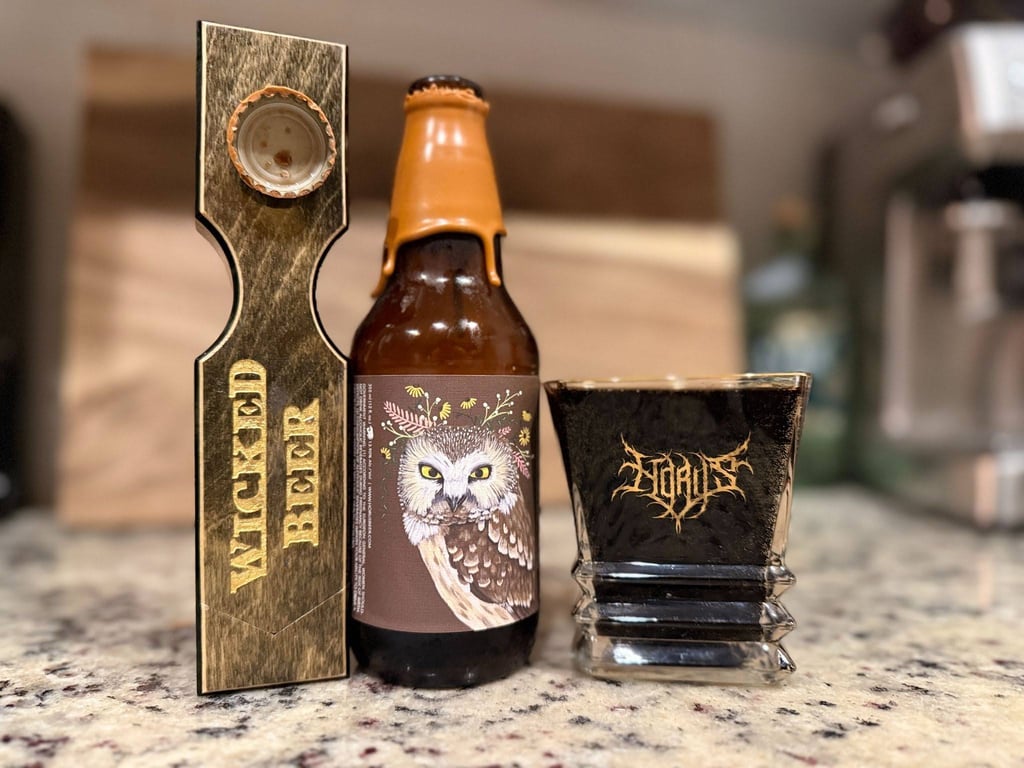
Jet black, viscous pour on this massive stout. The murky depths are dotted with small pieces of coconut in varying sizes, floating lazily across the surface. Virtually no head formation whatsoever.
The nose lands squarely in Samoa cookie territory, with rich coconut, milk chocolate, and Nutella-like hazelnut notes arriving immediately.
On the palate, much of that nose carries through. Chocolate-dipped coconut and dense hazelnut character lead the way, but it’s layered with a notable barrel presence that emerges mid-palate. Subtle charred oak, toasted sugar, and a touch of rye spice round things out, adding needed depth and structure.
Mouthfeel is well executed: full-bodied without becoming heavy, with just enough carbonation to keep things from feeling static. There’s a steady warmth at 14% that lingers long after each sip, which works within the profile but makes this very much a slow-pour beer.
PPR (Red Label) | 19% ABV
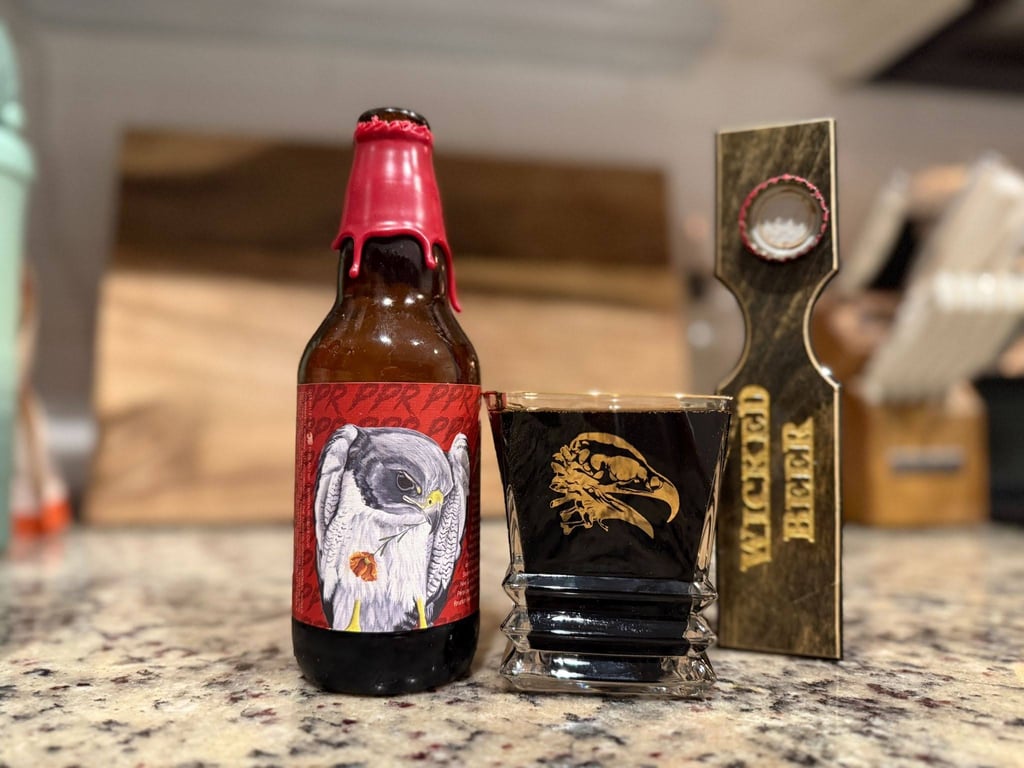
Pitch black, viscous pour with zero head formation as it cascades into the glass.
Vanilla leads immediately on the nose, followed quickly by peanut brittle, whiskey-soaked raisins, and a faint oaky rigidity on the tail end. Despite its intensity, the aromatic profile leans slightly restrained and sweet.
The palate follows a similar arc, bringing bourbon-laced vanilla up front, quickly joined by a nutty, slightly bitter edge. The mid-palate is where the barrel asserts itself: dry oak tannin, charred wood, and a touch of tobacco that builds toward the finish.
Texture and mouthfeel are major parts of the appeal here: weighty yet slick, with low but present carbonation. The 19% heat becomes very real on the back half, trailing all the way down and leaving behind a faint astringent grip that lingers after the swallow. That alcohol presence may be too much for some drinkers, but in the context of the beer, it does not feel out of place.
Fletcher One | 13.5% ABV
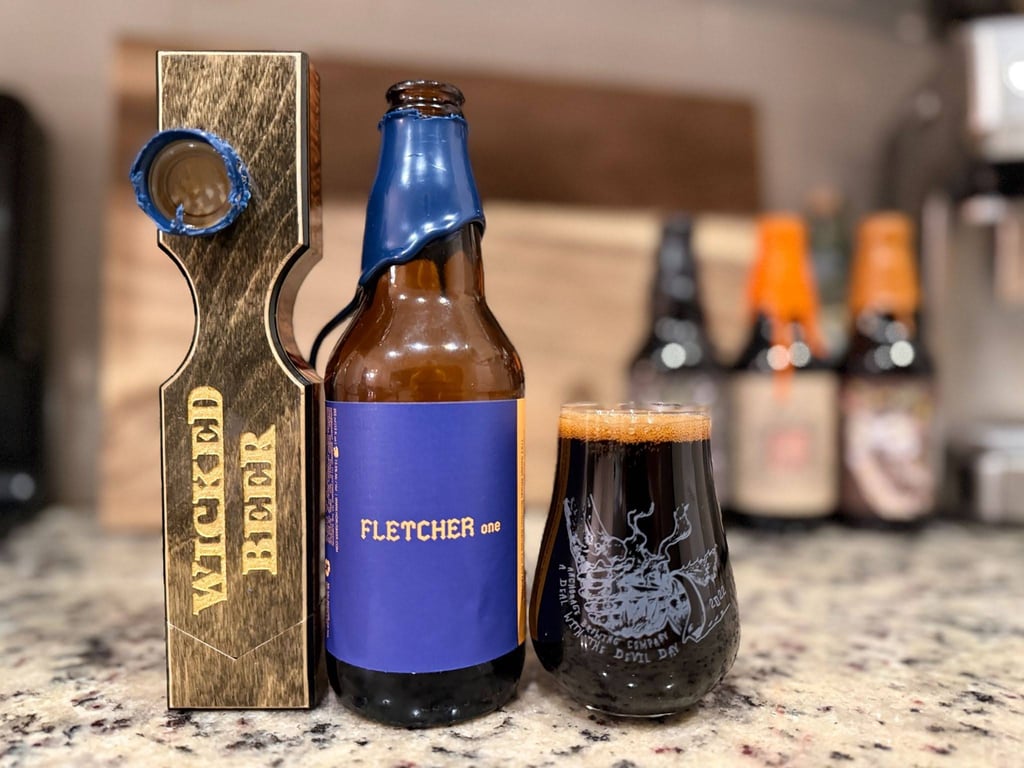
Deep black abyss of a pour with clear viscosity as it hits the glass. A small amount of brown foam briefly rises before collapsing into a thin ring around the perimeter.
The nose is driven by caramel and prune up front. With time, more complexity emerges, bringing with it dark chocolate, red fruit, and a subtle oxidative note that adds depth rather than detracting.
The palate is impressively layered. In a previous discussion, Harrop explained that this first iteration in what became a multi-release “Fletcher” series was an attempt to recreate A Deal With the Devil without knowing the recipe. Notes of fig arrive immediately, followed by Queen Anne cherries, honey, and Werther’s caramel. It opens intensely sweet, but a touch of hop-derived bitterness and the 13.5% warmth bring balance on the finish.
The mouthfeel is thick and syrupy, but not cloying or medicinal. It coats the palate fully on the mid-palate, with a soft, tingling carbonation and a warming finish that lingers well beyond the sip. Of the beers in this lineup, Fletcher One may be one of the clearest examples of how much structure matters when sweetness is this central to the experience.
PPR (Black Label) | 19% ABV
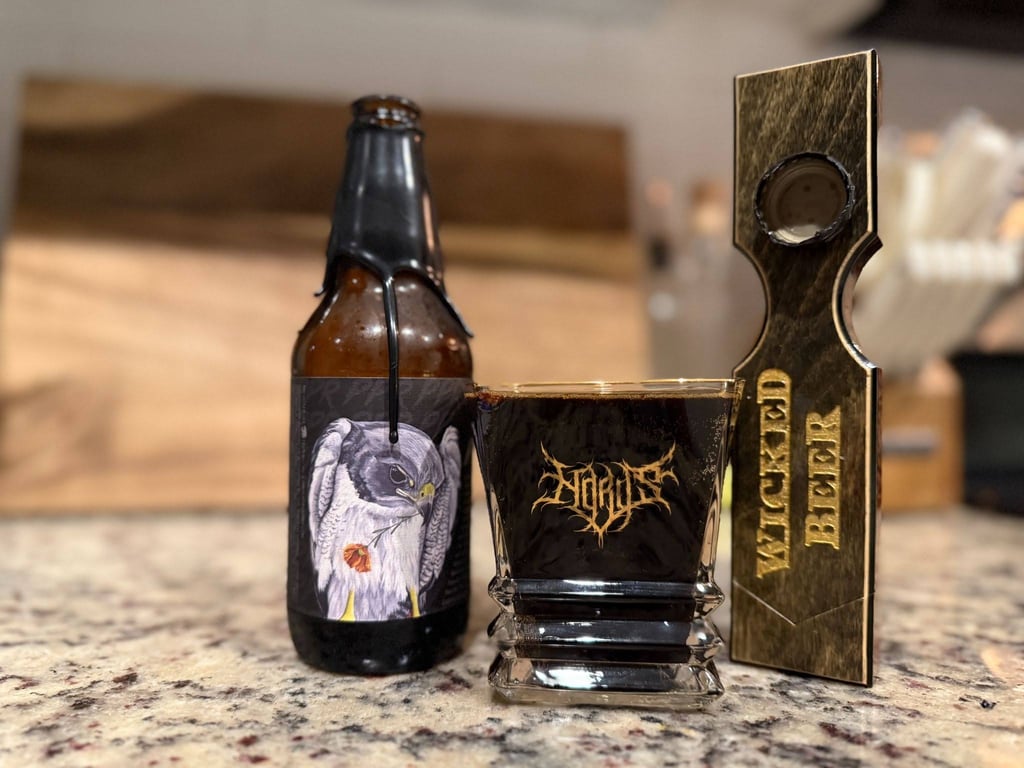
Viscous, motor oil pour. Zero agitation in carbonation, with scattered islands of coconut drifting across the pitch black surface.
At first, the nose is dominated by sheer intensity: boozy heat, charred oak, and toasted vanilla. With time, it opens significantly. Vanilla becomes the anchor, lifting dark fruit and toffee while barrel character introduces subtle spice and worn leather.
This is a forceful marriage of adjunct and barrel. After a quintuple barrel treatment, maintaining balance is no small feat, yet this holds together better than the specs might suggest. Notes of smoked vanilla layered over burnt caramel and bourbon-soaked oak staves move together with considerable cohesion. The mid-palate brings toasted coconut bitterness, transitioning into boozy raisins and caramelized sugar on the finish.
The mouthfeel is oily and viscous without tipping into heaviness. Carbonation is nearly absent, though a faint prickling sharpness on the tongue provides just enough lift to cut through the density. The finish is smooth for its size, carrying warmth without harsh ethanol bite, and lingers long into the next sip. A natural cold-weather sipper, though certainly not a casual one.
Only The Barrel | 14.8% ABV
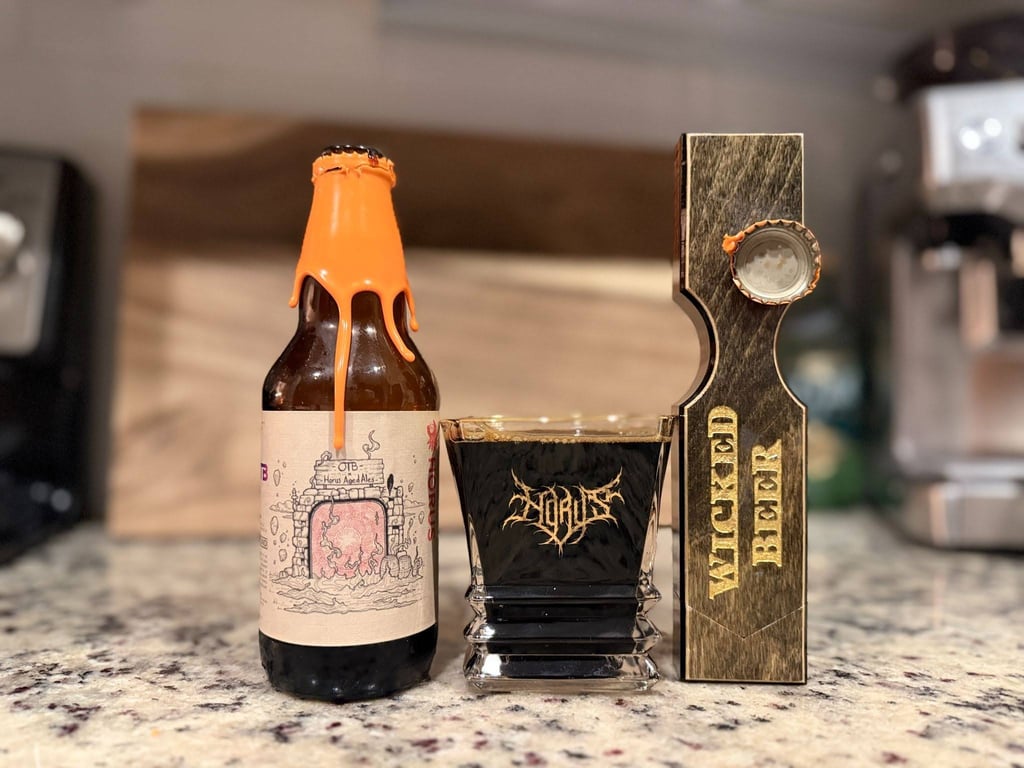
A black abyss of a beer. On the initial pour, it appears almost completely flat, but after a moment, small islands of beige carbonation rise and settle on top before quickly dissipating into a thin ring.
The nose is bold and expressive, a clear reflection of both the stout base and extended barrel maturation. Dark chocolate cherry, candied prune, orange peel, and toasted caramel lead the way. With time, more barrel-driven grit emerges: char, a hint of smoke, and an increasingly present ethanol edge.
The barrel expression is the defining feature here. An assertive malt core is layered with subtle citrus, toasted wood, and deeply caramelized sugar. A gentle fruit sweetness runs throughout, resolving into brown sugar and a faint roasted bitterness on the finish.
Despite its extended aging, OTB maintains a surprisingly good finishing gravity. It is slightly lighter than comparable Horus stouts, yet still structured enough to carry the profile. At 14.8%, the alcohol is present but integrated: warmth, mild astringency, and a touch of lingering bitterness extend well after the swallow.
Confidence in the Cellar
In many ways, these six beers aren’t just a spotlight of Convocation Years 7 and 8. They’re a condensed timeline of what Horus Aged Ales has become over the last decade. Each bottle reflects a different expression of patience: extended barrel aging, layered adjuncts, multi-year blending programs, and the kind of compositional risk that only works when time is treated as an ingredient.
What stands out most across the lineup isn’t just intensity, though there is plenty of it. It is the consistency of intent. Whether it’s a single-barrel stout resting for more than four years, or a quintuple-barrel project pushed through five distinct stages of maturation, there’s a throughline of structure beneath all that decadence.
The caveat is obvious but important: this is a narrow, specialized corner of beer. These releases are scarce, often high in ABV, and built around a degree of richness that will either thrill or exhaust a drinker depending on their palate. That limitation is part of the story. Horus is not trying to make broadly accessible beer for every occasion. It is making cellar-driven beer for people who want to follow the long arc of a project year after year.
That is ultimately what The Convocation has come to represent. Not simply scarcity for scarcity’s sake, but an understanding between brewery and member that these beers are meant to be experienced on Horus’s timeline, not in line with whatever the broader market happens to want at a given moment. Each release becomes another marker in a longer story, defined less by individual drops and more by the total weight of everything leading up to them.
Now, as Convocation Year 9 begins in 2026, that story continues to expand. If Years 7 and 8 are any indication, Horus still has plenty to say from the cellar.
And for those paying attention, that’s where the real excitement begins.


Conversations (0)
No comments yet.