



Sensory Analysis for Everyday Use: Finding What You Like to Drink

 Story by:
Josh Weikert
Story by:
Josh Weikert
When people hear the phrase “sensory analysis,” they often think of quality control panels, scoresheets, and identifying flaws in beer; in other words, “judging.” That’s understandable: sensory training is often a professional or technical matter…but not always. The most valuable application of sensory analysis for most beer drinkers isn’t determining whether a beer deserves a 38 or a 42. It’s figuring out what you like, why you like it, and how to use that information to make better decisions as a drinker. It’s a self-discovery tool.
Most of us develop broad preferences over time. We might say we like English beers but not Belgian beers. We might gravitate toward German lagers or American ales. Those preferences are useful, but they’re also imprecise. The problem is that broad categories can become shortcuts. We start assuming we like or dislike entire groups of beers without understanding what specific sensory traits are driving those preferences. Do you actually dislike Belgian beers? Or do you dislike the phenolic spice character that appears in many Belgian strains? Do you really love English Extra Strong Bitter? Or do you love moderate-strength beers with low carbonation, firm bitterness, and bready flavors?
The answers matter, because once you understand the sensory elements behind your preferences, you gain the ability to seek out new beers you’ll enjoy, even if they come from regions, categories, or breweries that you don’t usually think of as “your” beers. We’ll start by talking about how we talk about our beers, then move into a sensory analysis process you can use to structure and map the preferences you identify. Away we go!
Talking Beer
The first challenge in sensory analysis isn’t palate sensitivity: it’s finding the words. Many people rely on broad descriptions such as “malty,” “hoppy,” “fruity,” or “funky.” Those terms aren’t wrong, but they don’t tell us much. They’re often too general to be useful. If someone tells me a beer is “fruity,” I still have dozens of questions. Is it citrusy? Tropical? Berry-like? Stone fruit? Dried fruit? Similarly, if a beer is “malty,” what does that mean? Fresh bread dough? Crackers? Toast? Bread crust? Toffee? Honey? Building a more precise vocabulary is one of the most effective ways to improve your sensory skills. The goal isn’t to sound impressive; it’s to create descriptions that are meaningful and reliable.
When tasting, try to dig deeper than the first descriptor that comes to mind. I often refer to this as “blowing out” the term to get to the most precise flavor descriptor you can find. Instead of “citrusy,” you can progress from citrus to lemon to Meyer lemon to semi-tart juice. Instead of “malty,” you can progress from malt to bread to crust to toast. If we identify the specific flavor, “bready” goes away because what we really mean is the smell of caraway in a rye beer or the yeasty smell of uncooked dough. The more precise your language becomes, the easier it is to identify recurring patterns in your preferences.
Flavor vs. Style
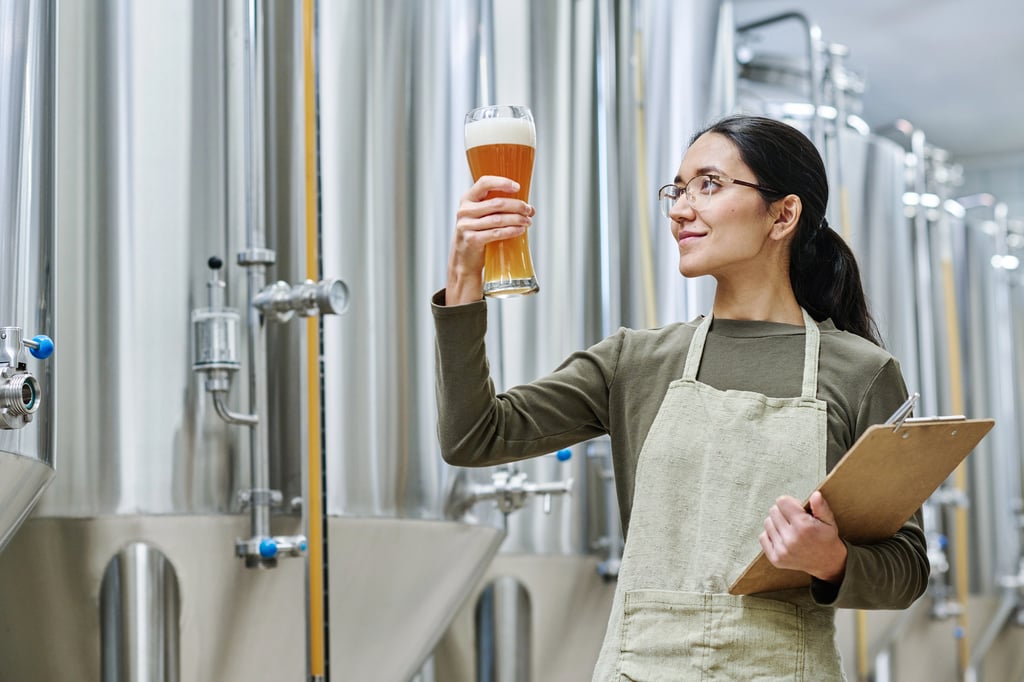
One of the most useful habits a beer enthusiast can develop — no, not tasting beer, but I promise we’re getting there! — is learning to separate sensory impressions from style expectations. Styles are helpful, don’t get me wrong. They provide context and set expectations, and it’s easier to “find” flavors when the style cues you on what to expect. If you know you’re drinking a Doppelbock, you’ll expect malt richness. If you know you’re drinking a West Coast IPA, you’ll expect bitterness. Those expectations help us recognize flavors…but they can also bias us. You can psych yourself into a flavor that isn’t really there. Or your expectations can prevent you from noticing what actually is.
When evaluating a beer for your own enjoyment, focus first on what you’re sensing rather than what you’re supposed to be sensing. What flavors stand out? How intense are they? Why do I like or dislike this beer, specifically? Only after answering those questions should you compare your impressions to the style category. You may discover that your favorite beers share sensory traits that cut across style boundaries. Irish Stout, Festbier, and North German Altbier don’t share much DNA. Different regions, colors, yeast families, production methods…but they can share high-carbonate water profiles that bring out certain flavors. If you lock into stylistic thinking, you may miss out on some of your favorite beers. Almost anyone who knows my beer preferences knows that Belgian abbey ales just aren’t my thing…and yet two of my top-ten all-time favorite beers include a Belgian Blonde and a Tripel. Keep an open mind!
Trust the Process
Finally: actually tasting beer. You don’t need to be obsessive, but process matters. When you taste a beer the same way each time, you’re more likely to notice meaningful differences and similarities. What follows is my basic process, but you can find what works for you!
First, swirl that glass and smell the beer. Aromas usually mirror what you taste, but not always!
Next, observe the appearance. Clarity, color, and other visual cues might give you clues as to what to expect, especially with something like carbonation. You can see bubbles, after all, and carbonation can be surprisingly tough to assess by mouthfeel alone.
Then taste. You’re looking for a lot here, so take small sips and look for something different every time: initial or dominant flavors, secondary flavors, bittering level, finish, body, and so on.
As the beer warms, revisit these impressions. Many flavors become more apparent with warming, while others recede or disappear. Body, alcohol character, and astringency often become easier to evaluate later in the tasting.
Is this process overkill? Maybe. But whatever process you use, use it consistently. Consistency allows comparison, and comparison is where learning happens.
Beer Sensory Analysis: A Data-Driven Preference Map
Beer apps have made rating beers easier than ever. Unfortunately, they’ve also made it easier to stop paying attention. Ratings tell you whether you liked a beer, not why. If you’re serious about understanding your preferences, keep notes. They don’t need to be extensive: jot down key impressions and descriptors, what you specifically liked or disliked, and then add a rating. Personally, I find a letter grade more intuitively useful than a star or number system.
Over time, those notes become valuable data. You’ll start noticing recurring themes. Perhaps your highest-rated beers consistently feature moderate bitterness and high attenuation. Maybe your favorites tend to emphasize noble hop character. Maybe nearly all of your preferred beers have relatively low alcohol content. These patterns are often invisible until you write them down.
Then, you can start building out your personal preference map. Instead of asking, “What styles do I like?” you’ll start asking, “What characteristics do I like?” Look at your favorite beers, breweries, and recipes. Search for common threads. Some patterns, as noted previously, are obvious, but others will be more subtle, and that’s where the fun really starts. When you see oddball beers, make it your mission to figure out why. Dig into the recipe, the process, the locale, the terroir, or anything else that might be unique. And once you think you’ve got it, find another beer you wouldn’t have a natural affinity for that has that thing, and see if you like that one. Finding that kind of connection is incredibly satisfying, and understanding those connections helps reveal what you’re really looking for in a beer.
Enjoy Yourself
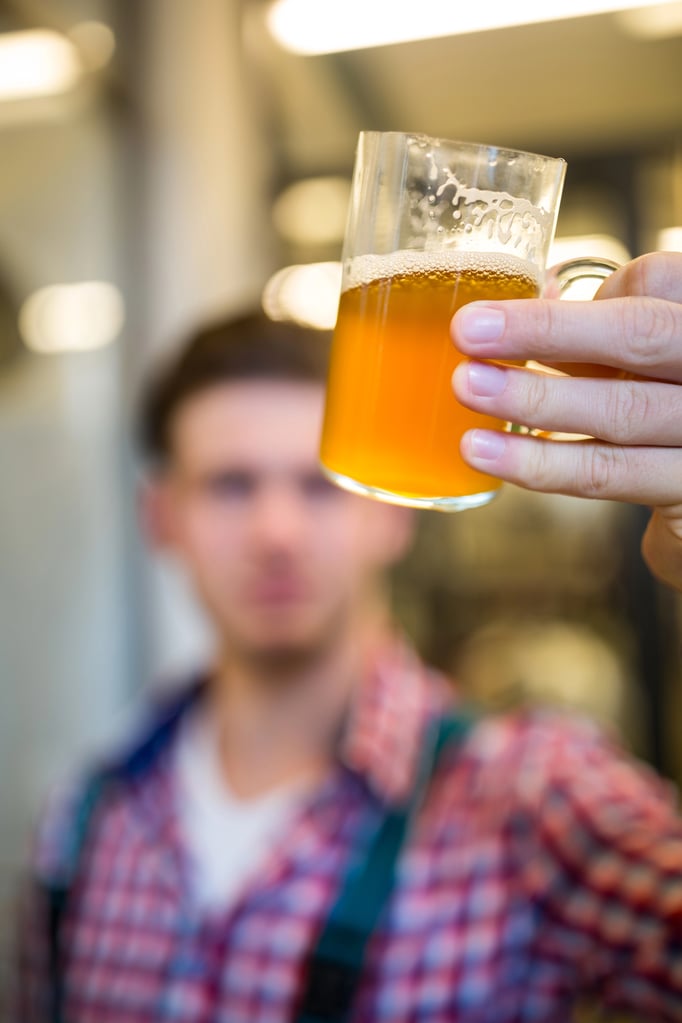
The most important thing to remember is that sensory analysis isn’t about proving that a beer is objectively good or bad. In fact, “good or bad” isn’t even a relevant assessment here. Better sensory evaluation simply makes beer more enjoyable. It helps you discover new favorites, order or brew beers that better align with your tastes, and communicate more effectively with other drinkers. Most of all, it helps you become a more intentional beer enthusiast. That’s a worthwhile goal whether you’re judging a competition, brewing your next batch, or simply enjoying a pint with friends.
Sensory analysis is personal. Language matters. Preferences can be identified and refined. And, like any skill, tasting improves with practice. The payoff is simple: a deeper understanding of the beers you love and a clearer path toward drinking them more often. That’s a pretty big payoff for keeping a few notes!



Conversations (0)
No comments yet.