





Actually, the “Hymn to Ninkasi” Is Not a Beer Recipe
The Hymn to Ninkasi has long been hailed as the world's oldest beer recipe—but modern scholars say we may have been drinking the myth. Competing translations, mysterious ingredients like bappir and titab, and historical guesswork raise serious doubts about what the Sumerians were really brewing 4,000 years ago.
 Story by:
Martyn Cornell
Story by:
Martyn Cornell
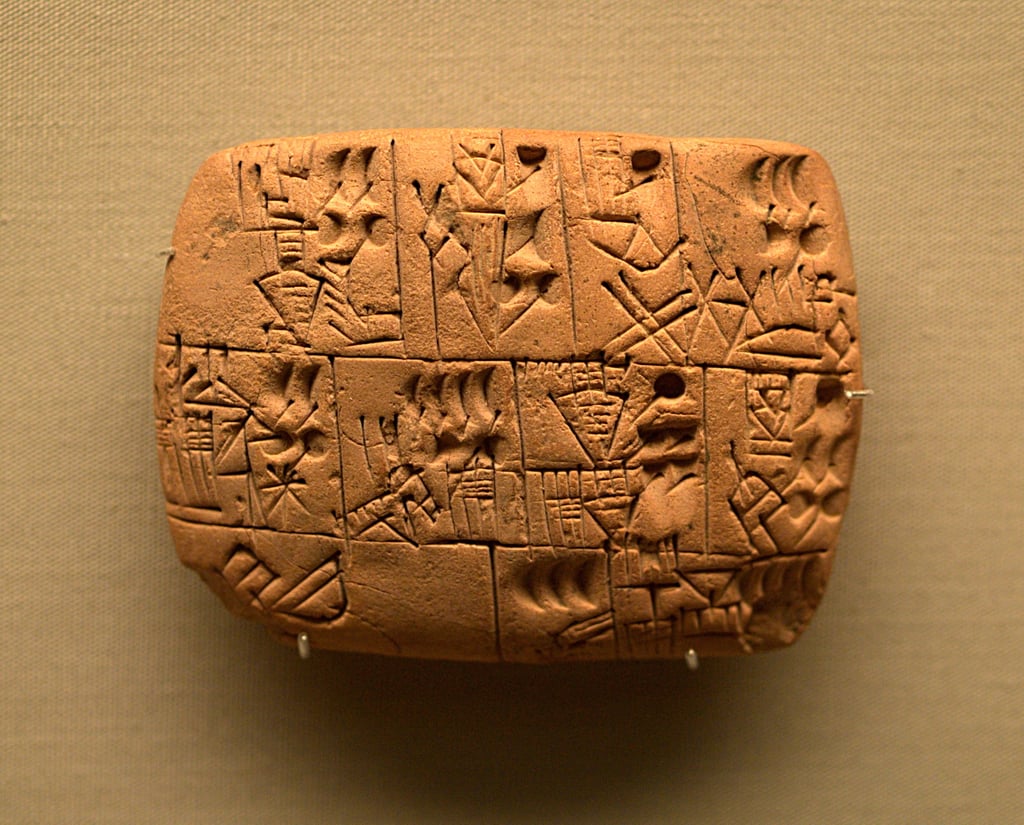
You have read the claim, I am sure, in a book or magazine article: the Hymn to Ninkasi, a 4,000-year-old poem from ancient Mesopotamia (more or less modern Iraq), written on clay tablets in the ancient writing method known as cuneiform, in the ancient and long-vanished language called Sumerian, contains “the oldest beer recipe in history.”
The poem, dedicated to Ninkasi, the Sumerian goddess of beer, is claimed to contain a description of “the detailed brewing process” that “modern researchers have used to recreate Sumerian beer.” The Hymn to Ninkasi, one American publication said, “served not only as spiritual homage but also as detailed brewing instructions for the beverage that came to be known as beer.”
The Anchor Brewing Experiment
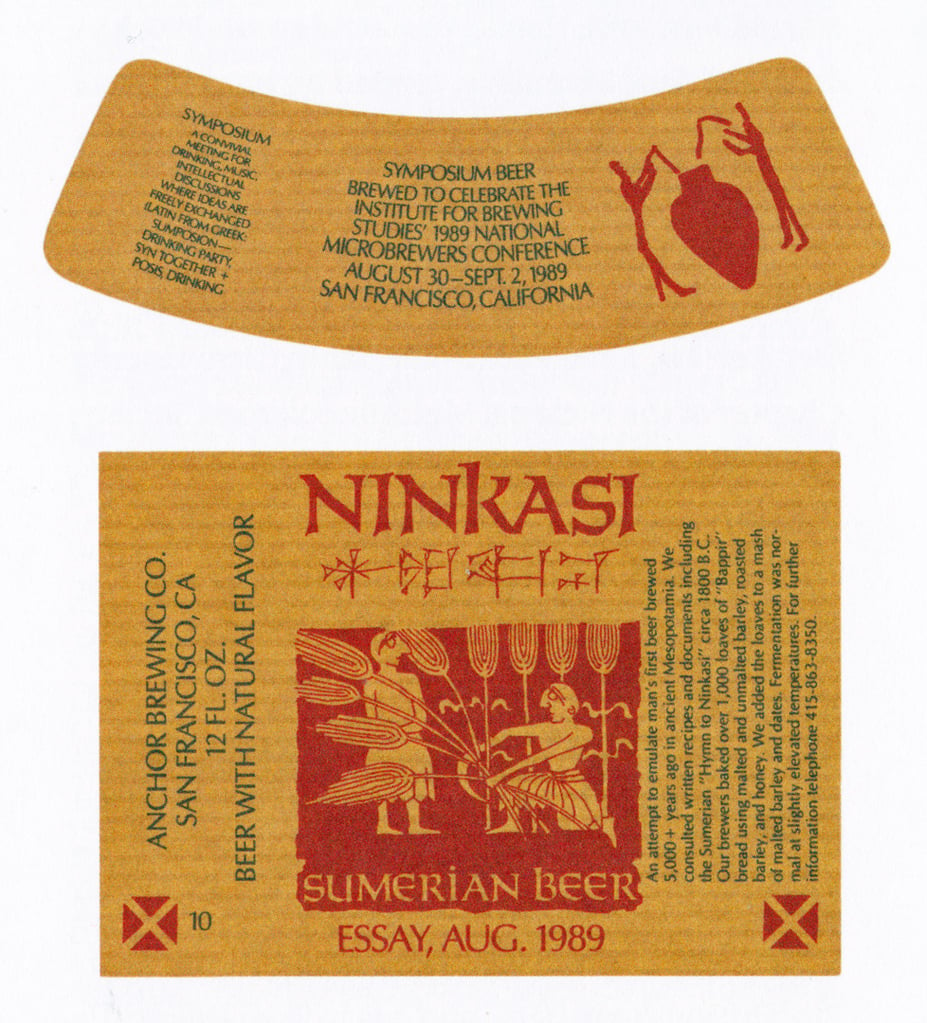
Certainly, modern brewers have used translations of the Hymn to Ninkasi to guide them into making a beer they have claimed to be close to the brews that people in Mesopotamia were drinking four millennia ago. The best-known recreation was by Fritz Maytag at Anchor Brewing in San Francisco, after he read about the Hymn to Ninkasi in an article by Solomon Katz, professor of anthropology at the University of Pennsylvania and an expert on the anthropology of food.
Katz based his article on a translation of the Hymn to Ninkasi by Miguel Civil, professor of Sumerology at the University of Chicago’s Institute for the Study of Ancient Cultures, who made a translation of the Hymn into English in 1964. Maytag contacted Katz, who happily agreed to help with Anchor’s project to resurrect Sumerian beer, and they put together a recipe for “Ninkasi Beer” using methods and ingredients “compatible with her activities as described in the Hymn.”
Unfortunately, Katz said later, “Certain aspects of the recipe seemed wrong based on what we know of modern brewing techniques. So, we located Miguel Civil and had him re-translate a portion of the text.”
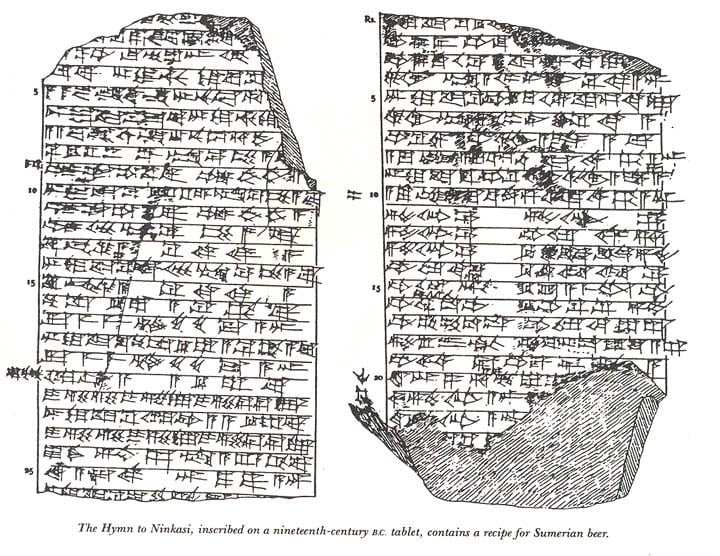
Even then there were many aspects of the recipe that Maytag, Katz and the Anchor brewers put together that were basically guesswork. One of the vital ingredients in Sumerian beer was something called bappir. Part of the poem, in Civil’s translation, goes:
You are the one who handles dough [missing words] with a big shovel,
Mixing, in a pit, the bappir with sweet aromatics.
You are the one who bakes the bappir in the big oven,
Puts in order the piles of hulled grain.
Decoding Bappir: Bread, Beer, or Both?
But what was bappir? The Sumerian logogram bappir was the pointy jar symbol meaning “beer” plus the symbol for “bread,” leading Assyriologists to assume that the word meant “beer-bread” or “beer-loaf.” The symbol for the word “brewer” combined the symbols for “man,” “beer,” and “bread,” making him “beer-bread man.” We can be pretty confident, then, from the evidence found on other clay tablets, that bappir was made from barley. But no one can agree on how it was made, how it was used and what its purpose was. All sorts of guesses have been flown up the flagpole.
Maytag, Katz and the Anchor brewers decided, seemingly for no apparent reason, that bappir was a mix of dates, or date syrup, and malted, unmalted, and roasted barley flour. Legal restrictions on what could go into beer in California, apparently, meant that honey had to be substituted for the dates in the mixture, which they baked. The 100-plus loaves they baked didn’t dry out properly, so they baked them again, ending up with something like Italian biscotti—also twice-baked—very hard and dry.
None of this came from the Hymn. Maytag and his team mixed one-third of their supposed recreation of bappir with two-thirds of malt in the mash tun, adding standard brewer’s yeast to the resultant wort, although the Hymn seemingly says nothing about yeast.
Yeast, Straws, and Sumerian Style
The resultant Ninkasi Beer, 3.5% ABV, dry, and described as “cider-like,” was served at the National Microbrewers Conference in San Francisco in 1989 from huge jars into which drinkers dipped straws, just as Sumerian drinkers are depicted doing in ancient seals found by archaeologists. Whether a Sumerian would have recognized it, we have no idea.
However, Maytag’s and Katz’s version of “Sumerian” beer and brewing methods, and Civil’s translation of the Hymn to Ninkasi, have subsequently, over the past 35 years, been written up perhaps hundreds of times as if they were the definitive answers to the questions “what does the Hymn to Ninkasi mean in English?” and “how did the Sumerians brew beer?”
It would be wonderful to think that we could enjoy a beer just like the one drunk on the banks of the Tigris or Euphrates 40 centuries ago. Unfortunately, the amount of guesswork and sheer invention that went into the Maytag-Katz recreation means we have absolutely no idea if what they brewed was actually anything like what Sumerians sucked up through straws from big jars.
Lost in Interpretation: Questionable Translations, Competing Meanings
One big problem is that there are at least two other translations of the Hymn to Ninkasi apart from Miguel Civil’s. One, in German, was done by Walther Sallaberger in 2012, an Austrian-born Assyriologist, and professor of Assyriology at the University of Munich. The other, in Russian, was done by Veronica Afanasieva, a Sumerologist and poet born in 1933 who worked for the Hermitage Museum in St Petersburg. Both disagree with Civil and their translations differ drastically regarding some of the most important words and phrases in the Hymn.
Sallaberger, for example, translates bappir as “sourdough”, not Civil’s “beer-bread”, and says it was the yeast in the sourdough that fermented the beer when the bappir was mashed in water, though that does not make much sense, since the yeast in the sourdough would be killed by being baked.
Another contentious word in the Hymn is titab, which was something “spread” on “large reed mats”. Civil translates titab as “cooked mash”. Sallaberger says it means “spent grain cake”, left behind when the wort was run off the mash. Afanasieva said it meant “wort”, though if you pour wort onto reed mats, it will just run straight through and soak into the earth…
A third term the scholars cannot agree on is dida, which Afanasieva translates as “noble beer,” very different from Civil’s “sweetwort” and Sallaberger’s “dry beer,” whatever “dry beer” might be. The three translators give completely different versions of the couplet that the word dida occurs in: Afanasieva renders it as:
Oh, and you prepare noble beer,
Mixing honey and wine and pour it in drop by drop.
Sallaberger as:
Your large dry beer, if it is processed and ready
It is honey and wine that together give juice.
And Civil as:
You are the one who holds with both hands the great sweetwort,
Brewing [it] with honey [and] wine.
This is problematic, even ignoring the fact that none of those renditions makes much sense in terms of how to make Sumerian beer. And how do you hold wort in your hands?
Scholarly Skepticism
These are just a few of the disagreements among scholars which led the late Peter Damerow, of the Max Planck Institute for the History of Science in Germany, to say that the Hymn is “difficult to unambiguously read, understand, and translate … due to our limited knowledge of the context of beer brewing in the Sumerian culture and, in particular, of the terminology relating to it.”
Indeed, Damerow wrote: “Given our limited knowledge about the Sumerian brewing processes, we cannot say for sure whether their end product even contained alcohol.”
A Recipe for Doubt
So, there we are: the Hymn to Ninkasi most definitely does NOT contain “detailed brewing instructions” for brewing Sumerian beer: and what is more, we cannot be absolutely certain that what it was talking about was something we would even recognize as beer anyway. Just remember that the next time you read another article about “the oldest beer recipe in history.”


Comments 0
No Readers' Pick yet.