







Keeping it Cloistered: The Overlooked Tradition of German Monastic Breweries
 Story by:
Brett Cortelletti
Story by:
Brett Cortelletti
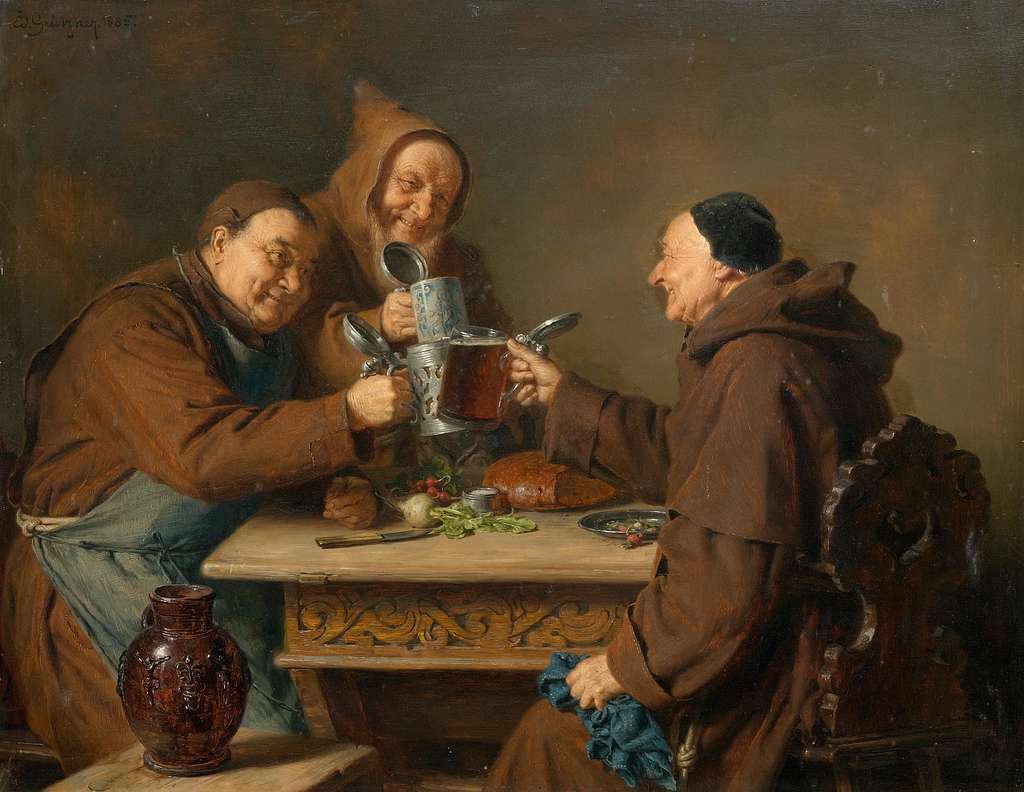
Long before hype breweries with names riffing on popular intellectual property existed, one of the easiest ways to make a beer stand out on the shelves was to put a monk on the label. Monks are to beer as the Swiss are to watches. We know they’re good at it, even if we can’t explain why. As it turns out, there are plenty of reasons. They’ve been doing it for millennia, sometimes in the form of charity, other times for self-preservation, but always free from the forces of industrialization and profit optimization.
While the history of monastic brewing goes back over a millennium its legacy today is readily apparent. One need not look further than the “Authentic Trappist Product” label, often found on some of the highest-rated beers in the world. Currently, there are ten official Trappist breweries (i.e. the beer is produced in the walls of a Trappist monastery, under the supervision of Trappist monks, and all profits must go directly towards funding the monastery, or to charity). Of the ten, five are Belgian, two are Dutch, and the remainder can be found in Italy, England, and Austria. Notably, one country is missing from this list: Germany.
While Germany may not have a representative brewery on the list of “Authentic Trappist Products” (nor does the Trappist movement encapsulate all monasteries) it shouldn’t be surprising that Germany has a rich history with monastic brewing. Some of Germany’s most notable breweries have monastic roots, and a select few are still brewed by monks in monasteries to this day.

In the Beginning: The Origins of Monastic Brewing
In the 13,000-year history of beer, the concept of a brewery is relatively recent. For a vast majority of that time, brewing was not perceived as the skilled work of experts; instead, it was a domestic task, largely regarded as “women’s work,” as fermentation was one of the best ways to ensure ‘water’ was safe to drink.
One of the earliest surviving pieces of evidence for the shift from brewing as a household chore to a dedicated profession can be found in The Plan of St. Gall, an architectural sketch for a benedictine monastery dated to 820, which included three dedicated brewhouses. One for the monks, another for the local poor and visiting pilgrims, and a third for high-ranking guests. While this specific monastery was never constructed, the plan still established the fact that beer production was an important aspect of monastic life.
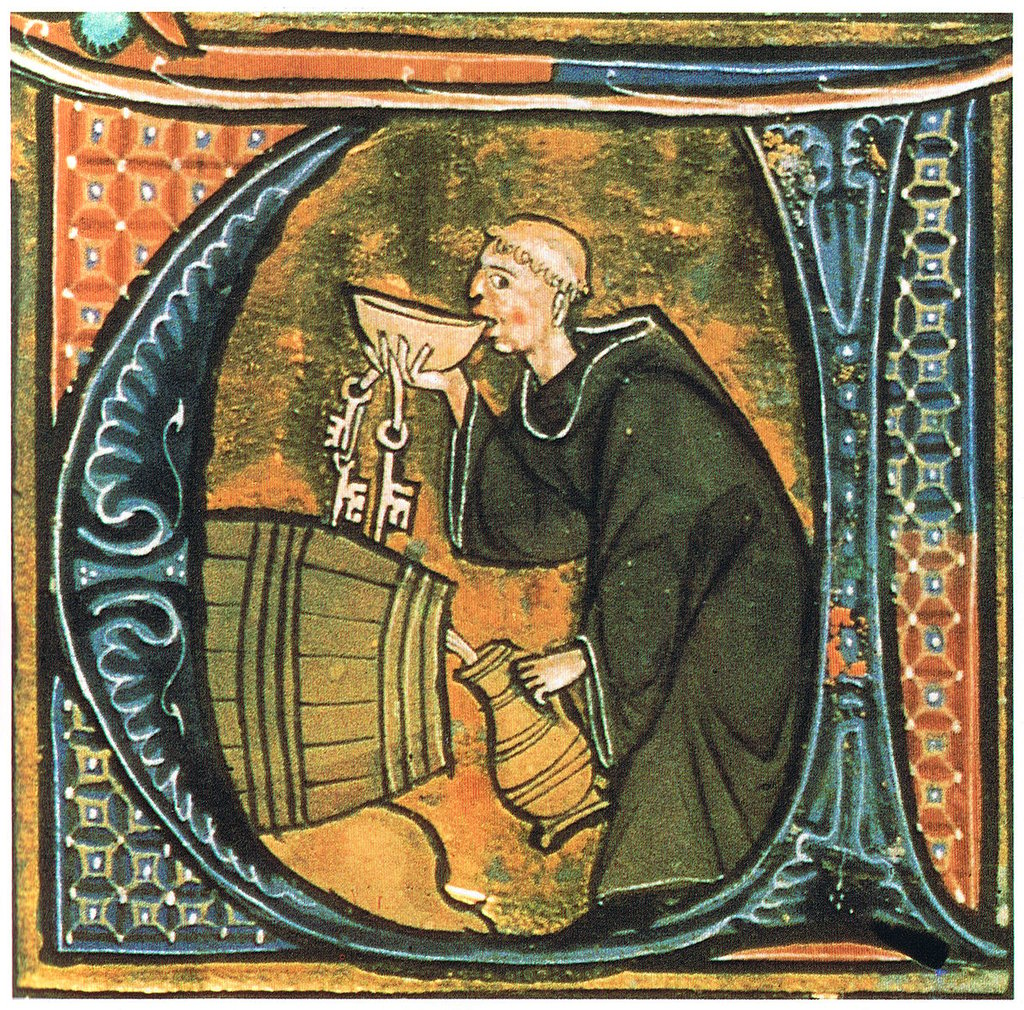
As established earlier, the lack of readily available clean drinking water in Europe made the need for brewers ubiquitous. The specific function of monastic breweries varied on a case-by-case basis. Some brewed just for the monks within the monastery and pilgrims passing through, while others brewed to give away back to the community. Eventually, selling beer (among other goods like cheese and liqueurs) became a popular way to financially support monasteries. As it turns out, a quiet life dedicated to spiritual contemplation left monks with plenty of time to innovate and perfect their craft.
Deus ex Deutschland
Much of what has been said so far applies to all monastic breweries across Europe. However, many of the earliest and most important monastic breweries were located in what is now Germany.
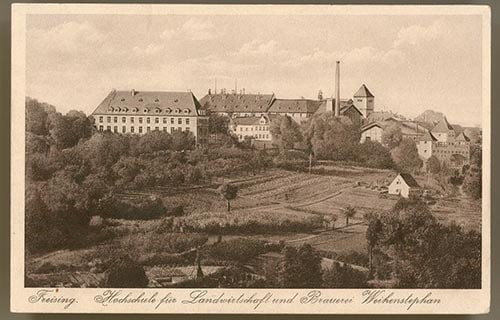
A common piece of beer trivia is the fact that Weihenstephaner, founded in 1040, is the oldest brewery in the world. Less well known is the fact that, originally, Weihenstephaner was a monastic brewery as a part of the Weihenstephan Abbey (which was founded around 725). Similarly, Paulaner, another highly regarded German brewery, was founded in 1634 by the Paulaner Order of Munich. The same is also true of Augustiner-Brau, founded in 1328 by Augustinian monks in Munich. These are in addition to countless other monastic breweries: some lost to time, others buried in historical archives.
Not only did many German monasteries make beer: they revolutionized it. Understandably, when people think of monks brewing beers, their minds drift toward “abbey ales” (e.g., Belgian dubbels, trippels, and quads); however, several essential beer styles (and techniques) have their origins in German monasteries.
One of the most important contributions to beer as we know it today did not come from a monk, but rather a nun. In the eleventh century, Hildegard Von Bingen praised the preservative effects and medical benefits of hops, paving the way for it to become one of the four essential ingredients in beer. Subsequently the monks and nuns of Germany revolutionized the cultivation of hop varieties.
Another significant innovation in beer can be traced back to around 1774 by the monks of the previously mentioned Paulaner Monastery: the creation of the doppelbock, a strong, dark, and sweet lager. A common misconception is that the doppelbock was originally brewed to serve as sustenance for fasting monks during lent (that purpose was actually served by lentbier). Instead, the doppelbock was brewed for the Feast of St. Francis of Paola (the founder of the Paulaner order), which occurred in the spring and often overlapped with the Lenten fasting season. This celebratory brew paved the way for strong beers as we know them today. A subtle nod to the pious roots of the doppelbock can be found in the name of virtually all contemporary doppelbocks. The original doppelbock brewed by the Paulaner was (and still is) named Salvator. Today, virtually all doppelbocks released, in Germany and abroad, end with the suffix –ator as an homage.
(Photo Credit: Wikimedia Commons / Public Domain)
Reformation, Secularization, and Privatization
As previously mentioned, numerous world-renowned German beer brands began as monastery breweries, but what happened between then and now? While no specific reasons can be found for the closure and secularization of most of Germany’s monastic breweries, it can be traced through centuries of both historical upheavals and gradual shifts in mindsets.
The first major step in this shift can be found in the Protestant Reformation in Europe, initiated in 1517 by Martin Luther posting his 95 Theses on the doors of a church in Wittenberg. The fallout from this resulted in a spiritual and political upheaval across Europe, and especially in Germany. Some genuinely bought into Luther’s critique of the Catholic church, and others, especially German noblemen, saw this as an opportunity to shift power away from the church, giving nobles more influence. This shift resulted in the closure of numerous monasteries across Germany, with their breweries going with them. Ironically, Luther himself was an outspoken lover of beer, and he even has a famous quote about this holiest of beverages.
A few centuries later, the Enlightenment would accelerate the trend of monastery closures. In particular, the French Revolution and the influence of Napoleon put both political and military pressure on The Holy Roman Empire to secularize and form The German Confederation in 1815. Notably, Belgium, once a part of the Holy Roman Empire, was not included in this reconfiguration. Around this time is when the breweries of Paulaner, Weinstephaner, and Augustiner, among others, separated from their monastic roots. Thankfully, beer production continued. Some breweries were taken over by the state, while others were privatized, and yet, a select few remain open to this day.
Monks in Modernity
While the vast majority of monastic breweries in Germany have either been closed or secularized, a select few have survived to this day, and they’re making beer that’s easily on par with the well-known Trappist breweries.
Notably, there’s Kloster Weltenberger out of the Weltenberg Abbey. Founded in 617, the abbey opened its brewery in 1050, a mere ten years after Weihenstephan. This makes it the oldest proper monastic brewery in the world. Nearly a millennium of experience has given Weltenberger more than just bragging rights, as their Barock Dunkle won the World Beer Cup title for ‘Best Dunkle’ in 2004, 2008, and 2012. While the ideal way to enjoy a glass of Weltenberger’s beer would be to visit the abbey and sip it in their tavern overlooking the Danube river, thankfully, they export some of their beer overseas.
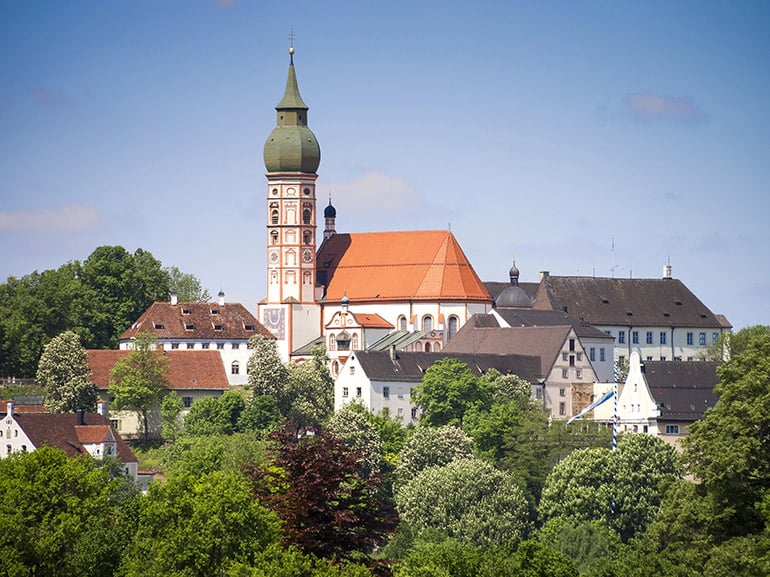
Out of all of Germany’s monastic breweries—past and present—one of the most highly regarded is Kloster Andechs. While many breweries operated for hundreds of years before beginning their brewing operations, the right to brew beer and serve as written into Andechs’ founding document. Founded in 1498, Andechs was founded with the intention of brewing, and it has been doing that task ever since. In 2024, they were named The Beer Connoisseur’s brewery of the year. Today, they are world renowned for their wheat beer, and centuries of experience has clearly assisted in perfecting their craft. Thankfully, their beer is also exported overseas.
There are other breweries in Germany based out of operational monasteries, such as Ettaler Koisterbruari, Kloster Reutberg, an Kloster Kreuzberg. Unfortunately, few of them carry the same level of prestige as their Trappist certified equivalents. Thankfully, for those who seek out the opportunity, there are still current, and former breweries in Germany that are inextricably linked to their monastic roots. As for those who don’t seek out the opportunity, they still get to benefit from the legacy of German monastic tradition, whether it be in the form of enjoying a beer from a former monastic brewery, or at the very least, beer that was shaped by their tremendous innovations and spirited pursuit of beer excellence.



Conversations (0)
No comments yet.