



Non-Alcoholic vs. Alcohol-Free Beer: What’s the Difference?
 Story by:
Jodi Villa
Story by:
Jodi Villa
The world of beer is getting a makeover. Shelf space once dominated by lagers and IPAs is now shared with 0.00% stouts, dealcoholized pilsners, and craft “no-and-low” offerings. However, not all “no-alc” beers mean the same thing”no-alc” can mean different things for different beers, and that distinction matters to consumers, brewers, and regulators. So, what is the difference between “non-alcoholic” beer and “alcohol-free” beer in the U.S.? To answer this, the United States Alcohol and Tobacco Tax and Trade Bureau (TTB) has separate, legal classifications for “non-alcoholic” (NA) and “alcohol-free” (AF) malt beverages.
Per the TTB, a beverage may be labeled “non-alcoholic” only if it contains less than 0.5% alcohol by volume (ABV). If the term “non-alcoholic” is used on the label, it must be accompanied by the phrase, “contains less than 0.5% alcohol by volume,” placed immediately adjacent in a readily legible manner. A non-alcoholic malt beverage cannot simply be labeled as “beer,” “lager,” “ale,” etc.; it must carry the appropriate class/type descriptors like malt beverage, near beer, or cereal beverage.
While the “non-alcoholic” designation allows for up to 0.5% ABV, a product can only be legally labeled “alcohol-free” if it contains no alcohol at all (i.e. 0.00% ABV with no measurable alcohol present). No tolerances are permitted for this claim, and a laboratory analysis must confirm the absence of detectable alcohol before the claim is approved. Like non-alcoholic products, alcohol-free beverages must also use appropriate malt beverage class/type designations on the label, rather than ordinary style names like stout or porter.
How to Make Beer Without Making Alcohol
There are several ways of producing NA beers, and these methods generally fall into two categories: biological, such as arrested fermentation or the use of specialty yeasts, resulting in almost no alcohol being produced during the fermentation process; and physical, including the use of thermal or membrane systems, where the alcoholic compounds are physically removed from the beer after fermentation. These methods result in a beverage with a trace of alcohol, and many well-known brands are producing and selling a variety of great-tasting NA beers.
Making an AF beer, however, is more difficult. AF beers have historically been made using vacuum distillation, or by adding alcohol-free beer flavors to water. Beyond these methods, innovation is ongoing.
Vacuum distillation can be used to gently remove alcohol from fully fermented beer at low temperatures, which protects the flavor, aroma, and body that would normally degrade if the beer were distilled at normal boiling temperatures (173°F / 78°C for ethanol). Vacuum distillation preserves flavor better than high-heat methods, is energy efficient due to lower temperatures, and allows for the recovery of the removed alcohol, which can be repurposed. While vacuum distillation is able to achieve products with 0.0% ABV and can be labeled as alcohol-free, the equipment required for physical removal of alcohol can be expensive, and other costs are involved, such as steam, clean-in-place systems, CO2, and water. Adding the vacuum distillation process to an existing brewery can involve extensive engineering and space planning; and while the potable alcohol by-product can be collected for other uses, such as hard seltzers and craft cocktails, proper licensing, such as obtaining a distiller’s permit from the TTB, is required if the brewer chooses to use or capture and resell alcohol from the dealcoholizing unit. Additionally, insurance and fire codes must be consulted to make sure alcohol storage is allowed on the brewer’s premises. Finally, if the by-product is diluted with water and flushed down the drain, it must be in accordance with local disposal guidelines.
Alcohol-free “beer” can also be produced without brewing at all, by simply combining water with malt-, hop-, or beer-like flavorings. This approach, sometimes used for low-cost products or for creating 0.00% ABV options, avoids fermentation entirely, meaning no alcohol ever needs to be removed. Manufacturers may blend carbonated water with malt extracts, natural or artificial flavor compounds, hop oils, sweeteners, and colorants to mimic the aroma and taste of beer. This method can achieve a completely alcohol-free beverage, but could lack the complexity, mouthfeel, foam, and fermentation-derived character of traditionally brewed beer, functioning more like a flavored soft drink modeled after beer, and offering a simple and inexpensive alternative for consumers who want the taste of beer without any alcohol exposure at all.
Alcohol-Free Craft Beer Without Compromises
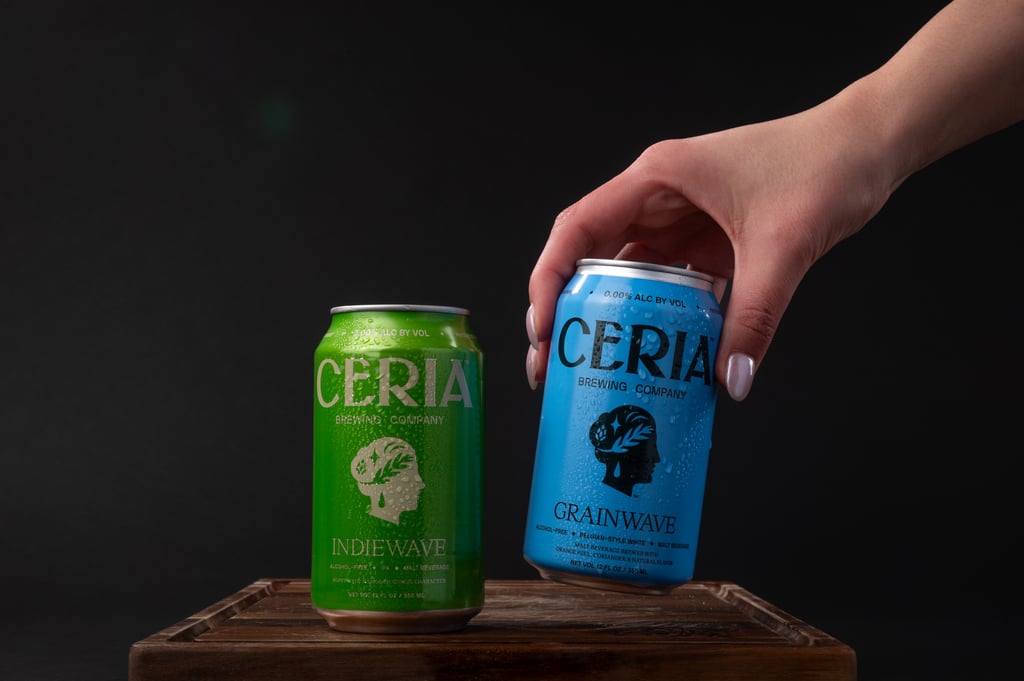
More recently, Ceria Brewing Company has been producing AF beers using their patented brewing method, which utilizes standard brewing equipment and ingredients.
Ceria Brewing’s patented alcohol-free technology refers to a proprietary brewing method developed by the company’s co-founder and brewmaster (Keith Villa, PhD) that allows for the rapid production of true 0.00% ABV craft beers with full flavor, body, aroma, and head retention, something many traditional methods struggle to deliver in alcohol-free form. Ceria’s patented process enables the brewery to achieve no detectable alcohol in their products while still maintaining many of the sensory characteristics of traditional beer that are usually lost in standard non-alcoholic brewing or dealcoholization methods. Utilizing standard brewing equipment and ingredients, Ceria’s approach differs from typical non-alcoholic methods because it was invented specifically to create a full-bodied craft-style beer with 0.00% ABV, rather than simply removing alcohol after normal fermentation or relying on conventional low-alcohol brewing techniques.
Regardless of the method of production, tunnel pasteurization is essential for NA/AF beers because it ensures microbial stability and safety in a product that lacks alcohol’s natural preservative effects. In NA/AF beer, even tiny amounts of remaining yeast or bacteria can continue fermenting, which can create unexpected alcohol, off-flavors, or excess carbonation. Non-pasteurized NA/AF beers can cause cans or bottles to rupture. If there is residual live yeast in the beer, it can ferment in the container, resulting in an alcoholic product. By gently holding the finished beer at a specific temperature over time to neutralize these microorganisms, pasteurization keeps NA/AF beers shelf-stable, consistent in flavor, and reliably at their intended ABV, making it a critical step for quality and consumer safety.
An Option for Everyone
The NA/AF beer market is one of the fastest-growing segments in beer, and current estimates show double-digit year-over-year gains. The NA/AF beer market is responding to changing consumer preferences such as wellness and “sober-curious” lifestyles; and this is being reflected in improved product quality, an increasing number of beer styles and increased availability of NA/AF beers. In addition, without the alcohol (or, with a trace amount in the case of NA beers), these beers can actually be good for you in that there are potential antioxidant and cardiovascular effects. Some studies show non-alcoholic beer contains polyphenols and other compounds from malt and hops that can exert antioxidant effects and may positively influence markers of cardiovascular health. NA/AF beers, which are often lower in calories than alcoholic beers, are sometimes used as post-exercise refreshments, as some research suggests they may boost rehydration and reduce inflammation.
Aside from the theoretical benefits of NA/AF beers, there are also the clearly established benefits of cutting back on overall alcohol consumption. People report improved sleep, more productive mornings and reduced anxiety when cutting out alcohol; alcohol-free beer provides a convenient replacement that can support those changes. Also, with the rise of NA/AF beers, people who abstain from or moderate alcohol can still join social rituals (pubs, celebrations, concerts) without feeling left out.
The rise of non-alcoholic and alcohol-free adult beverages is more than a fad. It is a structural shift in how people think about drinking; and continued investment from large brewers and craft innovation will likely keep improving quality and flavor. New innovations in flavors and techniques, targeted products and changing social norms have turned a once-niche segment into one of the fastest-growing parts of the beer market. For consumers the choices are expanding. You can keep the ritual of a beer in hand while choosing health, safety, or sobriety; but always read the label if you desire or need absolute zero alcohol.
Header Photo Credit: Walker Creates


Conversations (0)
No comments yet.