



Can (and should) U.S. Breweries Try to Cash in on Cask Ale?
 Story by:
Owen Ogletree
Story by:
Owen Ogletree
Walk into any U.S. beer bar, and you’ll probably see the same scene: draft lines snaking from shiny kegs, each filled with pasteurized beer, force-carbonated with industrial carbon dioxide, and kept under CO2 pressure to make the beer flow into a glass with a simple flip of the tap handle. But across the Atlantic, in the pubs of Britain, beer is handled in a unique way that feels almost ceremonial by comparison.
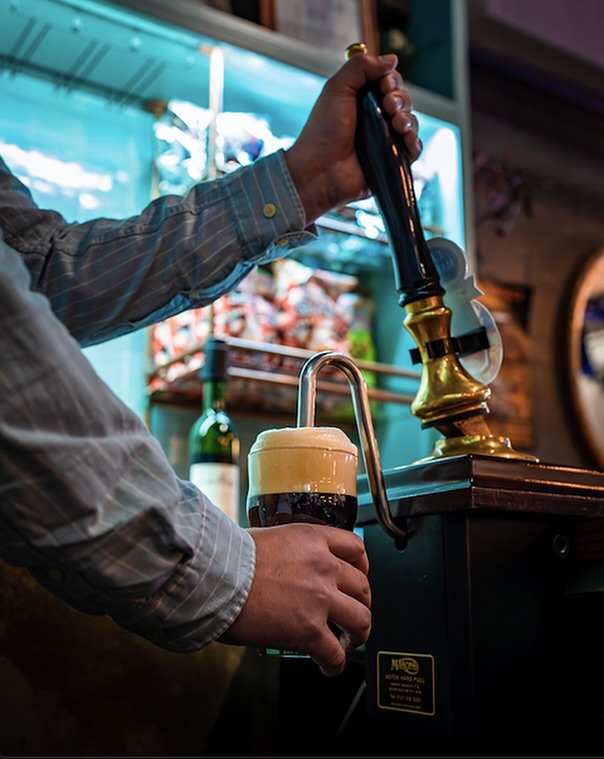
Cask ale isn’t just a drink in the U.K. Instead, it’s a sacred ritual, a small bit of living history poured with care behind the bar. If you’ve ever enjoyed a pint in an English pub, you know the sight: those sturdy handpump taps, shaped like billy clubs, and the satisfying “thunk” noise as the bartender pumps the beer straight from a cask in the cool cellar below.
What Is Cask Ale?
Don’t mistake cask ale for a single style. Cask ales focus more on the process, which is a unique, almost Old World approach to conditioning and serving beer. Pretty much any style can make its way into a cask, but the classics are Mild Ale, Pale Ale, Bitter, Golden Ale, Porter, and Stout. These traditional British pours tend to have less alcohol than the bold, boozy creations popular in American breweries.
How Cask Ale Works (Firkin, Cellaring, Venting, Beer Engine)
Nowhere else on Earth does beer culture cling to this cask tradition quite like the U.K. The process itself is fascinating: beer, still alive with yeast, goes into a 10.8-gallon cask called a “firkin” near the end of fermentation. The yeast gets to work, nibbling up the last bit of sugar, adding a soft amount of CO2 into solution and creating elegant flavor notes that can’t be faked. Once it’s settled, you get a pint that’s fresh, smooth, and easy to drink with no extra gas and absolutely no shortcuts. Ultimately, cask ale is beer in its most honest form.
In England, publicans have the process down to a science. As soon as a delivery arrives, the firkin is set gently in the cellar and left alone. The beer clarifies, the yeast settles, and when the time is right, a wooden peg vents the excess carbonation. Later, a tap goes in, and the handpump brings the beer up to the bar. To some American bar managers, this all sounds like a great deal of effort, or maybe even a bit weird. But a handful have embraced it, determined to bring a slice of British tradition stateside.
David Kaye, manager at Nod Hill Brewery in Connecticut, feels that cask ale connects drinkers to an older, slower way of doing things. “Its flavors are subtle and layered, and can be both rustic and refined,” he explains. “Serving these beers by the imperial pint off our beer engine evokes a sense of heritage, and drinking cask ale with fellow patrons has an Old World social quality. For me, enjoying a properly cellared pint of cask ale is one of those special and genuinely rare experiences in today’s fast-paced world.”
Characteristics of Cask Ale
The best cask beers are served cool, not cold; 50 to 55 degrees Fahrenheit is the sweet spot. They should have a gentle sparkle, never flat (except maybe for a few strong Old Ales and Barleywines that are the exception to the rule). Still, it’s a tough sell for Americans used to icy, fizzy beer. The myth that cask ale is always warm and flat is stubborn, and changing minds takes work.
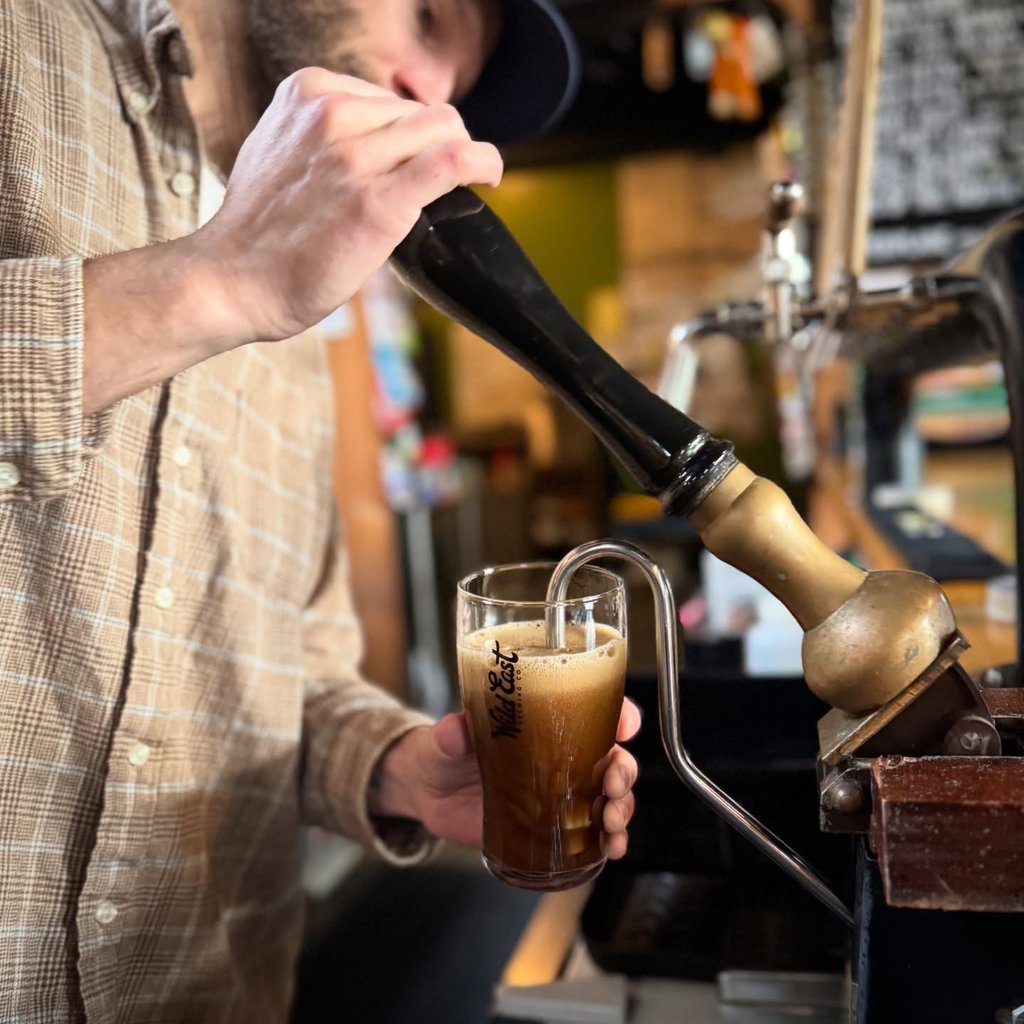
For Tyler March, co-owner of Wild East Brewing in Brooklyn, cask ale forms a rich piece of English tradition that his taproom strives to keep alive. “A beer served at cask temperature with natural carbonation presents itself differently, often even better than the standard keg or canned version,” he notes. “We pride ourselves on making beer using traditional methods, so offering a cask option fits in with our ethos.”
The U.K. Backstory: CAMRA and Why Cask Survived
Cask ale has seen its share of drama in the U.K. Once the most common pour in every pub, it nearly vanished in the 1970s when brewing giants pushed for more industrial, shelf-stable, kegged options. Enter CAMRA (aka the Campaign for Real Ale), a grassroots group that pulled cask beer back from the brink and sparked a renaissance. Today, this tradition is so treasured that there’s even a campaign by the “Keep Cask Alive” organization to have cask ale recognized with UNESCO Intangible Cultural Heritage status.
Could (or should) cask ale ever catch on in the States? Can cask ale escape its current niche status here? The movement is small but growing. More taprooms and festivals are taking the plunge and offering cask-conditioned ales, but it’s still a bit of an uphill climb. Many people in the industry just haven’t learned the ropes yet.
Almost everyone in the U.K. knows about cask ale, but the average American drinker is, frankly, still figuring out what the fuss is about. Getting drinkers in America to try a pint of cask ale takes a bit of coaxing, sampling, promotion, and education. Oregon’s Gigantic Brewing offers regular cask-conditioned ales, and brewer/co-owner Van Havig enjoys explaining cask ale to taproom customers. “You look them right in the eye, and you say, ‘It’s the way God wanted you to drink beer,’” he says. “The history of beer is some sort of bunged-up, naturally or semi-naturally carbonated product. That’s how we drank beer forever.”
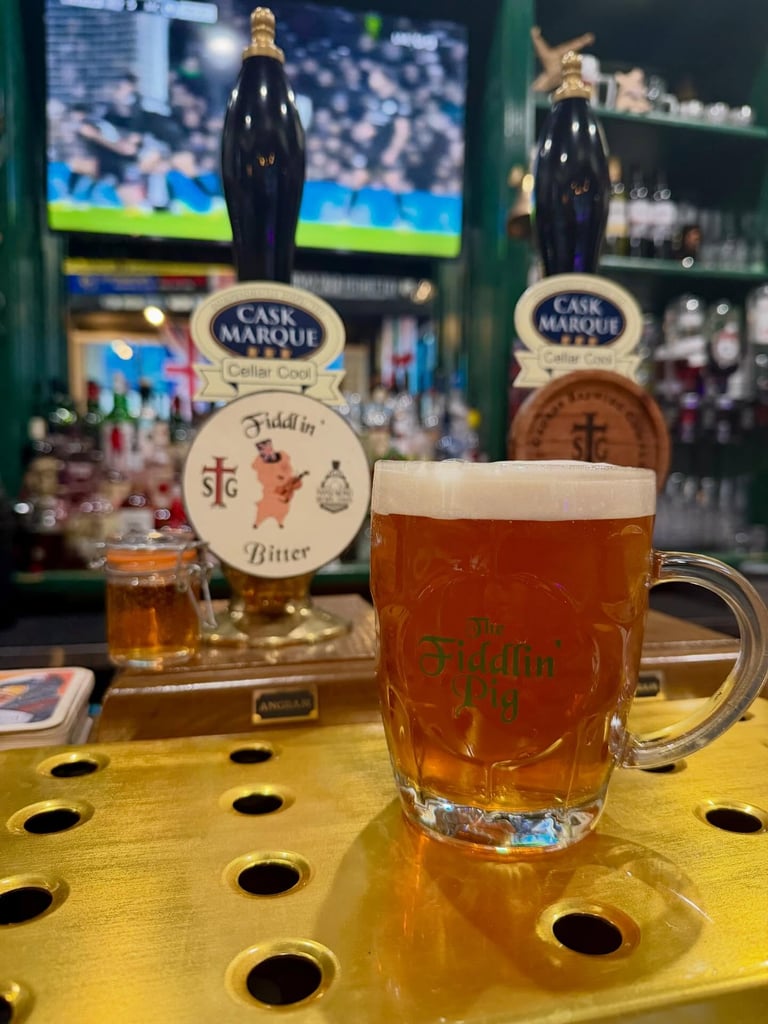
Some U.S. bars and taprooms have even earned Cask Marque accreditation, which is a badge of honor from the U.K.-based group that certifies pubs for serving their cask ale in the proper fashion and in top condition. Cask Marque provides eye-catching plaques for beer outlets to showcase that they serve a great pint of cask ale.
A prime example of a U.S. Cask Marque pub is The Fiddlin’ Pig in Smithfield, Virginia, where owners labor to serve cask ale with the perfect taste, temperature, aroma, and appearance. “Our customers’ experience of having a pint drawn using a beer engine, enjoying the smooth taste that can only come from cask ale, and sharing that experience with friends and family is at the very heart of our pub community,” explains Fiddlin’ Pig publican David Goodman. “Much of our popularity is the result of serving cask ale, providing a unique experience for beer enthusiasts.”
Why Cask Ale Struggles in the U.S.
Of course, leave it to American brewers to get creative… sometimes a little too creative. Around the country, you’ll find some U.S. firkin ales filled with everything from wood chips to peanut butter, coffee beans, fruit, peppers, and candy. Some drinkers love the surprise, while purists might roll their eyes.
Setting up proper cask service isn’t a small task. Breweries and bars need genuine casks, handpumps, and a dedicated cooler, not to mention the know-how to pull it all off. Temperature is critical: too cold, and the flavors hide; too warm, and the beer becomes dull and unappealing.
Many U.K. pubs replace the volume of a pint of cask ale with air from the cellar. This means the firkin of cask ale must be consumed within a couple of days; after that, the beer shows signs of staleness, acidity and oxidation. Many U.K. pubs now add a light volume of carbon dioxide to the cask during handpump dispense. This “cask breather” system does not force CO2 into the beer, but only serves as a protective layer against microbes and oxygen.
The equipment, the training, the maintenance — all of it adds up. Traditional U.K. cask-dispense systems can be expensive and a challenge to install properly, and they require regular maintenance. Beer outlets must decide on whether to use the traditional method of keeping the cask on its side to allow for settling or using a fancy system called a CaskWidge that allows the cask to be served in an upright position by employing a unique system of venting excess CO2, while using a floating nozzle that pulls cask ale for dispense from the top of the beer.
Are U.S. beer outlets prepared to go to all this trouble for cask ale? Many are up to the challenge, motivated by a deep love of cask, probably gained from travels abroad. American brewers are struggling financially these days and would probably find it challenging to afford all the accoutrements needed for proper cask ale service. For today’s brewers, time and money form the main priorities.
The stakes are even higher at beer festivals. Organizers have to plan for storage, venting, and serving, all while keeping the casks cool and training staff in the fine art of cask tapping and pouring. It’s a lot more work than rolling out a keg and letting the CO2 do the heavy lifting.
Why Some U.S. Bars Still Do It
So what’s in it for American taprooms? There’s the thrill of offering something out of the ordinary. The lower carbonation and softer texture make cask ale feel gentler and less filling than standard draft beer. Some breweries make a show of it, raffling off the chance to tap a cask in front of the crowd, and people line up to taste the difference. Try the same beer on cask and on keg side-by-side, and you might be surprised by the divergence.
Hogshead Brewery & Taproom frequently offers the same beer on keg and cask. Hogshead’s David Leichty notes, “We feel that cask ale offers a more nuanced, intimate taste, enhanced by the smooth mouthfeel and the theater of the beer engine and cascading effect. We lean into the artistry of cask conditioning; it’s our niche and passion in a crowded Denver beer scene.”
Chris Quinn, owner of Chicago’s Beer Temple pub, sees cask ale as a synergy of a brewer’s expertise, a publican’s cellarmanship, and a customer’s desire for something special. “Without all three of these elements, a cask program won’t work,” he claims. “Real ale has been successful at Beer Temple because it forms a wonderful experience you can’t get at home.”
As American palates shift toward lower-alcohol, more sessionable beers, cask ale might be just the thing to fill the gap. Blake Tyers of Creature Comforts Brewing in Athens, Georgia, helped install the taproom’s popular “caskerator” and handpump beer engine. He adds, “Lower carbonation, lower ABV, but full of flavor and drinkability, which checks many of the boxes today’s drinkers are looking for. The word about cask ale is slowly getting out, and folks in the U.S. are finding the pints.”
Feature Image Credit: Nod Hill Brewery


I’m from Staffordshire in England, near Burton on Trent and yes, if there is anything I miss about the UK aside from the pubs, the walks, the history, and the sarcasm, it’s English beers and especially cask ales. I have a small English pub in my basement here in Georgia USA, The Green Man, and I brew my own British beers. A couple of years ago I purchased a Pint 365 beer engine with its own dedicated kegerator. I typically clone Theakston’s old Peculier for this hand pump and it is a fantastic experience to get close to my favourite beer. I think America is ready and I think Americans are slowly moving away from hop rockets. It’s time for real ale with maybe a slightly higher ABV than the UK served from casks.