



A Journey to Einbeck and Bock
 Story by:
James Link
Story by:
James Link
When one thinks of Bock beer today, Bavaria, and Munich in particular, often come to mind. Yet the style’s roots lead north to Einbeck, Germany, where strong beer was documented as early as 1378. The medieval Bock beer in Einbeck was not identical to the bottom-fermented Bock lagers we know today, but its brewing tradition and name helped shape the style that later developed in Bavaria.
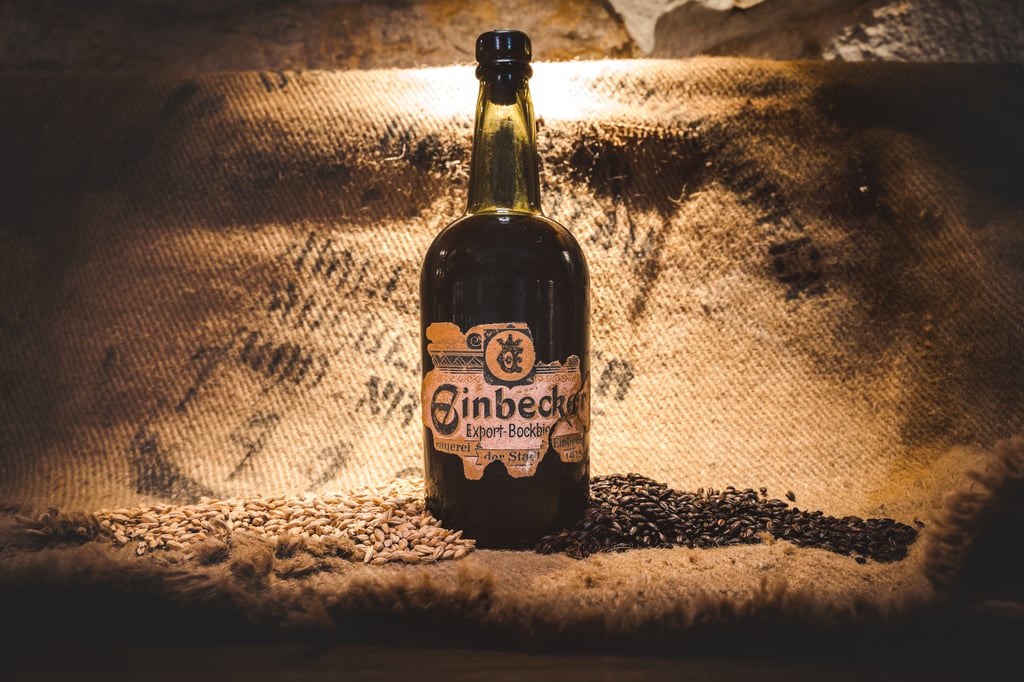
Einbecker Brauhaus still draws on that history, producing what are, in my opinion, some of the finest Bock beers available. In 2016, the brewery introduced Ainpöckisch Bier 1378, an unfiltered strong beer inspired by the town’s historic brewing tradition.
How Einbeck Became a Brewing Epicenter
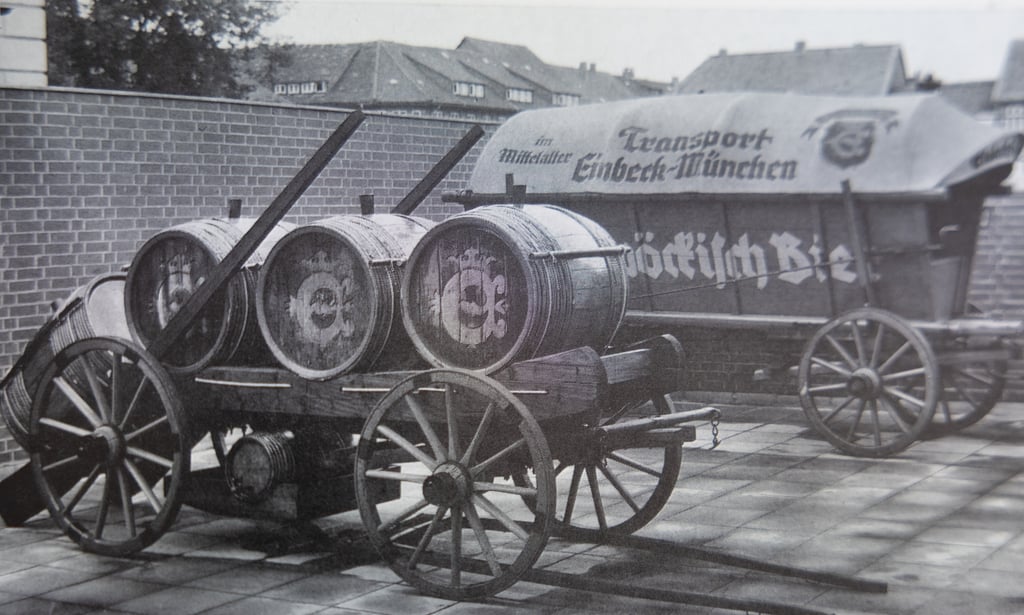
Einbeck joined the Hanseatic League in 1368, a medieval cooperative of merchants formed to establish monopolies and facilitate long-distance trade. It was then possible to transport beer as far as Stockholm to the north and Munich to the south. The latter was achieved using horse-drawn wagons accompanied by mounted armed guards. With this vast expanse of distribution came the need for higher production. Brewing became deeply woven into life in Einbeck, where more than 700 houses eventually held brewing rights. Many of the picturesque timber-framed houses featured high, arched doorways wide enough for brewing equipment to be moved inside, and those distinctive entrances can still be seen throughout the city center today.
According to local tradition, Martin Luther was given Einbecker beer at the Diet of Worms in 1521, where he had been summoned to either recant or reaffirm his criticisms of the Catholic Church. The famous line describing Einbecker beer as “the best drink known to man” has also long been attributed to him.
To fully understand the historical significance of beer in Germany, one must look no further than 1516, when Duke Wilhelm IV of Bavaria enacted the brewing ordinance later known as the Reinheitsgebot. The law specified barley, hops and water as the ingredients permitted in Bavarian beer; yeast was incorporated into later formulations once its role in fermentation became understood. When the German Empire was formed in 1871, Bavaria retained special rights concerning its own beer laws rather than immediately imposing them nationwide. Versions of the purity standard gradually spread elsewhere before becoming part of empire-wide beer legislation in 1906.
A Visit to Einbeck Today
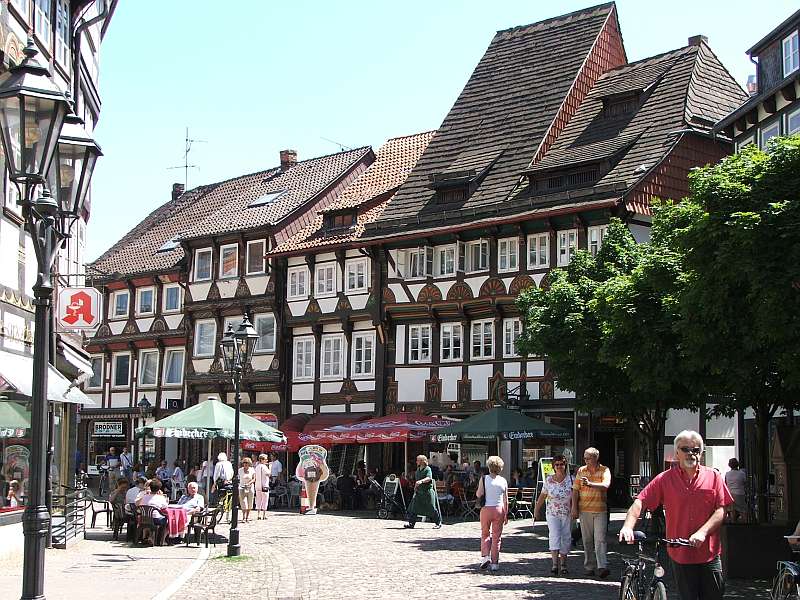
Photo Courtesy Wikimedia Commons/Longbow4u
I was fortunate to have the opportunity to visit Einbeck on two separate occasions. During my first visit with my brother, we were greeted at the local train station by members of the Einbeck Partner City Committee and whisked off to the brewery for its daily tour. The visit culminated in the tasting room, where we enjoyed pitchers of Winter-Bock accompanied by baskets of dark bread, cheese and cold cuts. Afterward, we explored the historic medieval city, whose ancient walls still bear the scars of cannonballs from long-forgotten wars, offering a tangible connection to its remarkable history.
Eulenfest and Winterbock
My second visit was to Einbeck’s Eulenfest, the city’s massive annual festival, which celebrates its 50th edition this October. The three-day event is the largest city festival in southern Lower Saxony, drawing roughly 100,000 guests with well-known musicians, market stalls and entertainment throughout the historic center. Einbecker, a major sponsor of the festival, traditionally helps open the celebration with the ceremonial tapping of its annual Winter-Bock.
Seven Bocks From Einbecker
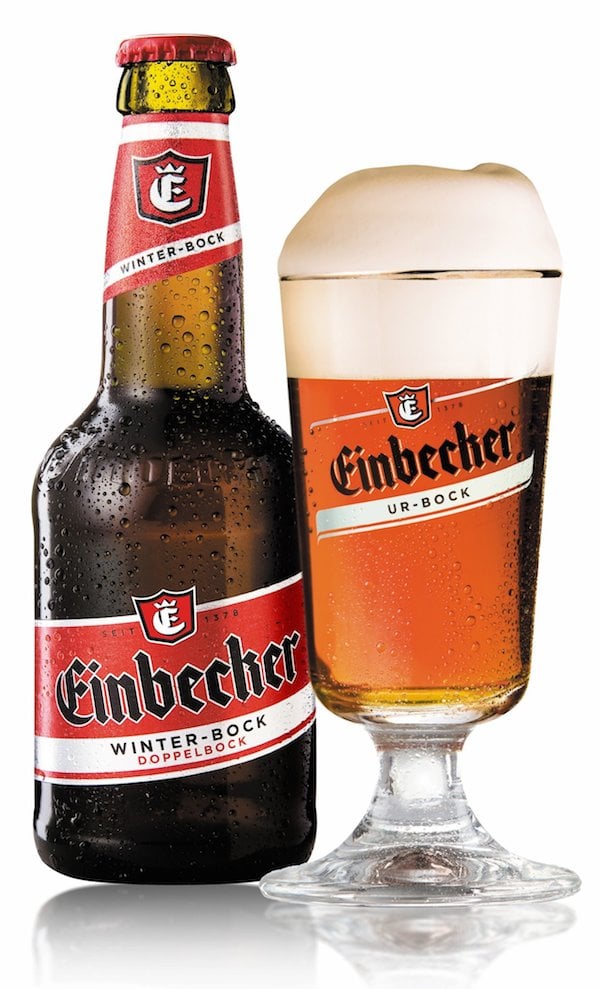
Einbeck has a rich history of brewing excellence. Across its regular lineup and specialty releases, Einbecker has produced an unusually broad range of Bock beers, each with its own distinctive personality and demonstrating just how diverse the style can be. The seven expressions below offer a particularly good illustration:
Ainpöckisch Bock Bier – Also known as 1378, Ainpöckisch Bock Bier was originally brewed at a higher gravity than most beers of that time in order to be ideally suited for long-distance transport. The modern Ainpöckisch 1378 displays a slight haze as well as a deep golden hue and is respected for its sweet, grainy malt character in addition to its smooth alcoholic warming.
UR Bock Hell – Golden in color and quite clear, with soft, persistent carbonation that supports a medium white head. The aroma is light, grainy and almost honey-like in nature, while the flavor has a lightly kilned Munich malt character that delivers a firm punch of strength at 6.5% ABV, separating it from other pale lagers such as Pilsners or Munich Helles. Malty sweetness is offset by lower-alpha-acid hops to create balance and clean up the finish.
Mai UR Bock – A pleasant, clean, honey-like aroma greets your nostrils upon the initial pour. Amber-hued and very clear, the beer supports a medium, bone-colored head. Although a touch of noble hops is present in the flavor profile, make no mistake: This is a malt-forward beer that features a sweetish complexity of maltiness throughout. Alcohol at 6.5% ABV is well hidden. A perceived bitterness in the finish prevents cloying sweetness.
UR-Bock Dunkel – A classic—and my favorite of the group. A shade darker than the Mai UR Bock, it is topped with a medium-sized, off-white head and displays similar clarity. The flavor is malt-forward and exceptionally clean, showcasing a pure and well-executed fermentation. The deep, rich malt character found here is difficult to find elsewhere at this alcohol level of 6.5% ABV. Hop character is evident only in a supporting role. A must for Bock lovers.
Winter-Bock – Einbecker’s Doppelbock, at 7.5% ABV, is a seasonal Bock brewed to be enjoyed during the winter holiday season, with enough strength to warm the innards. It is a mahogany-colored, full-bodied beer that delivers a punch of rich malt flavor that persists long after each sip. Very clean and well-conditioned, drawing on nearly 650 years of documented Einbeck brewing tradition.
Barrel Bock – Einbecker expanded its Bock lineup in 2024 with this limited Doppelbock, matured in former Bourbon whiskey barrels made from American white oak. The barrel aging adds woody and whiskey-derived character to the beer’s rich malt profile while bringing the finished beer to 9.1% ABV. A true winter warmer, Barrel Bock was initially limited to just 10,000 bottles.
Null Bock – Recognizing a global trend toward alcohol-free specialty beers, Einbecker has carefully dealcoholized its UR-Bock while preserving its signature rich malt flavor. Since alcohol-free beers can often lack flavor, this innovation is likely to be well received by consumers seeking a flavorful, alcohol-free alternative. Like the Whiskey Barrel Bock, Null Bock is not yet available in the United States.
I found Einbeck to be charming and its people warm, friendly and hospitable. It’s hard to imagine a better place to visit, explore and enjoy a beer.
All Body Photos Courtesy Einbecker Brewery
Header Photo Courtesy Einbecker Brauhaus AG



Conversations (0)
No comments yet.