



Jameson Caskmates Brings Whiskey And Stout Together
 Story by:
Jonathan Ingram
Story by:
Jonathan Ingram
It’s not an unusual practice for people to round out the potency, inspiration and fire of whiskey with beer. From the classic shot of whiskey and a beer chaser sometimes favored by drinkers to distillers using ex-beer barrels to add a soft, ale-like vignette to their whiskey, the idea has been around.
But a microbrewery and distillery within 12 miles of each other in Cork, Ireland have come up with a new and engaging approach. Shane Long, the head brewer at Franciscan Well Brewery created an imperial stout conditioned in barrels previously used to age Jameson Irish Whiskey. The barrels were then returned to Dave Quinn at Jameson Distillery, where Jameson was added back into the barrels.
The result is what has been branded Caskmates and an entirely new approach to whiskey, which in this case includes a touch of hops in the aftertaste. Not only is the triple-distilled whiskey smooth with its nose of fruit, there are notes of cocoa and a touch of coffee roastiness followed by a faint aftertaste of hops.
Both the Premium Stout of Franciscan Well and the follow-up of Caskmates were well received in Ireland. The whiskey is already in distribution in the U.S. and Jameson is encouraging the future arrival of the Premium Stout to the U.S. as well.
“Beer and whiskey go well together,” said Patrick Caulfield, the senior brand manager of Jameson, “but the beauty of this whiskey is that it wasn’t planned out from a long term perspective. It really was down to a close relationship between Dave and Shane that it became something we needed to bring to our consumers.”
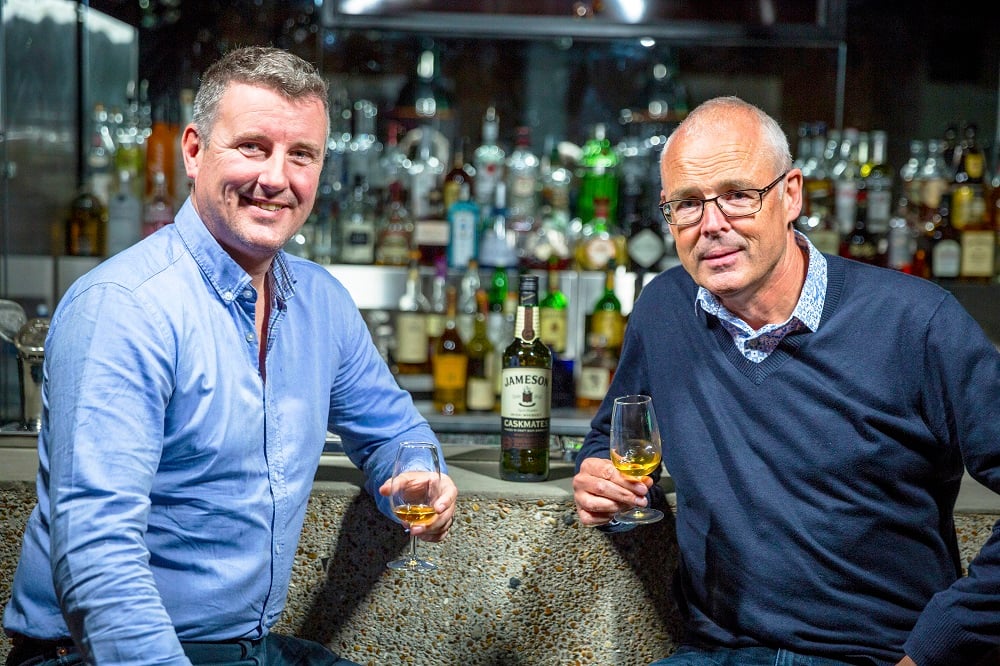
Shane Long, head brewer at Franciscan Well, and Dave Quinn, Head of Whiskey Science at Jameson enjoy a glass of Caskmates.
On the other hand, Jameson has long been using a variety of barrels to create its whiskeys. “We age Jameson whiskeys in port, sherry and bourbon barrels,” said Caulfield, “but the beer barrel was born out of a conversation.”
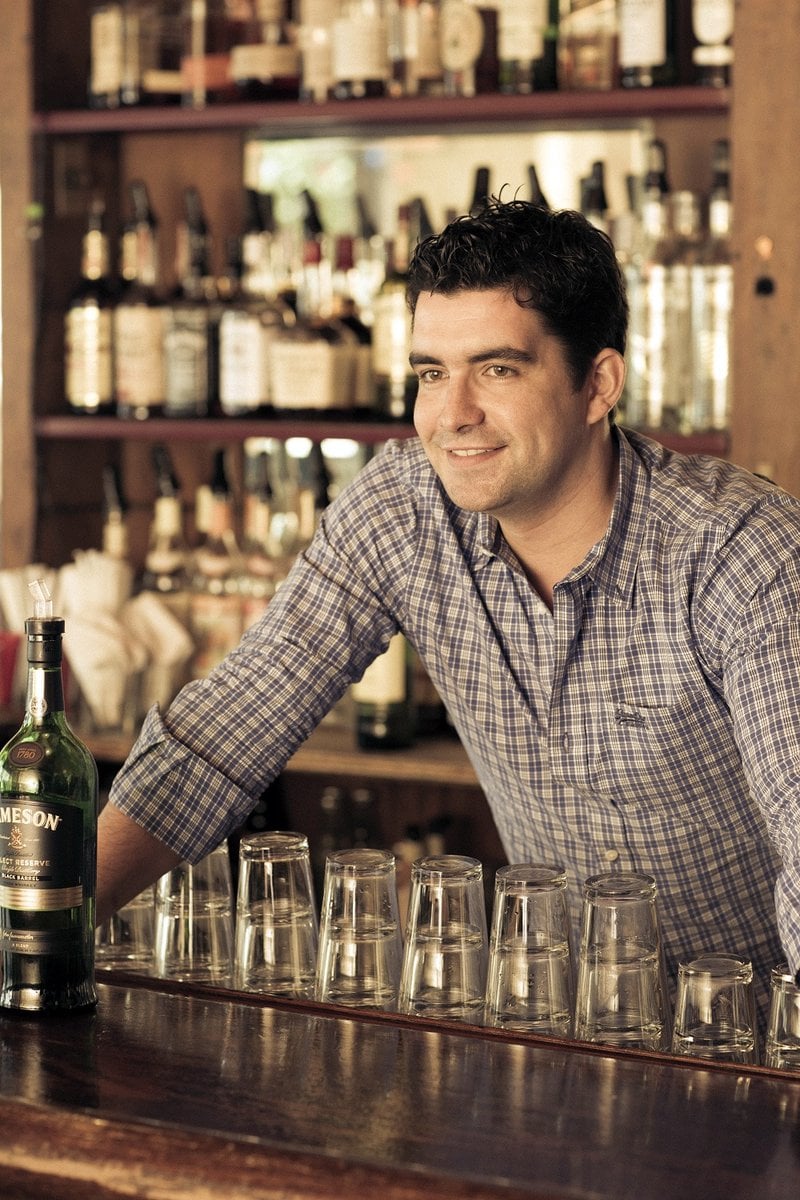
Caulfield himself is from Dublin and is now working in New York, which gives him a unique perspective on the discovery trend in both the beer and spirits market. “Today’s world is all about people discovering something different and new,” he said. “It allows Jameson to do something relevant. It’s amazing since I arrived in the U.S. four years ago just how much people’s sense of discovery and the repertoire of brands, whether it’s whiskey or beer, has evolved massively.”
To start at the beginning, Ireland has undergone a beer revival in the sense of smaller, independent breweries getting established that provide a wider range of choices for drinkers long familiar with homegrown brews and macro imports.
“For a country that drinks an awful lot, there has not been a big array of selection, specifically around beer,” said Caulfield. “So it’s nice to see the selection. It’s nice to see there’s an increase of beers coming from smaller brands and the Irish seem to have taken to them in a very strong fashion.”
Patrick Caulfield thinks Caskmates will help increase diversity among Ireland’s craft beer selection.
Founded in 1998, Franciscan Well is one of the recent start-ups that have enjoyed success producing a range of German and Irish styles using barley sourced in Ireland and the U.K. plus hops sourced from Germany, the Czech Republic, England and the U.S. The original brewpub sits on the site of a former Franciscan monastery whose well was said to produce water with curative powers.
Long, who went to college in England to study hotel management, returned to Cork from managing one of the largest Irish clubs in London to take up craft brewing. With an investment partner, he opened Franciscan Well and began serving beers made from his own recipes. At the time, Long’s brewpub was one of 11 craft start-ups in Ireland and became one of three to survive. The country now has over 60 microbreweries.
After 14 years of operation and quite a few beer awards, Franciscan Well was sold in 2012 to Molson Coors U.K. & Ireland to facilitate expansion and greater export opportunities. The brewery recently moved to a new 50,000 square foot facility in the heart of Cork, where the capacity is over 100,000 barrels. At this year’s World Beer Awards, Franciscan Well took home six medals.
In 2013, Quinn, the Master of Whiskey Science at Jameson, met with Long in a Cork pub while in the company of Master Distiller Brian Nation. Over drinks, Long suggested brewing a stout strong enough to benefit from aging in a Jameson Original barrel. Thus, Premium Stout Aged in Jameson Irish Whiskey Barrel Casks was born. It went on to win a Gold Medal in the summer of 2013 at the International Beer Challenge in the Specialty category.
Admittedly, aging stouts in former whiskey barrels, particularly bourbon barrels, was not a new idea and had been well under way since the 1990s in the U.S. Three Floyds Dark Lord is one of the best known examples. It has created a release day festival which has become an annual phenomenon in northern Indiana. The Goose Island brand has dedicated an entire building to its barrel-aging program in Chicago.
Not only have bourbon barrels been sought after and shipped all over the world after one-time use as legislated by industry regulations, but European brewers began using whiskey barrels from distillers at home as well. The whiskey barrels add an unmistakably strong and sweet boozy nose to beers, particularly bourbon barrels and impart alcohol into the beer as well as flavor.

Dave Quinn chalks Caskmates up as a successful collaboration.
There is a quintessential artisan aspect to the barrel aging, says Long. “Every batch has got a character of its own. You’re dealing with the casks and a different entity.”
The twist to this story came when Long asked Quinn what he would do with the barrels once his first batch of stout was ready for market. Quinn eventually took the opportunity to age some Jameson for a variety of time periods and was pleasantly surprised by the results.
Where the Jameson has notes of sherry and sweetness – it’s aged in both bourbon barrels made with American oak and sherry barrels – the additional stay with the stout produced the cocoa and coffee notes with some butterscotch at the finish. The bourbon and sherry influence are still there, but as a smooth triple-distilled backdrop to the new stout influence.
“When the stout-seasoned Jameson barrels arrived back at Midleton from Franciscan Well, curiosity got the better of us and we experimented by maturing our Jameson in the casks,” said Quinn. “We found that after six months, the perfect balance of flavor was achieved and we couldn’t be happier with the results.”
The other good news is that Premium Stout Aged in Jameson Irish Whiskey Casks also took off in Ireland and in London in much the way barrel-aged stouts became popular in the U.S.
“The fact the beer is so good was testimony and the brewer wanted to create more,” said Caulfield. “That enabled us to have a larger supply of the barrels to make Caskmates more readily available.”
Caskmates started out with a small distribution in Ireland and was touted with the tag line of “Triple distilled, once stouted.” Like the stout, the demand for the whiskey was quickly apparent.
Perhaps the best way to appreciate Caskmates is with an imperial stout, he suggests, particularly if you’re intrigued by hops and whiskey. “If you try Jameson Original next to Caskmates, you can really tell where the hops are on the back end,” he said. “Also, the Jameson Caskmates and then the Jameson Original gives you a way of tasting the hops.”
Caulfield hopes to see Premium Stout available in the U.S. “We’re delighted to see how many people in the U.S. are excited about this collaboration. We’re trying to work with Franciscan Well about making the beer available in the U.S. So you can taste the influence of the whiskey on the stout and of the stout on the whiskey.”
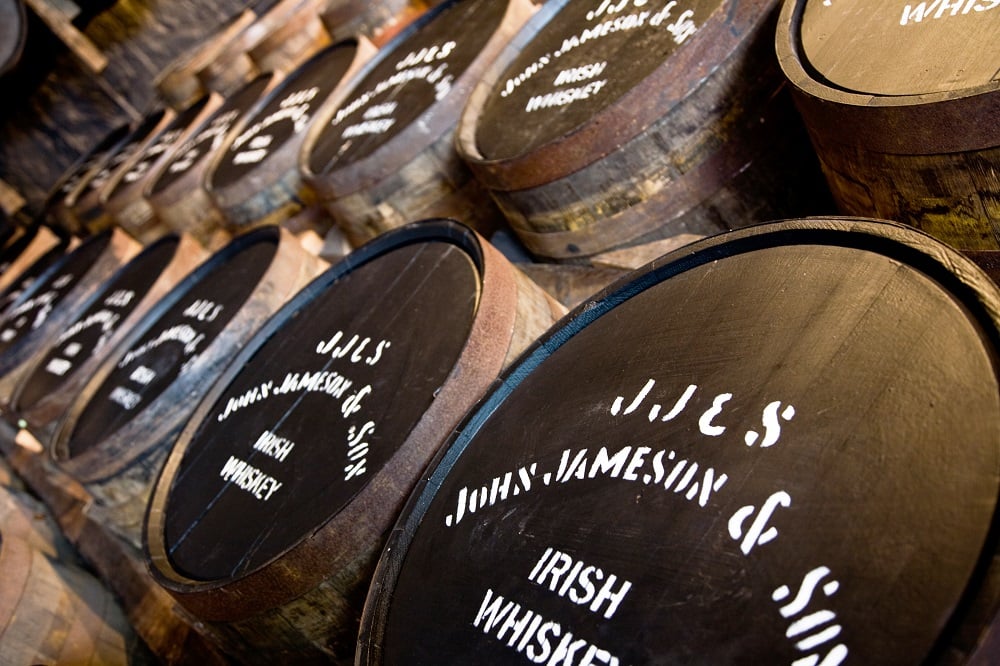
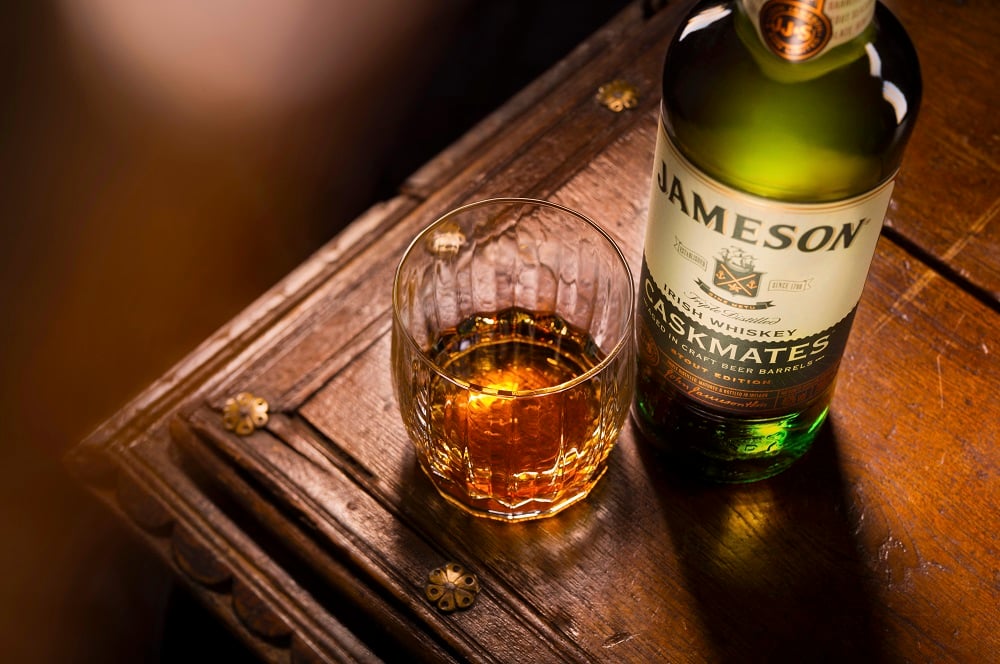
The selfsame barrels that Franciscan Well and Jameson employed for Caskmates.
For the record, the Original is added to the barrels without any hops being involved other than the influence from the stout. “The hops come from the beer resting in the barrel,” said Caulfield. “What’s really nice is the fact we only use barrels that have been previously used in the U.S. The character of the previous American spirit that has rested in there, combined with the Jameson combined with the stout it’s a nice harmony between the three. The hops come from the beer that was in there before.”
The barrels, in effect, live quadruple lives.
Not surprisingly, the experimentation now continues among Franciscan and Jameson. A pale ale influenced by Jameson barrel-aging took a bronze at the International Beer Challenge this summer. There are other concoctions in the works, said Caulfield. “There’s an IPA and the question of what would that taste like with whiskey? That’s the exciting thing – not knowing what will come out. ‘OK, let’s do an IPA edition. What impact will that have? Will it be in the same vein as the stout and have as much of a profile as the stout?’”
For now, the Caskmates stout-influenced whiskey has become one of the more inventive and intriguing new developments to come out of creative brewing.
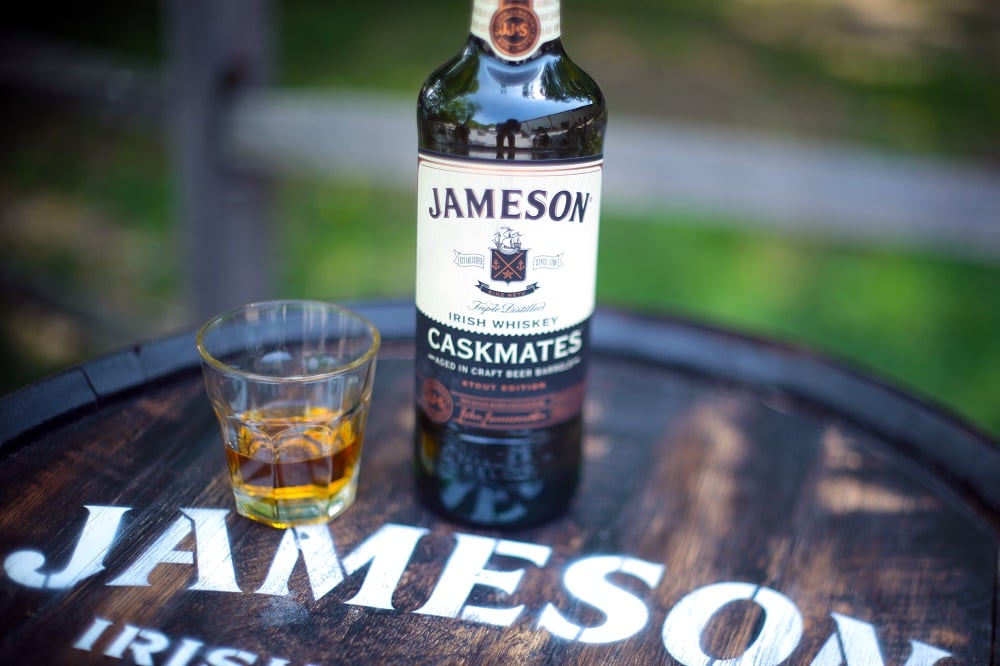
Perhaps the best way to appreciate Caskmates is with an imperial stout, particularly if you’re intrigued by hops and whiskey, says Caulfield.
Conversations (0)
No comments yet.

Share or leave a comment