




Trending Hops for 2023
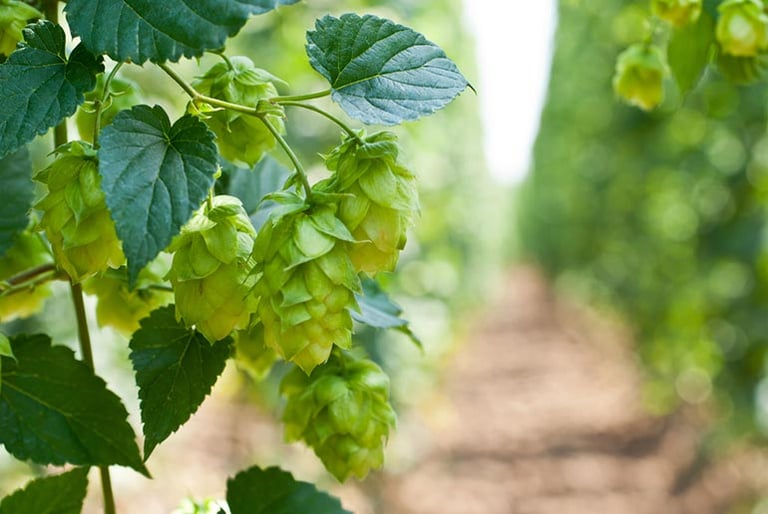
Without hops, beer would be far less interesting. Learn about out the year's top trending hops being considered by craft brewers in our annual The Hop Report.
 Story by:
Jonathan Ingram
Story by:
Jonathan Ingram
In addition to being agronomists and scientists, hop growers have to be soothsayers. Due to the long gestation of a hop cultivar before it gets into brewing kettles, generally nine or ten years, there’s an art to choosing which types to send down the long path that culminates in testing by brewers and then entering the marketplace.
In the last decade, American hop growers in the Pacific Northwest, whose “green gold” has been driving the independent brewing movement for four decades, have been focused on dual-purpose hops while keeping a sharp eye on bittering hops. The brewers making the majority of beer in the U.S. and around the world, after all, generate a strong demand for bittering options.
This year’s new entries of Vista and McKenzie represent the dual-purpose hops and Helios is a very promising bittering hop.
The rise of sales by independent brewers of American-style IPAs, from West Coast to double, session, New England and now cold versions, has been evident from the early 2000s. That consistent rise in popularity of IPAs coincided with some favorites that began making their way up the wires at the same time such as Citra and Simcoe or the triple play known as CTZ. These are classic examples of the dual-purpose hops with alpha acids for bittering and relatively large amounts of oils for flavor and aroma, giving brewers flexibility on how they are used.
It’s worthwhile to remember the origin of Cascade hops, the longtime driver of independent brewing since Ken Grossman recognized their potential in the Liberty Ale made by Fritz Maytag and Anchor Brewing all the way back in 1976. It was the major brewers who initially relied on Cascade for bittering in its earlier years before Grossman made the hop a craft classic with Sierra Nevada Pale Ale.
Still in the top five in terms of acreage strung in Washington, Oregon and Idaho, Cascade is the iconic dual-purpose hop. The movement it helped start continues with the American-style IPAs now comprising half of the independent brewing market. In addition, there is demand for dual-purpose hops from those major brewers who have acquired reliable IPA brands such as Lagunitas, Voodoo Ranger, Two-Hearted IPA and Stone, to mention a few.
“The market will decide” is an old business bromide that is always true for new hops. What is trending now among relatively recent arrivals in the market covered in this annual report?
Strata, introduced in 2018, gained 250 strung acres in the Pacific Northwest in 2022 according to the Statistics Service of the U.S. Department of Agriculture. That puts it at 1,083 acres and top ten territory if the trend continues. A dual-purpose hop, this kind of growth indicates a good response from brewers in terms of introducing a new range of flavor possibilities and blending options with other favorites. Growers are finding good production per acre and hardiness.
Others trending that have appeared in this space in years past include Talus, which gained an impressive 416 acres of bines on trellises in Washington and Oregon in 2022. Cashmere moved up 93 acres to 791. Interestingly, Sabro has declined from its darling status of 1,342 acres harvested in 2021 to 893 strung for 2022.
Among those introduced from the Antipodes, Eclipse looks to be a rising star out of Hop Products Australia with a harvest increase of 87 percent. New to the market, Akoya is a German-bred aroma hop recently out of trials.
Vista
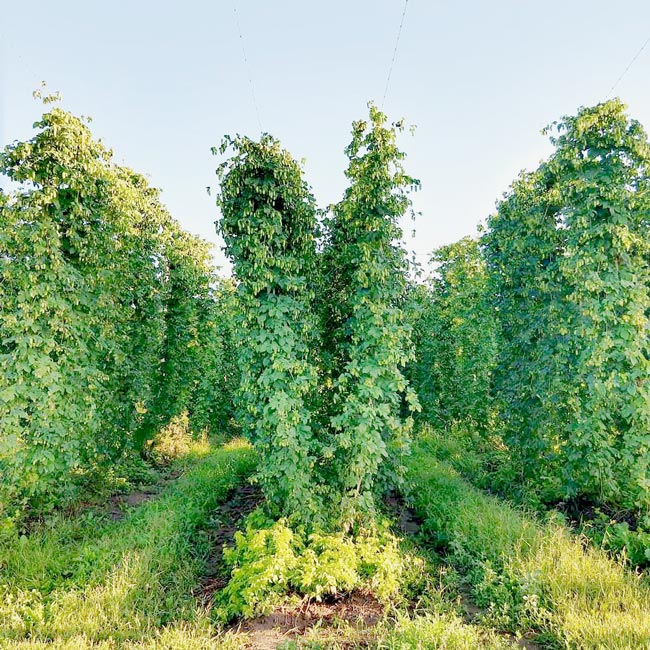
Well known by its long identifying number from the USDA’s Agricultural Research Service and its large cones well before receiving its name in 2022, Vista is an exciting new hop because of its origin and reception. It came out of the public program, making it available to all growers without licensing. The cooperative effort anchored in Corvallis, Oregon has recently produced Cashmere and Triumph. Like its recent predecessors, Vista works well for double dry hopping in the current push toward juicy and hazy beers. Quickly becoming known for working well with other popular varieties, Vista’s flavor profile includes melon and tropical flavors such as papaya and white peach and pear.
Steve Luke, an award-winning brewer at nano-sized Cloudburst Brewing in Seattle, told the Brewers Association why Vista worked so well for him during its trial period. “We used Vista in a pale ale all the way through, flavor additions in the kettle and whirlpool, and in the dry hop. I remember it having notes of Meyer lemon, ruby red grapefruit and bright pine.”
McKenzie
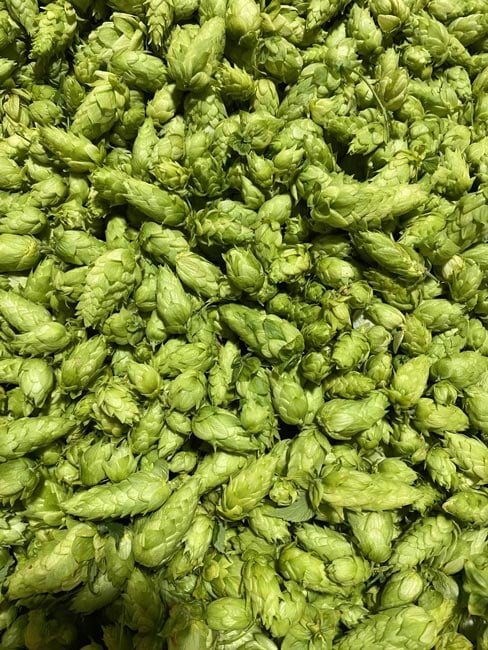
The first variety to be released by the West Coast Hop Breeding Co. out of Oregon, McKenzie was specifically bred to be grown in Oregon and highlight the area’s terroir. McKenzie has a dual purpose in terms of working well in West Coast IPAs and the juicy New England style. Grapefruit, lemon, nectarine and melon aromas are backed by pine, resin, and wood. The oil content (2.0 to 3.0 ml./100 gms.) leans strongly toward juicy while the alpha acid is a likeable 9-11 percent for those brewers making the increasingly more fruit-forward West Coast style.
Hop guru Stan Hieronymus has long covered the significance of terroir, the idea that bines in one location may be more productive and produce different aroma/flavor than bines in a different location. Whether this hop becomes prominent among Oregon growers will be interesting to watch.
Photo Courtesy West Coast Hop Breeding
Helios
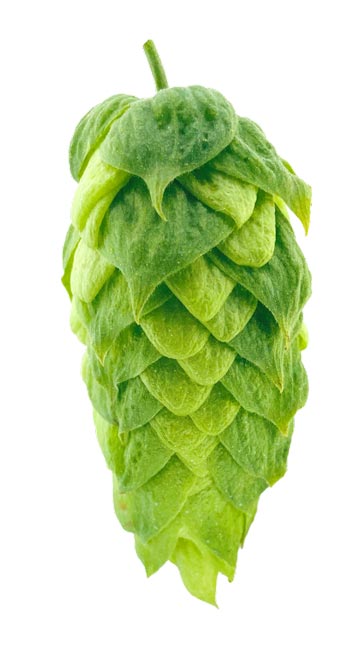
A monster hit both figuratively and literally. Named after the god of the sun, ironically, it grows so tall and thick, seeking the sun, that it tends to create more shade than usual in the trellised fields. Helios delivers an outstanding acid content when it comes to bittering. Its alpha-acid percentage is 18 to 20 percent and the oils comes in at 1.5 to 2.0 milliliters per 100 grams. The aroma and flavor are said to be mild with outstanding characteristics of spice and resin along with slightly floral notes.
The low co-humulone content helps keep the bittering smoother and more palatable. Trademarked by Hopsteiner, Helios is very productive and likely to end up with large-scale brewers and help growers when it comes to a hop that has a sustained market.
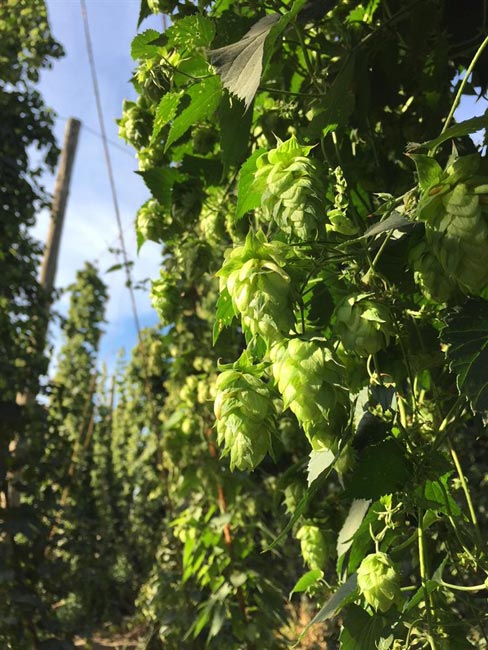
Cashmere
What’s in a name? Cashmere wool is never out of style when it comes to clothing, because it’s so comfortable and versatile as long as you’re making sweaters. The Cashmere hop is versatile, especially when you’re making hop-forward ales. A public domain cultivar, it plays well with other traditional hops in those high-ABV West Coast Style IPAs by adding a lemon drop or adds zest to a pale ale. The latest brewing trends are biotransformation and cold IPA. The delicate lemony flavors of Cashmere can be enhanced by biotransformation in juicy New England beers, and they match well with the lager yeasts used in cold IPA, which aim to be clean, crisp, dry and on the slightly more bitter side.
Photo Courtesy BSG Craft Brewing
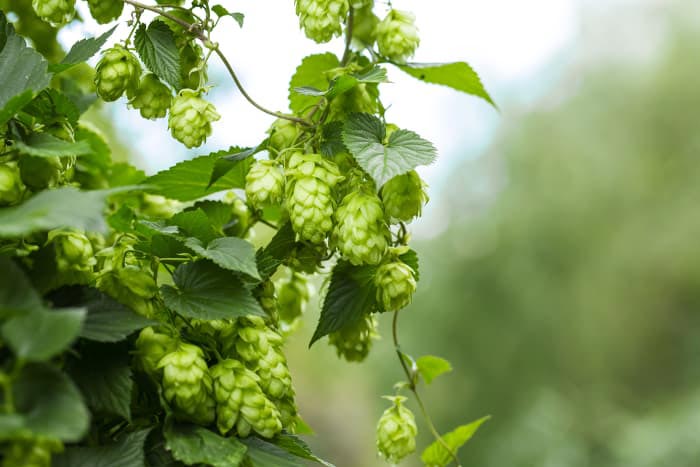
Strata
Introduced in 2018 by Indie Hops in conjunction with Oregon State University’s hop program, the success of Strata has not been stratospheric but rather a steady climber, so to speak. By adding 250 acres in 2022, it has surpassed fast-breaking Sabro in acreage. Strata is versatile and boasts solid alpha acid numbers (11 to 12.5 percent) and outstanding oil content (2.3 to 3.5 ml./100 gms.) Brewers say that dry hopping deepens the grapefruit and dank/herbal/cannabis elements. No surprise there. Appeal to weed users has long been part of the appeal of the West Coast and Colorado Front Range hoppy beers that helped launch craft. Strata can more than just complement the cannabis user’s palate like the earlier generation hoppy ales, producing dank aromas like a wisp of weed in the air. In addition to grapefruit, the flavor profile includes mango, passion fruit and berry.
Photo Courtesy Minneopa Orchards
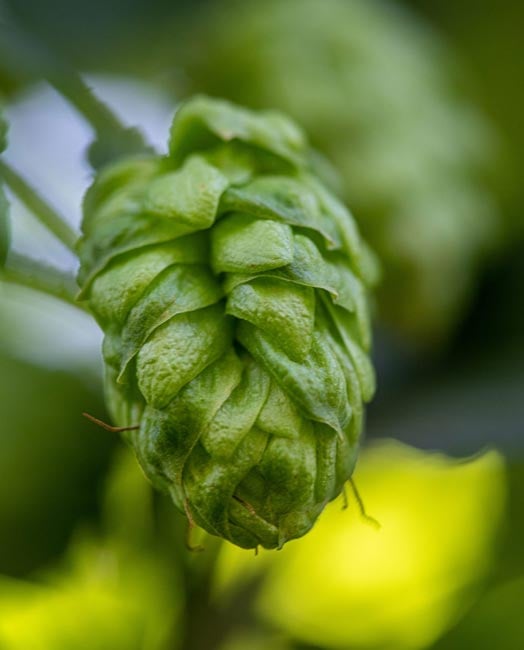
Talus
This hop led all others when it came to added acreage (416) in 2022. While Sabro dropped precipitously by 449 acres, this offspring of Sabro and another unknown hop in open pollination continues to gain interest. Its flavor profile includes coconut, for which Sabro became well known, in addition to grapefruit, stone fruit, rose, oak and pine. Shifting tastes toward West Coast IPAs that are fruitier (and away from coconut beers in general) may account for this tale of two ships passing in different directions. According to one of the breeders at Yakima Chief Hops, Talus “checks all the boxes” of a Pacific Northwest hop, including citrus, stone fruit, floral and woody.
Photo Courtesy Yakima Chief Hops
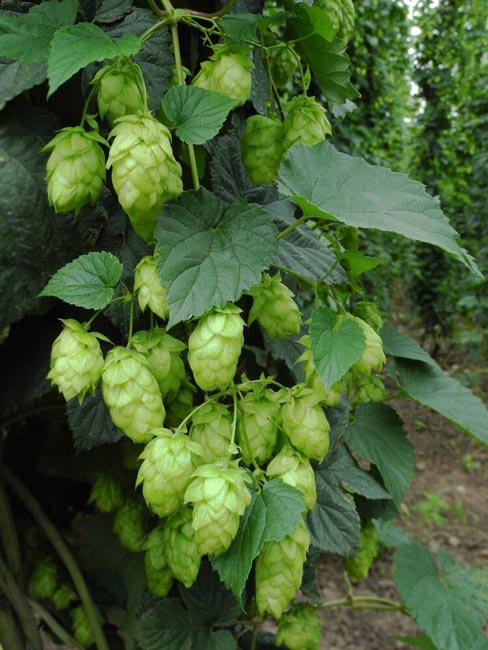
Triumph
The increase in popularity of lagers may have something to do with Triumph’s ongoing move toward long-term success, if not triumph, in the marketplace. Introduced in 2019, its noble hop genetics help make it attractive as a lager hop. But Triumph’s rather unique combination of orange, lime, and peach work in fruity ales and IPAs. This hop demonstrates why there’s a constant search for different flavor profiles as well as hops that suit different styles.
Photo Courtesy Barn Talk Hops
Zappa
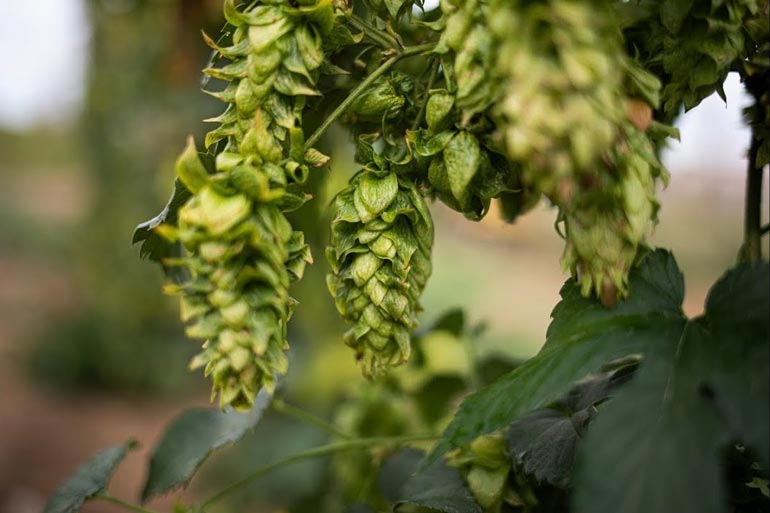
Along with Medusa, this hip hop is one of the more promising of the unique American subspecies Neomexicanus after a first full year of 68 acres. Named for the famed musician Frank Zappa by agreement with his family, it’s characterized as intense and versatile. That can mean finding it in hazies, fruited sours or mixed-fermentation beers. The flavor profile includes tropical fruit, citrus and melon. Because of its desert birthplace in New Mexico, the Zappa hop has more than the usual share of growing challenges in the Pacific Northwest, including being less inclined to grow up a trellis and limited height. But because of that intense flavor, hop farmers such as CLS Farms in Washington have taken on the challenge of growing Neomexicanus varieties, whose appeal to brewers continues to grow.
Photo Courtesy Yamika Chief Hops
Eclipse
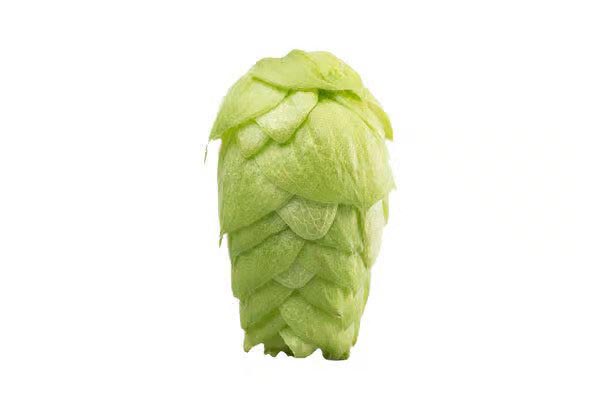
Developed by Hop Products Australia, Eclipse went into worldwide distribution in 2021. The near doubling of production for the 2022 growing season, which ended in May in Australia, indicates it found favor given that HPA works only on a forward contract basis. Eclipse offers intense flavors of sweet fruit, crisp pine resin, citrus peel, spice and alpha acids that run from 15.7 to 18.7 percent, quite a high number. The spiciness often stands out, which is a way of saying it boasts an intense hoppy aroma. The growers are positioning this aroma hop as a recognizable name brand like its predecessors Galaxy and Vic Secret. It now trails only those two in terms of production and demand down under.
Photo Courtesy Hop Products Australia
Akoya
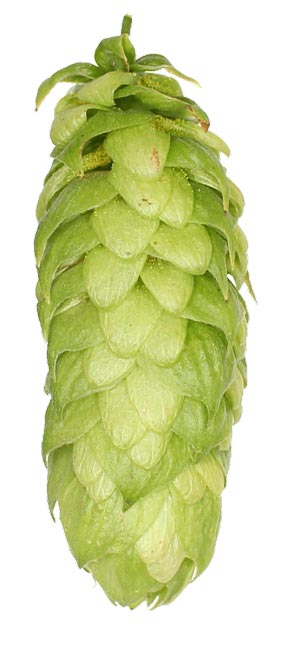
Recently released by Hopsteiner in the U.S. after cultivation in Germany, Akoya is a tribute to the search for different flavors and for hops that work outside the IPA and pale ale arenas. A name more commonly associated with a type of pearl, Akoya’s alpha-acid and oil are mid-range, and its German-bred flavor profile is more continental. The grower points to “tea, spice, green fruit and pepper” for a cultivar that grew from a cross of Zenith, an English hop, and one of Hopsteiner’s male aroma hops. Its IPA appeal is probably limited to the classic English variety. It is likely to be brewed in altbier, helles, lager, pilsner and golden ale styles. Given that Northern Brewer is considered a good substitute hop, this writer would like to taste a California common brewed with Akoya, which could highlight its herbal character.
Photo Courtesy Hopsteiner

Comments 0
No Readers' Pick yet.