


Craft Beer in Mallorca
 Story by:
Martyn Cornell
Story by:
Martyn Cornell
One of the big benefits of the global craft beer boom is that it is now possible to go on holiday almost anywhere in the world and find good, locally brewed craft beer on sale. There are, for example, around 300 craft breweries in Spain now – and that includes the Mediterranean holiday haven of Mallorca, largest of the Balearic islands, 125 miles to the east of the Spanish mainland, which welcomes 10 million tourists a year.
Mallorca is currently home to seven craft breweries, all of which have started in the past three or four years. Few Mallorcan bars, alas, stock anything but big-name lagers and, in the built-up tourist belt around the coast, other macrobrews such as Guinness. But the small guys have made a surprisingly successful push into the island’s supermarkets, so that even the beer shelves of stores serving big tourist centres such as Cala D’Or in the southeast will have bottles from four or five small Mallorcan breweries.
At the same time the better Mallorcan restaurants have recognised that if you are going to promote Mallorcan cuisine and Mallorcan produce, it makes sense to sell artisanal Mallorcan beers alongside Mallorcan wines for your patrons to drink, so that good craft beers can be found in the sort of high-class restaurant that would not necessarily stock such brews in other parts of the world.
Life is a little different on Mallorca from, say, Italy, where Italian craft brewers are making much-admired pilsner-style brews: no Mallorcan brewer makes a lager, simply because they could not compete with the Spanish giants, Estrella Damm and Mahou San Miguel, on price. But all seem to make a wheat beer (“blat” in Catalan), which is evidently seen as the entry-level craft beer for locals, and there are pale ales, IPAs, and speciality beers too.
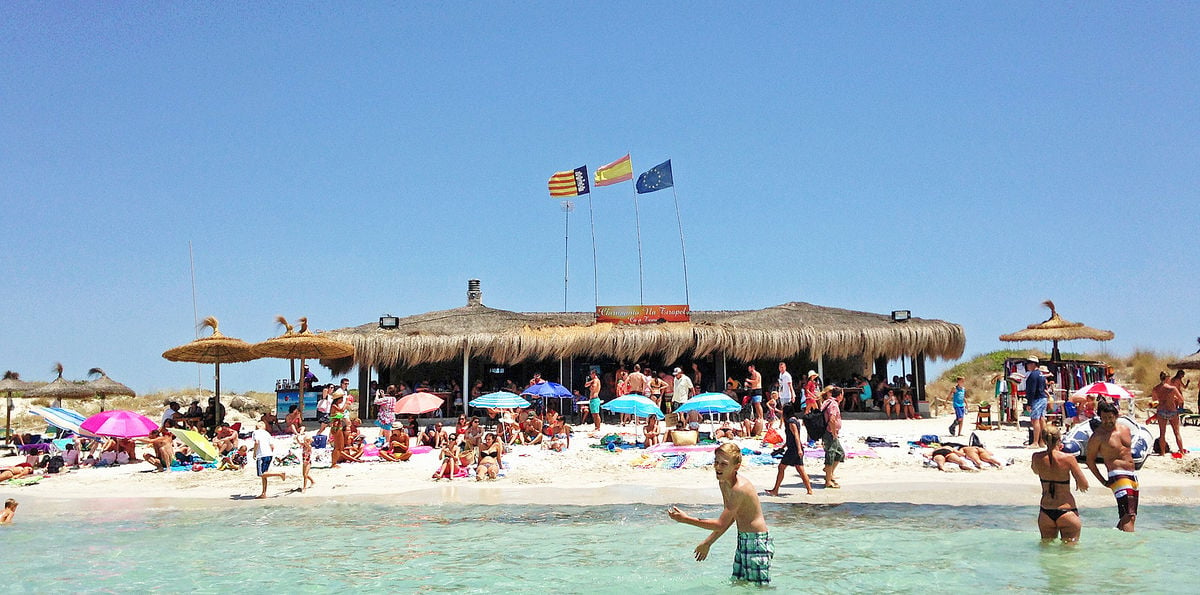
Touristy areas of Mallorca rarely stock local brews – to find them, one must travel inland.
The Sullerica brewery, in the small town of Sóller, in the west of the island, makes a very good wheat beer flavored with local lemon peel, and an 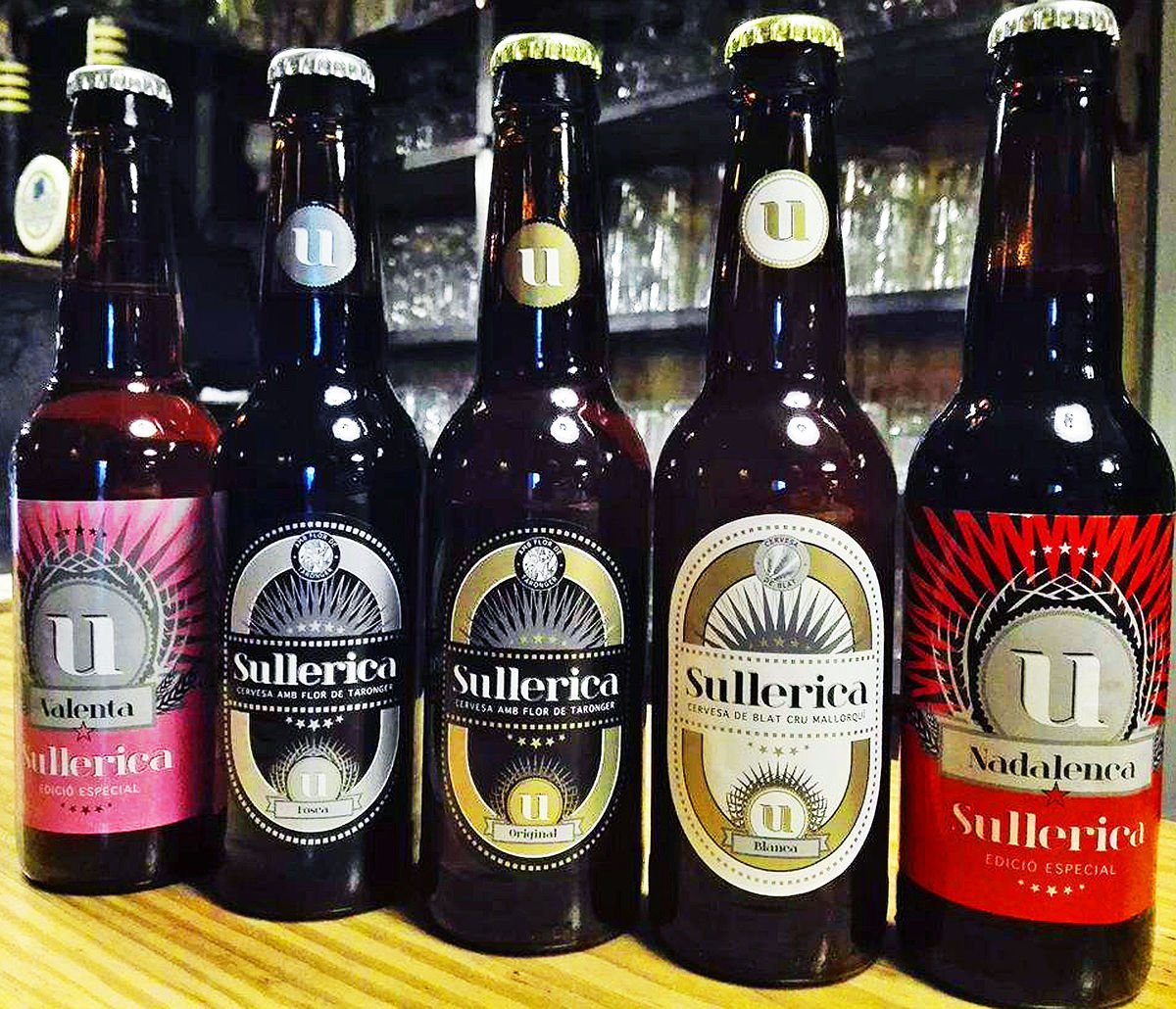 equally fine amber ale, Original, which includes rosemary, lemon verbena and orange blossoms, or ‘flor de taronger’ in Catalan. Alas, the beer brewed with bitter olives the brewery was making in 2014 seems to have disappeared.
The Sullerica Brewery incorporates tastes of the local terroir in its beers, like rosemary, lemon, and even olive.
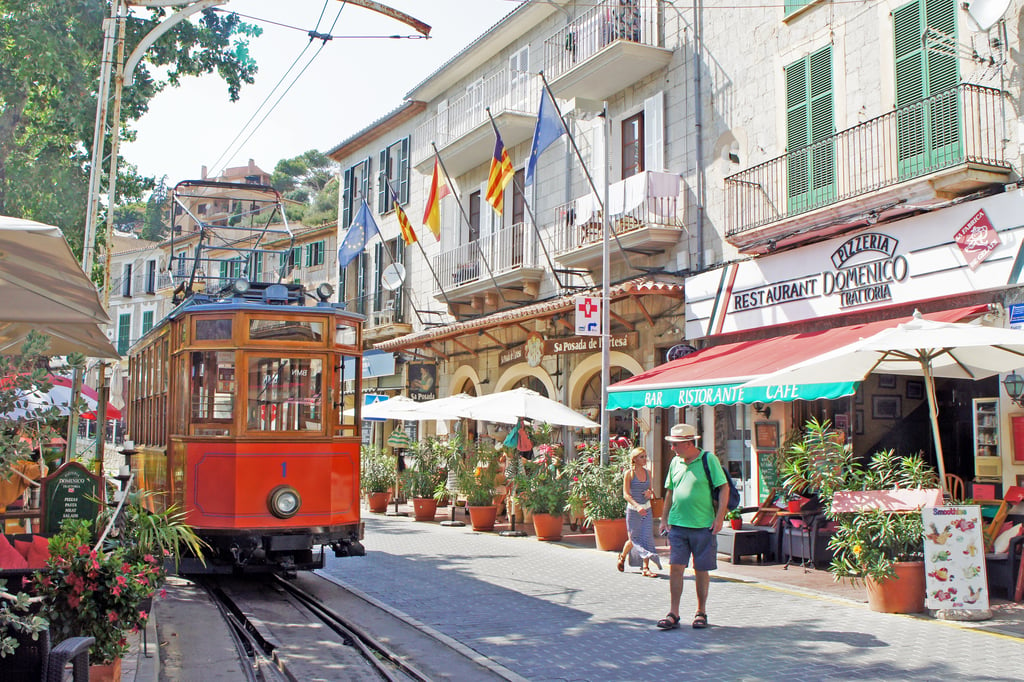
Sóller is a lovely old town worth a visit in its own right (take the somewhat rickety train up from Palma), and if you go there, you’ll find Sullorica beers on sale in the excellent Café Scholl, a vegetarian restaurant in Carrer de la Victòria. You should also track down “Fet a Sóller” ice cream, which is also made from locally grown ingredients.
Another establishment concentrating on local flavourings is the Cas Cerveser brewery in Galilea, about eight miles to the west of Palma, started by a German-Mallorcan brewer called Sebastián Morey, which makes a first-class sour cherry beer, Cor de Cirera, aged for a year in French oak barrels that had previously contained red wine from the Bodegas Son Puig in nearby Puigpunyent.
Other Mallorcan brews worth finding are Rossa, an English bitter-style bottle-conditioned ale from the Pla brewery, named for Es Pla, the flat plain of central Mallorca in Algaida, about 15 miles east of Palma, and the wheat beer from the Talaiòtika brewery in Porreres, a small town in the middle of Mallorca. Watch out, however, for at least one fake: Moli Balear, or “Balearic mill,” a wheat beer that carries a drawing of a typical Mallorcan windmill on the label, is actually brewed in Belgium.
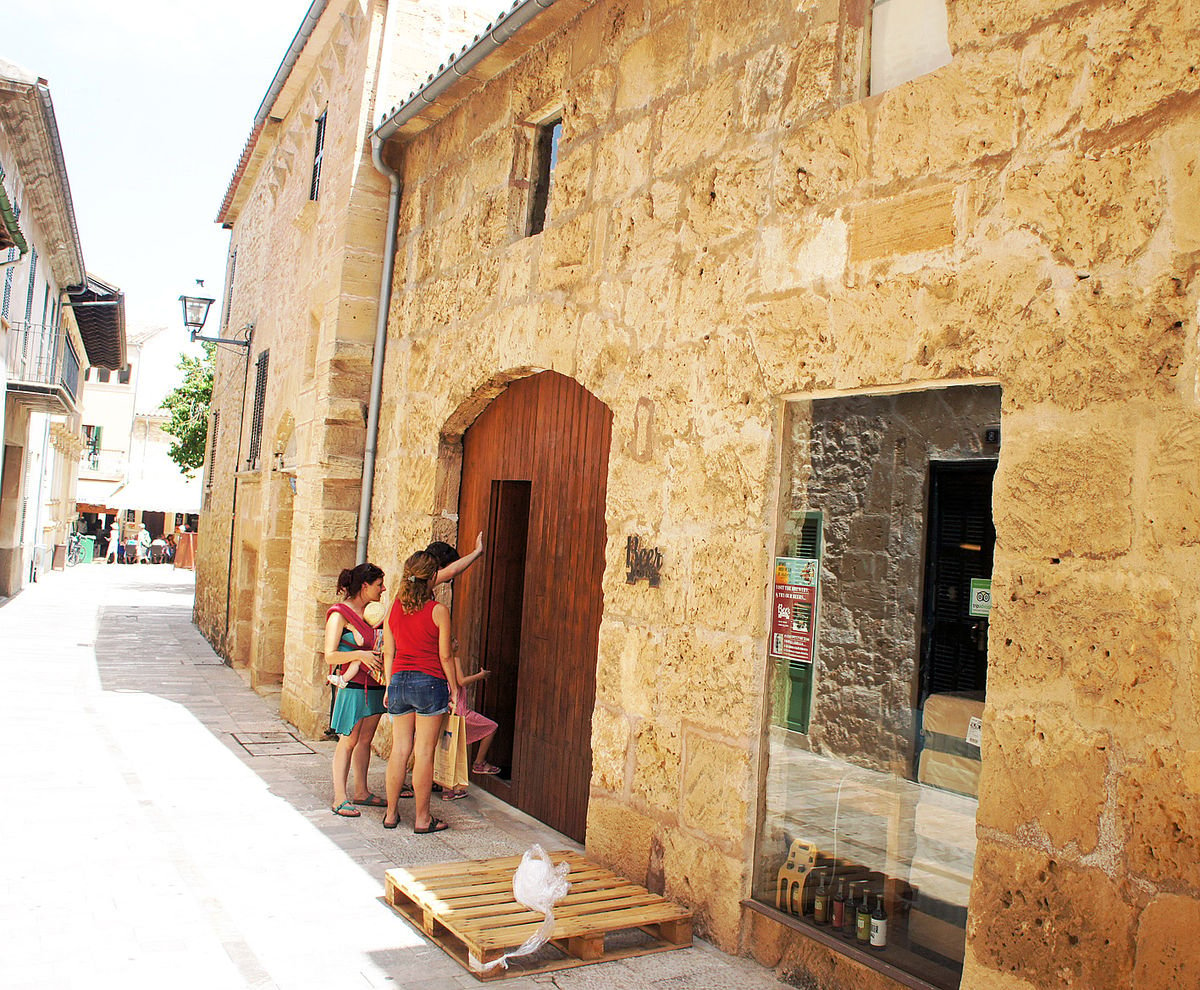
Beer Lovers Brewery is scarcely recognizable from the outside. Formerly a barn, the structure has been in the family for 300 years.
Several Mallorcan breweries have “open days” for visitors with tastings and food-and-beer pairings. One is Cas Cerveser; another is the Beer Lovers brewery in Alcúida, in the north of Majorca, which was founded in 2012 by Miquel Amorós Crawford and his brother Felipe, sons of a Mallorcan father and a mother who is half-Welsh and half-English. The brewery is down a narrow street, in the heart of the attractive centre of old Alcúida, in a former barn built of the local honey-coloured limestone and attached to a house that has been owned by the family for 300 years. It is hard to find even with the help of Google Maps, and it was not until I was ten yards from the front door and smelt the unmistakable aromas of mashing malt that I knew I was close to my target. Originally, the barn, which still has troughs on one wall for animal food, “was where the horse and cart were kept – it was full of stuff, so we emptied it and added a bit – we couldn’t touch much, because all the old buildings are protected,” Miquel says. “We put in a new floor, but the floor had to be like the old house’s floor, the walls have to be built of the same old stone.”
The brewery name is in part a pun on their surname – “amorós” literally means “loving” in Catalan – and was chosen because it would be easy to understand and pronounce, by Mallorcans and tourists alike. They could have chosen a locally based geographical name, Miquel says, but they didn’t want 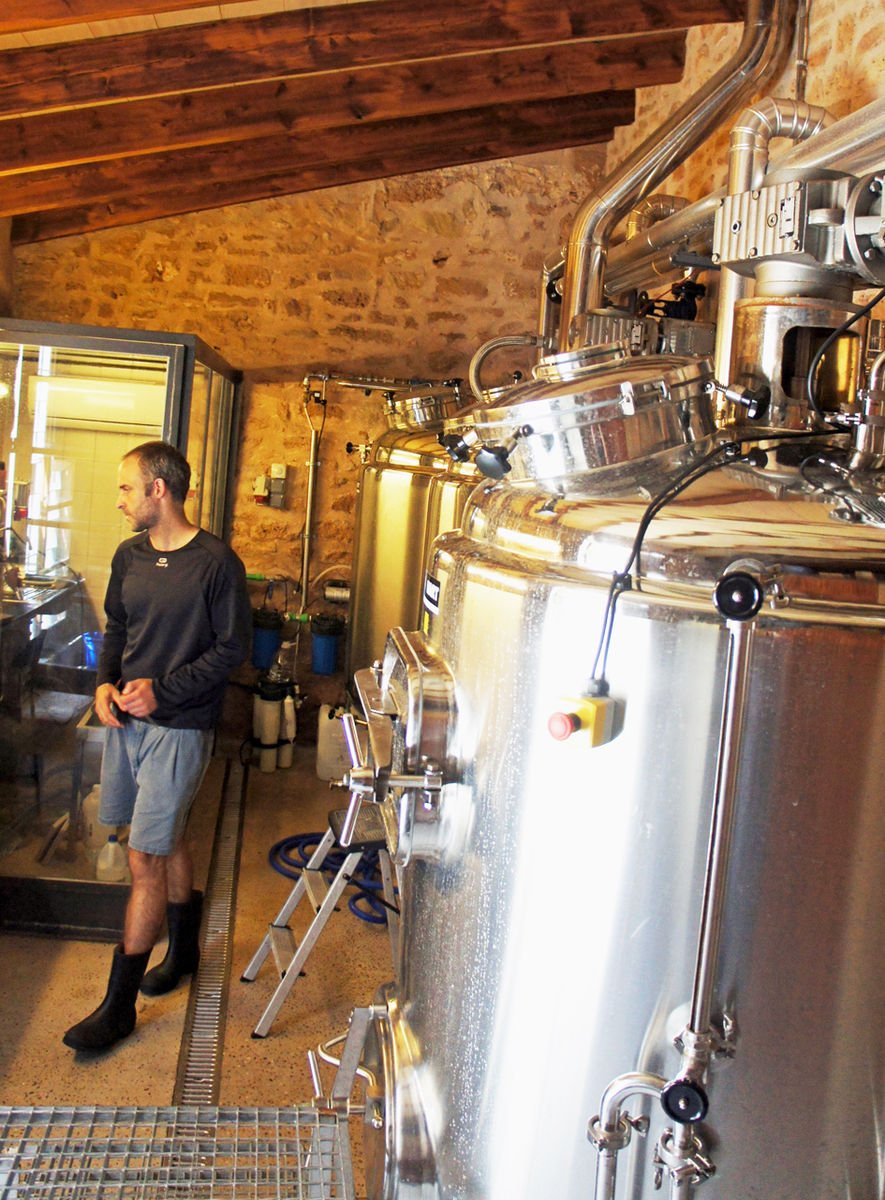 one of those: “We wanted to escape from all those products that are being sold because they’re Mallorcan rather than because they’re good.” The name “doesn’t sound so strange to us,” he says, though he admits that “there are people who like it a lot and people who don’t like it, who say, ‘why an English name when you’re based in Mallorca?'”
The water used at Beer Lovers comes from seven miles away, as it is more suitable for brewing.
Miquel is a semi-reluctant professional brewer: “I tell everybody, ‘I prefer drinking beer to brewing it,’” he says. “We were homebrewers, but I was working in construction, and that was badly hit by the recession, while my brother was a translator, and Google Translate means that’s not a good job to have nowadays. So we called some numbers, we visited a few breweries and we decided to get into the brewing business. Come back to me in two years and I’ll tell you if we were right or wrong!”
The brewing equipment – combined mash tun and kettle alongside a combined lauter tun-whirlpool, plus, in the front room of the barn, three small conical fermentation vessels – comes from a firm in Catalonia that previously made kits for wineries. The boom in small breweries in Spain has been a blessing to them, after the country’s wine bodegas stopped expanding in the recession. Brewing capacity is 750 litres at a time, with brewing currently taking place once a week during the summer months, less during the island’s quiet season. There is actually a well inside the barn itself, but it smells musty, and Miquel says Mallorcan well water is not normally suitable for brewing. Beer Lovers actually tanks 3,000 litres at a time from a well in a place called Can Sales, around seven miles to the west, at the end of the Sierra Tramontana, which runs up the island. Here the water has apparently spent less time travelling through Mallorca’s limestone rocks, and needs no treatment to make darker beers with, and only a little tweaking for pale ones.
The brewery produces both bottled and keg beers, and its beer is on tap in a few bars in Palma. It makes five different beers: the original three, Blat, a Belgian-style wheat beer and the brewery’s best-seller (“It wouldn’t be a beer I would have done as a homebrewer, but this is a business, you’ve got to brew the beer people will buy, not the one you like,” Miquel says); Broll, a Pale Ale (“sales are growing, and if in one or two years we sell more of the pale ale it will be mission accomplished!”), and Bram, an amber ale, “difficult to sell in Mallorca, people see dark beers, they’re a bit taken aback,” plus, now, a porter, made just twice a year with English malt from Crisp of East Anglia, a fine, deep ruby-brown drink with chocolate and coffee in the depths, and Llop, Catalan for “wolf,” an IPA that Miquel confesses began as an accident after they over-hopped a batch of the amber ale. Miquel and his team decided to dry-hop the beer as well before releasing it, and it found enough of an audience for them to have brewed more batches since.
“For me it’s the best one we’ve got,” he says. Most of the malt, except for the porter, comes from Weyermann in Germany via the Spanish mainland: “there’s plenty of barley in Spain, but the maltsters are owned by the big companies, so you can’t buy it even if you wanted to,” Miquel says. All the bottles carry a full list of the malt and hop varieties found in the beer.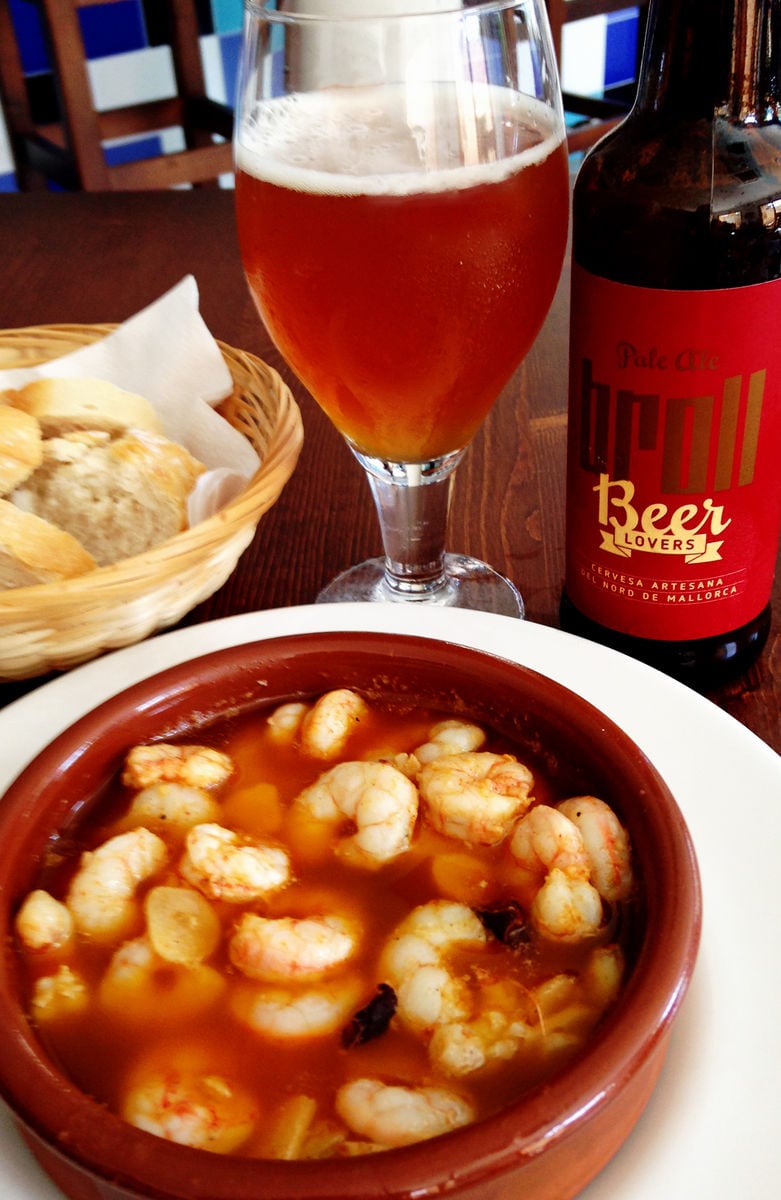
The first stage, Miquel says, was to make sure they were happy with the standard of the beers they were making. The next stage, which they are working on now, is “to be easy to find. People come here, they try the beers, they like it, and they ask, ‘where can be get hold of our beer,’ and that’s the difficult question. The most difficult part is distribution.”
The Mallorcan palate skews towards lighter styles, although amber ales and porters are catching on.
As news about Beer Lovers spreads, Miquel is also finding holidaying brewers from Denmark, Germany and other countries – and beer writers like me – arrive on the brewery doorstep. The brewery is open to the public on Fridays and Saturdays, when Miquel and his team showcase the suitability of their beers to be matched with food. They certainly match extremely well: right after my visit to the brewery I had a lunch of gambas (prawns) in a garlicky, buttery sauce with a bottle of Broll in a restaurant 100 or so yards away that was a marvellous combination.
Mallorca is still short of good craft beer bars, but one not to be missed if you’re in Palma is the island’s oldest, Lórien, a small, dark, hidden-away place, now 25 years old, and run by the friendly and knowledgeable Pep Joan: the beers on draft when I was there included examples from Italy, mainland Spain (from Pamplona, an excellent sour wheat beer, though definitely not the “hefeweizen” it claimed to be) and Ireland. It also sells excellent llonguets, the Mallorcan version of a sandwich. Two others in Palma are Guirigall, in Carrer d’En Brossa, close to Lórien, quieter and a locals’ favourite, and Atomic Garden in Carrer de Borguny, whose recent beers include brews from Mikkeller, To Øl, Rogue Ales and Edge Brewing from Barcelona. Outside Palma, La Birreria in Carrer del Temple, Pollença, flies the flag for craft beer in the far north of the island.
(Photos courtesy of Martyn Cornell)
Comments 0
No Readers' Pick yet.