




Altbier and Specialty Wood Aged Beer
 Story by:
Chris Guest
Story by:
Chris Guest
Altbier
Altbier sounds like a faintly condescending term, such as “alternative rock” or “alternative lifestyle,” with little to no real meaning regarding its subject. This is not the case for altbier, however.
Historically, “alt” means “old,” a reference to the fact that this is an ancient style whose nomenclature was only finalized in the modern sense in the 1800s, when it became threatened by the “new” style of making beer with bottom-fermenting lager yeast.
A more modern spin on the altbier name refers to the fact that this beer is brewed with a top-fermenting yeast, which is commonly used for all ale styles – such as IPAs, pale ales and stouts as opposed to the typical bottom-fermenting yeast used to make lagers. Since altbiers employ top-fermenting yeast, they showcase all the hallmarks of smooth, easy-drinking, bottom-fermented lagers but are technically ales due to the strain of yeast they are brewed with. Hence the term “alternative beer” or altbier.
Further confounding the issue is the fact that altbier are fermented at cool ale temperatures (59 – 68° F) and then conditioned and lagered at colder bottom-fermentation temperatures (roughly 50° F).
Either way, altbier originated in the historical region of Westphalia and are a specialty of the German city of Düsseldorf (hence the spelling of beer as “bier”). It is still one of the most popular beer styles in that city.
Well-made altbier should be balanced, attenuated, clean and smooth and should exhibit a clean, sharp bitterness tempered by a strong, sweet malt character. Generally, they should drink like a classic lager, but with a higher level of hop bitterness. The color is similarly lager-like, with amber coloration laced with darker copper hues being the norm.
Another discerning characteristic of altbier is its full flavor profile, far different from the often dull lagers that replaced it in 19th century Düsseldorf, though they retain the light-bodied and sessionable elements of those beers as well.
The malt tends to be the more prominent element of an altbier’s ingredient list, with German base malt varietals in the forefront such as Pils, Munich and trace amounts of crystal, chocolate and black malts to adjust the color. Rich nutty and bready flavors emanate from the malt bill and are balanced and accentuated by the use of Saaz or Spalt hops, which provide a spicy, herbal and perfume-like character – creating a fascinating blend of malty earthiness and fragrant hop-forward aromas and flavors.
The finest examples of altbier are found straight from the source in Düsseldorf, though a few American breweries are beginning to experiment with this ancient style, though often with higher alcohol strengths in the sticke or doppelsticke categories.
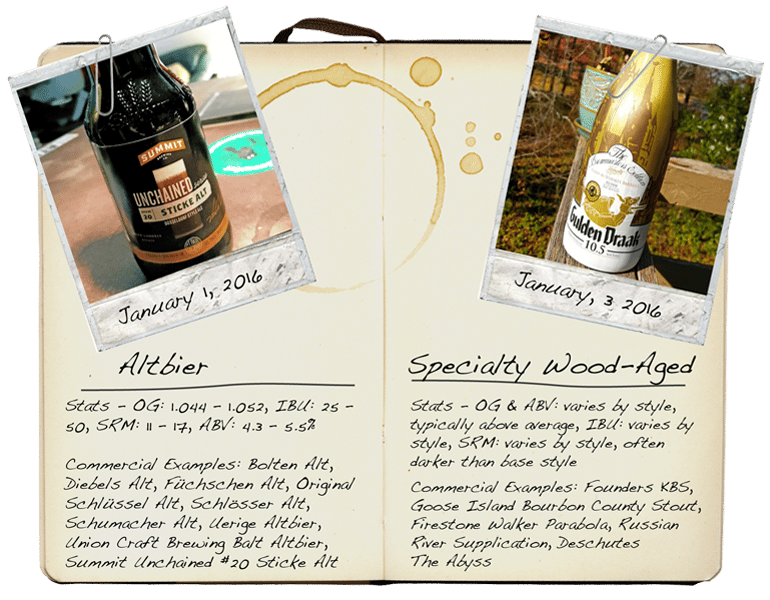
STATS
OG: 1.044 – 1.052
IBU: 25 – 50
SRM: 11 – 17
ABV: 4.3 – 5.5%
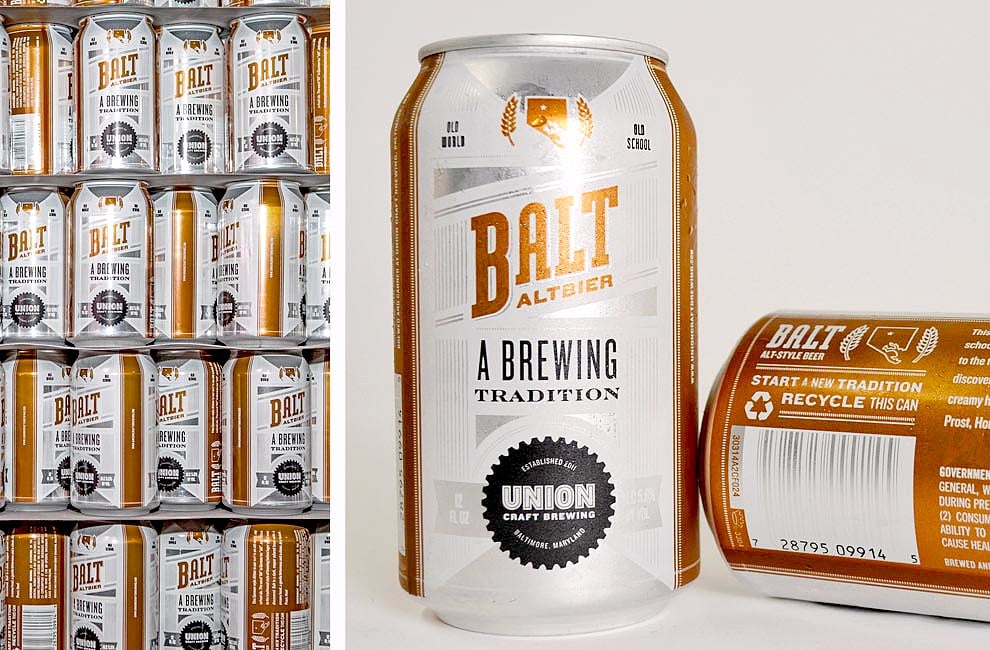
Commercial Examples: Bolten Alt, Diebels Alt, Füchschen Alt, Original Schlüssel Alt, Schlösser Alt, Schumacher Alt, Uerige Altbier, Union Craft Brewing Balt Altbier, Summit Unchained #20 Sticke Alt
Specialty Wood-Aged Beer
No style gets craft beer connoisseurs in a frenzied tizzy more than a Specialty Wood-Aged Beer. Specifically, Barrel-aged Imperial Stouts are among the most sought after beers currently available on the market. People brave the elements and wait in line for hours for 3 Floyd’s Dark Lord, Goose Island’s Bourbon County line, Westbrook’s Mexican Cake and various other lesser-known barrel-aged beauties.
Despite the popularity of barrel-aged imperial stouts, their style is still based upon what barrel they are aged in, be they Whiskey, Bourbon, Scotch, Rum or Tequila, and Specialty Wood-aged Beers have specific characteristics that set them apart from other beers that have spent time in wood.
Many craft brewers use wood chips, spirals or staves in order to impart a beer with barrel flavors, though these beers are not technically “specialty,” but rather just “wood-aged beers.” Even AB InBev got in on the action with last year’s release of Oculto – a “premium” lager brewed with tequila barrel staves.
Preserving beers in wood is a practice that has existed since the birth of beer, and some styles (such as Flanders Red or Lambic) require keeping beers in barrels to create and cultivate cultures that aid in the continued fermentation of those beers. However, specialty wood-aged beers are aged in barrels solely to impart the flavors of whatever libation rested in the barrel before its use as a beer container. Many barrels’ interiors are charred or toasted in advance to provide even more flavor to the beer housed inside.
Specialty Wood-Aged Beer is a bit of a catch-all phrase too. While one might immediately think of uber-popular (and extremely revered) barrel-aged stouts that craft beer fanatics may camp out several days in advance to obtain, any beer that has spent time in a barrel that was previously used for another alcohol qualifies as a specialty wood-aged beer.
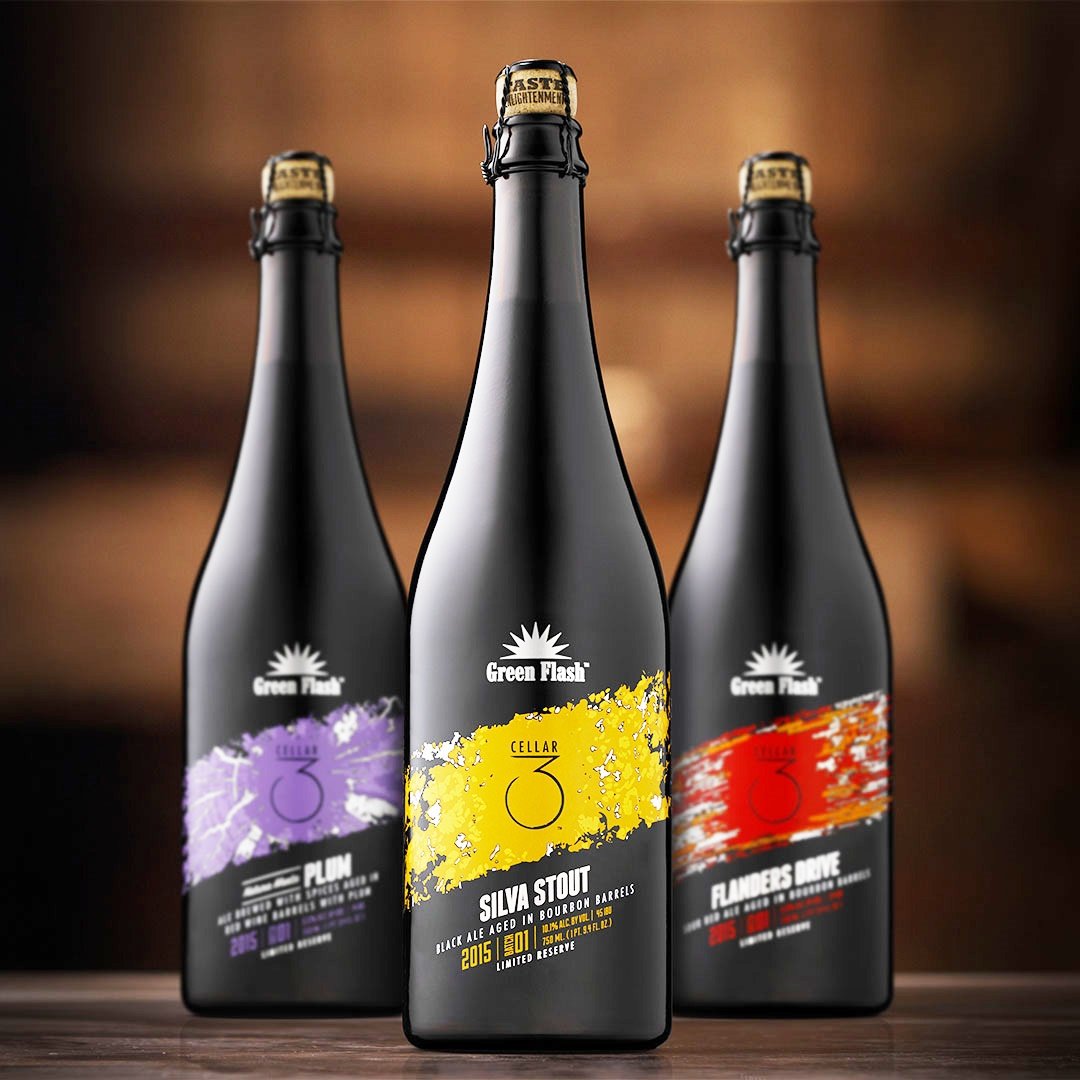
Green Flash Brewing’s Cellar 3 series is an exemplar of the style. While the series contains the standard bourbon barrel-aged Imperial Stout (Silva Stout), it also explores fascinating additions such as Oculus Sauvage, a Mixed-Style Beer (Belgian Tripel and Double IPA) that was aged in red wine barrels and finished with Brettanomyces, or Natura Morta Plum, a Saison brewed with plums and also aged in red wine barrels.
Aging beers in once-used barrels can completely transform a beer’s flavor, color, aroma and (unexpectedly) alcohol content. Of course, the changes are dependent on what barrel is employed, but some common flavors and aromas found in specialty wood-aged beers include: vanilla, wood, butterscotch, toasted bread, coffee, cocoa and caramel.
While these flavors and aromas should be noticeable, they should never overpower, but rather nestle themselves side-by-side with the base beer style’s characteristics – leading to a delightfully robust and complex, yet balanced, finish.
The beers should contain a slightly more warming alcohol element, though they should never be too “hot,” and are often darker than the base beer due to the beer leeching some of the original liquid leftover in the barrel.
STATS
OG: varies by style, typically above average
IBU: varies by style
SRM: varies by style, often darker than base style
ABV: varies by style, typically above average
Commercial Examples: Founders KBS, Goose Island Bourbon County Stout, Green Flash Oculus Sauvage, Firestone Walker Parabola, Toppling Goliath Kentucky Brunch Brand Stout, Perennial Barrel-Aged Abraxas, Russian River Supplication, Deschutes The Abyss
(Top body photo courtesy of Union Craft Brewing, bottom body photo courtesy of Green Flash Brewing Co.)

Conversations (0)
No comments yet.