








Pairing Polish Delicacies with Beer
 Story by:
Sherry Dryja
Story by:
Sherry Dryja
Although history has not always been kind to Poland, its people are known for their resilience and their ability to preserve their culture through even the darkest hours. Since food is a way to keep hold of one’s culture, those who have had to emigrate from the homeland maintain ties through aromas and flavors that remind them of the old country.
These families have inspired our menu of tasty Polish cuisine. In fact, three of our four recipes come straight out of the kitchen of Lucy and Ted Dryja, a real-life babcia (grandmother) and dziadek (grandfather) who arrived in Detroit after World War II.
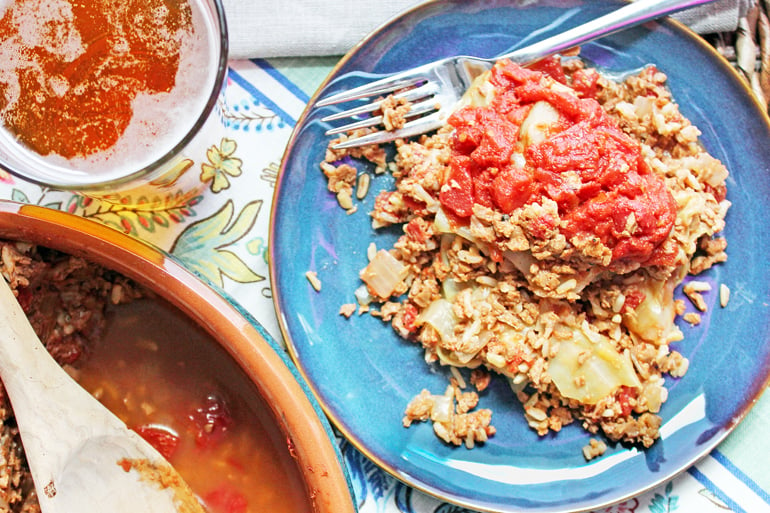
Lucy gave us her savory pierogi and golabki (cabbage roll) recipes. She makes the best potato pierogis, but we wanted something a little more exotic, so we made ours with sauerkraut and mushroom. We also turned her cabbage roll recipe into a vegetarian casserole. Other than the vegetarian “meat” crumbles, the ingredients are essentially the same. The main difference is our technique – making it into a casserole takes less time and effort than rolling cabbage rolls. If the vegetarian version doesn’t sound appealing, simply replace the two packages of vegetarian “meat” crumbles with one pound of beef and one pound of pork.
Both recipes pair well with Bohemian Pilsner, the most common beer style in Poland. The Zywiec Lager and Okocim O.K. Beer are examples. Because Polish brews aren’t always readily available, we went with something closer to home and similar in style, Resignation Brewery’s KCCO Gold Lager. It is light and crisp in flavor, perfectly reflecting the pilsner style from the old world, while pairing beautifully with our savory dishes.
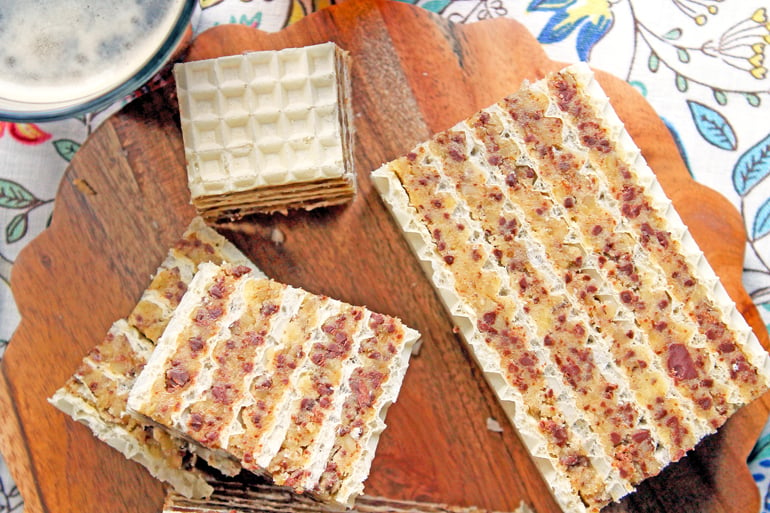
Ted, who was born and raised in a town outside of Krakow, has a bit of a sweet tooth. His specialty is a dessert called Andrut. Ground chocolate and walnuts are creamed together with sugar, butter, and eggs, which are then layered in between large tort wafers, similar in look and texture to ice cream cones. Ted likens this dish to the Polish version of a Kit-Kat, though Andrut is far more decadent. It should be pointed out that Andrut has raw eggs in it, so be sure to use pasteurized eggs and store leftovers in the refrigerator.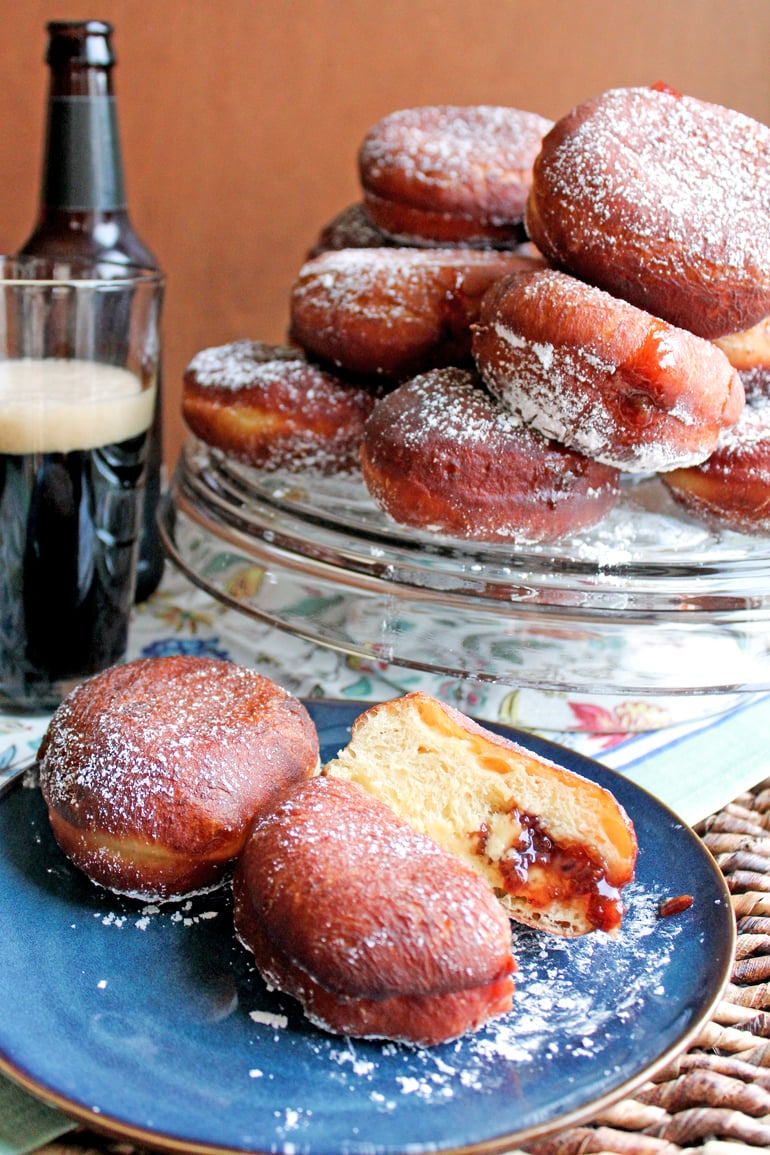
Neither Ted nor Lucy make the Polish jelly doughnuts known as Paczki, but they both love to celebrate Fat Tuesday with them, just like all the other people who line up outside Polish bakeries on Fat Tuesday to get these sweet delicacies. We created a version of our own that might have neighbors lining up outside your house when you make them. Fill them with the traditional plum jelly like we did, or use any other fruit jelly or custard filling you like.
Porters are the dark beer style commonly found in Poland. This style goes well with both the Andrut and the Paczki, and Zywiec and Brower Witnica both make porters that are available in the United States. If you can’t find them near you, try any porter with a bit of a coffee bent. We went with Red Hook’s Blackhook Porter and Kona Brewing Company’s Pipeline Porter.
For something a little different, try a dunkel, such as Hofbräu München’s Dunkel with the Andrut. Granted, this is a Bavarian beer, but it is medium-bodied, so it stands up to the richness of the dessert and has notes of cocoa and almonds that nicely complement the chocolate and walnuts.
Poland has shown itself to be a country that can rise up through the ashes to reinvent itself while simultaneously honoring its historical and cultural roots. Warsaw, for example, was essentially demolished during World War II, but today is a thoroughly cosmopolitan city with architecture, infrastructure, arts, and restaurants that rival any city in the world. If you haven’t already, add it to your travel bucket list. And, until you can make the journey there, enjoy a taste of Poland by cooking up our menu and pairing it with a Polish style brew. Na zdrowie!
Andrut
Ingredients: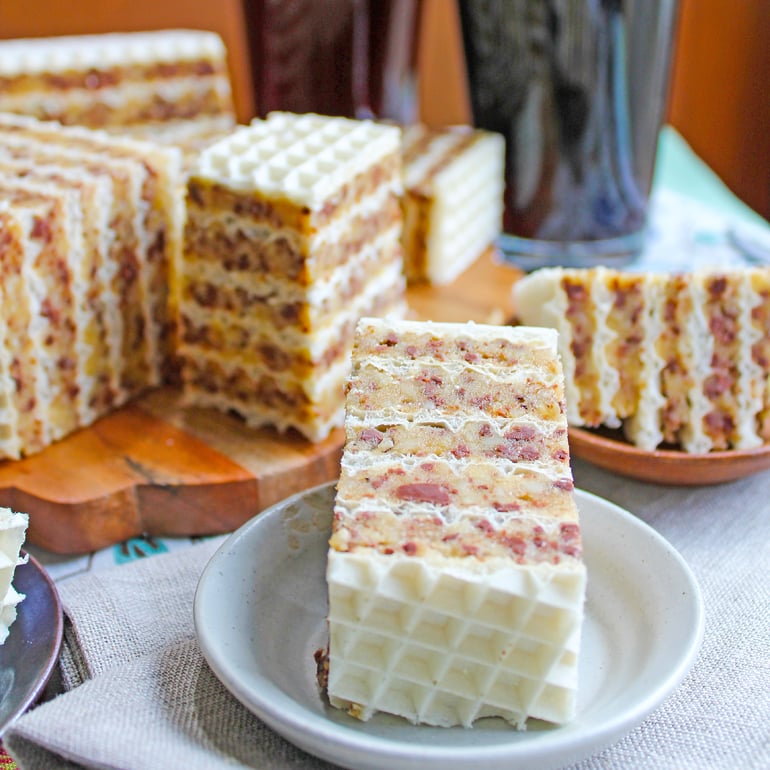
16 ounces milk chocolate candy bar, such as Hershey’s
16 ounces raw walnuts
1 pound salted butter, room temperature
2 eggs
4 egg yolks
5 cups sugar
1 package of 6 tort wafers, about 12-inch square or round*
Directions:
Break up the chocolate bars and place in the bowl of a food processor fitted with the chopping blade. Pulse until the chocolate is finely and evenly chopped. Remove to a large bowl and set aside.
Do the same with the walnuts – process until finely and evenly chopped. Add these to the bowl with the chocolate and set aside.
In the bowl of a stand mixer with the paddle attachment, or in a very large mixing bowl, stir the butter with the sugar until completely mixed. Add the eggs and yolks to this and stir until combined. Fold in the chocolate and nuts. Divide the mixture evenly into 5 separate parts.
Place a single wafer on a baking sheet and dot the wafer with one part of the chocolate-nut mixture. Gently spread the mixture across the wafer until it is evenly covered, all the way to the edges. Top with a second wafer and spread the second part of mixture in the same way as the first. Continue this process until all parts of the chocolate-nut mixture and all but one wafer has been used up. Top with the last wafer.
Cover with plastic wrap and refrigerate until firm. When ready to serve, cut the number of pieces desired and keep the rest of the dessert in the refrigerator.
*Available at German, Polish, or other Slavic specialty food stores in certain cities and online at amazon.com.
Vegetarian Golabki (Cabbage Roll) Casserole
Ingredients:
1 large or 2 small heads green cabbage
For the Tomato Sauce:
1 tablespoon extra-virgin olive oil
3 cloves garlic, chopped
2 28-ounce cans diced tomatoes
2 tablespoons white wine vinegar
1 tablespoon sugar
½ teaspoon kosher salt
¼ ground black pepper
For the casserole filling:
1 tablespoon extra-virgin olive oil
1 medium onion, chopped
2 cloves garlic, minced
2 tablespoons tomato paste
2 tablespoons red wine
2 12-ounce packages vegetarian “meat” crumbles
1 large egg, lightly beaten
1-1/2 cups cooked long grain rice
½ teaspoon kosher salt
¼ teaspoon ground black pepper
Directions:
Set a large pot of water over high heat and bring to a boil.
Remove any damaged outer leaves from the cabbage. Carefully peel off the remaining leaves and add to the boiling water. Blanch for about 5 minutes and then drain in a colander and rinse with cold water. Shake the colander to get as much water off the leaves as possible and set aside.
Preheat the oven to 350°F.
Make the tomato sauce: Place a saucepan over medium heat and add a tablespoon of olive oil to it. Add the garlic and sauté for about a minute. Stir in the cans of diced tomatoes and cook for about 3 minutes, stirring occasionally. Add the vinegar and sugar and simmer for about 5 minutes, or until the sauce starts to thicken. Season with salt and pepper and remove from heat. Set aside.
Make the filling: To a large skillet, add a tablespoon of olive oil and place over medium heat. Sauté the onion and garlic for about 5 minutes, until the onion is translucent. Stir in the tomato paste, red wine, and ¾ cup of the previously prepared tomato sauce. Cook until heated through, then remove from heat.
In a large mixing bowl, combine the vegetarian crumbles with the egg, the cooked rice, the onion/garlic mixture, and salt and pepper. Stir together until thoroughly combined.
To assemble, pour about a half a cup of the tomato sauce into the bottom of a 13×9-inch baking dish and spread evenly. Over the sauce, line the dish with a single layer of cabbage leaves. Spoon half the vegetarian crumble mix over the leaves, spreading it out until it is evenly distributed.
Repeat this – tomato sauce, cabbage leaves, second half of vegetarian crumble mix. Finish with a final layer of cabbage leaves and top with the remaining tomato sauce.
Cover the dish with aluminum foil and bake for 1 hour.
Makes 8 servings.
Sauerkraut and Mushroom Pierogi
Ingredients: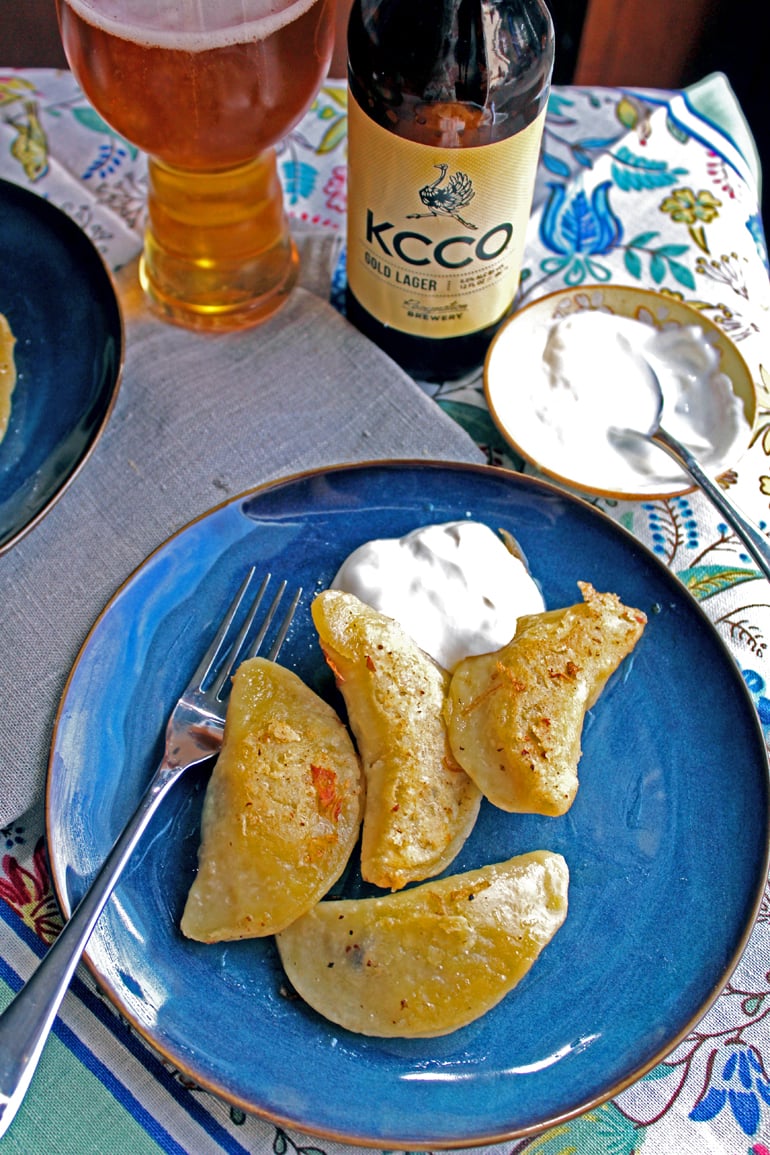
For the Filling:
4 tablespoons unsalted butter
10 ounces mushrooms, sliced
2 cups sauerkraut, drained
¼ teaspoon ground black pepper
For the Dough:
4-1/2 cups all-purpose flour
1 egg
¾ cup whole milk
¾ cup water
8 tablespoons (1 stick) unsalted butter, melted and cooled
2 tablespoons sour cream
Directions:
Make the filling: Melt the butter in a large skillet over medium-high heat. Add the mushrooms and sauté for about 7 minutes, until the mushrooms are soft and have released their liquid.
Make sure the sauerkraut is thoroughly drained. Squeeze out as much remaining liquid as possible. Add to the pan of mushrooms and cook for about 10 minutes, cooking out the liquid from the mushrooms and any liquid left in the sauerkraut. A little liquid is okay – you just don’t want it to be soupy. Season with pepper and stir until combined. Set aside to cool.
Make the dough: Stir together all the dough ingredients and mix until it comes together and a ball of dough is formed. Knead until pliable, adding flour as needed.
On a floured surface, roll the dough to 1/8-inch thickness and cut into circles using a 2-1/2 inch round cutter.
To assemble the pierogi, place a circle of dough in your hand and add about a tablespoon (give or take) of filling to the center. Press the edges of the dough together, enclosing the filling. Pinch the edges to make sure they are completely sealed. Place the finished pierogi pouches on a floured surface under a kitchen towel.
When ready to make the pierogi, boil a large pot of water with a pinch of salt and oil. Turn the heat to medium-high and drop about 12 pierogi into the water. Allow to cook until they rise to the surface of the water. Wait 2 more minutes and then remove them with a slotted spoon or spider strainer to a dish.
Leftover dough can be cut in pieces and boiled like noodles.
To serve right away, simply drizzle melted butter and eat! Or, if preferred, fry in a pan of melted butter and serve with sour cream.
If not serving right away, boiled pierogi can be cooled and refrigerated for a few days, or frozen for at least a month.
Makes about 2-dozen pierogi.
Paczki (Polish Doughnuts)
Ingredients:
1-1/2 cup milk, heated to approximately 110°F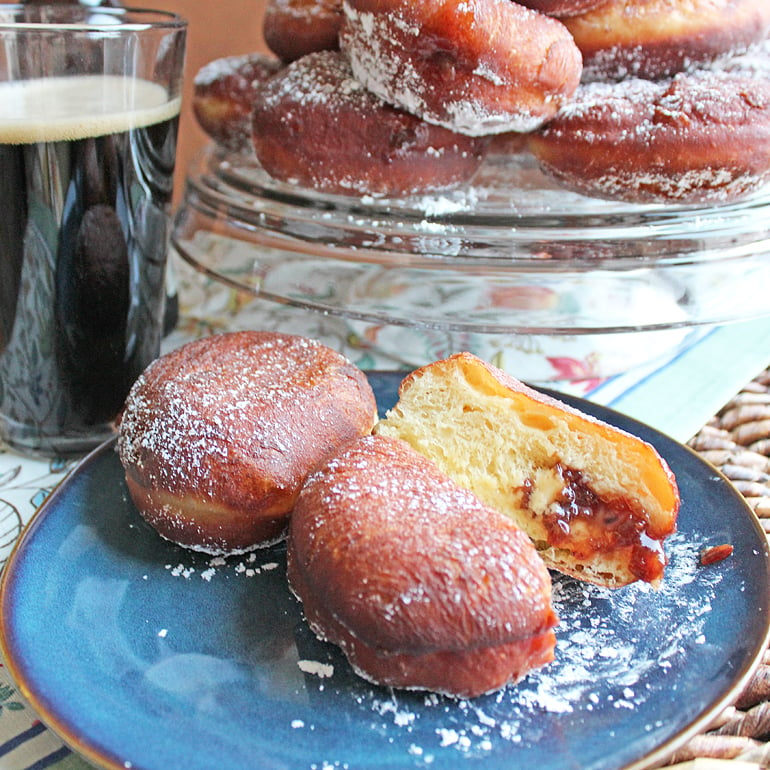
4-1/2 teaspoons active dry yeast
½ cups sugar
4 tablespoons butter, room temperature
1 egg, room temperature
4 egg yolks, room temperature
1 tablespoons vanilla or other flavoring, such as rum
1 teaspoon salt
5 cups all-purpose flour
Peanut or vegetable oil for frying
1-2 jars of plum jam
Powdered or granulated sugar for coating
Directions:
Add yeast to warm milk and stir to dissolve. Set aside in a warm spot of the kitchen to proof.
In the bowl of a stand mixer fitted with the paddle attachment, mix together the sugar and butter until fluffy. Add the egg, egg yolks, vanilla, and salt. Mix until well incorporated.
To this, add the flour one cup at a time, alternating with splashes of the yeast mixture until you’ve added 4 cups of flour and all of the yeast to the dough. Beat for 5 minutes, until smooth. If too much liquid is still present in the dough, add flour a little at a time. The dough is meant to be sticky and slack, so don’t add too much flour.
Grease a large mixing bowl and place the dough in the bowl. Cover and set in a warm spot to allow the dough to rise until doubled, about 2 hours. Punch down and allow to rise again for another 45 minutes.
Turn dough out onto a well-floured surface. Roll to ½-inch thickness. Cut rounds with 3-inch biscuit cutter and place in a single layer on a parchment lined baking sheet. Reroll and cut leftover dough until all the dough has been used.
Cover rounds and allow to rise in a warm place until doubled in size, about 30 minutes.
In a large skillet or Dutch oven, heat the oil to 350°F. Carefully drop the rounds into the oil a few at a time. Do not overcrowd them. They should immediately puff up.
Fry until golden brown on the bottom – about 2 to 3 minutes – then flip and fry the other side for another minute or two longer, until golden brown on top and bottom. Using a spider strainer or slotted spoon, remove the paczki to a baking sheet lined with parchment paper. Bring the oil temperature back to 350°F and continue frying the rest of the rounds in this way until they are all done.
Allow them to cool until they can be handled easily. Use a pastry bag fitted with a filling tip to fill the paczki with jam – poke a hole in the side of each paczki with the filling tip and squeeze the bag until the paczki is full. Dust with powered or granulated sugar and eat!
Paczki are best eaten the same day they are made, but can be stored in a paper bag for about a day.
Makes about 2-dozen paczki.
All photos courtesy Sherry Dryja



Comments 0
No Readers' Pick yet.