


The Best ESB in the World Is… Sierra Nevada Pale Ale?!
 Story by:
Jim Dykstra
Story by:
Jim Dykstra
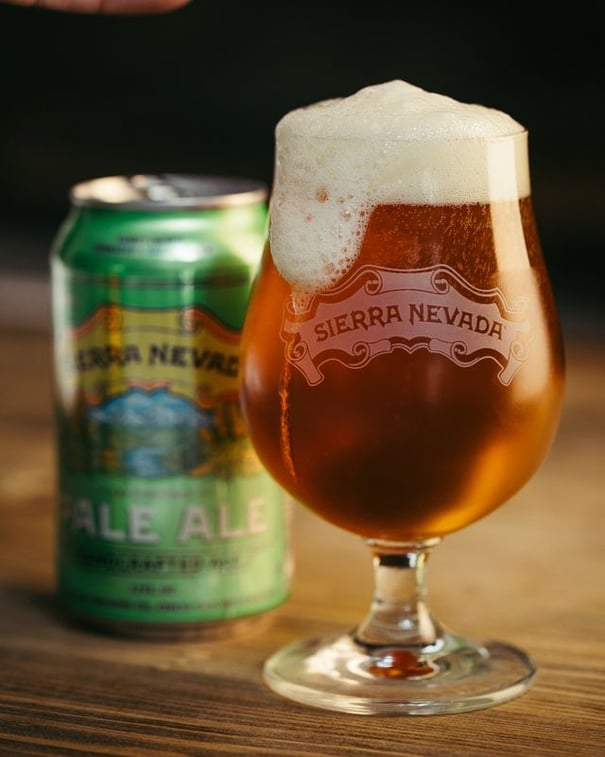
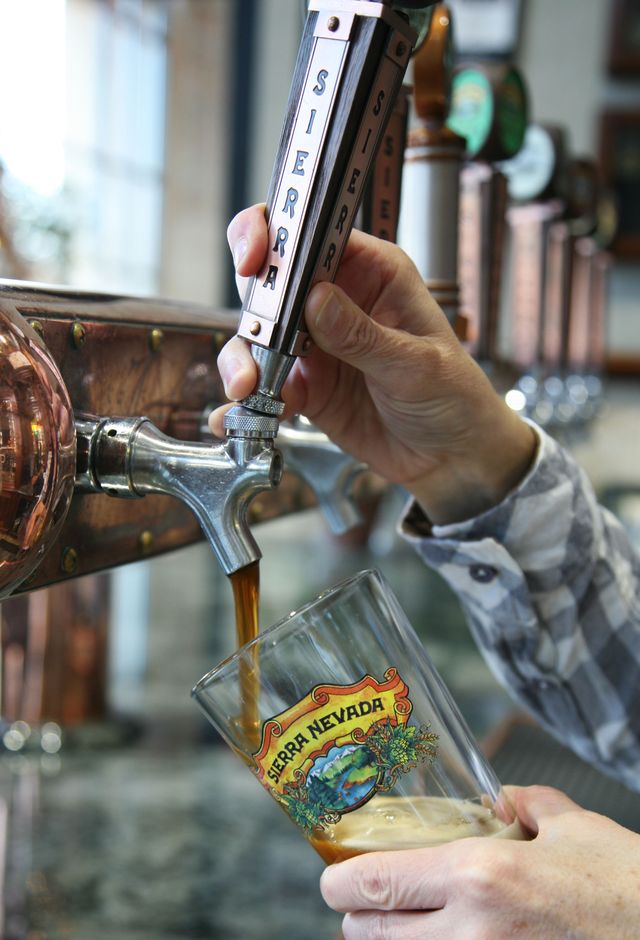
Back in May, the annual World Beer Cup made a head-turning announcement. Sierra Nevada Pale Ale, one of America’s oldest, most revered beers, was a gold medal winner. Not just any old gold medal winner, but an extra special one – it won gold as an ESB, or extra special bitter.
Yes, a pioneering beer of the American Pale Ale style took gold as an English Bitter, leaving many bitter Englishmen in its wake. What happened? Who cares? And why are we so obsessed with names and categories?
Physicist Richard Feynman wasn’t interested in splitting hairs, and he helped split the atom. Growing up, his father gave him a lesson in the difference between abstraction and reality:
“You can know the name of a bird in all the languages of the world, but when you’re finished, you’ll know absolutely nothing whatsoever about the bird… So, let’s look at the bird and see what it’s doing – that’s what counts. I learned very early the difference between knowing the name of something and knowing something.”
So what do we know about these pale and bitter birds? Back to foggy old London town for a primer.
Pale Ale vs. Bitter: Two Names, One Pint?
In their halcyon days, the distinction between “pale ale” and “bitter” was less about recipe and more about serving context. The same beer might be called a pale ale if you purchased it in a bottle, but a bitter if drawn from the cask. The terminology was less systematic and more cultural. Often just a matter of habit.
By the mid-20th century, with tap handles less-than neatly codified and branded and ordering still a largely verbal affair, “bitter” became a shorthand. U.K. drinkers would ask for a bitter to distinguish it from sweeter, darker mild ales popular at the time.
Of course, even within “bitters,” a hierarchy developed: the Ordinary Bitter, modest and low in alcohol; the Special Bitter, a step up in strength and flavor; and finally, the Extra Special Bitter, or E.S.B. – a term immortalized by Fuller’s in 1971 with its iconic flagship. When Fuller’s Extra Special Bitter became an export success, those three letters – ESB – stuck, first in the U.K., and then across the pond.
Americans who recall Ross Perot may also remember Redhook E.S.B., one of the earliest widely distributed craft beers in the States. Over its career, language got in the way. Many newcomers to craft beer took “bitter” too literally, assuming the style would leave them with a taste in their mouths akin to bowling alley ashtray and ex-spousal scorn. Breweries, in turn, avoided the term, leaning instead on “pale ale,” which sounded more approachable.
And so, while “ESB.” survived as a niche style designation, it was the American Pale Ale that truly flourished. And the beer most responsible for that flourishing? The pleasantly floral Sierra Nevada Pale Ale.
Beer Style Guidelines: Map, Not Territory
Fast forward to our caricaturesque present, where everything is black and white, but simultaneously, there are no clear lines drawn for anything, anywhere, anymore. Some see ducks where others see rabbits. Still others see Duck Rabbit Brewing Co.
In the 2025 World Beer Cup, the guidelines recognized six distinct pale ale categories, plus two categories for bitters. Eight styles are separated by nuances in malt character, hop intensity, color, carbonation, and balance.
To the casual drinker, the differences may be academic. But to competition judges, whose task is to group like with like, the lines matter. If you put an Ordinary Bitter against a New England Pale Ale, the milder beer will seem bland by comparison, even if it’s exemplary. It’s about setting expectations.
This is where Sierra Nevada Pale Ale’s gold medal becomes fascinating. The beer has hardly changed in 45 years. No lip filler, no buccal fat reduction. Its recipe, its malt bill, its Cascade hops all remain faithful to the original. What changed is the context.
Forty years ago, Sierra Nevada’s aggressive hop profile marked it as radical, even brash. Today, in a world where triple IPAs crack 10 percent ABV and bristle with Fuggled-up Mosaic hop varietals, Sierra Nevada Pale Ale seems almost chaste.
What was once hop-forward now reads as balanced. From Malcolm X to Bryant Gumbel, in Chapelle-ian equivalencies. What once directed Kevin McCallister “Down the hall and to the left” in Home Alone 2 now quarterbacks the nuclear football.
In other words, the living beer stayed the same, but our comparatively static understanding drifted beneath it.
The Quintessential Ale
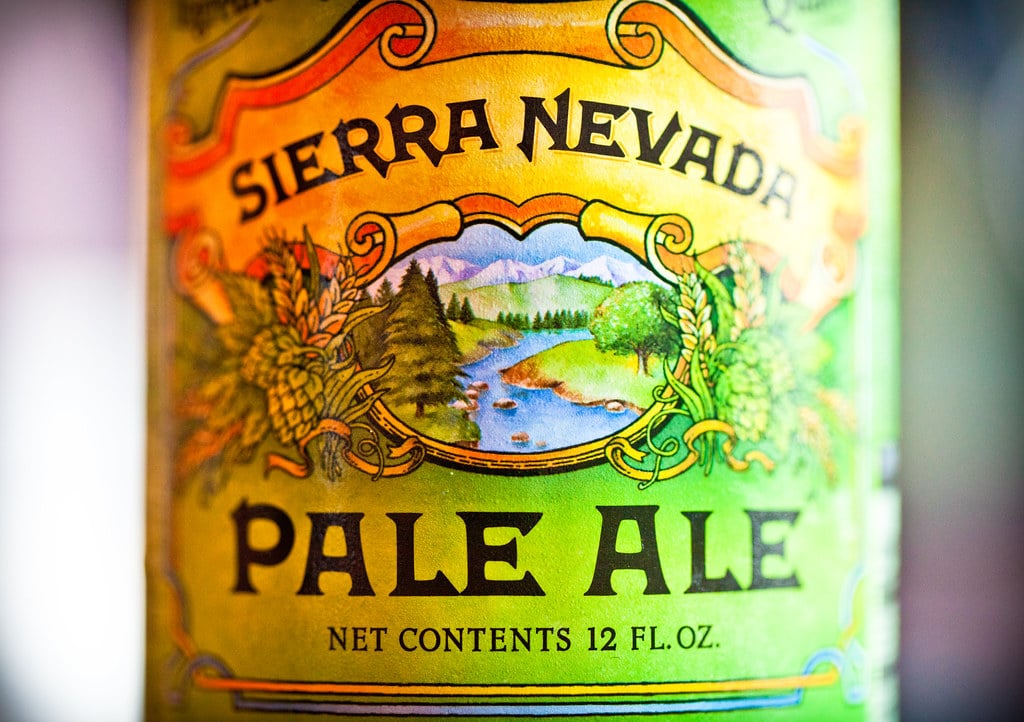
This brings us back to Pale Ale itself, a style that, perhaps more than any other, embodies balance.
A good pale ale is a Flying Wallenda tightrope walker. It must have malt depth without cloying sweetness, hop character without overwhelming bitterness, and drinkability without blandness. Done right, it is a beer for all occasions: porch, pub, backyard wrestling. Done wrong, it tumbles from the tightrope to its death.
Sierra Nevada Pale Ale has carved out a career from balance exemplified. Biscuity malts provide structure. Floral Cascade hops add zest. Carbonation keeps the finish brisk. It is neither extreme nor timid but centered.
The Drift of Expectation
The tale of Sierra Nevada’s medal highlights a deeper truth: not even beer styles are static. They are living languages, a conversation between brewer, drinker, and our ever-flowing river of taste preference.
Every year, the judging guidelines adjust slightly to reflect this drift. They are but tails on comets. They are the Academy, and if the people want Al Pacino with a Cockney accent, they’ll accommodate it. This is why a beer can win gold as a Pale Ale one year and as an E.S.B. the next.
With its win, Sierra Nevada Pale Ale transcends the ebb and flow of style, remaining true as definitions redefine.
Lessons in Style
The overlap between Pale Ale and ESB is a reminder not to be dogmatic about style or category, names, allegiance to party… Labels exist to guide us, yet they tend to cage us. Beer is not defined linguistically, but by how it speaks to our senses. Our perceptual connection to what surrounds us is what matters. Names point a finger towards the moon without ever touching it.
In Sierra Nevada’s case, the lesson is clear. Novelty fades and extremity dulls. But balance? It persists.

This is asinine as I explain here; https://dingsbeerblog.com/2025/10/06/this-is-just-plain-stupid-taste-the-damn-beer/