





How Hibernating Yeast is Advancing Cancer Research
 Story by:
Ivan Farkas
Story by:
Ivan Farkas
Beer yeast microbes have a surprising survival strategy up their sleeve to deal with food shortages: they hibernate. As bears hibernate to avoid the stresses of harsh winters and the resultant famine, yeast microbes perform their own version of hibernation to bypass periods of nutrient scarcities.
Now, scientists are leveraging this interesting evolutionary adaptation to innovate new ways of researching cancer cells, with the ultimate goal of putting them to sleep—for good.
An Exciting New Discovery
Researchers from the University of Virginia’s School of Medicine, in collaboration with Germany’s European Molecular Biology Laboratory (EMBL), have made a vital discovery, outlining a “never-before-seen adaptation that helps yeast cells go dormant when nutrients are scarce.”
Just as surprisingly, this finding could have essential implications in an important field. No, not brewing, but something even more crucial: cancer treatments. Just like bears and beer yeast, cancer cells go dormant when faced with a shortage of resources, and this feature can be exploited by medical science to open up a new way to fight one of the world’s most dreaded diseases.
Humans and Yeast: Not so Different After All
The study, published in Nature Communications, focuses on an interesting yeast species, Schizosaccharomyces pombe. For a little history, the tongue-twisting S. pombe was originally isolated from millet beer, and “pombe” is Swahili for “beer.” This yeast can also be isolated from arak, a Levantine anise spirit that tastes like licorice.
More interesting still, S. pombe is so similar to human cells that it’s scientifically useful as a model for cell division. It’s not exactly a flattering fact for humans, but it certainly shows the surprising sophistication of beer yeast—a fact most aficionados will agree with, if for different (flavor-related) reasons.
How Hibernating Beer Yeast can Advance Cancer Research
Scientists found the mechanism for S. pombe’s hibernating skills begins in the cell’s “batteries,” more scientifically known as mitochondria; some people may remember these from biology class, or memes, as being the “powerhouses” of the cells. Truly, mitochondria power cells (whether beer, bear, or cancer cells) by splitting adenosine triphosphate (ATP), which is a compound that contains phosphorus—no wonder, then, that matchsticks use phosphorus to blaze a flame.
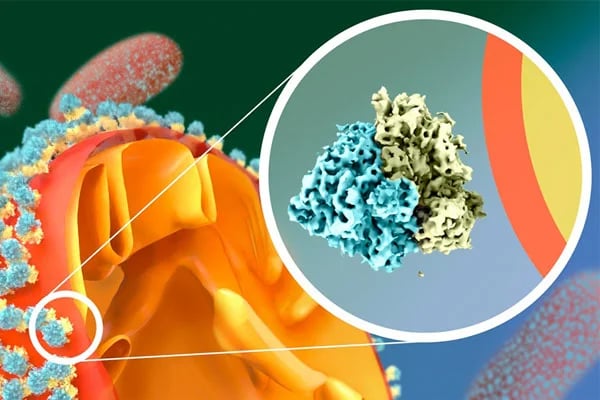
Yet mitochondria can also power down. When yeast cells go dormant, their mitochondria become covered with inactive ribosomes, which are the molecular machines that otherwise make proteins when resources are available.
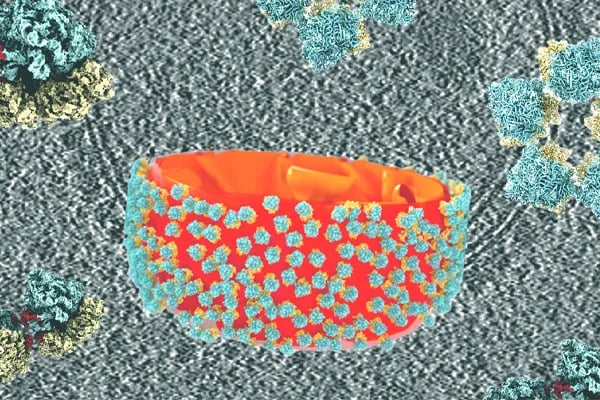
The exact purpose of this is up for debate, but it may be to protect the mitochondria from self-cannibalization, because when cells run out of resources they begin digesting themselves.
Amazingly, the researchers were able to peer all the way down to the cellular level using some, no surprise, incredibly complicated microscopy methods that rely on cryogenic temperatures and beams of electrons.
Zooming in allowed scientists to see that the inactive ribosomes attached themselves upside down, which is curious to say the least, and a counter-intuitive discovery that sheds light on these cells’ dormancy.
Putting Cancer Cells to Sleep
In cancer cells, such dormancy, or quiescence, also acts as a biological camouflage that hides them from the immune system. This isn’t a great thing, as these malignant cells can pull off the equivalent of a biological Trojan Horse strategy that sneaks past a patient’s immune defenses.
Therefore, the next steps involve further studying the literal ins-and-outs (and upside-downs) of cellular hibernation to ascertain how cells regulate their entry and exit into this quiescent state.
Once researchers have a better handle on the processes controlling cellular dormancy, they can hopefully utilize that knowledge to induce a more profound state of dormancy and help put cancer cells to sleep, permanently. In the grander scheme of future medicine, this beer-based research may help doctors derive new treatment methods for use in healthcare settings across the world.
Here’s looking forward to the first person whose life will potentially be saved by beer, literally!
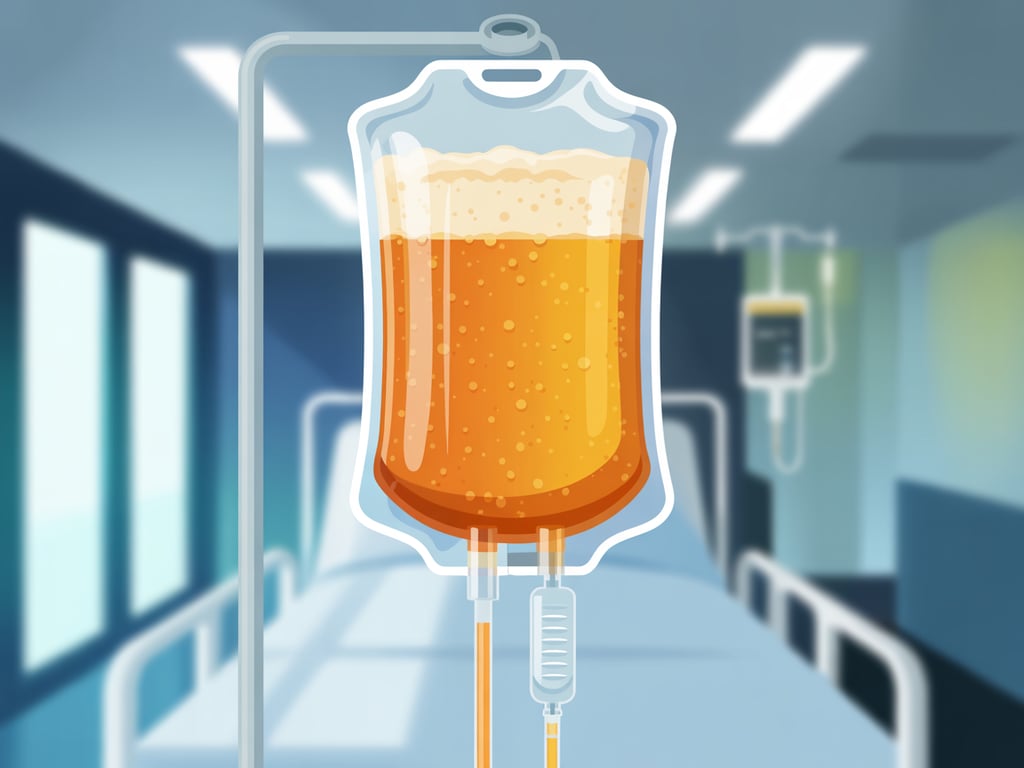
Feature image generated with Ideogram.ai, used for editorial illustration.




Comments 0
No Readers' Pick yet.