


2023 Beer Trends
An exploration of IRI Worldwide sales data, which tracks some of the most popular beers by brewery and by sales category.
 Story by:
Jim Dykstra
Story by:
Jim Dykstra
For our analysis of 2022 Consumer Trends, we will continue to pull from IRI data, a market research firm which tracks category-wide sales trends of beer sold in numerous retail outlets and then produces a monthly report of its findings. Our goal is to use these findings to provide real-time insight into the ever-changing beer marketplace, helping the consumer make more informed choices, and helping industry participants adapt and thrive. We will then supplement with relevant news sources and insight from craft enthusiasts around the country, both consumers and retailers.
Before delving further into this year’s data, here are a few things to keep in mind – these numbers are on a national scale and may not represent individual brewery or regional sales accurately. The numbers also do not draw a hard line between beer styles within certain categories, which could mask sales trends of smaller brewers. They track sales of packaged beer only and from a few different sources, including convenience stores (think gas stations), a general “food” category (grocery stores, etc.), and a combined multi-outlet and convenience (MULC) store category (a combination of grocery, drug, Wal-Mart/Sam’s Club, dollar stores and military stores, among others). We will focus on the MULC category, as it encompasses most major sources of packaged beer sales in the United States.
The Numbers (Part 1):
Overall Beer Sales in 2022
Beer sales in 2022 saw marginal growth of .2 percent over the previous year, topping $37.2 billion. Beer demand isn’t going anywhere, but the increase in demand seen previously is leveling off.
The Domestic Premium segment topped the Beer category again at around 27 percent of total beer sales, but lost ground to the Import segment, which grew by almost 7 percent to account for 22 percent of total beer sales. Imports saw similar growth last year and are expected to continue an upward trend on the coattails of Mexican beers, which account for roughly 80 percent of imported volume to the U.S.
Especial-ly Promising
Modelo Especial and Corona Extra saw some of the year’s most positive growth, and now sit comfortably as the fifth- and sixth-most popular beer brands in the U.S., by dollar sales. Modelo, which grew by nearly 8 percent over 2021, is now a half billion-dollar brand, and is expected by many to become America’s top-selling beer within the decade, ousting Bud Light. Corona grew just under 6 percent, and if growth holds, which seems likely, the brand can expect to pass half a billion in dollar sales by 2025.
Demographics are a huge factor, as few brands can compete in terms of brand loyalty. As the Latin American population continues to grow, so too will its favorite beer. There is national pride behind these beers that Bud Light can no longer hold a torch to, and Constellation Brands, which owns both, is well aware of how to capitalize through its advertising to reach beyond its core audience.
Pacifico, an AB InBev holding, had a great year, with dollar sales jumping 23 percent, making it a top-20 beer brand. Heineken’s Dos Equis XX Lager Especial sales dropped by 7 percent over last year, but it remains about $15 million ahead of Pacifico in sales. Corona Premier outsold them both despite a modest 5 percent sales drop, placing within America’s top 15 beer brands by sales.
Corona Light sales dropped substantially, by 26 percent, which can be attributed to a mix of factors. Foremost is growing interest in Light Lager, followed by growth of its sister brands, and the focus on that growth through advertising spending by Constellation Brands. Decision-makers within AB InBev and Constellation have to view brands as a sports GM might view prospects, or as cards in a deck. Some are called up, some are reshuffled, and the focus is often more on pulling the rug out from the competition than focusing purely on its own brands’ success.
Continuing down the Top 100 Beer Brands, we next meet Modelo Negra, squeaking into the top 40 with strong growth of 18 percent. Poor Tecate had another tough year, down 13 percent among the top 60. Even further down, Landshark saw a mild drop of 3 percent in sales, while still managing to account for roughly 25 percent of “Wasting Away” in owner Jimmy Buffett’s Margaritaville.
Finally for standard Mexican beer styles, near the bottom of the Top 100 sits Corona Familiar, down 4 percent for around $23 million in sales.
In the mind of the consumer, Mexican imports are more exotic than Domestics, more affordable, familiar and reliable than most craft, and guaranteed to meet expectations, which are typically that the style will offer crushable refreshment. Suffice it to say there’s a lot of positives for Mexican Imports, and the future is bright. But what of Imports from across the pond and beyond?
The Importance of Being Imported
The two European top dogs are Heineken and Stella Artois, owned by AB InBev. Both saw significant single-figure sales drops in 2022. Heineken, America’s ninth-most popular brand, saw sales fall by 7 percent. At $172 million in sales, it has captured 1.5 percent of the top 100’s dollar share, compared to Modelo’s 4.5 percent. The difference in dollar sales between the two brands is more than the entirety of Budweiser sales ($308 million.)
Stella Artois, America’s 11th-favorite brand, saw sales drop by 5 percent over last year, selling $139 million worth in 2022. Both Stella and Heineken are struggling to maintain relevance as competition tightens from all angles. Foremost is the rise of premiumization, thanks to craft, and the widening of specialty categories such as hard kombucha and RTD cocktails. In comparison, the perception of European luster, which once carried these brands, has receded. And lest we forget, Negra Modelo, Victoria and Dos Equis Amber are all Vienna Lagers, technically a European style. Drizly reported that Victoria was its fastest-growing beer brand in August of 2022.
All this points to a struggle to differentiate, with no clear path in sight. When all else fails, advertising is the next best bet. Both brands have relied on action-packed, quirky scenes that seem to be plucked from the deleted scenes of a Wes Anderson film. The result comes off as a bit desperate. Don’t be surprised if Fantastic Mr. Fox starts shilling for Stella, Joe Camel for Heineken.
Guinness still exports to the U.S. from Ireland, despite opening U.S. facilities, and its numbers for Guinness Draught are also down by 7 percent. Guinness Extra Stout is down 2 percent, and among the top 25 Brand Families, it is the 25th, seeing a congruent 7 percent drop in total Brand Family sales, though these drops aren’t necessarily a sign that the world’s favorite Irish beer is on the outs. So long as St. Patty doesn’t get canceled, Guinness isn’t going anywhere.
Some Bright Spots Among International Players
Not everything is in decline for our overseas contenders. Heineken 0.0 saw solid growth of 6 percent, and not just because Gen Z drinkers mistook its name for an emoji. Health consciousness is in, and the success of its non-alcoholic option lessens the sting of its Brand Family-wide 8 percent sales decline.
Even more promising is Peroni Nastro Azzurro (which, by the way, translates to Peroni Blue Ribbon). Italy’s PBR saw a 7 percent sales increase over 2021, riding the wave of interest in Euro Pilsner. Retailers take note! The public has spoken. More on Italian Pilsner and comparable styles further down.
Somewhat surprisingly, Fosters Lager saw solid 6 percent growth in 2022, though increase in shipping and materials cost may soon stymie this growth, another topic soon to be addressed. Rounding out our list of top imports is Labatt Blue and Labatt Blue Light, both of which saw modest single digit drops in sales.
Price Hikes Will Drive Tastes in 2023
We mentioned that Fosters growth may soon stagnate, and the reason is that in December, the Aussie stalwart announced it will increase prices while decreasing the beer’s alcohol content in 2023. Needless to say, this is Australian for “bad news.” The 4% ABV brew will drop to 3.7% in draft on January 23, followed by cans on February 13.
Price hikes are not limited to the land of Kangaroos and Vegemite sandwiches. In fact, Heineken has boldly and proactively announced it will increase its beer and cider prices by an average of 10.7 percent on January 1. The announcement comes on top of a 5.8 price increase it implemented in August of 2022 – none of which bodes well for 2023.
Heineken cited higher energy bills and more expensive raw materials to deal with, stressing that it is merely passing on some, not all, of its increased costs. What is difficult for an international brand is downright frightening for craft brewers.
Down in the Bayou, for example, things are looking grim. Abita Brewing Co., the 19th-largest craft brewer in the U.S., is worried. Malt prices are up 30 percent over last year. Same for sugar. And carbon dioxide jumped to twice its usual price over the summer. Brewers may need to resort to social media and political arenas, where windbags and blowhards are in surplus.
“Cans, bottles, caps, malt – utilities are obnoxiously more expensive,” said Abita President David Blossman. “Freight is more expensive. We’re not dealing with 8%, 9% inflationary pressures that the government is saying that consumers are under. It’s way higher than that.”
Many craft brewers express doubt that they can weather further financial pressures without passing on prohibitive costs to consumers. To compensate, breweries are focusing on less resource-intensive styles, and more attractive packaging. That too, however, is shooting upward in price.
Andrew Godley, owner of Parish Brewing Co. in Broussard, Louisiana, said prices for six-pack carriers have jumped by nearly 50 percent since 2019, and cardboard boxes are up nearly 60 percent in the same amount of time, costing almost the same amount as beer ingredients themselves.
“In the beer industry – I can’t speak for other industries – there’s probably going to be a lot of companies that don’t survive this inflation,” said Godley. “COVID was challenging, but the sales were strong for companies and the costs of goods were not that high to be able to manufacture things. Today, though, inflation is just an absolute nightmare for businesses.”
It’s becoming a nightmare for consumers as well, who are beginning to choose increasingly based on what is affordable, be it lighter, less resource-intensive styles like light lager, or simply shifting from buying craft entirely to cheaper domestics.
Deflated by Inflation
Worry and woe seems to be a theme for brewers and drinkers alike, all of whom fear what the future holds. Microbrewery owners surveyed expressed frustration at being caught in the middle, trying to look out for the consumer while getting priced out by the big guys.
Many drinkers in a financial bind, or not, give no thought to the implications of where their dollars are spent, simply preferring to save at all costs. When small brewers hike costs to stay afloat, their loyalty to local beer runs out and they head to Wal-Mart. The lack of support means unique and historic brewing cultures are lost as breweries fold, like Massachusetts’ Spencer Brewery, which ceased production after eight years as America’s first and only Trappist brewery, or innovative Mikkeller, which closed its San Diego brewery and ceased all U.S. brewing operations in August.
We have been enjoying an unprecedented golden age of craft beer, and there was never a guarantee it would last. Great beer isn’t going anywhere but supporting local beer has never been more important. That means a willingness to sacrifice an extra few bucks or drink a few less if you want to be able to walk around the corner and meet friends for a pint at something other than a corporate establishment. Exchanging quality for quantity is a core part of what it means to be a connoisseur. History repeats, and this country was founded on revolutionary principles forged over drinks in local taverns. We’ve drifted far from where things began, but few things are more American than supporting your neighbor.
Craft by the Numbers
Total craft sales are down by 5.3 percent, or $220 million – whichever makes you feel more hopeful. Among styles, sales were down in every segment save for two: Wheat Beer and Variety, which saw 3 and 5 percent growth respectively. But before you give variety packs a clap on the back, bear in mind that seasonal samplers and 3x4s of different styles have been more or less forgotten in favor of IPA sampler packs. Ironically, many consumers have voiced frustration and disappointment with the lack of variety in variety packs. Further, perhaps the biggest swelling of discontent among hundreds of craft enthusiasts surveyed was hop fatigue.
The King’s Bitter Constituency
Though IPA remains far and away the most popular craft beer style, it is, for that very reason, also the most unpopular. There is a growing camp of drinkers expressing boredom, frustration and (dare we say) bitterness at the ubiquity of IPA.
Craft IPA, which saw less of a percentage drop than any other craft style, now accounts for 45 percent of total craft sales, or more than $1.7 billion. The next true beer style listed is Belgian Wits, whose $320 million in sales consists mostly of Blue Moon, which is considered the top-selling craft brand, at $229 million. After that, we have Pale Ale, IPA’s closest relative, down 6 percent for $210 million.
The two other top-selling styles we skipped were Craft Seasonal and Variety Packs, accounting for around $600 million combined. A conservative estimate of 45 percent of those sales can be attributed to IPA as well, meaning, basically, IPAs are probably closer to half of all craft beer sales.
If IPA were a state, it would be California; the most likely to split off and become its own country. If IPA were a food, it would be pizza, because it sells regardless of quality, whereas other styles don’t. To the average IPA drinker, if certain broad stylistic boxes are checked, then greenlight! Same for the majority of pizza eaters. If the boxes of cheese, bread and sauce are checked, you’ll probably eat it without getting worked up about how the tomatoes were sourced. IPA is the gateway to craft, but like Two and Half Men in 2011, it has lost its sheen.
Beyond the aforementioned hop fatigue, consumers cited annoyance at the often lower standards of quality for IPAs, the seeming “lip service” paid to it on tap lists and grocery shelves, which is crowding out other styles, and the stagnation of innovation. Retailers counter these claims with logic: IPA sells no matter what. Other styles don’t move. IPAs are a safe bet. Other styles aren’t. They’re following the numbers, which, unlike sleeping dogs, don’t lie.
Cold IPA
IPAs have saturated the market, and the consciousness of drinkers, but that doesn’t mean innovation isn’t afoot. To this end, there are two buzz words to watch.
The first is Cold IPA. Pioneered by the aptly named Wayfinder Beer in Portland, Cold IPA is something like the offspring of pilsner and IPL, resulting in an IPA that just may quell and quench the haters. Wayfinder brewmaster Kevin Davey began experimenting with the style in 2017, adding rice and corn to the grain bill for body – a favorite trick of Budweiser and Yuengling. Next, he added lager yeast, creating a clean base for hops to stand upon. Finally, he dry-hopped near the end of fermentation, debuting his Frankenstein in 2018 with Relapse IPA, which showcased hops and finished dry and clean. A star was born.
The second buzz word to watch is “thiolized yeast” from Omega Yeast. According to the maker, this designer ingredient “enhances a yeast’s ability to biotransform compounds found in malt and hops to unleash thiols – flavor and aroma-active compounds reminiscent of grapefruit, passion fruit and guava.” Consider it a yeast CRISPR for supercharged hop flavor, perfectly suited for the Cold IPA, and often used in tandem.
Fans are quick to distinguish between Cold IPA and IPL, which bears the same hallmarks, but is a bit rougher around the edges. Less-enthused drinkers consider them a cleaner, hyped-up variation on the theme. A compromise would be to describe them as what IPLs were meant to be. If beers were televisions, IPLs are cathode ray tube TVs, and Cold IPA is a 4K HD flatscreen. In fact, a popular blog states that Cold IPA “showcases the hops in brilliant clarity.”
Despite the electronics department lingo, it is an apt description. Cold IPAs are poised to capitalize on single-hop interest, and may win back many IPA renunciates who have grown tired of juicy or bitter excess. If nothing else, they’ll merit a try from novice drinkers whose Venn diagram of interests overlap with “Cold Beer” and “IPA.”
Craft That Isn’t IPA
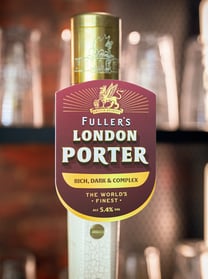
We’ve mentioned the strong numbers posted by Witbiers, carried by Blue Moon. Nevertheless, this top-scoring Craft segment saw a 7 percent drop in sales. The next most popular style after Pale Ale is Golden Ale, which saw a similar 8 percent drop. In fact, barring trends we haven’t already mentioned, most other styles saw decreases in line with Craft as a category. Amber Ale’s 15 percent is in line with previous years, and the same for Amber Lager. Saison/Farmhouse Ales are down 24 percent, and ESB is down 25 percent. Porters are down 19 percent. In fact, it isn’t until we reach Craft Light Beer that we find a noteworthy outlier.
Craft Light Beer is down just 3 percent. All things considered, it’s performing well above average among Craft styles. We’ve seen interest in Craft Light Beer steadily increase in years past, to the point that this style should be considered a given on tap lists. For the unconvinced, consider this statistic: According to a 2021 Nielsen survey, 85% of consumers are regularly buying or consuming alcohol beverages that are “better-for-you” or are open to it. Chalk it up to health consciousness.
Health Consciousness: Seltzers and Non-Alcoholic Beer
Do you have a smart watch or fitness tracker? Are you a Crossfit or Weight Watchers member? Do you count calories? Apparently, one-third of Americans do tally up their calories, and few ‘cals’ are more silent than beer calories, putting them firmly on the chopping block for the weight-conscious. Considering almost half of Americans are considered overweight, chances are some aspect of health-mindedness has infiltrated your life. This makes light and non-alcoholic beer an attractive choice.
This reasoning constitutes a large part of why hard seltzers shot to prominence (though they plummeted 11 percent this year), as most are clocked at 100 calories or less. The hard seltzer bubble had to pop at some point, and it has, though not disastrously. White Claw and Truly still held down the seventh and eight spots among top Brand Families for 2022. With flexible flavoring options and wide appeal, hard seltzers are here to stay. Some flavors dropped in sales by double digits, while others, like White Claw Surge… surged. Such is the nature of an established market.
What about non-alcoholic beer, championed by Athletic Brewing? Things are looking golden. Sales for the category are up 14 percent, and prices for NA offerings are rapidly becoming premium-ized in a way O’Douls could only fantasize about.
In the past two years NA beers posted the steepest rise in average base price among all categories of alcohol-related beverages, increasing its average by 21 percent. In the same period, overall beer increased its base price 6.3 percent.
Further, in November, Keurig Dr. Pepper Inc. announced a $50 million minority stake in Athletic Brewing Co., further cementing its status as the industry leader in all things NA.
The average consumer agrees. The stigma of NA offerings is all but gone among the initiated, and it seems the public is becoming more aware of the effects of drinking, opting to reduce the downside. To paraphrase one consumer’s opinion: “I just like being able to have a couple brews during the week and not have any of the negative effects of a ‘real’ beer. Athletic Lite is honestly indistinguishable from any of the big three light beers, and it’s 25 calories and 3 carbs. I can drink it any night of the week, and it’s amazing.”
Stout and Out
Craft Stout is down 20 percent, and consumers report similar fatigue to that of IPA. In place of hop fatigue is sweetness fatigue. Or booziness fatigue. Or simply calorie fatigue. With Stout and IPA essentially comprising the ebony and ivory keys of the craft keyboard, we begin to see a clear picture of the state of craft drinking, and it’s promising from a connoisseur’s perspective:
The American palate is beginning to refine.
It’s been a long time coming. Anyone who drinks enough is going to eventually crave a break. Not necessarily from drinking, just the extremes that IPA and Stout have come to represent in America. We’ve reached the West Coast and now must move beyond simply pushing the boundaries further. The response? “Czech Please.”
The Mlíko Revival: Are American drinkers finally becoming civilized?
What in tarnation is a Mlíko pour, and why is it surging in popularity across the US?
Mlíko is Czech for “milk,” and it refers to the frothy, milky way of serving a beer that is basically all foam. Typically, we Americans dump our suds, but in the Czech Republic, there is a long history of serving beers with big head quantities. In the 19th and early 20th centuries, Mlíko’s were often served as ‘dessert’ as a nightcap after the tab was paid, or for women as a lighter, daintier, “ladylike” mode of consumption. Unlike the typical American pour, which is beer first, then foam, Czech pours go foam first, beer last, to better preserve the aroma.
As with all things foam, there is an aesthetic element at play. You can picture a slow-motion scene where the drinker dives from the tap into a fluffy cloud as if starring in a soft, downy pillow advertisement. A muffin top of flocculent froth peeks coyly over the cusp of the glass, beckoning you to take it all in one long swig… which is how you’re typically supposed to drink it. Like a shot. That way the foam won’t settle. Nobody likes a flaccid pillow, after all.
A proper Mlíko effect is achieved with a side pour faucet. To really nail the Euro-vibe, you’d want to use LUKR faucets, which are the iPhone of side pour faucets. They’re those classy brass patinated taps, often perched atop the bar in tower form, front and center for your viewing pleasure. iPhone or otherwise, side pour taps utilize a ball bearing for control over the rate of pour, and to pour a Mlíko, you have to open it up just slightly. Drinkers enjoy the sensory experience, watching the delicate preparation and savoring the captured aromas and sweetness, often as a communal “Cheers-ing” scenario, clinking bowl mugs together with jollity.
Side pour faucets aren’t one-trick ponies and allow for greater control regardless of the pour. This trend points to increased conscientiousness from both the bartender and consumer – further refinement. Lagers take a long time to make and deserve a pour that does justice to their subtlety. The rapid popularity of this trend is yet another signal that Americans are ready to lay down extremes in favor of a nuanced drinking experience.
Drinkers surveyed around the U.S. expressed great excitement for side pours and “the rise of lager” in general, more than any other trend. It seems we are on the verge of a new era in drinking.
Weeding Out the Competition
Cannabis consumption is more tolerated and widespread than ever, and Gen Z, which grew up never knowing the song of dial-up Internet, is also the first generation to grow up in a world where cannabis is often as easy to procure as alcohol. Therefore, many Zoomers opt to skip the hangover and melt into the couch.
Further, Gen-Z has grown up in an online world and come of age in pandemic-conscious isolation. Generally speaking, this demographic may be more likely to view a night out as an anxiety-inducing threat to their safety, rather than an opportunity for serendipitous connection and merriment. Matchmaking is done via Tinder, to the detriment of Billy Bob’s Bar & Grill.
Lastly, Zoomer values place a premium on tolerance and acceptance of personal choices. Peer pressure is nowhere near as cool as it once was, and respect for temperance is the norm, rather than the exception.
What About Domestics?
Domestics are the powdered horse hooves which hold our beer drinking nation together. How are our Rockies and Clydesdales faring?
In a nutshell, Domestic Premium is down three percent for a total market share of 27 percent, or $9.9 billion. Sub Premium seems to be stabilizing with a 1 percent drop compared to last year, accounting for 12 percent market share.
The reasons for these segment drops are fairly straightforward: the rise of Imports and Hard Seltzer (not to mention every other style) are taking bites out of the big boys. Generally, this problem is solved through buyouts or creating facsimile brands to compete. Imports are the exception to this rule, as the vast chunk of its sales come from Constellation Brands, which to the macro brewer, is leeching potential profits.
The majority of the top 100 beer brands are still owned by the usual suspects. Bud Light is top seller, though it’s down 4 percent for a “mere” $814 million in sales. Next up? Michelob Ultra, which saw another stellar year of 8 percent growth. Coors Light follows with a 1 percent drop in sales, and then Miller, which saw a 2 percent sales increase.
Busch Light is a top ten stand out, jumping up 10 percent in sales for 2022. Reasons for this seemingly arbitrary success include increased advertising from ABI, name recognition from an apple-flavored spinoff, and marketing partnerships in everything from sports to agriculture. As a result, Busch Light has been able to transcend its category and edge closer to a higher classification of “Premium.”
Natural Light stood firm, as its utility as beer pong fodder and soon-to-be curbside litter remains timeless. Miller High Life had a great year with a sales increase of 6 percent, and Coors did even better, jumping up 12 percent on the back of similar marketing and public perception as to that of Busch Light.
Suffice it to say that macro brewers aren’t going anywhere, and that is neither a positive nor negative assessment of their success. These companies will continue to do their darndest to adapt as rapidly as possible, eating the smaller fish they need to survive, even if they lose some girth along the way.
This is America
Change is afoot. Our whale hunting days are largely over. Ahab is in rehab. Consumers and retailers alike noted that the demand for buzzworthy bombs of yore is dwindling, and the secondary market for beer is drying up. This is not surprising given that the honeymoon phase of craft has passed. While still enjoyable, the novelty of boozy bourbon barrel chocolate stouts aged with cinnamon and vanilla has run its course. Consumers pointed to a lack of innovation. There are myriad ways to blend beer with fun adjuncts, but they’re still variations on a theme. Retailers confirmed that the demand is no longer there, with some scrapping their high-end bomber sections entirely. In place of the whale? The ABV minnow! Non-alcoholic beers were said by one retail store owner to be “skyrocketing in popularity.”
Imagine the entirety of American drinking habits embodied within one person. For the last decade they’ve been in a Dionysian fugue, seeking out the strongest, boldest, most bizarre concoctions to imbibe, from the tartest sours to the bitterest enamel-stripping IPAs. They are like the boy in Matilda forced to eat an entire cake until they hurled, or the first-time cigarette smoker who got caught and was made to smoke the whole pack. First came the excitement, then the queasiness. And here we are, feeling the effects and vowing to never drink that much again.
It’s no wonder, then, that the pendulum is swinging towards moderation. Further, American drinkers are maturing. They are learning, one beer at a time, to discern the depth in what they’re drinking. Sweetness, booziness and bitterness are like bumpers in a bowling alley, and now we’re learning to put some English on our palates and tackle the 7-10 split of subtlety.
The resurgence of local and regional establishments is helping us incorporate drinking into our lives more organically and dynamically, like the Englishman who enjoys a table beer on lunch break. Drinking isn’t as binary as it once was, and has become more analog, like a LUKR faucet. We can meet a friend on a Monday night at the local brewery for a pint or two, rather than cutting loose with a weekend bender.
Boldness is an American hallmark, but we’re not apes, and our reason for coming to greater beer consciousness is simply a matter of having had the time to get acquainted with the wide, wonderful world of beer.
Stay well in 2023, and if you enjoy local beer, try your best to let your dollars give independent brewers a lift. The influx of government funding to compensate for COVID losses has all but run out for small businesses. Without public support, many of your favorite brewers may have to shutter, taking with them the vital aspects of community and interpersonal communication that come with drinking local. See you next year!

Comments 0
No Readers' Pick yet.