



2025 Beer and Beverage Trends
An exploration of Circana sales data, which tracks some of the most popular beers by brewery and by sales category as well as data related to various other beverages.
 Story by:
Jim Dykstra
Story by:
Jim Dykstra
There’s a sense of foreboding in the world of beer that the dream is deferred, if not dead, and that the Roaring Teens and Twenties are giving way to a Duff Bowl. Manifest destiny has reached the far shore, and craft beer is no longer booming.
While the craft beer world is right to pause and reckon with its changing landscape, it’s important to see just how far things have come. In 2014, craft contributed about $20 billion to the U.S. economy, per the Brewers Association.
In 2023, that number had ballooned to just over $77 billion. Furthermore, the industry also contributed “nearly 460,000 total jobs, with almost 190,000 jobs directly at breweries and brewpubs, including serving staff at brewpubs.”
We’re not seeing moonshot growth, but we’re seeing a mature, stable market firmly entrenched in modern American culture. If you want a job in the beer industry, you’re probably going to be able to find one, provided you work harder than you drink.
As is true in many arenas of life, a little gratitude can go a long way in lifting us from a collective fugue state and bringing our minds back to the baseline. So too can a reminder that hard seltzer, imports and macro brews all play a part in our beer ecosystem, bringing in new potential drinkers and opening up minds and palates to new flavors and new interpersonal connection.
So, have heart as we look at the numbers. They’re a snapshot of a living, thriving world of beer. It may lack the fire of young love, but the embers of our favorite beer category burn bright. Grab a winter warmer and join us for a dive into 2025 as we swirl the dregs of the past year.
Craft By Style
On paper, it was not the greatest year for craft beer sales. In fact, they were down by 3.3 percent. Retail channels are closing as high-ABV, expensive craft sits on shelves in the face of an economic downturn. If it doesn’t turn over quickly, it won’t last in a world dictated by spreadsheets. Plus, craft is not always shelf stable or around long enough to build brand identity. There is pressure from both retail and consumer sides for lighter beer. We’ll find out later if the numbers have begun to reflect that pressure.
Among the Craft segment’s top five biggest sellers, IPA, the golden goose, saw growth, topping out at $914 million dollar sales and accounting for just about half of all craft sales. The next three – Seasonal, Wits and Variety, are all down between 6 and 13 percent, while still making up 22 percent dollar share. So a good chunk of IPA’s growth may simply stem from a lack of desire for exploration as the pond dries up.
Golden Ale, the fifth highest-selling category, saw 1.6 percent growth, totaling about 5 percent craft dollar share, and Pale Lagers grew 1.2 percent while Pale Ales suffered a precipitous 8 percent decrease, dropping to craft’s sixth highest-selling category overall.
Going down the list, it takes a while to find another bright spot. Fruit/Veggie/Spiced, Bocks, Amber Lager, Amber Ale and Wheat Beer are all down. Substantially. The Ambers are in the low double-digit drops, but Wheat Beer… fell more than 20 percent. What the hell happened to this wonderfully refreshing style?
Here’s the theory: There are two main factors at play. One, America is finally hitting hop fatigue and craving lighter, more functional drinking styles that are a little better than Bud. Two, America still wants a bit of bitter backbone – because to the average drinker, that’s what makes craft beer taste like craft beer. That’s why pretty much every craft style is down but IPA, Golden Ale, Hoppy Lager and Pilsner.
Speaking of Pilsner, it’s up 4.2 percent, solidifying the case that America is in its era of refinement, finally.
But only to a certain degree, because Belgian Ales, among the most refined of styles, are down nearly 13 percent. We can vouch for them by citing the extreme competition among imports from Mexican beer, America’s desire for light craft and the fact that Belgians are expensive, though justifiably so. We still love you, Belgian Ale. Your time will come.
Stouts, once among craft’s stoutest sellers, are down 6.5 percent, accounting for just over 1 percent total dollar share. Kind of hard to believe, but how much liquid cake and pastry can we truly consume before suffering the consequences?
Furthermore, Americans do want to be able to function while imbibing a craft brew, as the term “sessionable” continues to make the rounds as an important buzzword when delivering a low-ABV lager or session IPA. Drinking multiple beers in a “session” sounds like fun, but staying “functional” afterward is paramount.
Perhaps that’s why Craft Light Beer is crushing, up 16 percent. Score another point for the theory that we want functionality above all else.
Functional Drinks
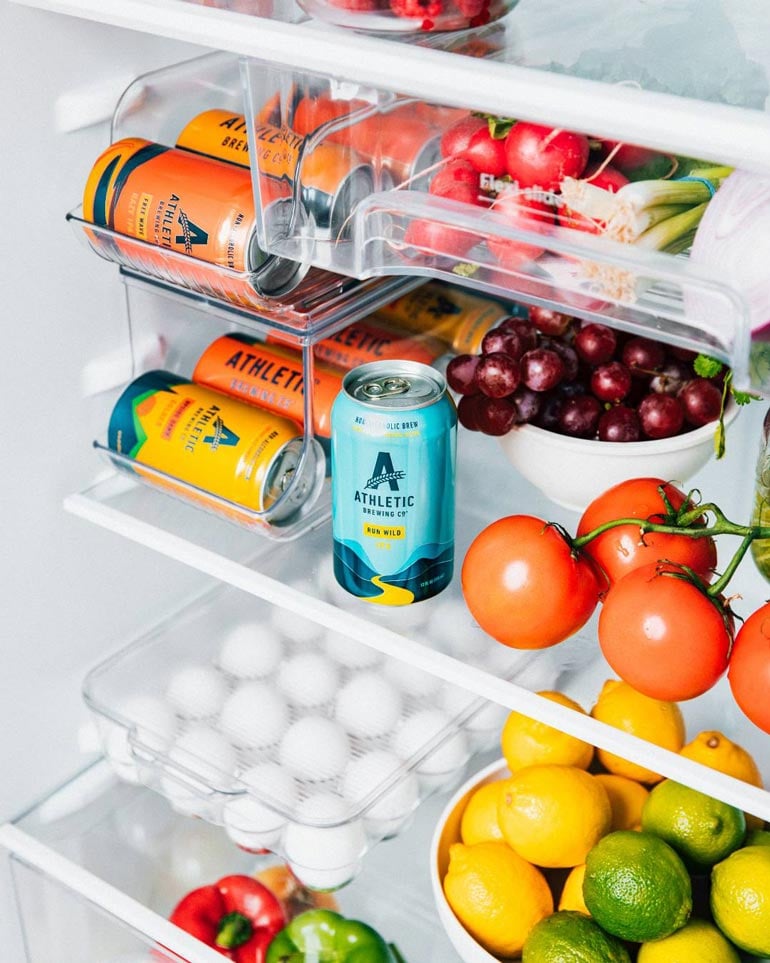
As we regain consciousness from our big bold bender and functional drinking takes hold, 2025 is the perfect time to explore how to capitalize on “healthy” alcoholic options.
There are plenty of options, and you don’t need to look far to find them. Consider all the old methods before trying to do something completely new. Premium-ize your non-alcoholic options with exotic flavor combos, or even better, consider the gold standard of healthy beverage marketing tricks with “knock-on” effects.
With these, you move your brew from “not unhealthy” to “actually health-encouraging,” to the individual and to the community. Can it be organic? Non-GMO? Can it incorporate ingredients which contain antioxidants that you can brag about? Can it contain a nip of caffeine to enhance focus and performance? Can it boast natural calming ingredients beyond hops? What about a probiotic element? Research the health effects of your ingredients and you may unlock new marketing avenues.
Further, consider how alcohol affects flavor, and what doors might be opened with its absence. There may be more space to find a unique flavor traditionally consumed in a foreign land, allowing you to tie up novelty, flavor and health all in a neat ribbon. Seek and ye shall find.
Table Beers
Sessionable and light, there’s still no reason why table beers can’t recover a smidgen of craft’s lost market share. Light on resources and the consumer’s digestion, they’ve got a lot of potential waiting to be untapped. If there’s any hurdle, it’s simply an understanding from the general public of what a table beer is and how it can best be utilized.
A brewer of this style could do some of the educational legwork with a very clear label and accompanying image – think something like “Roundtable: A Light and Sessionable Ale To Share”, (but you can do better on the name.) Then depict characters reminiscent of the children’s book characters Frog and Toad sitting around a cozy table pointing to a big, bold “2.7% ABV” and you’ve got a decent start. Utilize a light, crisp base flavor profile to add a gentle note of something slightly more piquant and exotic to help pair with dishes, and you’ll be appealing to multiple sub-species of beer connoisseur.
The End of Novelty
Rounding out Craft’s top sellers, there are no more great surprises. Everything else is seeing significant sales drops, from Barleywines, ESBs to Saisons and Special Releases. The clear takeaway is that the honeymoon, explorative, “sex on the beach” phase of America’s relationship to drinking craft beer is over, for now. We’re getting married, having kids, and considering other means of locking ourselves into lifelong, crippling debt.
With responsibility comes routine. We sacrifice novelty for the sake of stability. There’s no shame in that. Barleywines are really not anyone’s daily driver. And if they are… you’re either the most interesting man in the world, or the fellow with the most cheese puff dust-stains per desk chair. Barleywines are potent vacation beers and once-a-year splurges that transport you to far-flung lands with Barbados rum scent-drizzled, honey-glazed dried cherries… all from the comfort of your favorite recliner.
Category and Segments
Total beer sales are down half a percent this year, about $200 million, putting beer dollar sales almost exactly at $39 billion. A deeper dive reveals both winners and losers among segments.
The year’s biggest winner, again, is Imports. Up a whopping 4.1 percent from the previous year, they now account for one-quarter of total dollar share, almost $10 billion. Runner-up among segments is Domestic Premium (think Budweiser, Coors). Though the segment still brought home about $9.5 billion, accounting for another quarter of total dollar share, it is still down 5.6 percent, more than $560 million less in sales than the year prior. Undoubtedly, Domestic Premiums are still feeling the crunch of Imports and Seltzers, Ready To Drink (RTD) cocktails and spirits in general, though they’ve pretty well trounced Craft on retail shelves. More on that later.
Domestic Sub-Premium (Natty Light-types) had a pretty stable, or stagnant year, dropping a mere .2 percent to hold 11.5 dollar share, while Flavored Malt Beverages (FMB) jumped up 7 percent to about 10.5 percent dollar share. Look for FMBs to overtake Domestic Sub-Premium by the end of 2025.
Craft is now in the middle to low end of the pack with its 3.3 percent decline, accounting for almost exactly 10 percent dollar share. Secure, but nothing driving the growth we’ve seen.
Domestic Super Premium (Michelob Ultra types) continued its steady growth on the back of the aforementioned Mich Skinny, contributing a solid 9.5 percent dollar share, while Seltzer and Cider dropped 9 and 2 percents, respectively. Those two are pretty easily explained between a loss of novelty and competitive squeezes from other categories. No shockers.
Non-Alcoholic: A Sobering Success Story
And then we have Non-Alcoholic beer. You know it, you’ve tried it a few times, drink it religiously, or most likely, buy a sixer for your weekly meet-up with friends to ensure everyone gets home to their family without having to recite the alphabet backwards. The latter option is the biggest driver for the category’s growth. It simply serves a very useful, necessary purpose, bridging the gap between America’s need to drink and be merry and do, literally, anything else.
Another banner year for NAs, up almost 30 percent, or $91 million more in sales, to take a solid 1 percent of the entire beer market. That’s pretty wild growth, and as the segment matures, it would not be surprising to see it grow 3-5x in the next couple years. It’s a better bet than Mike Tyson over Jake Paul was, sadly. Much firmer on its feet.
Top 100 Beer Brands
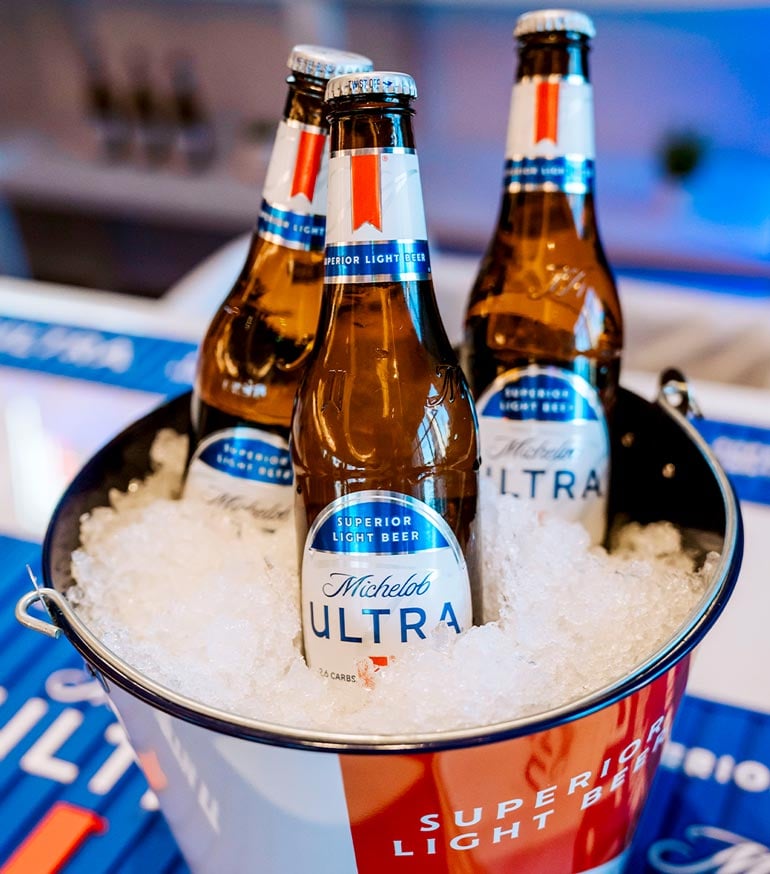
Give it up for Michelob Ultra, everybody. At over 7.5 percent of total beer dollar sales and 4 percent growth over the previous year to nearly $3 billion, its dominance simply can’t be ignored. And by that, it’s meant that craft brewers should be imitating this beer, because it’s objectively great and is, pretty much, the Platonic ideal for what a low-calorie beer should be. It tastes good; it’s refreshing; it’s firmly planted at the finish line of every marathon, and its function as a dangled carrot is likely responsible for half of the 26.2 stickers you see on car bumpers. This is a crusher of a beer brand, and it deserves its place at the top. In terms of proving where American beer sensibilities are at, look no further.
But it’s not actually the top dog, because the true king of beer is currently Modelo Especial. That’s right, this glorious imported brew saw 9 percent sales growth to more than $3.7 billion, and currently accounts for almost 10 percent of entire beer sales. We’ve cited demographic changes in years previous, but even America’s large Hispanic population doesn’t fully account for just how popular this brand has become. Its reputation for crushable quality on campuses and reliable drinkability for weekend gatherings make it the Super Mario of beers, well-rounded for all occasions.
Modelo Especial has the beer industry on its back, currently, both in the sense that it is lifting sales and also bowling over the competition. It will be interesting to see whether shifts in the political landscape, like proposed tariffs, drastically affect Import sales.
What craft brewers can take away is the necessity of perfecting a Mexican lager and keeping it year-round. Hell, make two or three. One standard, one hoppy and one with a flavor twist, such as Chelada.
Light, But Not Boring
Sales indicate the past, more than present and future. To that end, while IPA may reign, those not new to craft are yearning for a sea change. Simple, quality beer is desired, but perhaps not totally devoid of exoticism. Enter lime.
It’s not new, but it never fails to spice up dishes and beverages. Reliable with a twist, light sippers with lime zest are poised to carry significant volume in the beer taps of 2025. Expect to see it on shelves, and to hear it requested as an alternative to standard ale and lager offerings. Lime bridges the gap from plain Mexican lager to American desire for bold flavor, while not tipping the scales.
Top 100 Brands, Continued
Bud Light is still dry heaving from its Dylan Mulvaney debacle, down another 13 percent from last year, which also wasn’t pretty. Unfortunately for this American classic, it’s increasingly associated with Kid Rock and aspects of American culture that many are trying to move past. Next up is Coors Light, the Target beer to Bud Light’s Wal-Mart. Slightly classier due to its association with the Rockies, and far more stable, sales-wise, dropping just 1.3 percent over last year.
Rounding out the top five is Corona Extra, surprisingly stagnant at .4 percent growth over last year. Why hasn’t it seen the same leap as Modelo? For one, it’s got less room to grow. It’s long been a top-seller. Second, it’s slightly stronger: 5.6% ABV to Modelo’s 5.4%. Third, Corona is an AB brand, while Modelo is owned by Constellation. AB may be suffering splash damage from its Bud Light woes on the distributor side, and Constellation is simply having a long-term glow-up, growing and advertising more aggressively than any other Vendor. Lastly, Modelo Especial sells more in cans, and Corona sells more in bottles. Cans sell better in bulk and are the common choice for drinking games and portability. Don’t discount the packaging and how it affects consumer choices.
Other standouts include Busch Light, Coors and Pacifico, Top 15 Brands which grew 8, 16, and 25 percents, respectively. Twisted Tea and White Claw saw small gains, pointing to the diversity of alcoholic beverage types among top brands. Dos Equis and Heineken saw drops, thanks to Modelo and Corona, to a lesser extent, while Yuengling Traditional Lager is down 11 percent. Fairly substantial, but Yuengling’s lighter offering, Flight, grew 37 percent, and recouped around 60 percent of traditional Yuengling’s deficit.
Voodoo Ranger Juice Force jumped 20 percent, and Modelo Chelada Limon y Sal and Especial both grew significantly, combining for nearly $40 million in sales over the last year. Coupled with the growth seen from Victoria (35 percent), it’s safe to double down on the assumption that Hispanic Americans, citizens or non-citizens, are heavily impacting retail beer sales.
It’s not uncommon for blue collar Latin American workers in the States to grab a 12- to 30-pack, or a couple Cheladas post-shift and share them with comrades. Hard work from sunup to sundown deserves refreshment, and it’s interesting to see this cultural pattern reflected in the sales of beer styles, cheladas, specifically, which most non-Hispanic Americans have never tried.
Top 30 Craft Brands
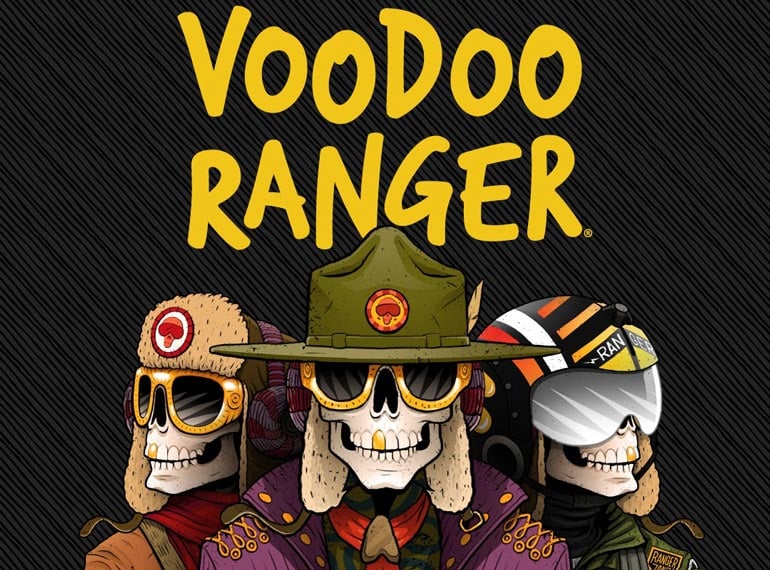
Rounding out our survey of beer sales is a clear victor among craft brands: Voodoo Ranger. Behind Blue Moon, which dropped 4.1 percent for a total of 6 percent of dollar share, the Voodoo Ranger imprint holds both the second and third spot by a substantial margin. In a nutshell, if you want to sell craft right now through a retail channel, it probably needs to be a DIPA, Tropical or Hazy IPA.
Hazy Little Thing is next in line, with old faithful Sierra Nevada Pale Ale clocking in just shy of Sam Adams seasonals. New Belgium, Sam Adams and Sierra Nevada are the Cerberus of large craft brewers, in the best way.
Back to Voodoo Ranger brands, Juice Force grew leaps and bounds, while the relatively mature standard Voodoo Ranger saw another 4 percent growth. Together, they far surpass the sales of Blue Moon and will likely be sitting atop the craft charts in another year or two. When it comes to building and marketing craft brands, New Belgium has set the gold standard, and brewers of all sizes should take notes.
New Belgium As Trendsetter
If you’re not feeling enterprising, you could do a lot worse than following the lead of New Belgium, a company which has consistently stayed ahead of the curve. Who drives trends you ask? Why, none other than the young legal-drinking-age consumer, or “LDA”.
Without hard innovation in the craft category, New Belgium is finding ways to present craft beer in novel ways to young drinkers. One head-shakingly simple way is packaging. The Fat Tire-maker has taken to packaging its Voodoo line in 7.5-ounce “Mini Ripper” cans, making what is old new again while appealing to the active and health-conscious, as well as the time-bound drinker, in one fell swoop. Better yet, they’re high margin, retailing for just a couple dollars less than standard-sized cans.
Another perk to the Mini Ripper is its ability to mitigate the potency of high-ABV brews, like New Belgium’s Juice Force from the Voodoo Ranger line, which packs quite a punch at 9.5%. Impractical in larger quantities, as are Imperial Stouts, but perfectly sessionable and shareable in 7.5-ounce doses. It’s a win-win for New Belgium on this front, while additionally differentiating Voodoo Ranger from its traditional offerings. Expect other breweries to follow suit, experimenting with can size, and even shape, to find ways to reinvent the (not-so-fat) tire.
Creative Splits
Another shockingly simple idea which can breathe new life into craft sales is the variety six-pack. Given the strength of variety pack sales, this is a concept with legs… but who knows how to use them? Texas’ own Shiner has set the gold standard, in this case, doing ZZ Top proud.
Of the many possible iterations, the most commonly employed are the 3/3 and one-of-each sampler. But don’t let that stop you. Shiner has taken the creativity one step further with both seasonal and branded sixers. In summer and winter, they’ve got Heat Wave and Cold Front, respectively. They’ve also titled them “Brewery Tour, Family Reunion and Taproom”, each adding charm, excitement and ultimately, value, to the standard six-pack purchase.
Drinkers now are feeling the burden of choosing correctly as wallets tighten and dollars inflate, and the anxiety of commitment is a not-insignificant driver of craft’s sales decline. With the variety pack, Shiner kills multiple Ruby Redbirds with one stone. They get the word out while removing one barrier to purchase and replacing it with the incentive of novelty. Further, they add an extra layer of branding, one scale up from the beer itself. New Belgium’s Voodoo Line, which has relied heavily on variety, is now a powerful meta-brand in its own right.
Consider how your portfolio might benefit from differentiating your products into sub-categories. You might stumble upon an entirely new retail channel.
Thoughts on Growth and Survival For Craft Brewers
Many beloved breweries have been shuttered or sold for parts. We can expect this trend to continue if forecasts of resource scarcity prove accurate. Grain, hops, aluminum, even kegs may become difficult to acquire, further squeezing out breweries just skating by. Thus, 2025 is also about survival.
One means for doing so is pooling resources and forming alliances. We may see more independent craft breweries going the way of Victory and Sixpoint or Dogfish Head and Boston Beer. The latter two are also great examples of diversification – hotels, beer-adjacent brands, or simply savvy collabs. Below, we’ll explore some ideas that brewers hoping to ride out the storm might find helpful to adapt.
Contentment and Coziness
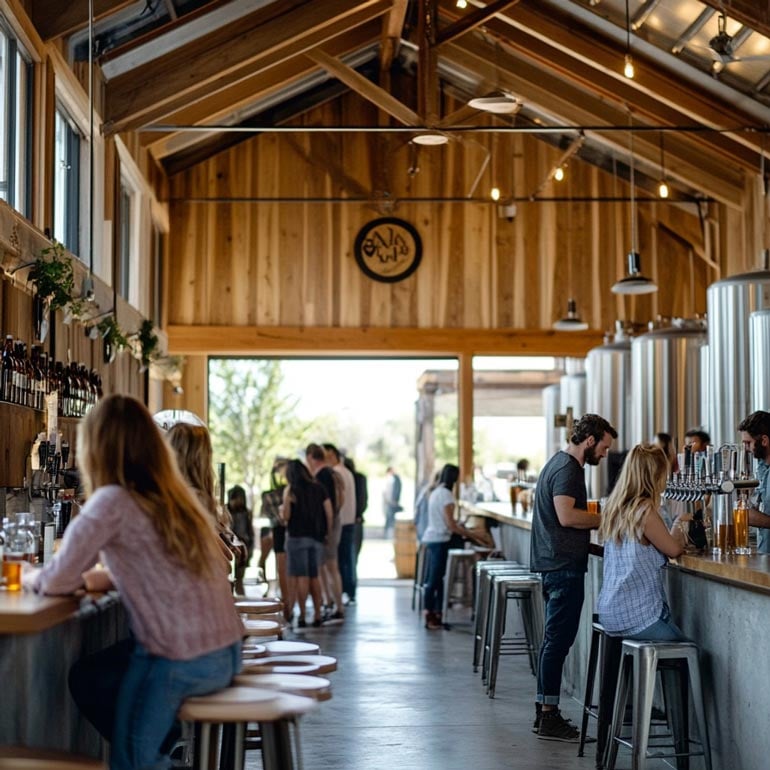
It ain’t ‘49 no more. The boom has busted, and financiers that joined the brewing game to simply make a quick buck will soon be weeded out, if they haven’t already. It’s time to hunker down and prepare for a long beer winter. Don’t try to expand your porch while it’s freezing. Stoke the fires of contentment and focus on making what you’ve got functional and cozy as heck. Make your space livable and inviting. Move away from the “drink space” and towards the community hub. Put up some taxidermy and family photos. Get to know your customers. Lionize dog regulars and paste world currencies to your ceiling. Get a map and have visitors from elsewhere put pins on their hometown. Focus on the cultural exchange rather than the dollar exchange, and the dollars will flow. There is perhaps no greater marketing tool than having the best atmosphere in town.
Do you have a coat rack? Boot brush? Do you have a bulletin board to encourage local business? Do your employees want to hang out after their shift? Are you skimping on heating to pocket an extra $200 a month? How does your taproom smell? Is your lighting harsh or warm, Edison-type bulbs?
The Dutch have a term, “gezellig,” which translates to “cozy atmosphere.” It’s something you worked at consciously that patrons sense immediately and unconsciously. And it makes a huge difference. Reclaimed wood. Little figurines in nooks and crannies… There is no textbook form of gezellig, because it is a reflection and extension of individuality for the sake of community.
If the concept seems foreign, think about how you feel one or two beers in, and try to externalize that. Intangibles square the circle. It’s the silence in between the notes that make the music.
Death of the Craft Aisle
Aside from specialty grocers and the rare enthused big-box stockist, most grocery stores are no longer candy stores for craft drinkers. Prices determined by distributors are helping squeeze the little guy further and further off the shelf. The economy is pressuring the consumer to make the economical choice, and that’s not a $20 4-pack. It’s Modelo by the dozen, or more. The effect cascades: retailers are dissuaded from setting up craft displays and endcaps, because they don’t move, and bars avoid craft kegs for the same reason.
Big beer has successfully won the battle. It was always a matter of time. And it was always a small miracle that craft was finding such purchase in big box grocers at all. It was a surprise salvo into enemy territory. Now it’s time to retreat to home turf, and there is no better high ground for craft brewers than the community taproom.
The Family Brewery
As breweries are liquidated and more are consolidated, those which remain must fight to stay relevant. It’s survival of the fittest. Looking through the eyes of Darwin may provide insight.
One of the more reliable models is that of the family brewery – a convivial space less specialized, and somewhat akin to that of a small community. Picture an open space for kids, ideally in a central location, perhaps abutting a park. There’s a stage for music, TVs indoors and outdoors showing the latest ballgame, and heaters encouraging everyone to stick around and get cozy no matter the temperature. Inside you can find not just beer but coffee, attracting remote workers during morning hours. There’s also some combo of cider, seltzer, wine and cocktails, with seasonal specials, all helping to make the space attractive to more than just the die-hard drinker.
Each day brings a different food truck, or even better, there’s a built-in restaurant, not necessarily operated by the brewery. Plenty of deck space for dogs, and there are string lights and speakers strategically positioned around the perimeter, which doubles as counter space for drinks. Completing the fantasy is a large old-growth tree, adding that extra sense of centrality and attraction, which subtly drives traffic to your family brewery.
This is a white picket, Cleaver-esque model, but consider what makes your space special and adapt. How can you function symbiotically with surrounding businesses? How can you utilize local talent and municipal resources? Who do you need to talk to? Maybe your solution is not to be the state’s best NEIPA maker, but simply the town’s ideal gathering space for a family Sunday where mom and dad can chill without paying for a babysitter.
An unofficial survey of craft drinkers highlights how the family brewery stands out in comparison to “beer geek” breweries, which they expect to struggle. They cited favorites such as a local farm brewery, which goes out of its way to set up a kids area, serving both as a safe playground and a means of mitigating the chaos that kids bring to an environment for less than sober adults… a potentially explosive combo.
A parent explained how their favorite local brewery has four locations in a major beer city, but their favorite is “this unimpressive little shack in an ugly, industrial, heavily construction trafficked area.”
They explain how the dinkiest location exceeds the sales of all the others due to its family friendly nature.
“It’s become known as the place to go in the community that encourages families to bring their kids… as someone who has a daughter, it keeps me coming back and I know it’s what keeps all their business coming back. These days, with how much breweries are struggling, my advice would be to not only allow kids but encourage that. You won’t be around long if you don’t.”
Cotton Candy Trends
By cotton candy, we mean trend forecasts which may be spun into something short and sweet, but ultimately won’t be running 100-plus miles in sandals, like Mexico’s renowned drinking runners, the Tarahumara.
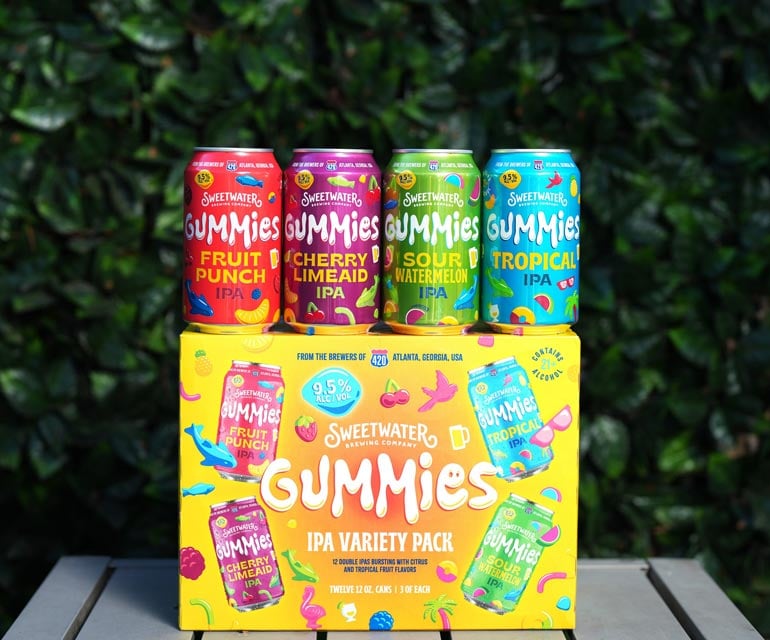
There is a sweets-adjacent trend, however – candy flavored beers. Gummies, anyone? SweetWater has successfully tapped the line between sweets and childish nostalgia with its Gummies line, featuring tropical, juicy DIPAs.
Everybody’s had a Well’s and Young’s phase. Remember Well’s Banana Bread beer? Young’s Double Chocolate Stout? Sticky Toffee Pudding? These are beginner craft beers to many, but they hit a sweet spot between respectability and cloying sweetness, which may save a few lost souls from swilling Mike’s Hard.
Nostalgia Taps
In a sweeping generalization, Millennials and Gen. Z feel a deep nostalgia for humanity’s last gasps of pre-smartphone existence. Consider that the dialed-in 80’s aesthetic of Stranger Things led to Kate Bush’s “Running Up That Hill” to chart higher in 2022 than it did for its original 1985 release.
Swept away in the ever-expanding deluge of social media drivel, we long for concrete reminders of a simpler past. We used to sip Hi-C Ecto Coolers, Yoo-Hoo and Capri-Sun with an intrinsic understanding that the rest of our peers were doing the same. Now we are paralyzed by novelty and suffer from a resulting loss of collectivity. The closest thing society has to shared experience now is virality, and it’s inherently ephemeral. Nothing is authentic anymore, and few things feel more poignantly authentic than nostalgia, regardless of whether we lived it. Nostalgia is a huge opportunity for a savvy marketer.
Brew a beer that evokes the flavor, quicksilver mouthfeel and 90’s packaging aesthetic of Capri-Sun Pacific Cooler and you’ve bought yourself a few years high on the hog.
Consider these traits – flavor, mouthfeel, aesthetic and brand partnership, and find a way to meld it with alcohol. In this day and age, in terms of sales, aesthetics and brand partnership will do a lot of your heavy lifting, but if you can actually make something of quality, all the better. You’ve done your part in slowing humanity’s freefall into total idiocracy.
The Hangover
It’s not sexy, but in terms of craft, the American drinker is a bit hungover. We just spent the last 10 years on a metaphorical all-night bender of wild flavor and increasingly exorbitant prices. We still love beer, but we’ve hit the morning after. We have to check our bank accounts and try not to cringe at what we spent. We have to think about our health for the sake of the kiddos. We have to drink the water so we can sober up and be ready for round two, whenever it next comes.
And that’s why we’re seeing non-alcoholic beer explode as the real thing falters. That’s why people are confidently skipping the shrinking craft aisles and tap handles for the pitcher or thirty-rack of Coors. That’s why we’re counting calories and springing for seltzer. Or just simply drinking a little less. Despite what your 105-year-old brandy-sipping grandfather wants you to believe, alcohol consumption and longevity do not perfectly correlate. And that’s okay. There’s always next year, and there’s always next beer.
Annual Disclaimer:
Our numbers come primarily from Circana’s Total US Multi-Outlet + Convenience Beer Data, which offers a comprehensive cross-section of sales by category, style, brand and more. This data, combined with consumer insights and the latest craft scuttlebutt, will inform our speculation for what’s on tap next year.

Conversations (0)
No comments yet.