


Craft Brewing Investment Trends
 Story by:
Jonathan Ingram
Story by:
Jonathan Ingram
As the sales of flavorful beer continue to soar, there’s seemingly no end to the outpouring of affection for it by a growing cadre of beer lovers. But as a wave of dollars flows into the craft beer business, it begs a question: who is going to be making the flavorful beer — and the money that goes along with it?
From artisan breweries to microbreweries and those in the realm of a million barrels a year – or trying to reach that milestone, three patterns emerge over the past year. Some craft breweries are finding unique paths toward growth through bank loans and private sales. Others are taking private equity investments as a path to reaping financial rewards while remaining in the brewing business. A third group has elected to reap all the rewards by selling their breweries outright.
What this means for the market segment of craft remains to be seen.
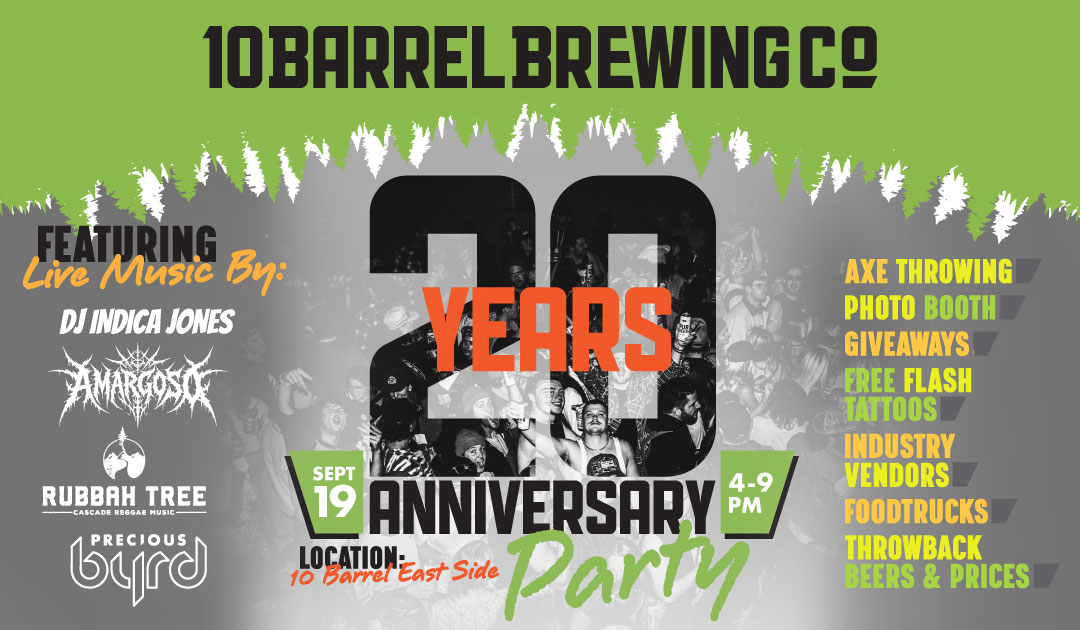
In the category of outright sales are New York’s Blue Point Brewing Company, the 10-Barrel Brewing Company in Oregon and the venerable Elysian Brewing Company of Seattle – all recently purchased by AB InBev within a 12-month period. With the brewing giant poised to make good on its multi-million dollar investments, which previously included the acquisition of the Goose Island brand, that means these breweries’ production and sales are expected to increase – with the profits accruing to AB InBev.
AB InBev is not finished with its acquisition strategy, according to Townsend Ziebold, a managing partner at First Beverage Group. “ABI set a strategy of buying a series of regionals and they’re in the middle of executing that,” said Ziebold. You can look at a map of the United States and I don’t think ABI is finished with their regional strategy. My guess is they have several more to do.”
In macroeconomic terms, the craft segment, which enjoys higher margins due to pricing, prospered during the Great Recession and took market share year after year despite those premium prices. This performance caught the attention of investors, banks and financial markets in general – in addition to major brewers. In an odd take on crowd funding, the top tier of craft brewery owners are often surrounded at the Craft Brewers Conference or any other meeting of the industry by would-be buyers, some of whom slip them notes or large denomination dollar bills signaling their intent.
Craft brewers are now welcomed with open arms at commercial banks as well. “There is a lot of debt financing available for breweries out there now from banks,” said Larry Bell, who over a decade ago contemplated bankruptcy during the first expansion of Bell’s Brewery when a bank loan hit a snag. “Banks are aware of the successes and profits going on now in the craft beer arena,” continued Bell, who has recently used bank loans to buy out his early partners and expects his daughter Laura Bell to run the brewery in the future.
From the perspective of another Michigan brewer, Mike Stevens of Founders Brewing Company, many of the same people who started the flavorful beer revolution will continue to sustain it despite investment from major brewers.
“These are really exciting times to be in the craft beer business,” said Stevens, who co-founded his company with Dave Engbers. Stevens sees the recent influx of financing as an opportunity for brewers such as himself and Engbers to keep brewing.“It’s going to become a chance for craft brewers to design the future,” he said. “I think there’s an opportunity to go forward and control our own destiny.”
With that in mind, Stevens and Engbers recently sold a 30 percent equity stake to the owners of Spain’s San Miguel brand. It was a good fit, said Stevens, because he and his partner want their families to follow in their footsteps at Founders and the Mahou family that owns San Miguel believes in that strategy.
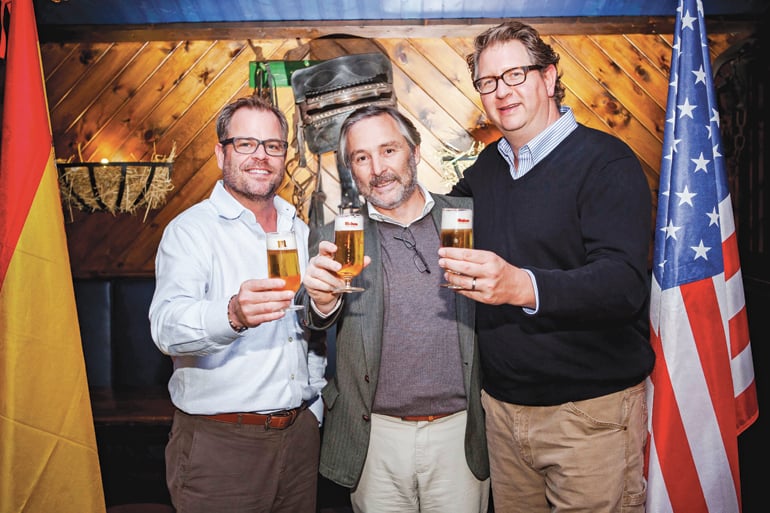
Stevens and Engbers of Founders recently sold a 30 percent equity stake to the owners of Spain’s San Miguel brand.
At the higher production end of the craft scale, other changes have been obvious that will help sustain some of the original members of the Brewers Association’s Top 50 Craft Brewers, who are by definition independent. Publicly traded Boston Beer Company has bought breweries in key locations around the country. Private brands such as Sierra Nevada, New Belgium, Lagunitas, Stone and Green Flash are establishing new breweries east of the Mississippi using debt financing and Deschutes is looking. As part of its expansion, Green Flash bought into the highly regarded microbrewer Alpine, a fellow California company.
In New York City, ownership of Brooklyn Brewery, has been quietly transferred to the Ottaway family by co-founder Steve Hindy. Plans for a million-barrel brewery in the New York City area are underway for Brooklyn, whose greatest area of growth lies in exports.
For those in the Midwest, expanding in place also makes sense. Bell’s, located near Kalamazoo, and Founders, in Grand Rapids, are poised to dramatically expand operations using bank financing. While Bell declines to share his bank loan information, Founders has stated its expansion is connected to a $42 million loan. Boulevard Brewing Company, under ownership of craft-sized Duvel Moortgat of Belgium since 2013, has expanded its operations in Kansas City to the tune of $12 million in investment.
Others on the Brewers Association’s Top 50 list are turning to financing from equity groups, a more unique and complicated approach. In a short span in the fall of 2014, Southern Tier Brewing Company, SweetWater Brewing Company and Uinta Brewing Company each announced the sale of equity stakes to private equity investors.
In deals that invariably restructure a company, private equity investors bring additional financing and an opportunity for original ownership to reap some profits without giving up all of the stock. Brewery owners are also looking for expertise from private money firms to help manage growth in a business complicated by the challenges of manufacturing, distributing and selling high quality fresh beer. Many of those challenges concern finances. On the other hand, private equity investments often result in another sale within a five-year period.
Because private equity investors are more interested in return on capital and continuity of leadership, they often take a large minority or slight majority ownership. The process of brewing the beer is not expected to change at Southern Tier, SweetWater and Uinta. But only SweetWater’s founder Freddy Bensch retained a majority of the equity in his company, according to a variety of industry watchers.
Bensch emphasized SweetWater, which brews the iconic 420 Pale Ale in Atlanta, will continue current operations after the investment by TSG Consumer Partners. “Operationally speaking,” he said in a statement, “SweetWater will remain unchanged whatsoever, and we will continue business as usual as we strive to keep making the best beer we possibly can. We look forward to the future and taking it to the next level…one beer at a time.”
 But changes on the administrative side are not out of the question in private equity deals. Shortly after the investment from Ulysses Management arrived, Southern Tier founder Phin DeMink hired John Coleman, the former president and COO of Pabst Brewing Company, to be the company’s new CEO. The announcement was made shortly after the investment by Ulysses and was another confirmation that Ulysses has become a majority owner. Johnson is a 25-year veteran of the U.S. brewing industry and formerly worked at Anheuser-Busch. He is charged with increasing sales from the current 100,000 barrels a year level at the brewery near Binghamton, New York.
Ziebold expects to see more private equity investments in the BA’s Top 50 list of companies.
“I think we’ll see both majority and minority investments,” he said. “I think you’ll see few 100 percent buyouts by private equity. Good private equity is smart enough to know they like some continuity in management and ownership. Private equity or family offices can be good partners for founders looking for partial liquidity and who want to continue in the business.”
Private equity is not the only way for craft brewers to take some profits and continue to brew beer. In 2014, Harpoon Brewery founders Dan Kenary and Rich Doyle sold an equity stake in the brewery to employees under an Employee Stock Ownership Plan. The plan enables employees to purchase 48 percent of the company’s stock. This follows in the footsteps of New Belgium, the pioneer of employee ownership in the craft segment.
In the cases where AB InBev purchases breweries, the object is for the major brewer to handle much of the overhead and administrative activity without too much additional expense while gaining revenue and market share by growing the craft brand.
Although outright purchases by major brewers are an exception to the overall trend, they can have far greater impact. Leinenkugels brand, for example, has become a one million barrel brewer as part of the Tenth and Blake’s Brewing Company owned by MillerCoors. Under new president Dick Leinenkugel the Wisconsin brewer, which has enjoyed success with its shandy style of beers, has set the goal of doubling production to two million barrels.
When AB InBev purchased the Goose Island brand of Chicago in 2011 for $38.8 million, the parent company quickly began brewing some iconic beers like 312 Urban Wheat outside of the Fulton Street Brewery. Both the Leinenkugels and Goose Island brands have become mainstays on supermarket shelves across America due to the strength of the major brewers’ distribution and brewing networks, replacing other beers in this highly sought shelf space.
It remains unclear if Blue Point, located on Long Island, and Bend, Oregon’s 10 Barrel and Seattle’s Elysian will become part of a regional strategy or if AB InBev will brew some of these companies’ beers elsewhere.
All of the recent financial activity in the craft segment serves to confirm that flavorful beer is here to stay. Given the expansion in production in many quarters, it also confirms craft is more of a marketing term than reflective of “hand-crafted” brews.
Under any name, the last five years have been exciting for the flavorful beer segment and not very exciting for traditional American lagers and American light lagers. The next five years are likely to be even more dramatic for the craft segment as well financed, well advised and talented brewers of all sizes continue to seek a larger market share.
‘We love beer. We Want To Make Beer’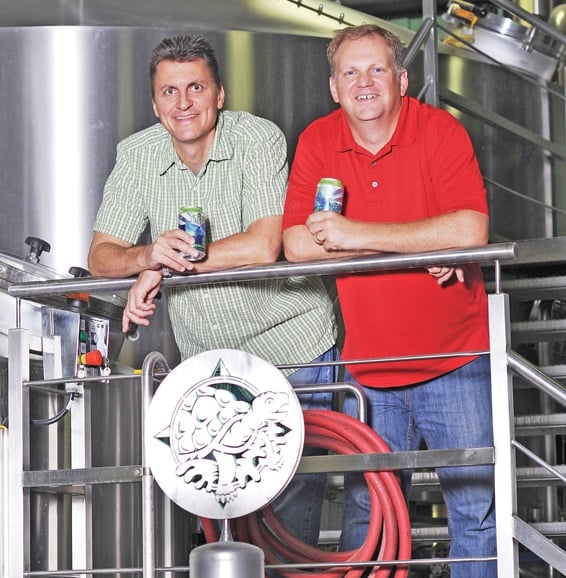
When John Cochran thought about transitioning from working at a microbrewery to building one, he was motivated by brewing beer and selling it — not by possibly becoming a millionaire.
“Our thing was, ‘We love beer. We want to make beer. How can we get out there and make beer?’” recalled Cochran, who launched Terrapin Brewing Company with Spike Buckowski in 2002. “I really believe that’s the way most of the brewers are. Even the new ones today. ‘This is good. I can make beer. My friends tell me the beer is good. I can make a living at this.’”
Part of the Third Wave in the American craft beer movement, Terrapin helped convert the Southeast to flavorful beer territory after setting up operations in Athens, Georgia – which led Cochran and Buckowski to the next challenge. How could they keep growing and could they ever reach a goal of brewing a million barrels of beer each year?
The answer was finding money to replace the initial minority investors, a common concern for craft brewer start-ups who are successful but need more capital to grow. “A lot of us never thought of an exit strategy for our initial investors,” said Cochran. In the case of Terrapin, the exit strategy arrived in the form of a minority equity investment from MillerCoors in 2010. The brewing giant’s Tenth and Blake Beer Company, a division seeking to brew and market more flavorful beer, took a 25 percent share of Terrapin, one of the first signs of money flowing into the U.S. craft beer segment despite the Great Recession.
‘When Money Is Too Easy, It’s Not A Good Thing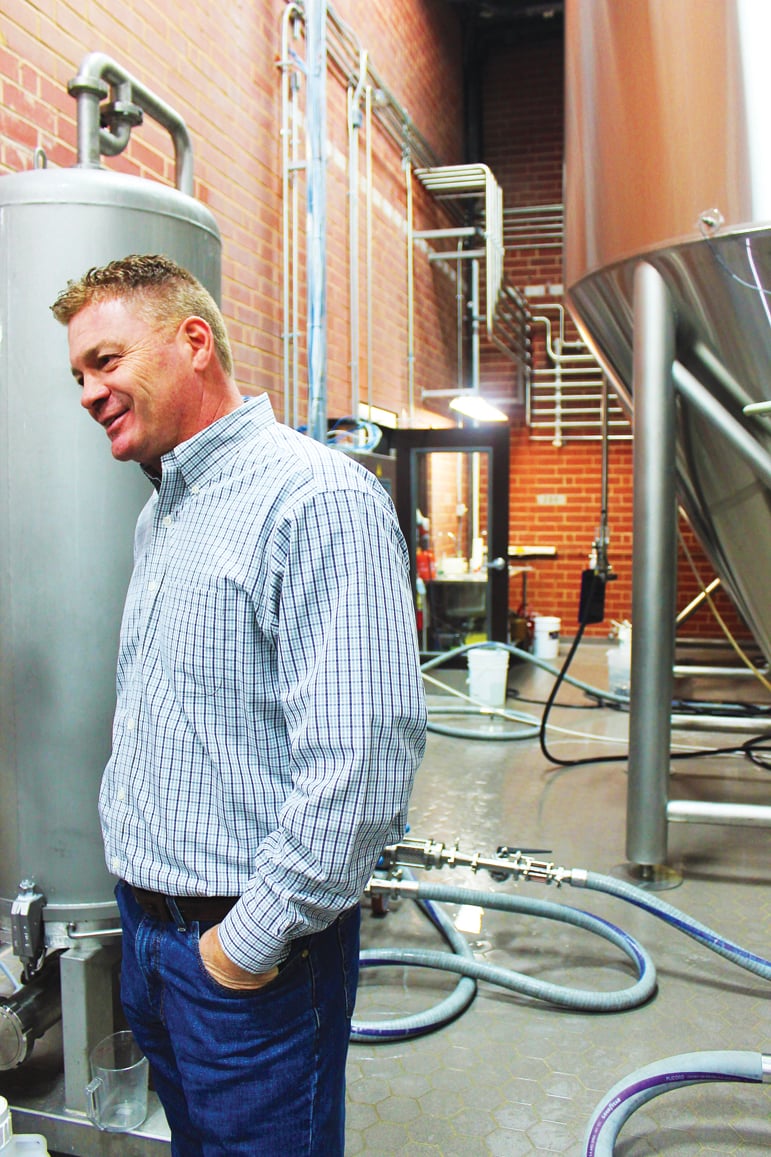
When John Marrino opened the Olde Mechlenberg Brewery in Charlotte, North Carolina in 2009, he used minority investors who funded his operation.’ They also invested with loans and as well as taking an equity stake.
An engineering graduate of Tulane, Marrino had made his living selling and installing water treatment systems manufactured in Germany. A frequent traveler to Germany, where he fell in love with German-style beers and brewing, he decided to go into business for himself, focusing on the styles he was already familiar with. From a fully automated brewery, he produces Copper, a Düsseldorf-style alt beer, and Captain James Jack, a German style pilsner, among others.
Emphasizing local sales and self-distribution, Marrino expanded rapidly after opening in 2009 in an industrial park. Now operating from a second, purpose-built brewery, Olde Mech brewed 15,000 barrels last year – all sold within a 20-mile radius of Charlotte. His new facility cost $8.5 million to establish and was financed by bank loans. He also used the loans to replace the private loans from his initial shareholders, who continue to hold an equity stake.
“I think next year we’ll start returning capital to shareholders,” said Marrino, who estimates shareholders have earned 400 percent. “Nowadays it’s a lot easier to get capital in craft brewing. I get five guys a week walking in here asking if they can invest. I turn them away because fortunately I don’t need them.”
Marrino thinks the easy money can be a benefit and a problem. “It’s a double-edged sword,” he said. “It gives a lot of craft brewers the ability to open and a lot of them shouldn’t have the ability to open. We’re going to have some guys that maybe bring down the standard. When it’s too easy it’s not a good thing; it should be difficult by definition.”
 Where Will New Owner Take Pabst?
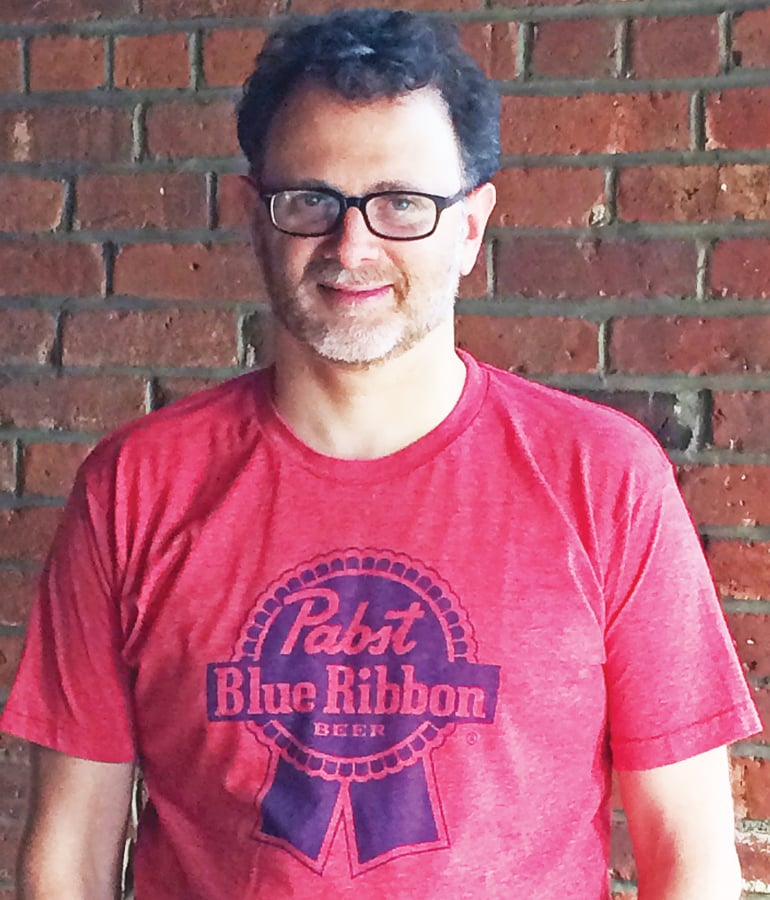
Although there were many high profile transactions involving beer companies in 2014, none generated as much attention as the acquisition of Pabst Brewing Company by Russian-born American Eugene Kashper. And none involved as much money or controversy.
The purchase price was said to be $700 to $750 million by a variety of sources and included $593 in debt financing, according to Forbes.com. It all bought a company that C. Dean Metropoulos originally purchased for a mere $250 million in 2010.
Kashper, who partnered with investment firm TSG Consumer Partners to make the purchase, is the founder of Oasis Beverages, which originally was stated to be the buyer in the media release announcing the deal in September. Based in Cyprus, Oasis launched in 2008 with a brewery in Moscow and later partnered to purchase brewing operations in the Ukraine and Kazakhstan.
Once headlines decried the prospect of the iconic Pabst Blue Ribbon brand being purchased by a Russian company, the deal was quickly re-characterized as a purchase by Kashper and TSG.
Under a board of directors including Eric Ottaway, the CEO of Brooklyn Brewery, it is a matter of speculation how the purchase will affect the beer business in the U.S. and internationally – or whether Kashper and partners paid too much.
“We intend to invest meaningfully in the organization, to continue strong marketing support for PBC’s unique brands, and to drive new product innovations and renovations, such as the recent launch of Ballantine IPA,” said Kashper in a statement.
The new owner has stayed out of the media eye since the firestorm over the initial announcement. At Oasis, he enjoyed a successful stint as chairman before resigning in favor of the Pabst deal. The Oasis conglomerate is a licensed contract brewer for well known German, British and Danish brands as well as the importer to Russia of brands such as Duvel, Chimay and Budvar. The Moscow brewery, meanwhile, produces throwback beer from the Soviet era and a “pre-revolution” brand, which captured a solid following in the Russian capital. The operations in Ukraine and Kazakhstan also focused on traditional brands.
Having started his career at the Stroh Brewery Company two decades ago, Kashper, who emigrated to the U.S. with his parents at the age of six, has become an expert in historic brands, licensed brewing and international business, He now owns the rights to a portfolio of historic U.S. brands such as Ballantine, Old Style, Schlitz and others that are contract brewed. The list includes Pabst Blue Ribbon, which is brewed by MillerCoors in Milwaukee.
Pabst sales have leveled off recently from previous strong growth but Ballantine IPA, an historic brew re-launched by the previous Pabst owners, is gaining traction.Whichever direction he chooses to take Pabst, the Columbia University-educated Kashper will be a man to watch.
Photos Courtesy of their respective breweries

Comments 0
No Readers' Pick yet.