


Opinion: Drawing the Line Between BrewDog’s “Punk” Posturing and Its Corporate Reality
Explore the clash between BrewDog’s rebellious "punk" image and its corporate reality. This opinion piece delves into the brewery’s controversial practices, asking if the ends justify the means in their rise to craft beer stardom.
 Story by:
Jim Dykstra
Story by:
Jim Dykstra
Some say BrewDog is to craft beer what KISS is to rock and roll. Both want you to believe it’s all about the music, but all that the music and tongue exhibition amount to is window dressing on a scandal-ridden marketing machine. Can we separate art from artist? Do the ends justify the means?
That is the question we’ll seek to answer in relation to BrewDog’s often dubious business practices, which have helped it grow into the multi-billion dollar empire it is today.
The Origin of Dog
Scotland’s own James Watt and Martin Dickie founded BrewDog in their garage in 2007, in the small coastal town of Fraserburgh. Within a few years they’d be the country’s largest brewer, moving into a state-of-the-art brewing facility in nearby Ellon. Prior to the dogged duo, Ellon’s most notable luminaries included legendary deaf percussionist Evelyn Glennie and the first man to use bone meal as fertilizer, perhaps providing inspiration for BrewDog’s offbeat marketing and penchant for finding out-of-the-box solutions to grow its business.
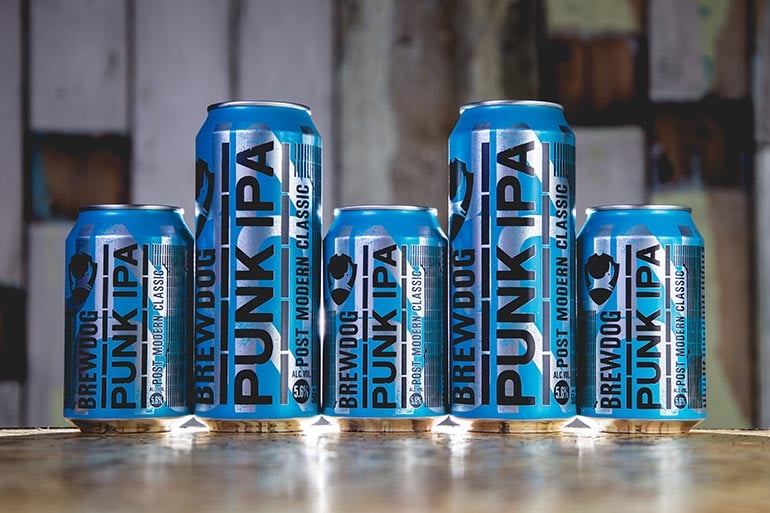
BrewDog’s irreverent spirit seemed to embody the craft ethos, and its timing couldn’t have been better to capitalize on craft’s renaissance. On the back of its flagship Punk IPA and solid core offerings like Libertine Black Ale, BrewDog caught the wave. Its ascent was faster than a greyhound, more agile than a Jack Russell, and more consistently viral than a surfing dog.
Dogged Businessmen
By the time IPA was a household name, BrewDog was an international brand, shaking up the industry with audacious moves including its “Equity for Punks” venture, a reality television show, brewing “the world’s strongest beer” and subsequently opening an ever-growing number of branded pubs around the globe. None were without controversy, and BrewDog wisely understood that controversy was great for business, managing to flip every potential hit piece into good PR with a pithy remark and the doff of a newsboy cap.
In 2020, Martin Dickie stepped back from day-to-day operations and now appears to be focusing on BrewDog Distilling, while James Watt stepped down to an advisory role in May of 2024, signaling the end of BrewDog’s “Punk” era. Both retain stakes in the company valued at over $400 million.
BrewDog’s success and savvy is undeniable. The quality of its beer has never been the main gripe from consumers. Rather, it’s the methods used to attain that success, and the company’s Janus face, espousing anti-establishment rhetoric while firmly cementing itself into the establishment.
BrewDog controversy comes in many flavors, some palatable, others repugnant. No matter the flavor, the origin will be traced back to founders James Watt and Martin Dickie, its founders.
Love them or hate them, they don’t care, and that attitude has served them very well.
Can we separate art from artist? Do the ends justify the means? Here are a few of their greatest hits.
Timeline of BrewDog’s “Punk” Bona Fides
2008: Not long after BrewDog’s inception, it made waves by protesting the Portman Group – a “long-reigning U.K. body that promotes sensible drinking,” claiming it impeded the development of small brewers. Some may deem it irresponsible, but this one can safely be classified as “Punk.”
Fool Me Once
As George W. Bush was exiting the White House, Watt had a light bulb moment – and it was called Equity for Punks.
As was the case for Sir Isaac Newton, an apple was its catalyst. After a failed North American debut, BrewDog was bankrupt, and Watt sat in Chicago’s O’Hare airport waiting for a return flight, unable to afford a meal. In a stroke of genius, he persuaded a kiosk worker to accept a presumably valueless BrewDog badge in exchange for an apple. Eureka!
“During our first few years we were constantly running out of cash,” Watt explained in an interview. “In a fast-growth company, unless you are constantly teetering on the edge of financial oblivion you are not stretching your limited supply of cash hard enough – it is a high-stakes game.”
During the flight home, Watt solidified his idea, which would ultimately raise over half a million pounds from 1,300 “investors” in its first round, saving a cash-poor BrewDog from insolvency.
“By the time we landed I had a two-page plan and a working title for the concept: Equity for Punks; this was equity crowdfunding before equity crowdfunding even existed.”
Is it a scam? Not really. A BrewDog share isn’t publicly traded, so its valuation won’t be listed beyond an annual report, and it won’t be so easy to sell. They are more akin to memberships via crowdfunding, which can earn loyal fans discounts. Advertised in all its pubs, Equity for Punks also serves as a savvy marketing tool, effectively having BrewDog fans buy into becoming brand ambassadors. It generates cash for BrewDog without giving up control. No one can deny that BrewDog forged its own path here, which is the epitome of Punk. On the other hand, it’s undeniably anti-Punk to leverage your fanbase to centralize power. Equity for Punks tips BrewDog’s hand but is not its most egregious anti-Punk violation.
2009: Portman bites back at the Dog, citing the naming of its “Speedball” beer as “grossly irresponsible.” It would be one of many issues Portman found with BrewDog products that year. Getting griefed by “the establishment”? Punk AF!
2010: BrewDog is forced to apologize by Portman after it “encouraged anti-social behavior and binge drinking with its Dead Pony Club ale advertising.” Not looking out for the little guy? Not very Punk. Apologizing? A further loss of Punk credibility, but ultimately a wash, given that Watt and Dickie may have actually felt remorse for their messaging.
Punk status was blessedly restored by utilizing a dozen dead animal carcasses as packaging for its 55% ABV The End of History Ale (one of the strongest beers of all time), to the horror of animal rights activists. Undeniably Punk AF.
2011: BrewDog successfully protests U.K. licensing laws “after the coalition government agrees to review a 300-year-old law that beer could only be served in third, half or full pint measures.”
They initiate the “world’s smallest protest,” hiring a dwarf to hold a sign outside of parliament for a week. Clearly a case of looking out for the little guy. So far, still Punk.
2012: No major scandal? Not Punk.
2013: The same year it builds its cutting-edge brewing facility, BrewDog uses swear words in advertising, and is cautioned by the Advertising Standards Authority. Watt makes an excuse for taking down the offensive language unrelated to the ASA, then states: “We believe in freedom of speech and artistic expression. We don’t believe in mindless censorship. As for the ASA – those motherfuckers don’t have any jurisdiction over us anyway.”
A Punk sentiment espoused, but ultimately Watt kowtows. Perhaps they had a point, but any Punk points won were lost in the damage control. This may signal a turning point for the lads.
2014: This year’s manufactured dissent focuses on Vladimir Putin. Prior to the year’s Sochi Winter Olympics, BrewDog mocks Russia’s ban on “homosexual propaganda” and brews “Hello My Name is Vladimir”, with Warhol-esque packaging labelled “*not for gays”. Pro-LGBTQ protesting? Mildly Punk.
2015: The “T’s” in LGBTQ would not smile upon BrewDog after an Equity For Punks ad titled “Don’t Make Us Do This…” dropped featuring the pair in drag, leading to allegations of transphobia. Playing both sides? Both Punk and the kind of move that would make the CIA proud. Neutral amount of Punk.
2017: A spat with the Elvis estate over use of a trademark for its “Elvis Juice” beer, which could be deemed mildly Punk, is overshadowed by allegations of hypocrisy and bullying after BrewDog harassed a local pub for sharing a name with its newly launched “Lone Wolf” vodka.
Owners of the pub chose the name in 2015, before the launch of the spirits brand, and did not go to court for fear of “financial repercussions.” Read: The little guy was squashed by the big guy, which was BrewDog. Not Punk at all.
2018: BrewDog’s “Pink IPA” is found to appeal to children by the Portman Group, due to its “Beer for Girls” slogan. Some women find it to be sexist, rather than supportive, despite BrewDog pledging 20 percent of proceeds from Pink IPA (and Punk IPA) to a STEM-focused charity for women for a month.
BrewDog responds: “As a one-off campaign aimed squarely at satirizing gender stereotypes on International Women’s Day, we’re comfortable it was no more aimed at underage drinkers than it was genuinely targeted at women. We’re as bothered about this Portman Group ruling as we are any other – that is, not at all.”
Perhaps a bit sloppy, but arguably Punk.
2019: Things start to unravel as BrewDog advertising for its new non-alcoholic Punk IPA comes under fire for billboard ads reading “Sober as a Motherfu,” generating numerous complaints from concerned citizens and leading to an investigation.
It soon emerges that the agency responsible for the ad, Manifest, claims to have created the Punk AF slogan over its nine-year relationship with BrewDog, but was never credited or paid for it.
You’ve Been Punk’d
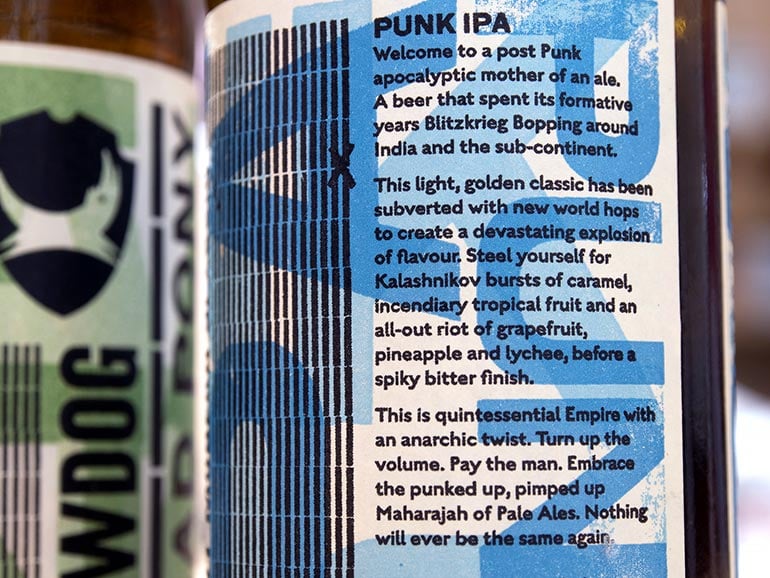
Here we’ll pause and look into one of least Punk things about BrewDog, namely its alleged pattern of stealing others’ ideas, leading to the term “Brewdogging.” Multiple individuals and marketing agencies took to social media sharing their experiences of being “strung along” by BrewDog, sometimes for months, repeatedly being asked to supply ideas, then ultimately being told the company chose another creative path… only to see those ideas resurface later. Some call it “poaching.” Others call it stealing, as these individuals and agencies were duped into working for free, often at significant expense.
This is unethical at any scale and demonstrates a stark disregard for others. To be fair, it’s also far more common than some may realize, almost to a point of normalization. Take this 2019 interview quote from Monday Night Brewing co-founder Jeff Heck, proudly describing their hiring process: “It’s a painful process to go through for people that want to get a job with us,” he said, noting that the company asks applicants to actually perform the job they are applying for as part of the assessment.
To find a new marketing manager, Monday Night asked second round candidates to create a mock social media calendar, a significant project requiring up to a week’s worth of work.
“It’s a great screening tool,” Heck said. A screening tool for people? Or free ideas? Perhaps to business owners, those willing to work for free are punks with a lowercase “p”.
Photo Copyright Brett Jordan/Courtesy of Flickr
2020: ASA strikes again, banning BrewDog hard seltzer ads claiming the beverage was “healthy,” and that the 5 percent ABV brew contained “a little bit of alcohol.” Misleading? Yes. Punk? Not really.
2021: An open letter to BrewDog is posted to Twitter, alleging 61 employees worked in a “culture of fear,” were bullied and “treated like objects,” resulting in a toxic culture that left some staff suffering from mental illness.
“Growth, at all costs, has always been perceived as the number one focus for the company,” alleged the letter. “Being treated like a human being was sadly not always a given for those working at BrewDog.”
Growth at all costs has undone many great men and institutions bent on conquering the globe.
2022: BrewDog champions mental health by partnering with the online movement #IAmWhole “to spark conversations around mental health issues.” Its main contribution features the launch of the “Sad AF beer,” which some saw as tongue-in-cheek. To be fair, at least they did something. Neutral AF.
That year, BrewDog also ran into issues of shipping beer with unauthorized ingredients to America, which is a breach of federal law, and lost its B-Corp status after a mere two years, due to an investigation spurred by a BBC documentary titled Disclosure: The Truth About BrewDog.
None of the above speaks to a Punk ethos, but BrewDog saves a little face by accepting another ASA ruling that calling a fruit-flavored beer “one of your five a day” was misleading.
BrewDog responds: “We respect the ASA’s decision and are happy to confirm that beer is not a fruit or a vegetable.”
Getting whipped into line by a regulatory body? Minimally Punk.
2023: James Watt is forced to pay out around £500,000 after its “solid gold” beer can campaign is once-again labeled “misleading” by ASA.
Being forced to pay up by the same regulatory body that has dogged BrewDog from the start? The Punk-ness ends with a whimper.
2024: James Watt steps down in May, but not before one final scandal. BrewDog abandons the “real living wage scheme” after reporting an unprofitable year, opting for the minimum £11.44 instead of the £12 “living-wage rate.”
That’s about as corporate, and un-Punk, as it gets.
The Dog Illusion
BrewDog’s co-founders are undeniably talented businessmen. They built a billion-dollar company from scratch. What to make of this checkered past? Can we separate the art from the artist? Did the ends justify the means?
For Watt and Dickie, with $400 million-plus net worth valuations, the ends certainly justified the means. For the workers who allegedly suffered mental health issues, or for those who had their work stolen? Undoubtedly not.
Are Watt and Dickie alone in their dubious practices? Not at all. Have they come up with unique means of attaining success? Yes. See their Equity for Punks crowdfunding campaign and stuffed squirrel scheme. Did they make a Faustian bargain, trading Punk soul for devilish dollars somewhere along the way? Sure. It’s what businessmen do. And that’s what they are. Savvy businessmen who saw a path forward by playing to the little guy. There are two sides to every story, and their success came from playing both sides.
Watt and Dickie didn’t mind grinding a few bones to seed their business’s growth… but this was their art, and they did it well. Better to let them stick to art, lest they set their sights on national politics.

Comments 0
No Readers' Pick yet.