





A Game-Changer for Brewers: Ensuring Perfect Brews with UV-Vis Spectrophotometry
From the hues in your glass to the flavors on your tongue, UV-Vis spectrophotometry is the brewmaster’s secret weapon—ensuring color, consistency, and crave-worthy taste in every pour.
 Story by:
Ivan Farkas
Story by:
Ivan Farkas
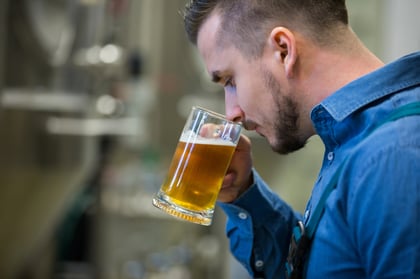
Color can reveal a lot about a beer—everything essential, in fact. But the human eye can’t accurately discern the fine variations between different beers, much less between batches of the same brew.
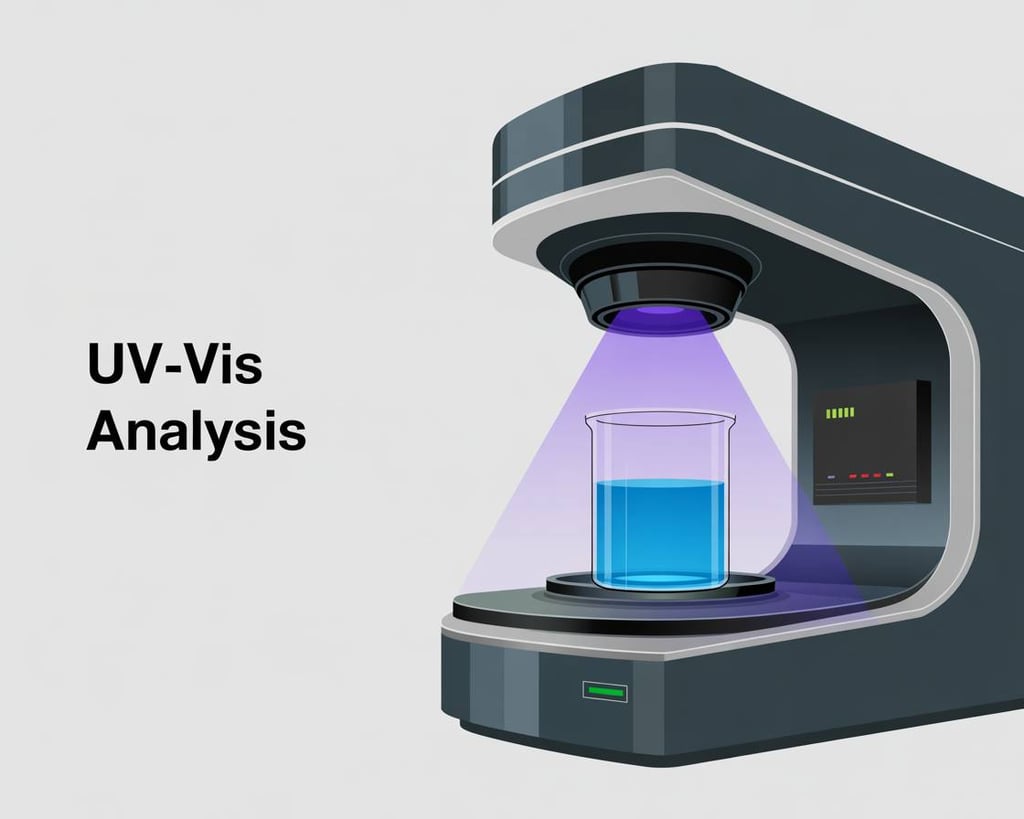
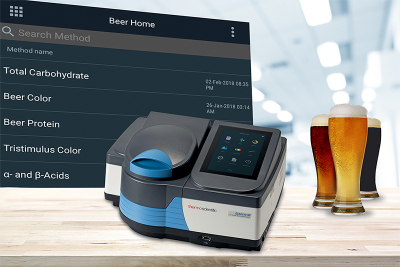
Fortunately, there’s a scientific method for quantifying these minute chromatic differences. UV-Vis spectrophotometry is a technique that measures how materials interact with light at different wavelengths. By using UV-Vis to analyze chemical reactions throughout the brewing process, beer-makers can supercharge their output and efficiency. And, of course, brew tastier beers.
From the Stars to Your Suds
Spectrophotometry is a form of spectroscopy, utilizing the same principle that astronomers use to glean the secrets of stars and other celestial objects. In the brewers’ realm, spectrophotometry offers a consistent way to analyze a beer’s most vital characteristics, including color, flavor profile, and alcohol content.
A Bright Future for UV-Vis Spectrophotometry
Brewers are increasingly using spectrophotometry, aka UV-Vis, because it yields more detailed analyses than other methods.
Like the craft beers it helps produce, UV-Vis pairs well. It pairs well with existing quality control techniques, including microbiological testing. It also pairs well with flourishing technologies like automation and AI, which could lighten the workload for brewers while allowing unprecedented experimentation and predictive, on-the-fly adjustments.
Given its precision, versatility, and affordability, it’s no surprise that UV-Vis has become many a brewer’s best friend.
How UV-Vis Crafts Top-Quality Beers
Uv-Vis measures how much light is absorbed, reflected, or transmitted in the ultraviolet and visible portions (they’re neighbors) of the electromagnetic spectrum.
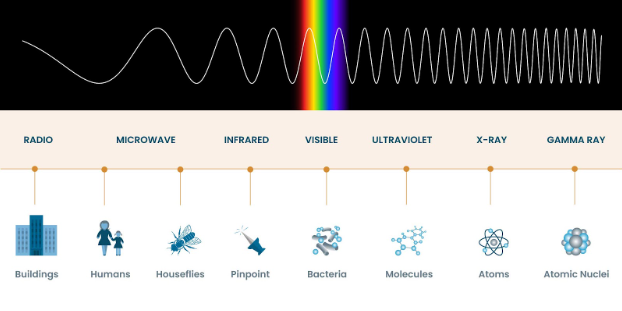
Since every material has its own unique spectral profile, brewers can analyze their beers’ chemical and physical evolution at each step of the brewing process, optimizing the transformation from raw ingredients to tasty beverages.
Beer Color is Key for Ensuring Consistency and Variety
Every beer’s color and clarity are essential to its character. The crisp clearness of a Pilsner, ruby resplendence of a red ale, or orange-juice opacity of a hazy IPA are key for maintaining each style’s trademark appearance and flavor—and enough to elicit a visual Pavlovian response in many aficionados.
Therefore, UV-Vis objectively ascertains a beer’s vital properties to ensure consistency in every batch. It ensures that different beers are true to their unique styles by maintaining the correct colors, in accordance with the Standard Reference Method (SRM), a number scale initially adopted in 1950 by the American Society of Brewing Chemists (ASBC).
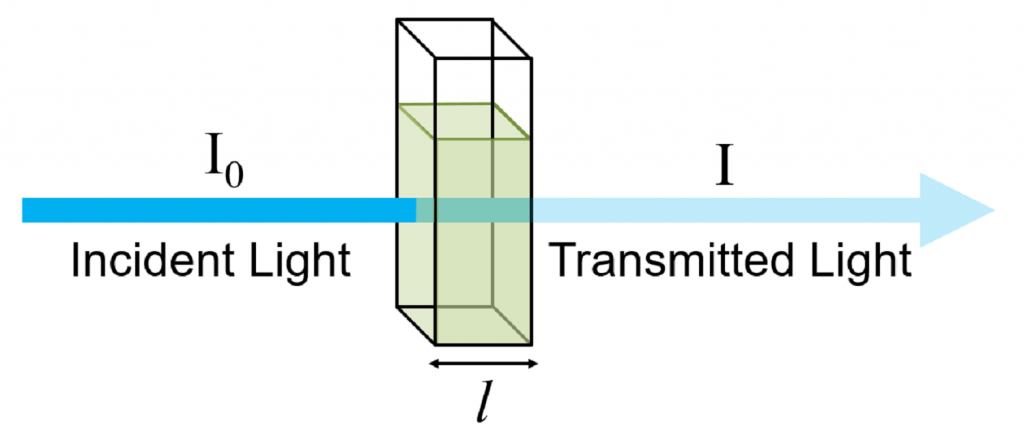
In specific scientific terms, UV-Vis measures the absorbance of light “across a given distance at a given wavelength.” For example, beer color analysis for SRM is performed at 430 nm (nanometers), while international bitterness units (IBUs) are measured at 275 nm.
This underlying tenet is the Beer-Lambert Law. More simply called Beer’s Law, it reveals a beer’s properties by its attenuation of light, the reduction in intensity as light passes through a substance.
Any inconsistencies in color can indicate issues with the ingredients, fermentation duration, temperature, pH, or other variables. For example, detecting haziness where no haziness is desired, such as in a pale lager, could mean protein instability.
Unwanted haze or other precipitates can also result from beta-glucans, viscous polymers including those found in the cell walls of barley and yeast. By keeping an eye on these polymers, UV-Vis helps brewers avoid undesirable turbidity as well as other issues, such as reduced wort separation and beer filtration.
Furthermore, the thiobarbituric acid index (TBI) assesses thermal stress caused by heating processes. TBI indicates the presence of organic compounds like Maillard reaction products, produced by sugars and proteins reacting under high heat and dictating the taste stability of beer.
As the Maillard reaction browns and crisps sugars in baked goods, it‘s accordingly responsible for darker beer colors and the flavor complexity of caramel, coffee, bread, and other flavors associated with duskier beers.
Making Better Beer
Protein and carbohydrate content determine a beer’s delectability, including its mouthfeel, sweetness, and that beautiful collar of foam. Plant compounds called polyphenols lend beer its astringent hoppiness, so IBUs are tracked to maintain the delicate balance between hoppy bitterness and mellower malt notes.
The prime bittering substances are alpha acids. Alpha acids are a chief component of lupulin, the sticky yellowish substance visible on hop cones. The boiling process thermally induces alpha acids to isomerize, or change their molecular form, into iso-alpha acids. This is a necessary step because their non-iso forms are insoluble in aqueous solutions.
When comfortably and bitterly dissolved in beer, iso-alpha acid percent is measured in IBU at 275 nm. Striking a savory symmetry between the bitter and the mild is always vital, but especially so for polyphenol-packed offerings like double-or-triple-hopped IPAs.
Improving Fermentation Efficiency and Freshness
Fermentation efficiency, a Holy Grail of brewing, partially depends on starch-to-sugar conversion. Starches must be fully converted to sugars that can then undergo fermentation.
By monitoring sugar chemistry at successive steps of the beer-making process, brewers can fine-tune their creations to produce fuller-flavored or lower-calorie options. Fermentation byproducts, like acetaldehyde and sulfur dioxide, are also analyzed and limited, to improve stability without jeopardizing taste.
And to please both consumers and labeling regulations, UV-Vis precisely measures alcohol by volume (ABV) through monitoring ethanol concentration throughout brewing.
Finally, while beer purity is sacred, some additives are necessary to extend shelf life. UV-Vis improves freshness standards by preventing excessive additive use (like sulfites) and detecting oxidation, the brewers’ scourge responsible for skunky, stale beer.
Cheers to UV-Vis
If that all sounds like a lot of complicated, tedious work, it is. But brewing is an art as much as it is a science and both fields require focused dedication. So the next time you settle down for some suds, take an extra second to appreciate the colors – there’s some science behind them.


Conversations (0)
No comments yet.