


Notes on American Beer From an Englishman
 Story by:
Adrian Dingle
Story by:
Adrian Dingle
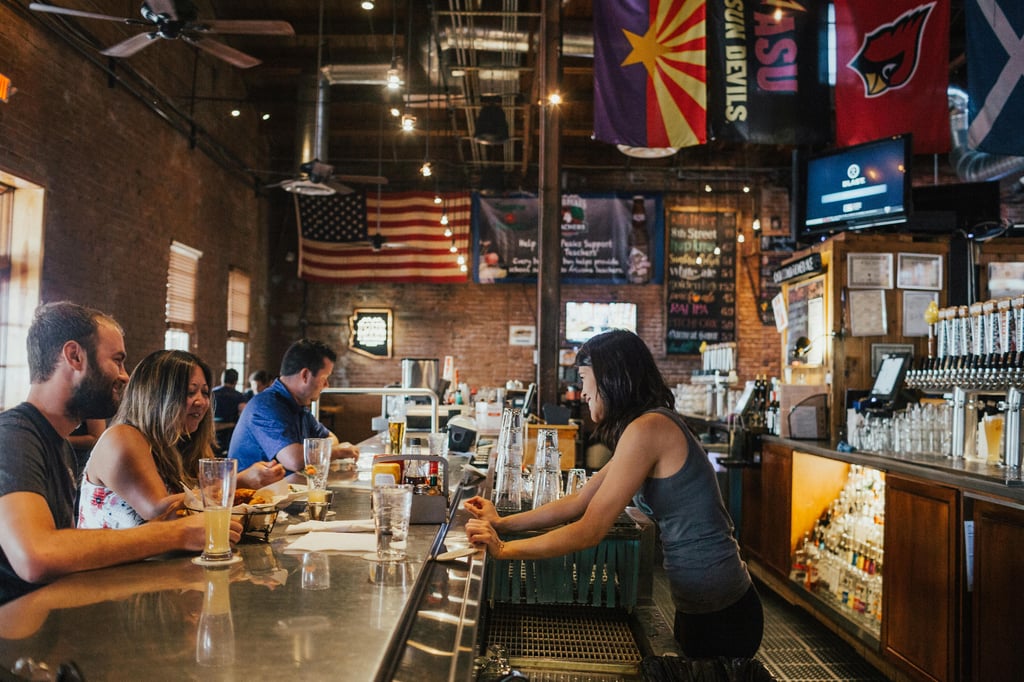
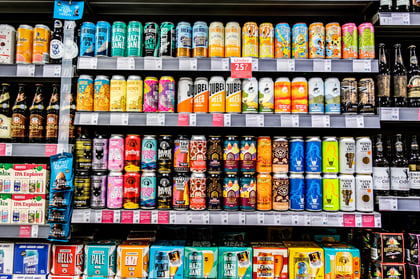
There was a time when I was almost entirely dismissive of what one might loosely call “the beer scene” in the United States. As a newly arrived immigrant in the early noughties, I had come from arguably the richest drinking and pub culture in the world to what felt like an almost totally barren landscape of what we used to simply call “BMC” (Bud-Miller-Coors).
When I asked my new colleagues in Atlanta about the best place to buy beer in the largest city in the South, they directed me to Green’s Beverages. They told me that Green’s was huge, and was extraordinarily well appointed; it was the former, but not the latter, and the selection that I was seeking simply wasn’t there.
It was certainly true that Green’s was the best beer store in Atlanta (and still is), but little did I know that at the time Georgia had a cap (6%) on the ABV of beer that could be distributed and sold in the state. It wasn’t that I was necessarily seeking a plethora of huge ABV beer – after all I’m famous for my love of and defence of 4% and under session beer – but the cap sent a message, and that message was “we don’t like beer”.
When the cap was “popped” in Georgia in 2004, a similar campaign followed in neighboring Alabama. In one now infamous moment in the state legislature there, former representative Alvin Holmes went on the record saying, “What’s the matter with the beer we got? I mean, the beer we got drink pretty good, don’t it? I ain’t never heard nobody complain about the, uh, beer we have. It drink pretty good, don’t it? Budweiser. What’s the names of some of them other beers?”
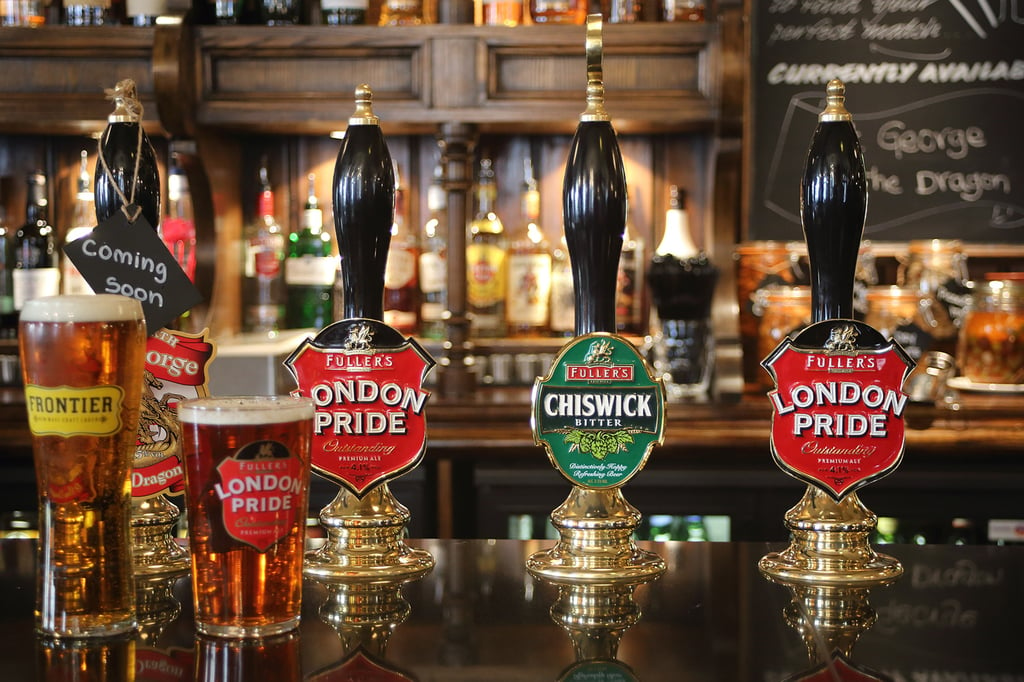
To a newly arrived Englishman, Alvin seemed to sum up what was going on in the U.S. in terms of beer. Before anyone reaches for their keyboard to start telling me, “Well, what do you expect, you were in the South?”, it’s worth noting that things weren’t that much better elsewhere. Were there some high spots? Sure, but the aforementioned BMC still had a vice-like grip on the country.
Those of us who have been paying microscopic attention since 2000 know that things improved exponentially across the nation between circa 2004 and 2015 before they plummeted soon after to their desperately sad (to a legacy drinker) sea of canned, fake sours, soupy slop, melted candy bars, barrel-aged solvents and worse. For the record, I believe that The Alchemist’s Heady Topper single handedly decapitated American beer, but this article isn’t about that, rather it’s about taking a look at the seemingly impossibly different cultures that exist in beer on either side of the pond. To paraphrase the famous saying, we remain two nations divided by a common beverage.
So after my initial contempt, what has changed? What have I learned? Quite a lot actually.
Without question the single most important and ubiquitous lesson for me has been to stop comparing beer cultures. There’s no point, and with the English to American comparison it only led to massive frustration on my part. America doesn’t have pubs, nor does it have cask beer (at least not to any meaningful extent), and it certainly doesn’t have a drinking culture like the UK. And that’s OK. I learned that rather than saying, “America has no beer culture”, I’ve come to be comfortable with saying, “America has its own beer culture”.
Now, that doesn’t mean that as an Englishman that I am giving equal weight or credence to those two, separate sets of customs, but it does mean that I have been able to enjoy more of what America has had to offer. So what about some specifics? Let me focus on a few people, a few places, and a few beers.
If you’re a non-American and think that nobody in the U.S. understands the beer culture of the old world, you’re wrong. Granted, such people aren’t exactly in huge supply, rather they are as my dad used to say, “like hen’s teeth”, but they are here. I could name a lot of people, and beer folk know who these individuals are. We would each compile lists that would have a lot of crossover, but it’s probably best for me to focus on a few people and places that I have personal experience with.
Dave Blanchard in Atlanta has, for more than a quarter of century, been championing the best of the best traditions via his famous “Upstairs and to the left” Belgian bar, and more recently, “cask on at all times” on the landing at the unrivaled Brick Store. Todd DiMatteo – coincidentally, one of Blanchard’s proteges – at Good Word Brewing in Duluth, GA, has earned one of only fifteen (as of March 2025) Cask Marques awarded in the US. Scott Burgess in South Carolina has built an authentic monument that pays homage to German beer and German beer culture at Bierkeller Brewing Co. in Columbia. Tom Peters in Philadelphia has been at the helm of Monks for the best part of 30 years. I could go on, but in any event these are Americans that ‘get it’, and they’re doing things as good as any of us from the old world could hope for. Kudos to them and the many others who continue to do the same.
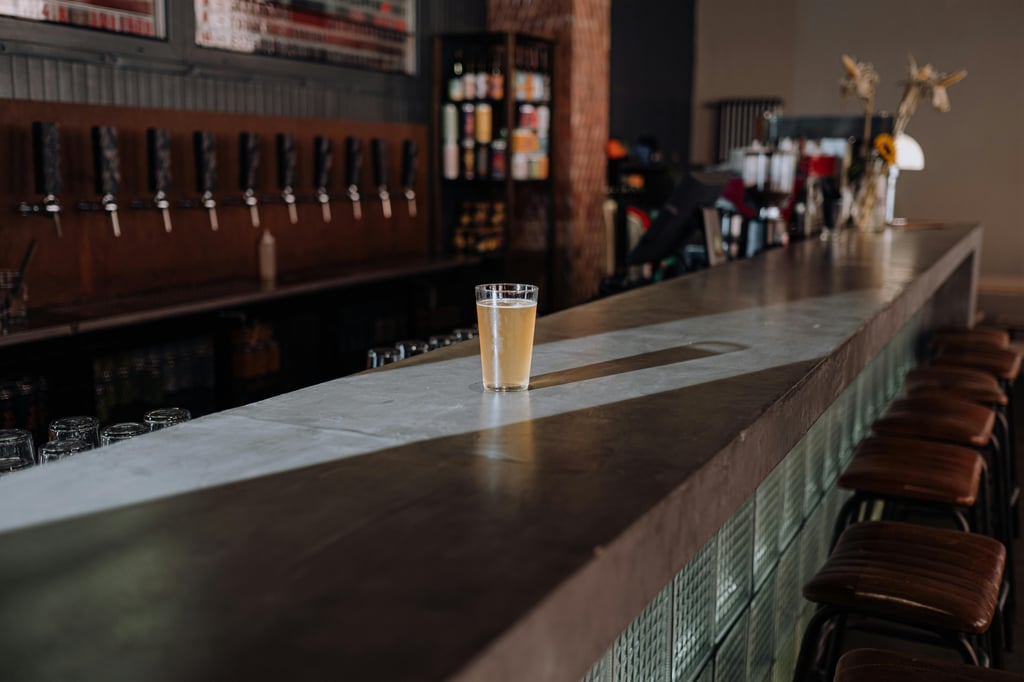
So what of American beer? Much maligned for decades in Europe, many of us know that it can be spectacularly good. However, it’s still true to say that it’s also just as likely to be spectacularly bad. Such is the nature of this place called the U.S. Extremes are ‘normal’, and beer is not spared.
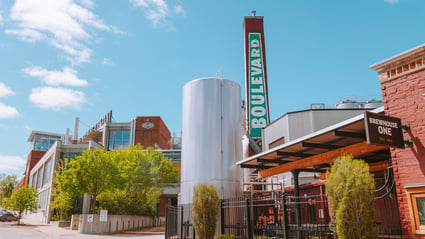
For example, and in my humble opinion, a couple very widely distributed beers out of the middle of the country, Boulevard’s (long before Moortgat-Duvel owned Boulevard) Tank 7 and Saison Brett, did for many years not only revive a whole style category for our delectation, but also were beers that could be held up against authentic players and be taken seriously. Are they Saison Dupont or the ‘Brettish’ Orval? Not exactly, but I’d defend them as examples of American brewed beers that could hold their own in those contexts. Beers like those from Boulevard, that at the time of their respective births might have been considered relatively unfashionable, did a lot to “save” (or at least introduce) a style to a lot of newer, inexperienced drinkers. I feel as though the U.S. is the only place that could realistically happen, and for two reasons. Firstly the size of the market, and secondly because of the sheer unparalleled ballsiness of U.S. brewers.
Whether those cojones are considered arrogant or simply viewed as a refreshing freedom is debatable, and perhaps depending on the situation either description could be applicable. Tavour relatively routinely pimping (and presumably selling) 375 mL of beer at close to $100 a bottle might be categorized extreme arrogance, as one may also choose to categorize the (unfathomable to me) formulation of “not beer” in the form of thick, sweet or sour, vomit-resembling concoctions of the devil by breweries like RaR in their Out Of Order series, and 450 North. On the plus side, the do-whatever-you-like freedom has brought us many truly innovative (I don’t use the term lightly) beers such as several early Dogfish Head products, which one could argue, could not have possibly been brewed elsewhere.
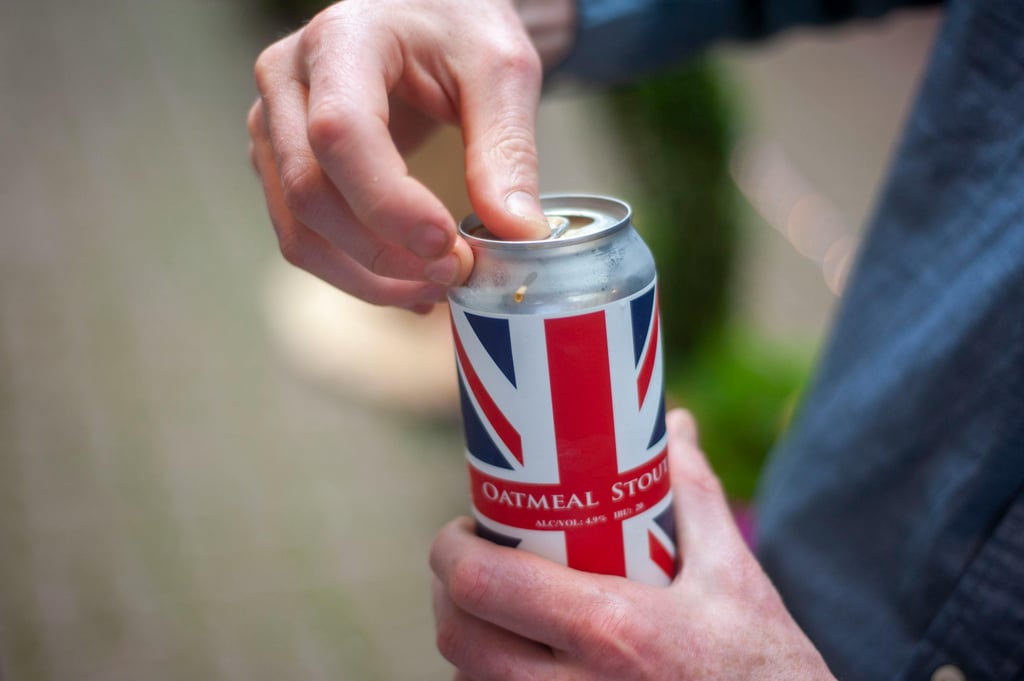
America’s beer landscape remains an agonizing conundrum for an Englishman. Often I have found it impossible to articulate all of the paradoxes, and the frankly ‘mental’ stuff going on here. One such experience at a small brewery local to me encapsulates my exasperation. Said brewery has an incredibly knowledgeable, well-traveled and intelligent owner/brewer at the helm. He appreciates and understands beer well beyond the contemporary US scene, and this was exemplified by the fact that he produced – in his own coolship no less – the only traditionally brewed Gueuze in the state’s history.
However, he also brews a range of beers that include adjuncts such as Cinnamon Toast Crunch and Count Chocula breakfast cereal, and a lactose based ‘beer’ called Blue Hawaiian Milkshake. Presumably those offerings are driven by the need to serve the market that exists on his doorstep, but regardless of the motivation, that bizarre juxtaposition tells you just about all that you need to know about beer in America in 2025, and how an Englishman is crippled by frustration within its shores despite his acceptance of the unique culture that is found from sea to shining sea and beyond.
Comments 0
No Readers' Pick yet.