



Brewing a Better Future: Spinnakers and Maple Leaf Adventures in the Great Bear Rainforest
 Story by:
Heide Brandes
Story by:
Heide Brandes
My heart leapt against my ribs as the first dorsal fin sliced through the dark waters of Whale Channel along the north coast of British Columbia. Another followed. Then another. The pod of transient killer whales moved like shadows beneath the surface, their sleek black and white bodies cutting through the coastal waters with predatory grace.
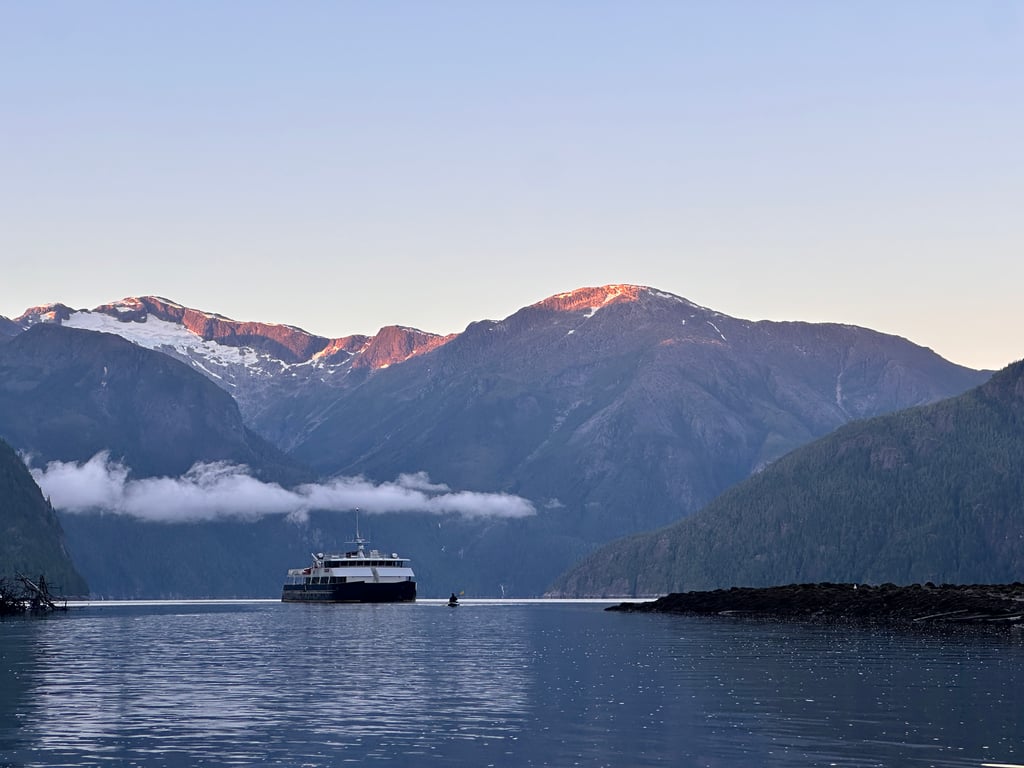
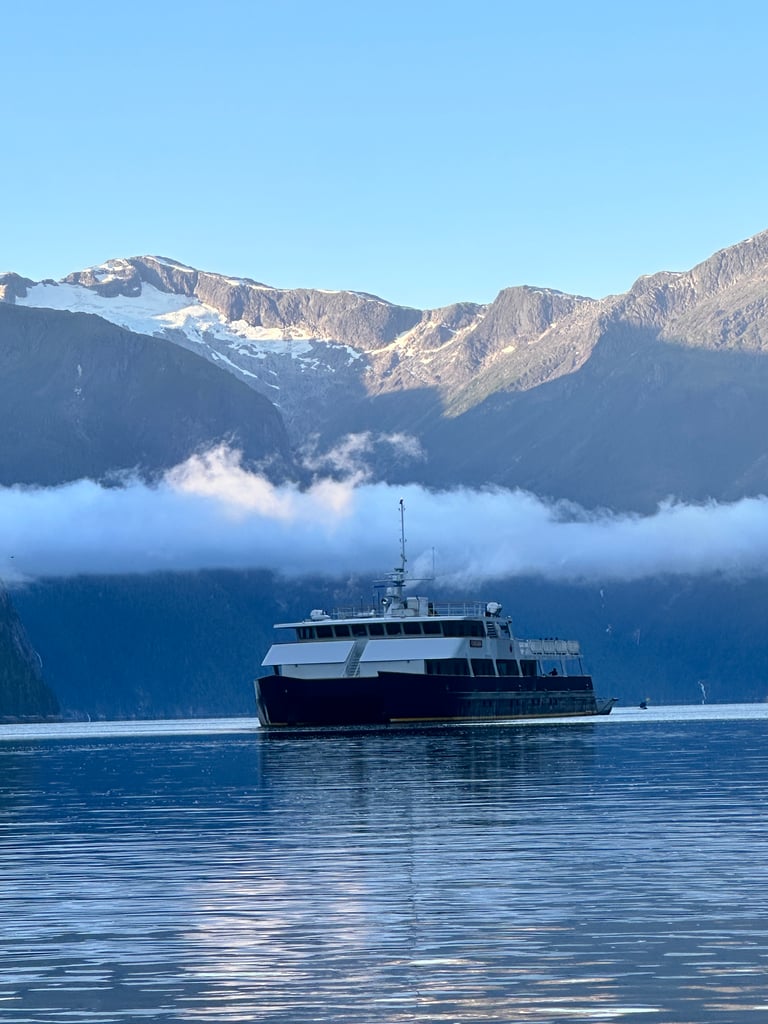
I stood frozen on the deck of Maple Leaf Adventures’ newest ship Cascadia, a glass of Spinnakers’ Cascadia Pilsner suspended halfway to my lips, watching nature’s most efficient hunters patrol their ancient territory.
Earlier that morning, we witnessed a congregation of humpback whales bubble feeding in the protected waters along the island-dotted coastal inland channels. Where the orcas embodied power and precision, the humpbacks displayed cooperative abundance, a living testament to the richness of these northern waters.
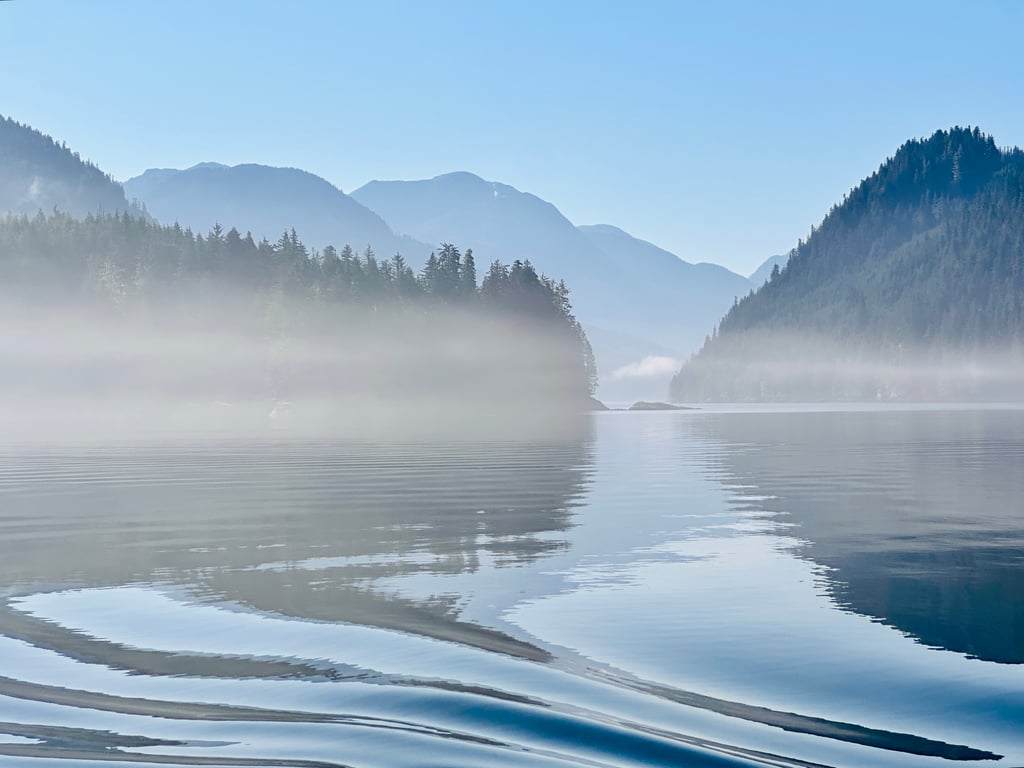
Both encounters felt like benedictions after a week of exploring the hidden recesses of Gardner Canal and the Kitlope River. We’d traveled deep into the heart of traditional territory of the Gitga’at First Nation and into what conservationists now call the Great Bear Rainforest, the largest contiguous tract of unlogged old-growth temperate rainforest remaining in the world. We were within a wilderness so remote that cell towers and Wi-Fi signals couldn’t penetrate its ancient cathedral of Sitka spruce and Western red cedar. Our only entertainment had been the sipping of beer and the haunting chorus of coastal wolves echoing through the darkness.
As the orcas disappeared into the channel’s depths, I finally took that sip of pilsner. The beer’s crisp finish and subtle hop character seemed perfectly calibrated for this moment. It was clean, purposeful, and unmistakably connected to its surroundings.
This wasn’t just any beer in any location. This was the product of a partnership between two pioneers who understood that sometimes the best way to protect what you love is to share it with others who might learn to love it too.
The Trailblazers of Beer and Bears
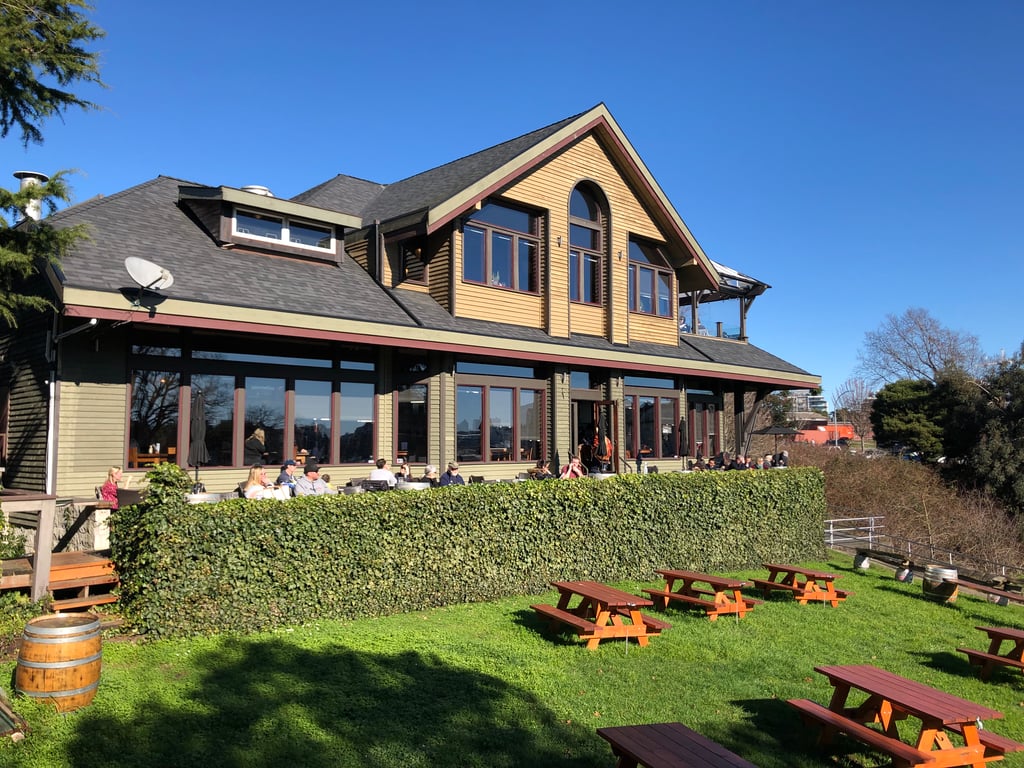
Paul Hadfield has been making beer longer than many of his customers have been alive. When he opened Spinnakers Brewpub in Victoria in 1984, craft brewing in Canada was essentially non-existent. The housing market had tanked in 1982, putting his primary business on ice. Rather than wait for markets to recover, Spinnaker decided to create something entirely new.
“Here’s the broad range of flavors that didn’t exist in our marketplace,” Hadfield said, describing that pivotal evening in 1982 when he and fellow beer aficionados sampled 14 different British ales brought back by brewing pioneer John Mitchell. “And the best beer we drank that night was made by the homebrewers. So, it seemed we had the technology in the room. We just needed to figure out how to go and do this thing.”
What followed was an 18-month odyssey of regulatory innovation. Hadfield didn’t just open Canada’s first modern brewpub, he also had to invent the legal framework that would allow brewpubs to exist. He worked with municipal, provincial, and federal authorities to change laws that prohibited manufacturing and retail sales on the same premises. He created site-specific zoning. He established guidelines for licensing that would eventually enable not just brewpubs but tasting rooms for wineries and distilleries across the country.
“We were very much at the beginning of the Renaissance of craft brewing in North America,” Hadfield said. “There would have been maybe 15 to 18 craft breweries in North America at that time. Of the original 15 to 18, there’s maybe three or four of us left still making beer and under common ownership.”
Seven hundred miles north, another pioneer was fighting a different kind of regulatory battle. Kevin Smith had spent five years working on land use planning for what was then called the Mid-Coast Timber Supply Area, watching logging companies race to clear-cut old-growth forests that had stood for millennia.
Smith, along with Xenaksiala (Haisla) Elder Wa’xaid Cecil Paul and other small ship operators, saw something the timber companies couldn’t, or wouldn’t, recognize. These forests were worth more standing than felled.
“It was so clear that this was not the highest and best use for this world-class area,” Smith said. “Tourism could be part of the solution here, because we can go in very carefully with a very light footprint, because everything’s contained on the small ships. We’re bringing in lots of outside dollars that care about the place.”
Smith’s vision was elegantly simple. He wanted to create an economy that depended on intact ecosystems rather than their destruction. For his tourism business to succeed, he needed “fully functioning ecosystems. I need the beauty of it all to be retained. I need wildlife to have a future.”
In 2001, Smith took over Maple Leaf Adventures, acquiring not just a 1986 schooner but a philosophy that would help reshape how an area the size of Ireland was managed. The Great Bear Rainforest agreement, finalized between 1990 and 2015, protected over 50% of the region, a conservation achievement that Smith helped orchestrate from both the planning table and the deck of his ships.
“I was one of the very few people that actually drew the lines on the maps about where the new protected areas were going to be,” Smith said. “I actually held the pencil and said, ‘Yes, this is going to be protected.’ And to this day, that’s a real thrill.”
Where Conservation Meets Craft
The partnership between Spinnakers and Maple Leaf Adventures began organically, as many of the best collaborations do. About 13 years ago, the Hadfield family was scheduled to take a dive trip, only to have a conflict arise with a local beer festival. By the time the scheduling resolved itself, Smith had purchased that vessel, The Swell, and converted it from a dive boat into the second vessel in his small but growing fleet.
“We were certainly aware of Maple Leaf Adventures,” Hadfield said. “Kevin and I would bump into each other on occasion, so we offered to make some beverages for them.”
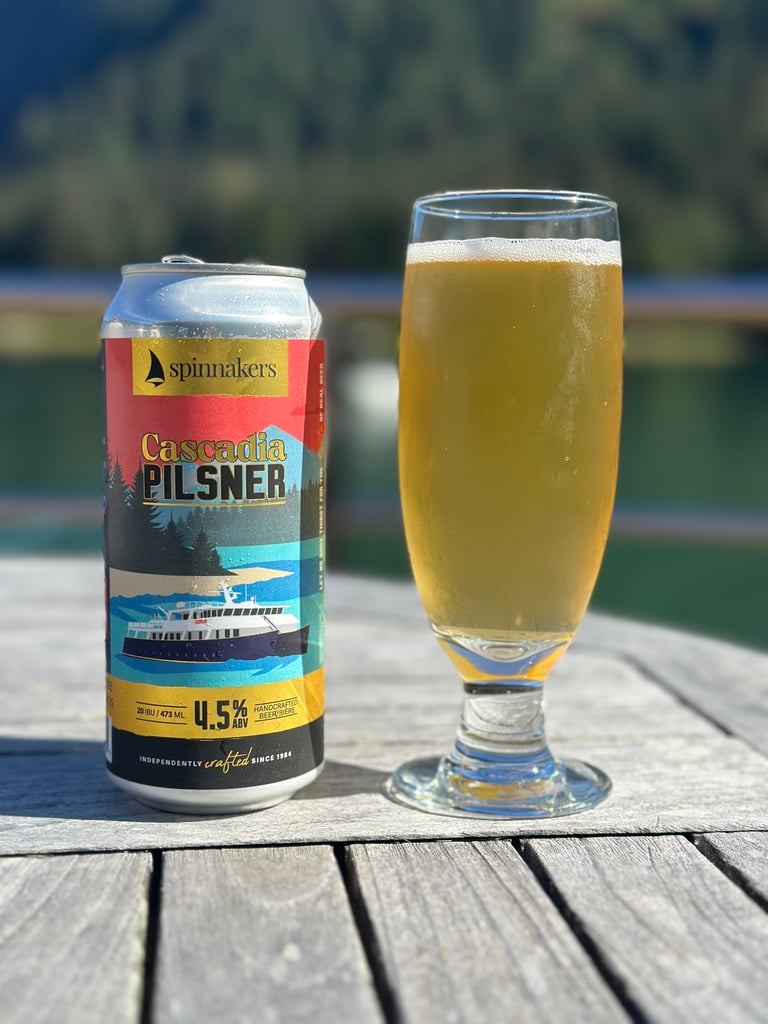
What emerged was a collection of ship-specific beers that reflected both the character of each vessel and the wilderness they explored. The Swell ESB is barrel aged to honor the wooden vessel’s heritage. The Maple Leaf ISA, an Indian Session Ale, was crafted for the flagship schooner. And most recently, the Cascadia Pilsner, a West Coast-style pilsner, was brewed for the newest and most luxurious ship in the fleet.
“It’s kind of fun on a small scale,” Hadfield said. “We can easily pivot, go off in different directions. We don’t have to make huge quantities, and so we’re able to partner with interesting characters who have good stories, meet interesting people and just create relationships. Community is what it’s all about.”
For Smith, the partnership represents something deeper than specialty beverages. It’s part of a broader philosophy that views conservation not as preservation through exclusion, but as stewardship through careful engagement.
“People protect what they love,” Smith said, quoting Jacques Cousteau. “And you can’t love something if you’ve just seen a photo of it. You love something because you’ve breathed it in, you’ve been there, you’ve experienced it, you’ve swum in that river, you’ve heard that owl, you’ve heard that wolf, you’ve seen the whales.”

The Deep Experience of Both
Smith’s approach to wilderness tourism challenges conventional cruise ship models. Where mainstream vessels carry thousands of passengers to heavily trafficked ports, Maple Leaf’s three ships carry 8, 12, and 24 passengers respectively to places most travelers will never see. The experience begins before guests even board.
“We’re not Princess Cruise Lines or a Hyatt Hotel,” Smith said. “People need to learn about who we are and how we can look after them. Honestly, we’re getting to know them. And if they’re the right kind of people for our trip, we will invite them on our trip. And if they’re the kind of people that are better off in Disneyland, we’ll tell them they’re better off going to Disney.”
This careful curation extends to the experience itself. Smith has developed what he calls a signature ritual for every trip. After several days of allowing the “city” to drain out of his guests, he leads them into an old-growth forest for five minutes of complete silence.
“Usually, it’s the first time people have ever had that experience to be completely quiet as a group listening to nature,” Smith said. “And it goes on for 10, 15 minutes, and it’s a little meditation, and it deepens people’s appreciation and understanding of the place that we’re at.”
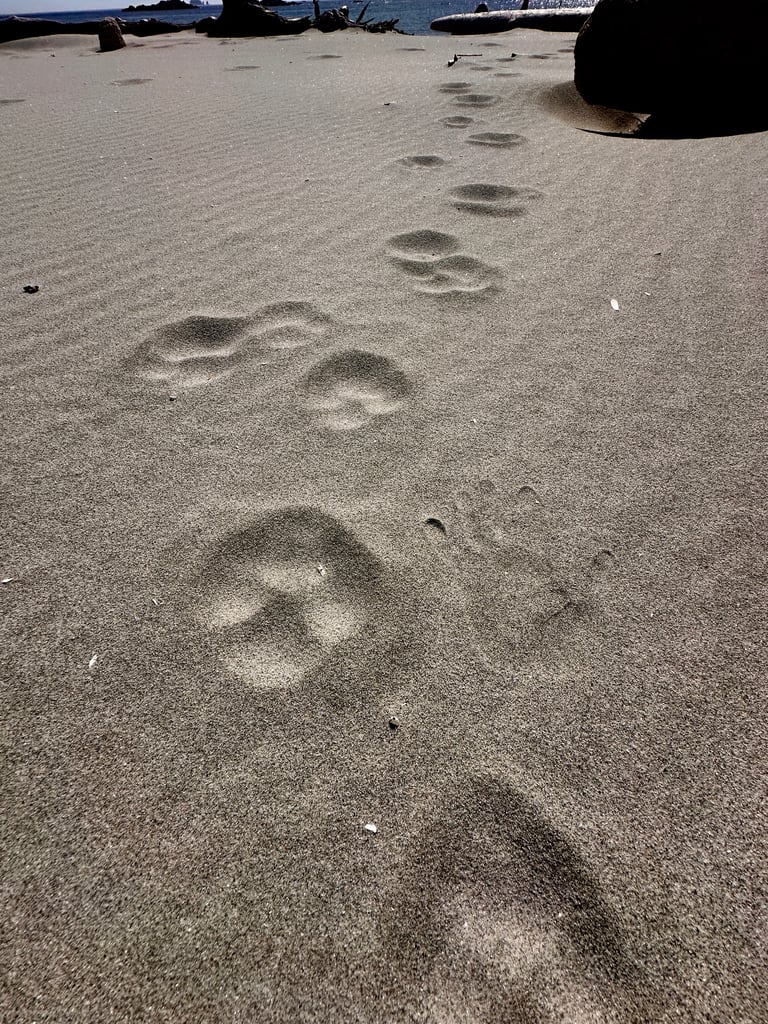
The Kitlope watershed represents the pinnacle of this conservation success story. At 780,000 acres, it’s the second-largest protected area in British Columbia, preserved through the efforts of Haisla elder Cecil Paul, who was born in the valley in 1931 and later led the fight to protect it from industrial logging. The area remains so pristine that visitors regularly encounter fresh wolf, bear, and moose tracks along the riverbanks.
Brewing a Better Future
Back in Victoria, Spinnakers continues to push boundaries while maintaining its conservation ethos. The brewery sources malt from Field Five Farm, a five-generation family operation on the Saanich Peninsula that grows heritage English barleys unique to North America. Spinnakers also grows their own hops (Cascade, Chinook, Centennial, along with Nugget and Golding) on property that Spinnaker has helped preserve as a green space.
The company’s commitment to place includes the water. Their sparkling mineral water beverages and craft sodas are made with alkaline mineral water from the Lecolq aquifer, accessed by a well drilled 225 feet through granite on their Victoria waterfront property. Even their newest brand—an adaptogens-based beverage line called Shift—is made with the understanding that wellness and environmental health are inseparable.
“We absolutely use local ingredients,” Hadfield said. “The fact that Field Five is an entirely local, family-owned operation producing some of the best quality malts available, to be able to support them is amazing.”
For both Spinnakers and Maple Leaf Adventures, success is measured not just in profits but in the health of the ecosystems they depend upon. Smith’s guests regularly become donors to conservation organizations they discover through their trips. Spinnaker’s brewing practices demonstrate that local sourcing and environmental stewardship can coexist with innovation and growth.
The Conservation Economy in Action
As I stood on Cascadia’s deck, watching those orcas navigate waters that might have been clogged with cruise ship traffic in a different timeline, I began to understand what Smith meant by the “conservation economy.” This wasn’t wilderness preservation through exclusion, but instead protection through sustainable engagement.
The beer in my hand represented multiple layers of this philosophy. It is made with local barley transformed by artisanal skill, served aboard a small ship that brings minimal impact to maximum places, generating revenue that supports both businesses and the conservation work that keeps these waters wild enough for orcas to hunt and humpbacks to feed.
“We all collaborate, we help each other, and we’re very much unlike industrial brewers,” Hadfield said. “Because we’re very small, we also don’t try to go after what the large-scale craft brewers are doing. Our opportunities are more unique opportunities and small-scale stuff that enables us to diversify and just build goodwill and contribute.”
As the last orca disappeared into the depths of Whale Channel, I finished my pilsner and reflected on the week behind us. We’d traveled hundreds of miles through fjords and channels where wolves still howl and ancient forests still stand, not because these places were locked away from human interaction, but because people like Smith and Spinnaker had found ways to make their protection profitable.
The Cascadia Pilsner and Maple Leaf ISA are available on their respective vessels and at Spinnakers Brewpub in Victoria, British Columbia. Maple Leaf Adventures offers 24 trips per season on each of their three vessels, exploring the Great Bear Rainforest and other remote corners of British Columbia’s coast.
Conversations (0)
No comments yet.