





Hefeweizen: The Zesty Charm of German Wheat Beer
A Bavarian-born wheat beer known for its hazy pour, lively carbonation, and iconic notes of clove and banana, plus tips for serving, pairing, and enjoying it fresh.
 Story by:
Chris Guest
Story by:
Chris Guest
While Bavaria has been brewing Hefeweizen for centuries, the modern German-style Hefeweizen became a popular kind of beer in the mid-20th century. Though they were popularized fairly recently, the creation of Hefeweizens can be traced back to Bavaria in the 1520s, following the passage of Germany’s beer purity law, the Reinheitsgebot. These always refreshing and highly effervescent beers are splendid to look at due to their fizzing foam cap and lightly hazy appearance.
As flavorful as they are attractive, Hefeweizens are enjoyable to imbibe due to their singular balance between phenols (flavors and aromas of cloves) and fruity esters (particularly banana) in both the flavor and aroma. Any true beer connoisseur must enjoy one of these beers to explore one of the most naturally flavorful and aromatic styles around.
Hefeweizen Beer Characteristics
While hops might be the signature of many beer styles, Hefeweizen debunks that statement, as hop elements are slim to none. In their place, clove flavors and heavy banana flavors and aromas take center stage, with mild vanilla notes, undertones of bubblegum and hints of citrus and lemon all providing depth and complexity in the finest examples.
High, snappy carbonation provides the easy-drinking style with a light body that helps it go down smoothly. Typically falling in the 4-6 percent ABV range, Hefeweizens must be brewed with at least 50 percent malted wheat per German brewing tradition. This use of wheat also provides the style’s signature fluffy and creamy mouthfeel, as well as a plethora of toasty flavors such as banana bread, and sweet bread crust.
Nomenclature: Hefeweizen, Weissbier or Weizenbier?
There is some confusion surrounding the difference between the terms “Weissbier,” “Weizenbier” and “Hefeweizen.” Weissbier in German means “white beer,” referring to the pale yellow/white color of the classical German wheat beer style.
In contrast, “hefe” in German means yeast and “weizen” means wheat – conveying that the style will be cloudy in appearance due to suspended yeast thanks to its minimum 50% malted wheat requirement during brewing. Weizenbier means “wheat beer,” referring to the most important ingredient found within. Furthermore, a filtered version of Hefeweizen that pours with flawless, crystal clarity called “Kristallweizen” is another variant, though it is far more rare than its cloudy brethren.
In summary: Hefeweizen is a wheat beer, but not all wheat beers are Hefeweizens.
Beer Style Attributes
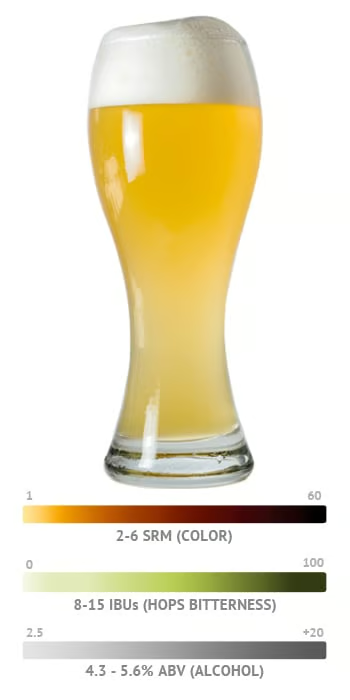
SRM (?): 2 – 6
IBUs (?): 8 – 15
ABV (?): 4.3% – 5.6%
Original Gravity (?): 1.044 – 1.053
Color:
Straw to Amber, with hints of golden color
Clarity:
Hazy
Carbonation:
Finely beaded, swift-rising bubbles
Alcohol:
Mild
Hops:
Very low hop flavor and bitterness
Malt:
Low to medium-low malt sweetness
How to Serve Hefeweizen
Proper Glass (?): Weizen Glass
Serving Temperature: 40-45° F
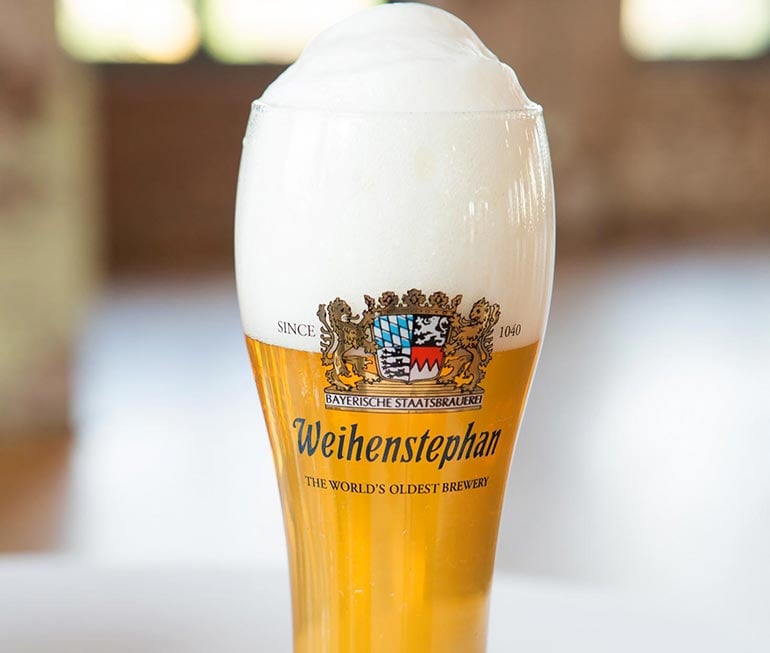
Wheat beers are typically poured in a weizen glass that is specifically designed with a wide rim and narrow base to allow this highly carbonated beer to form a medium-thick head that accentuates the yeast flavors.
Due to the high carbonation found within the style, German-Style Hefe must be poured at an angle, with the bottle inside of the glass and very slowly. Be sure to rinse the glass and wipe clean before pouring. Follow these tips for a perfect pour of Hefeweizen:
- While 45 degrees is commonly quoted as the correct angle to hold your glass when pouring this style, an even more acute angle (sometime nearly horizontal) serves this style better.
- Make sure that the neck of the bottle is inside of the glass, and then begin pouring slowly. Pouring too quickly will result in a foamy mess.
- Pull the bottle out once you’ve filled the glass up two-thirds of the way, then begin pouring again but faster this time to create a nice head of foam.
- The yeast (which provides much of this style’s piquant flavor) will be at the bottom of the bottle, so before finishing the pour, leave a finger’s worth of beer in the bottle, swirl it around to agitate the yeast, and then complete the pour to ensure you get that precious resource into your glass.
- Sit back and enjoy!
Check out this video on the perfect pour of weissbier!
Food Pairings
This flavorful style pairs well with a broad range of dishes including German classics such as Weisswurst and pretzels.
Seafood is a particularly nice complement to Hefeweizen, including lobster and avocado salad, fried scallops or cedar-smoked salmon.
Soft cheeses, such as goat cheese or blue cheese, would also make for an intriguing combination with this style, especially when smoked pork is added to the equation in an excellently designed charcuterie board.
For meat lovers, fried chicken or roast pork contrast nicely with the phenolic notes found in Hefeweizens, but those with a sweet tooth will be happy to note that hot apple turnovers and banana pudding serve as a wonderful after-dinner dessert alongside a Hefeweizen.
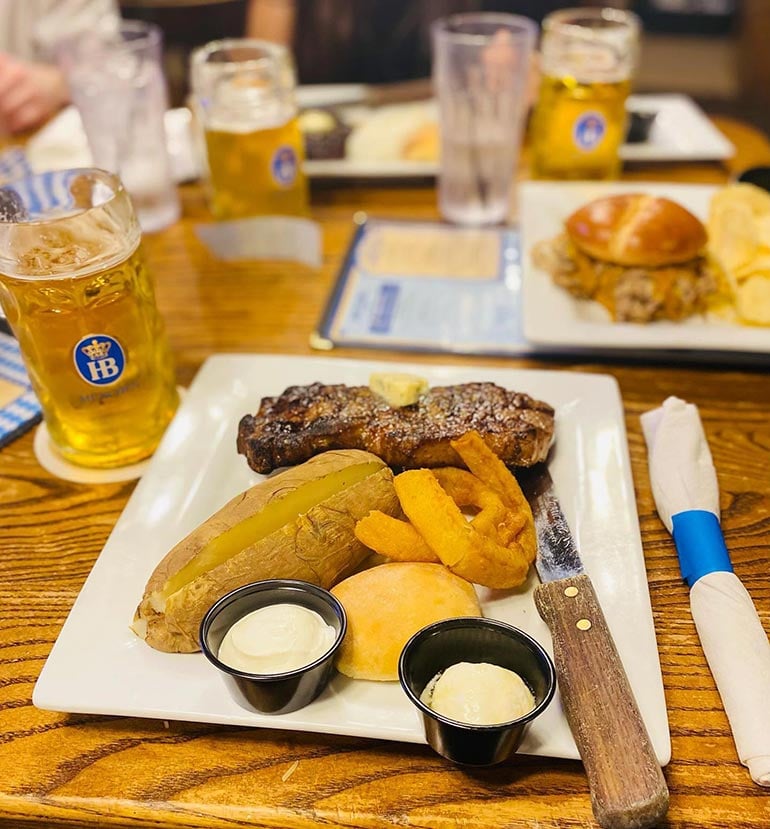
Photo Courtesy Steinkeller Bavarian Bier Hall
Popular Hefeweizen Brands
There are numerous brewers across the globe that produce Hefeweizen, therefore it should not be difficult to find this beer style at your local retail store or on tap at your favorite brewery.
Here are a few examples of popular Hefeweizen brands:
- Hefe-Weizen by Paulaner Braurei München
- Ayinger Bräuweisse by Ayinger Privatbrauerei
- Erdinger Weissbier by Erdinger
- Weissbier by Hacker-Pschorr Bräu GmbH
- Augustiner Weissbier by Augustiner-Bräu
- Franziskaner Hefe-Weissbier by Spaten-Franziskaner-Bräu
- Hefe by Widmer Brothers Brewing
- Legendary Shader by 3 Floyds Brewing
- Dancing Man Wheat by New Glarus Brewing Co.
Reviews & Best Brands
Here are the highest-rated Hefeweizens that have been evaluated in The Beer Connoisseur‘s Official Review.
We recommend seeking outstanding examples of the Hefeweizen style.
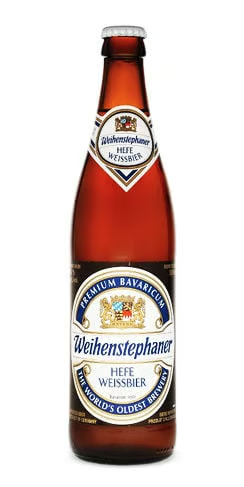
Hefe-Weissbier
Bayerische Staatsbrauerei Weihenstephan
Rated 97 (World Class)
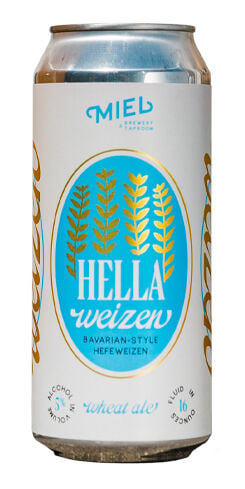
Hellaweizen
Miel Brewery & Taproom
Rated 96 (World Class)
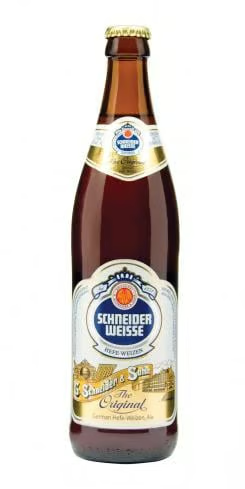
Schneider Weisse Original
Weissbierbrauerei G. Schneider & Sohn
Rated 95 (Exceptional)
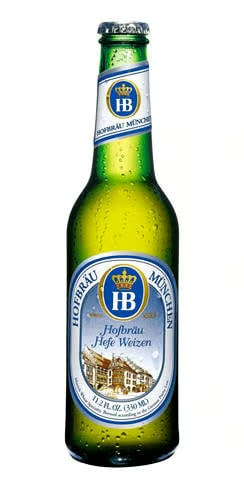
Hofbräu Hefe Weizen
Staatliches Hofbräuhaus
Rated 95 (Exceptional)
Judging Criteria for Hefeweizen
The Beer Connoisseur’s Official Review is conducted in a single-blind format that adheres to the Beer Judge Certification Program (BJCP).
The BJCP criteria for reviewing Hefeweizen is as follows.
Style Family: German Wheat Beer, Category 10
- Category 10A. Weissbier (German-style Hefeweizen)
- Category 10B. Dunkles Weissbier
- Category 10C. Weizenbock
Access the BJCP 2021 Style Guidelines for a full description of this style.
Frequently Asked Questions
Our Take on this Classic Bavarian Beer: Zesty, Fruity and Delightful
There are myriad beer options on shelves for fans and neophytes alike, and while IPAs and lagers continue to dominate sales the world over, there is an important place in the market for hefeweizens.
For one thing, it is a historically significant style that can be traced back generations to the founding of Germany’s still-present beer purity law. Beyond that, it tastes incredible, especially if you find a fresh one on tap made from a top-flight German brewery or a local watering hole that focuses on making authentic European styles.
Hefeweizens are delicious and intriguing, and we hope this article made you want to seek out this fascinating German wheat beer – either to try for the first time, or to rekindle your love for a style you haven’t had in a while. Cheers!
Header Photo Courtesy Weihenstephan USA





Conversations (0)
No comments yet.