



Fruit Beer & Belgian Golden Strong Ale
 Story by:
Owen Ogletree
Story by:
Owen Ogletree
A tough guy walks into a bar. He looks the bartender dead in the eye. “Give me a beer,” he says with deliberate gravitas. “And a back story to go with it.”
Whether in a bar or drinking solo at home on the back patio while watching a sunset, we all drink beer in a context. A current TV ad campaign creates a context, for example, about how hard people work to brew a well-known brand of beer. The back story of hard work is contrasted with partying hard without necessarily focusing on what’s in the beer.
But why not have the best of all worlds? Know what’s in the beer and what makes it special, know the story behind the beer and its style to better enjoy when the occasion calls for a beer.
In this issue, Owen tells the story behind a deceptively strong Belgian style and then delves into what distinguishes a fruit beer from a shandy.
Stay thirsty for knowledge, my friends.
FRUIT BEER
When it comes to fruit beers, there often seems to be no middle ground. Usually, people will claim to either love them or hate them, but when presented with a world-class fruit beer made by a talented brewer with generous amounts of real fruit, the usual response goes something like, “Wow, that’s not bad.”
The current popularity of commercial shandies and easy-drinking “gateway” fruit beers flavored with mild extracts has also led to increased interest in classic fruit beers that are based on recognized beer styles and made with whole fruit, puree or juice.
The Beer Judge Certification Program (BJCP) style guidelines uses the “culinary” definition of fruit in the description of its fruit beer category. It describes fruit as “fleshy, seed-associated structures of plants that are sweet or sour and edible in the raw state.” Apples, stone fruit, berries, citrus, dried fruit and tropical fruit come to mind.
Balance is vital to a classic fruit beer. There should be a pleasant, well-proportioned blend of beer and fruit flavors, and the drinker should still be able to identify the beverage as a beer and pick out aromas and flavors of the base beer style.
Often challenging and expensive to brew, superlative fruit beers can contain massive amounts of fruit or juice. Brewers must experiment to discover which base beer works best with each type of fruit. When should the fruit be added? Too early in the boil, and fresh fruit character caramelizes and boils away. When added in the fermenter, bacteria and wild yeasts on fruit skins can completely alter the character of the resulting brew. Pasteurized fruit puree or juice can prevent this problem.
Contrary to logic, sugars in fruits usually do not contribute a great deal of sweetness to the finished fruit beer. Brewer’s yeast feeds on sugar, converting it to alcohol, carbon dioxide and various other organic compounds. Adding a large volume of fruit will elevate the alcohol content of a beer.
Peels, seeds and pits have the ability to contribute noticeable aroma and flavor complexity. For example, a cherry porter made with juice will present the character of clean, fresh cherries, while the same beer made with whole cherries will offer notes of woody tannins from the peel and stems and a nutty, almondy complexity from the pits.
Fruit character should never come across as cloying, insipid, soda pop-like or artificial. Harmonious, balanced fruit tones should be present in the beer’s aroma, flavor and color (if the fruit has a distinct color). One should be able to identify the general type of fruit and appreciate its marriage with the base beer style. Imagine a raspberry American wheat beer that pours with a pink head, lovely red liquid hue and an impressive nose and palate of pureed berries and seeds – all supported by an appealing, bready, wheat malt backbone and light hops.
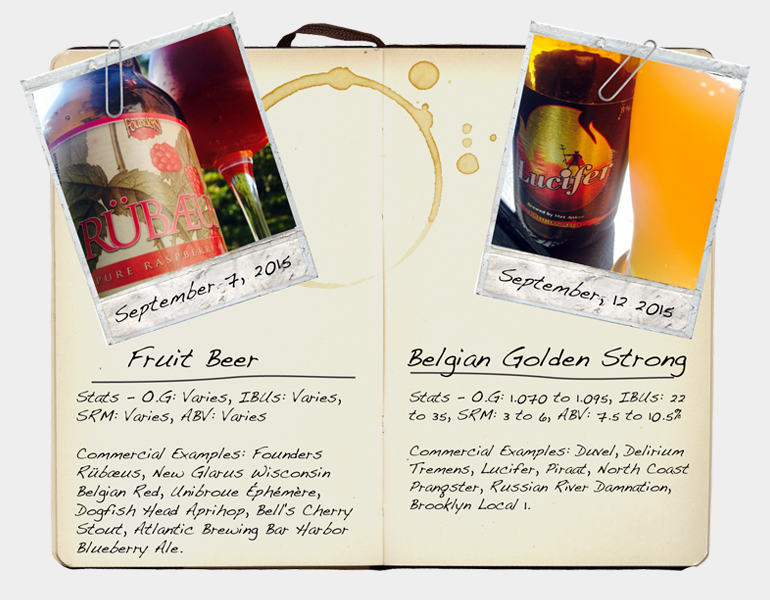
STATS
O.G.: Varies
IBUs: Varies
SRM: Varies
ABV: Varies
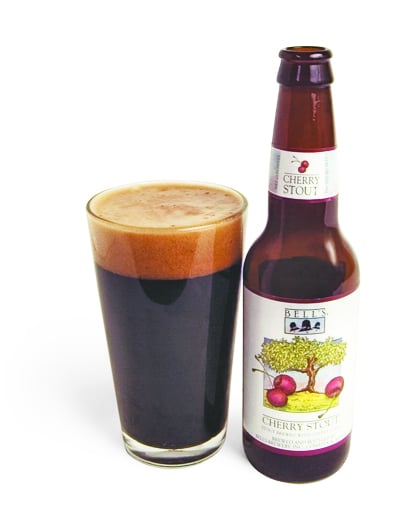
Commercial Examples: Founders Rübæus, New Glarus Wisconsin Belgian Red, Unibroue Éphémère, Dogfish Head Aprihop, Bell’s Cherry Stout, Atlantic Brewing Bar Harbor Blueberry Ale
BELGIAN GOLDEN STRONG ALE
Founded in 1871 by Jan-Leonard Moortgat on a farm in the Flemish town of Puurs, the fledgling Moortgat Brewery produced popular regional beers and delivered them to Brussels by horse and dray. The brewery later survived the turmoil of World War I, and Jan-Leonard’s son and successor Albert decided to produce a U.K.-inspired pale ale to honor the triumphant British troops.
Albert Moortgat traveled to Scotland, where he procured a culture of ale yeast to create the new Victory Ale. But his Belgian brewing training and enthusiasm resulted in a golden ale much stronger in alcohol than the typical English ale. A local shoemaker in Puurs, after enjoying several glasses of the potent brew, stumbled out of this chair and declared, “This is the beer of the devil.”
Soon afterward, Victory Ale was renamed Duvel – a Flemish word for devil. The beer founded the style known as Belgian Golden Strong Ale, and the immensely popular Duvel is now sold around the world, often introducing many people to the appeal and complexity of Belgian ales.
Pouring with the yellow/gold hue and spritzy effervescence of a pilsner, deceptive Belgian Golden Strong Ales often entrap unsuspecting drinkers by offering the illusion of a quaffable, sessionable blonde beer. In reality, substantial quantities of pilsner malt, along with generous additions of dextrose, candi sugar and/or other sugary adjuncts, provide enough foodstuff for highly attenuative, top-fermenting Belgian ale yeasts to create impressive alcohol levels without ending up with a heavy body and mouthfeel.
Intricate fruity and hoppy notes dominate the nose and palate of this style with intriguing spicy notes arising from warm fermentation. Expect esters reminiscent of pale fruits that include pear, citrus, kiwi, apple and honeydew. Low to moderate phenols similar to black pepper and dessert spices may be present in the aroma and dry finish, along with elegant, floral, spicy hop character – usually from Old World varieties such as Saaz and Styrian Goldings.
Despite the lofty alcohol content of Belgian Golden Strong Ales, aroma and flavor notes of fusels, solvents and hot alcohols should never be detected. The overall profile and light to medium mouthfeel should reflect delicate pilsner malt and offer a mild, slightly sweet character.
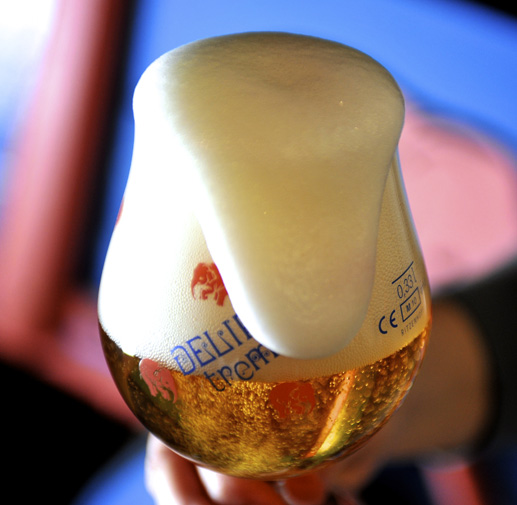
Always pour a Belgian Golden Strong Ale into an oversized tulip-shaped glass with enough force to fill the top half or third of the glass with a considerable, fluffy white layer of foam. Watch as the long-lasting head settles into a soft, creamy, lacy, cloud-like configuration that contributes delightful hop resins and bitterness to each sip. Since many brands are carbonated in the bottle by residual yeast, try to leave the last ounce of beer in the bottle to avoid pouring the sediment.
STATS
O.G.: 1.070 to 1.095
IBUs: 22 to 35
SRM: 3 to 6
ABV: 7.5 to 10.5%
Commercial Examples: Duvel, Delirium Tremens, Lucifer, Piraat, North Coast Pranqster, Russian River Damnation, Brooklyn Local 1

Comments 0
No Readers' Pick yet.