



American Wheat Beer and Baltic Porter
 Story by:
Owen Ogletree
Story by:
Owen Ogletree
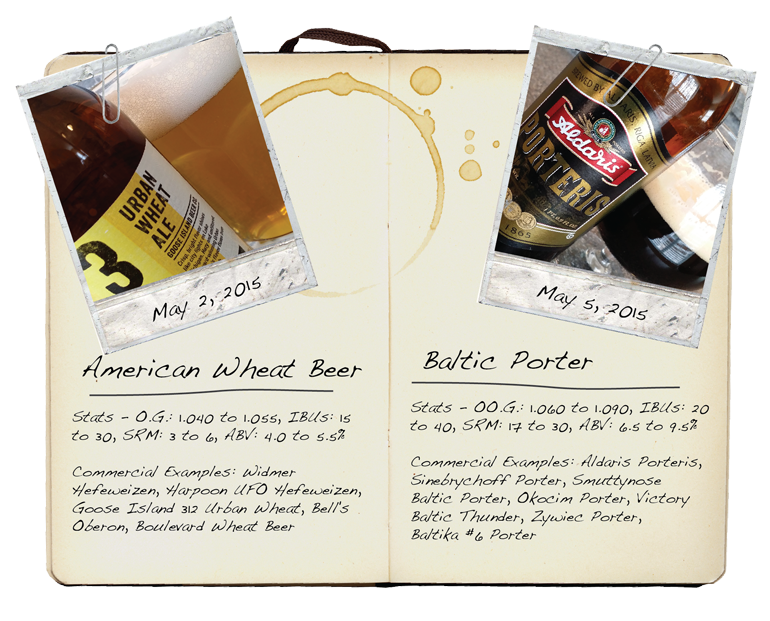
For those who love the American Wheat Beer style that has become such an engaging counterpoint to the wheat beers produced in Europe, Owen has the background on how the Widmer brothers created the American version by simply applying some practical knowledge to meet demand for more fresh beer.
When it comes to Baltic Porter there are different stories circulating on its origins, which is not unusual in the beer world. The key point is how brewers in Russia and the Baltic states began using the technique they knew best – lagering – and applied it to a style that was no longer available for import.
In both of these cases in very different parts of the world, skill, demand and creativity came into play to establish beers we can now enjoy daily – thanks to brewers who continue to pursue them and who add their own creative efforts.
Cheers!
AMERICAN WHEAT BEER
In 1986, homebrewing brothers Kurt and Rob Widmer were producing two brands of beer at their fledgling Widmer Brothers Brewing Company in Portland, Oregon: an altbier and a filtered weizenbier. The beers were selling so well at the local Dublin Pub that the pub’s owner asked the brothers to create a third brand. With only two fermenters, Kurt and Rob came up with a simple solution by kegging up a special batch of unfiltered, yeasty weizenbier.
After none of the pub’s patrons ordered this newfangled, cloudy American-style hefeweizen, one of the wait staff hatched a brilliant scheme. She pulled four tall glasses of the golden, murky wheat beer, stuck a lemon wedge on each rim, placed the beers on a tray and paraded around the crowded pub. Intrigued by the striking appearance of the new ale, customers soon fell in love with the unfiltered brew and catapulted it to the status of Widmer’s best seller. A new style of American beer was born.
An American Wheat Beer lacks the clove and banana fermentation character found in German weissbiers, with the flavor profile focusing more on pleasant hop aroma, hop flavor and bitterness alongside a refreshing, straightforward wheat and cereal grain backbone. Highly variable in style, American Wheats range from light, refreshing, somewhat sweet, sessionable versions to fairly well-hopped examples backed by a medium-bodied, substantial wheat profile.
Look for a color range of yellow to deep gold, with haze present in some versions. Proteins from wheat malt should coat the bubbles and create impressive head retention.
For this style, most brewers employ yeasts that produce a clean fermentation profile with moderate to light complex esters, and American ale yeasts or even lager strains may be utilized. Wheat malt should make up 30 to 50 percent of the grain bill, and hop choices often include varieties from America’s Pacific Northwest, Germany or New World strains such as Galaxy, Moteuka or Nelson Sauvin.
The nose of an American Wheat Beer should offer light to medium whole wheat bread dough notes with low to moderate fruity esters and malt sweetness balanced by a low to moderate citrusy, piney, floral and/or spicy hop presence.
Flavor notes follow suit, making for a highly drinkable and refreshing beer style. Light seafood dishes such as steamed clams, poached salmon, baked cod and boiled shrimp pair exceedingly well with crisp American Wheat Beers, as do summer salads that include acidic dressings, fruit and grilled meats like chicken breast or salmon. The style even complements light desserts such as blueberry tarts, sorbet, strawberry shortcake, peach cobbler and berry parfaits.
BALTIC PORTER
In the early 1800s, Europe was awash in Napoleonic wars, which curtailed the supply of high-gravity porters and stouts from England to the countries surrounding the Baltic Sea. Rather than do without the cherished strong ales during the tumultuous times, Baltic brewers took the opportunity to create versions of their own – often utilizing lager yeast strains used in local beer styles. The result became known as Baltic Porter.
Compared to Russian imperial stouts, the Baltic Porters offer more of a restrained roasted character and a smooth, full-bodied mouthfeel with rich, fruity esters and a complex malt makeup. The malt flavors are “reminiscent of an English Brown Porter and the restrained roast of a Schwarzbier,” according to the Beer Judge Certification Program guidelines. Brewing with more malt, or a higher Original Gravity, and the resulting higher alcohol, adds to this strong European lager’s singular character.
While many versions of the style are fermented with cold-loving European lager yeast strains, a few examples are produced from ale yeasts – with a slow, cool, primary fermentation being followed by a period of cold conditioning to smooth out the fruity ale esters.
Usually not jet-black in appearance, Baltic Porters often possess amber, ruby or dark brown highlights, with most versions being somewhat clear when held to the light. Extremely dark versions can come across as opaque. The style should be poured in a glass spacious enough to support a thick, creamy layer of tan foam.
Exceptional examples may waft aroma notes of sweet malt, brown sugar, dark toast, anise, toffee, caramel, chocolate, dark fruits, port and spicy alcohol notes. Any hop presence should be unnoticeable to the nose and lactic or other acidic notes are never appropriate.
A deep malt sweetness with complex notes of fruity esters, alcohol, chocolate, light coffee, blackberry jam, currants, caramel, toffee and molasses meld on the palate with a moderate hop and dark malt bitterness that lingers into a pleasing finish. Continental European hop flavors from varieties such as Saaz, Spalt or Hallertau may range from barely noticeable to moderately low, with the malt bill usually containing debittered dark malts, Crystal malts and Munich or Vienna base malts. Compared to standard porters, Baltic versions boast enhanced dark fruit and malt complexity in addition to a well-aged, warming alochol presence. Oxidative notes of sherry may be present in bottles that have been cellared.
For a flavor treat alongside a Baltic Porter, try desserts such as caramel flan, cheesecake with cherries, fruit tars or creme brulee. Pate, brie orsweet, creamy raw oysters lightly topped with a shallot vinegar mignonette sauce also make a superb pairing.

Comments 0
No Readers' Pick yet.