


Brewer Q & A – Travel 2016 (Issue 24)
 Story by:
Chris Guest
Story by:
Chris Guest
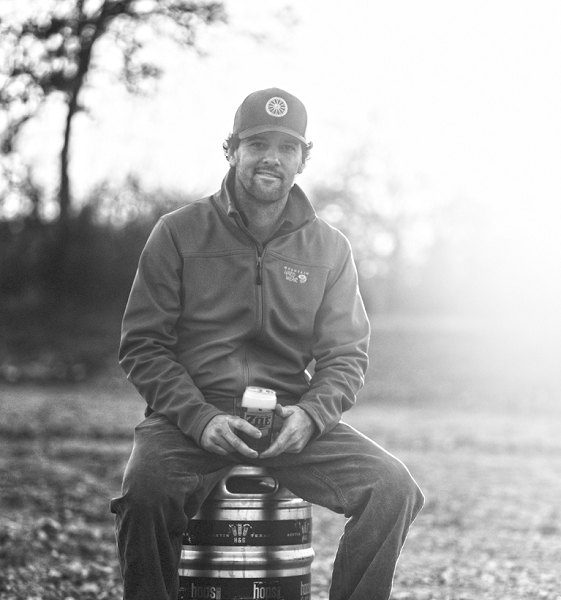
97 Rating – Hops and Grain Brewery – Porter Culture
Responses from Hops and Grain founder Josh Hare.
BC: Who came up with this beer’s recipe?
I did.
BC: What’s your favorite aspect of this beer (flavor, aroma, etc.)?
One of my favorite aspects of our Baltic Porter is that you get all of the rich chocolate, toffee and malt notes that you expect from a porter, but by fermenting with a lager yeast and having longer conditioning times we get a really bright, crisp finish.
BC: Where does this beer’s name come from?
Austin is fairly warm most of the year and we like to produce beers that are culturally relevant. Heavy, sweet beers don’t tend to speak to poolside drinking so when we decided to create a porter we wanted it to be easy-drinking but full of flavor. Porter Culture was the perfect moniker for our intentions.
BC: Is this your “desert island beer?”
Hell yes! As long as I can bring at least a 6-pack.
BC: Can you describe this beer in 10 words or less?
The beauty of a porter and finish of a pilsner.
BC: Do you know a story – or have a personal story – that revolves around this beer?
My neighbor is a die-hard Bud Light drinker; he refers to drinking something else as “cheating” on Bud Light. Late one night, I convinced him to try a Porter Culture, and now he keeps it in his fridge at all times!
BC: What’s a good food pairing for this beer?
Dark chocolate brownies with strawberries and blueberries and a scoop of vanilla ice cream on top. Yum!
Photo Credit: Tyler Malone
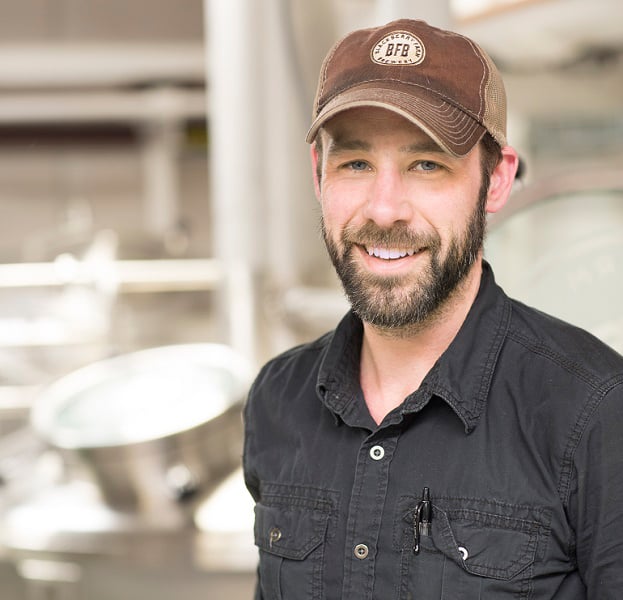
96 Rating – Blackberry Farm Brewery – Classic Saison
Responses from Blackberry Farm head brewer Daniel Heisler.
BC: Who came up with this beer’s recipe?
The current version of the Classic evolved quickly during the first few spins at our brewhouse as we dialed in our efficiency, hop utilization and color. We wanted a pale, well-attenuated and highly drinkable beer with balanced bitterness and a bright sparkle. I think a lot of brewers would look at this recipe of Weyermann Floor-Malted Pilsner and Wheat with Czech Saaz and UK Golding hops all fermented with an authentic Saison yeast strain and say… yeah, that sounds delicious!
BC: What’s your favorite aspect of this beer (flavor, aroma, etc.)?
Its drinkability and simplicity. I love the crisp, refreshing characteristics that remind me of the best Czech Pilsner variants.
BC: Where does this beer’s name come from?
Sam, our late proprietor, wanted it to be known by its real inspiration and truly indicative of what the product is… indeed, a classic saison.
BC: Is this your “desert island beer?”
Are we talking “Castaway” desert island, or more of a “Blue Lagoon” thing? Either way, I could definitely sip on this for a long while!
BC: What’s a good food pairing for this beer?
Classic Saison is extremely versatile at the table; that premise remains a strong focus for many of our beers. I would suggest a wide variety of seafood dishes from sushi to Thai, or heavier flavors like lamb and olives, or simply hot pretzels with mustard. We crushed a few Classic’s as a team around a table of Martin’s Bar-B-Que a few weeks ago. That was delicious for certain.
Photo Courtesy of Blackberry Farm
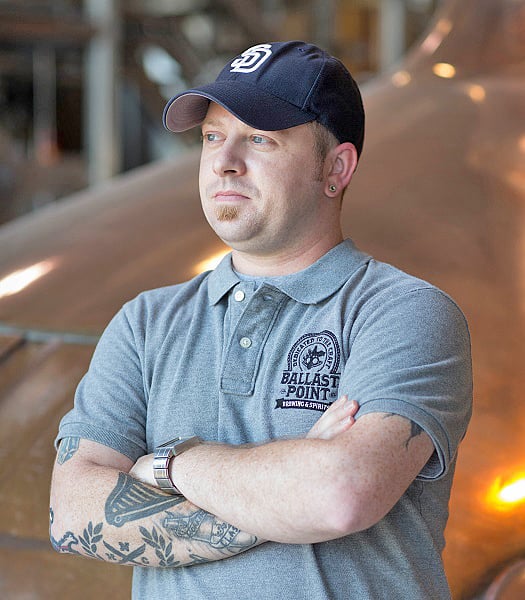
96 Rating – Ballast Point Brewing & Spirits – Habanero Sculpin
Responses from Ballast Point VP of Brewing and Distilling James Murray.
BC: Who came up with this beer’s recipe?
We are fortunate to have a very talented family of employees at Ballast Point. There is no single person responsible for coming up with a recipe. It is truly a collaboration between our brewers, cellarmen, lab team, production team, and sales/marketing team. We sit in our tasting rooms/local pubs and discuss different aromas and flavors that excite us and experiment from there. Once we hone in on a new beer, our team starts working on World Class Execution from all departments.
BC: What’s your favorite aspect of this beer (flavor, aroma, etc.)?
In regard to our Sculpin variations, the answer is quite simple. We have an amazing base beer to work with (Sculpin IPA). The Habanero was a fun little experiment we used to mess around with in our cask program. It became a hit in the tasting rooms, and we ran with it. The fruitiness of the habanero pepper and crushing heat create a truly unique IPA.
BC: Where does this beer’s name come from?
A lot of amazing things happen over a few pints in our tasting rooms. Coming up with names is one of them.
BC: Do you know a story – or have a personal story – that revolves around this beer?
As Grapefruit, Habanero and Pineapple Sculpin grew in popularity it became very apparent to us that an employee armed with a knife would not get the job done when it came to adding the fruits and veggies. We worked with our Executive Chef, Colin MacLaggan, to purchase an industrial-size food processor. It was pretty epic to use that piece of equipment to cut up 80 pounds of Habanero for the first time.
BC: What’s a good food pairing for this beer?
Jamaican jerk chicken.
Photo Courtesy of Ballast Point
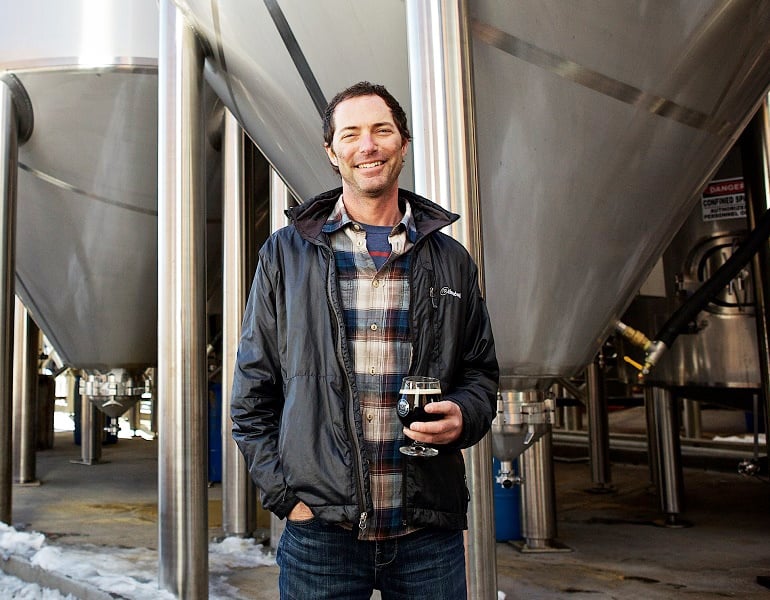
95 Rating – Great Divide Brewing Co. – Barrel Aged Hibernation
Responses from Great Divide founder Brian Dunn.
BC: Who came up with this beer’s recipe?
I (Brian Dunn) came up with the original Hibernation Ale recipe. Around 6 or 7 years ago we decided to barrel age it.
BC: Where does this beer’s name come from?
I came up with the name in 1995. I associated the name with having a very special beer during a very cold night; cozying up and “hibernating” with a beer for the night.
BC: Can you describe this beer in 10 words or less?
Roasted and chocolate malts, dry-hopped, with whiskey and wood notes.
BC: What’s a good food pairing for this beer?
Pork roast with herbs, browned carrots, Romano cheese, or vanilla cheesecake with cherries.
Photo Courtesy of Great Divide
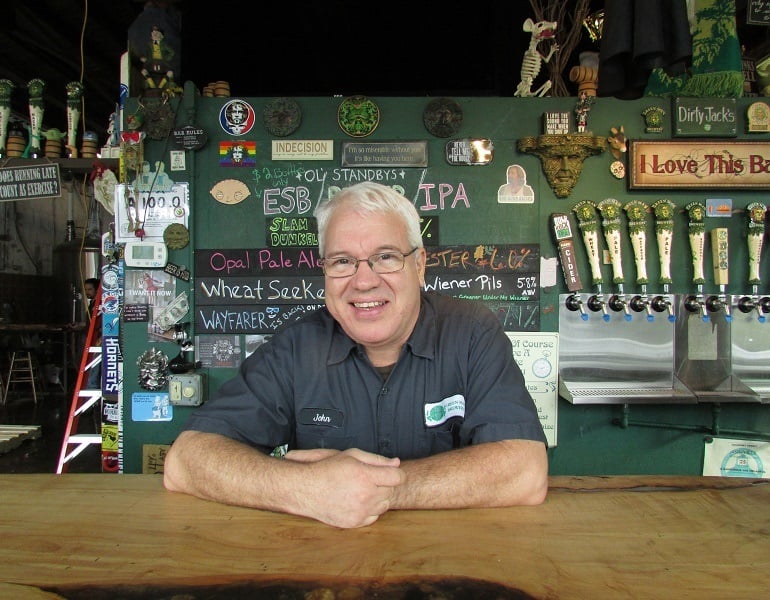
95 Rating – Green Man Brewery – The Dweller
Responses from Green Man brewmaster John Stuart.
BC: Who came up with this beer’s recipe?
I formulated and brewed The Dweller for the first time in 2008 to commemorate my 20th anniversary as a professional brewer.
BC: What’s your favorite aspect of this beer (flavor, aroma, etc.)?
The way the Crystal and roasted malts — along with the alcohol — blend together to mimic a velvety chocolate.
BC: Where does this beer’s name come from?
Owner Dennis Thies came up with the name for this beer. It went something like this…
Dennis: “Where’s that Imperial Stout?”
Me: “Still in the cellar, Dennis…”
Dennis: “Why isn’t it ready now?”
Me: “It needs to age more, Dennis…”
Dennis: “Man, that thing has taken up residence in our cellar… it’s a regular cellar dweller!”
BC: Can you describe this beer in 10 words or less?
Big, rich and roasty with a smooth, dry finish.
BC: Do you know a story – or have a personal story – that revolves around this beer?
The first time I ever experienced Imperial Stout was at the first brewpub in the US, Bert Grant’s Yakima Malting and Brewing Company in Yakima, Washington. It was the summer of 1987, early in the day, and I was killing time in the pub waiting for the next brewery tour. I scanned the chalkboard and written off to the side were the words: “Cask-Conditioned Russian Imperial Stout.” I waved at the hungover bartender and said, “I don’t know what that is, but I have to have it.” He wasn’t too happy about having to operate the beer engine for his first pour of the day, but that didn’t stop him from catching the overpour for himself! That beer experience started a 20-year infatuation with both Cask Ales, and Imperial Stout that has culminated in Green Man’s The Dweller.
BC: What’s a good food pairing for this beer?
Chocolate mousse, Chocolate Tort, Tiramisu… basically anything with chocolate.
Photo Courtesy of Green Man Brewery
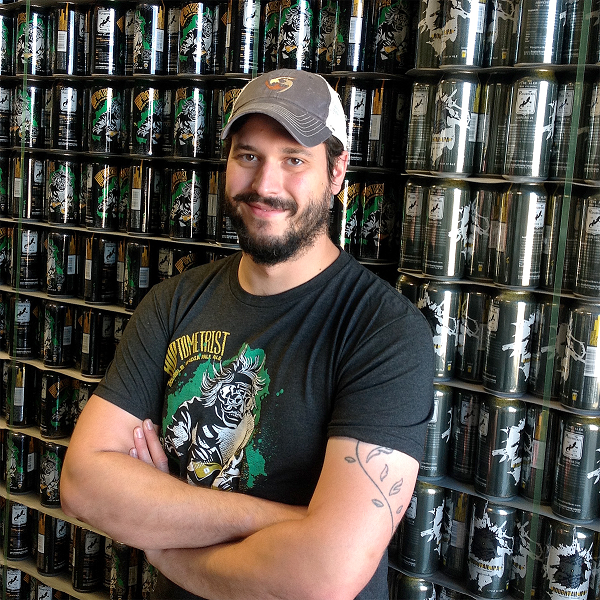
95 Rating – Roughtail Brewing Co. – 3rd Anniversary Ale
Responses from Roughtail brewmaster Tony Tielli.
BC: Who came up with this beer’s recipe?
All of our recipes are a collaborative effort between myself and our brewer Matt Denham. Usually we’ll discuss the recipe conceptually first and then work backwards into it with the end goal in mind. We tend to keep things pretty simple on the malt side of things and try to maximize our usage of hops.
BC: What’s your favorite aspect of this beer (flavor, aroma, etc.)?
I like how the citrus character of the blood orange and grapefruit contrasts with the citrus character of the hops we used. It makes for a nice complexity.
BC: Where does this beer’s name come from?
We sold our first kegs of beer on April 1, 2013… so we release an Anniversary Ale every April to celebrate another year in business!
BC: Is this your “desert island beer?”
This beer is pretty high in ABV; I would need something way more sessionable for a desert island beer!
BC: What’s a good food pairing for this beer?
I think the citrus character and bitterness makes for a good counterpoint to rich savory foods; this would match up well with any type of classic comfort food.
Photo Courtesy of Roughtail Brewing Co.
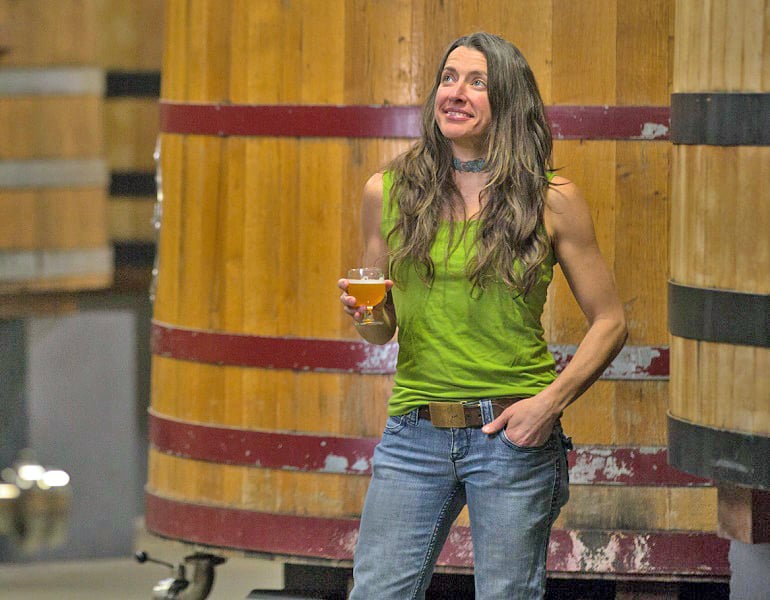
95 Rating – New Belgium Brewing Co. – La Folie
Responses from New Belgium wood cellar blender Lauren Salazar.
BC: Who came up with this beer’s recipe?
I’ve been working with this brand since my first day at New Belgium, and I’ve blended the brand since 2001. It was the first beer out of our wood cellar in 1999.
BC: What’s your favorite aspect of this beer (flavor, aroma, etc.)?
My favorite aspect of La Folie stems from the fact that when I set out to blend each vintage, I do not have a flavor description expectation. This is completely different from, say, Fat Tire Amber Ale. When we package Fat Tire, it must pass a sensory evaluation: visual, aroma, taste, mouthfeel, body- specific, consistent, repeatable, etc. La Folie is a blend of sour Oscar foeders (Oscar being the dark base beer we move into our wood cellar). All I am doing in a blend is creating the best blend of our available Oscar foeders. Each year is relatively the same in that it will be a blend of sour Oscars, but each year is also a little different. Maybe this year I am in love with the wild yeast (Brettanomyces) flavors in Foeder 1 (sure thing) or maybe it’s the caramel tones in foeders 22 and 18, or maybe it’s the lovely cherry notes in 8 and 9.
BC: Where does this beer’s name come from?
The name La Folie is fun — the definition of ‘folly’ is a foolish financial endeavor. This was apt in 1998 when we first started our souring experiment in our first used wine and oak barrels. It was our fun, our folly, and we never thought it would become what it has. From 7 wine barrels to our 65 foeders and from 14 to 6800 barrels of souring liquid in 18 years… Wow! That became New Belgium’s tagline too: “Follow your Folly.” Ours is beer…
BC: Can you describe this beer in 10 words or less?
Green apple, plum skins, citrus zest, mouth-puckeringly, thirst-quenchingly SOUR! Classic.
BC: What’s a good food pairing for this beer?
Duck and pork rillettes cooked with white wine and brandy, left to solidify then garnished with pickled rhubarb and sparkle strawberries served with toasted sourdough. It’s almost as if the beer was made for the dish or the dish for the beer.
Photo Courtesy of New Belgium Brewing Co.
95 Rating – Hops and Grain Brewery – Greenhouse IPA
Responses from Hops and Grain founder Josh Hare.
BC: Who came up with this beer’s recipe?
I did.
BC: What’s your favorite aspect of this beer (flavor, aroma, etc.)?
I love the ability to really showcase the beautiful aroma, flavor and texture that expressive hop usage can deliver. Keeping the malt bill simple allows us to really lay the groundwork for a hop-forward beer. We tend to focus on hop varieties with a high oil content and quality to deliver on the rich, tropical, citrus and floral elements of some of our favorite hops.
BC: Where does this beer’s name come from?
The name for this beer came from our 3-bbl pilot system. We originally named the pilot series of beers Greenhouse because we loved the idea of always growing something new. Because of our love for hop-forward beers we tended to produce mostly IPAs on that system so we decided to devote a year-round product to carrying on that inspiration.
BC: Is this your “desert island beer?”
Hell yes!
BC: Can you describe this beer in 10 words or less?
Bright and juicy IPA with a touch of class.
BC: Do you know a story – or have a personal story – that revolves around this beer?
We love to tell the story of our 3-bbl pilot system and the hundreds of different beers we’ve produced on it. Giving our employees the ability to make whatever they want in the “Greenhouse” is the core of what we stand for as a company.
BC: What’s a good food pairing for this beer?
I lean towards a nicely grilled, medium rare T-bone with grilled brussel sprouts and kale.
Photo Credit: Tyler Malone
95 Rating – Ballast Point Brewing & Spirits – Grapefruit Sculpin
Responses from Ballast Point VP of Brewing and Distilling James Murray.
BC: Who came up with this beer’s recipe?
We are fortunate to have a very talented family of employees at Ballast Point. There is no single person responsible for coming up with a recipe. It is truly a collaboration between our brewers, cellarmen, lab team, production team, and sales/marketing team. We sit in our tasting rooms/local pubs and discuss different aromas and flavors that excite us and experiment from there. Once we hone in on a new beer, our team starts working on World Class Execution from all departments.
BC: What’s your favorite aspect of this beer (flavor, aroma, etc.)?
In regard to our Sculpin variations, the answer is quite simple. We have an amazing base beer to work with (Sculpin IPA). The aromas and flavors of Pineapple and Grapefruit already exist in this beer via our unique blend of hops, so we decided to accentuate those flavors and aromas with the addition of Pineapple and Grapefruit.
BC: Where does this beer’s name come from?
A lot of amazing things happen over a few pints in our tasting rooms. Coming up with names is one of them.
BC: What’s a good food pairing for this beer?
Basil and pine nut-crusted salmon.
Photo Courtesy of Ballast Point
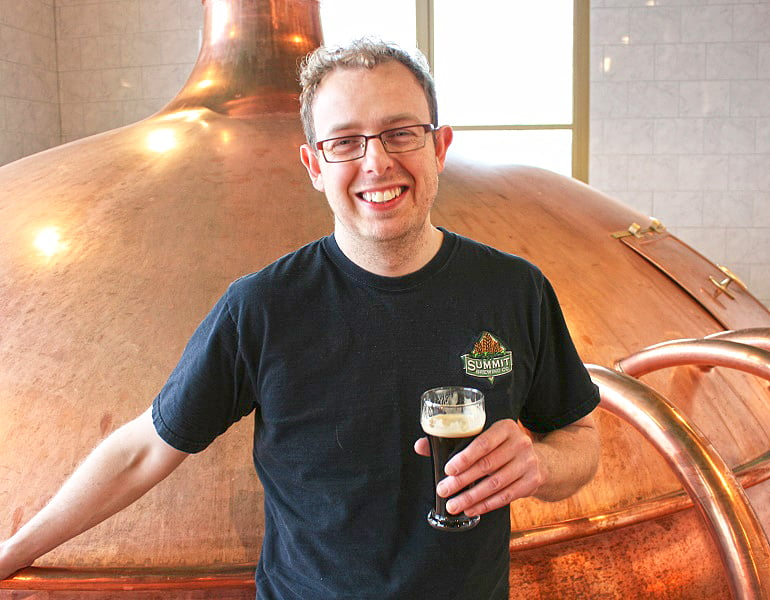
94 Rating – Summit Brewing Co. – 30th Anniversary Double IPA
Responses from Summit head brewer Damian McConn.
BC: Who came up with this beer’s recipe?
I did.
BC: What’s your favorite aspect of this beer (flavor, aroma, etc.)?
Probably the overall flavor. While the beer is indeed very bitter, it possesses a clean bitterness with no aggressively harsh characteristics.
BC: Where does this beer’s name come from?
It’s the first installment in Summit’s 30th Anniversary Series of limited beers, and essentially represents a hybrid between American and New Zealand Imperial IPAs.
BC: Is this your “desert island beer?”
No, but the next installment in the Anniversary Series, a Keller Pils, just might be!
BC: Can you describe this beer in 10 words or less?
Highly drinkable and intense IPA bursting with tropical fruit notes.
BC: Do you know a story – or have a personal story – that revolves around this beer?
This beer highlights the great relationships and partnerships we have with suppliers and customers that have allowed Summit to prosper for 30 years. Distributors, retailers and consumers all contributed to the production of the beer — including assisting with brewing and packaging. Suppliers such as maltsters and hop growers supplied specific varietals to allow expression of certain flavor attributes.
BC: What’s a good food pairing for this beer?
Barbecue, baked ham, sausages, aged cheddar, Stilton or cheesecake.
Photo Courtesy of Summit Brewing Co.
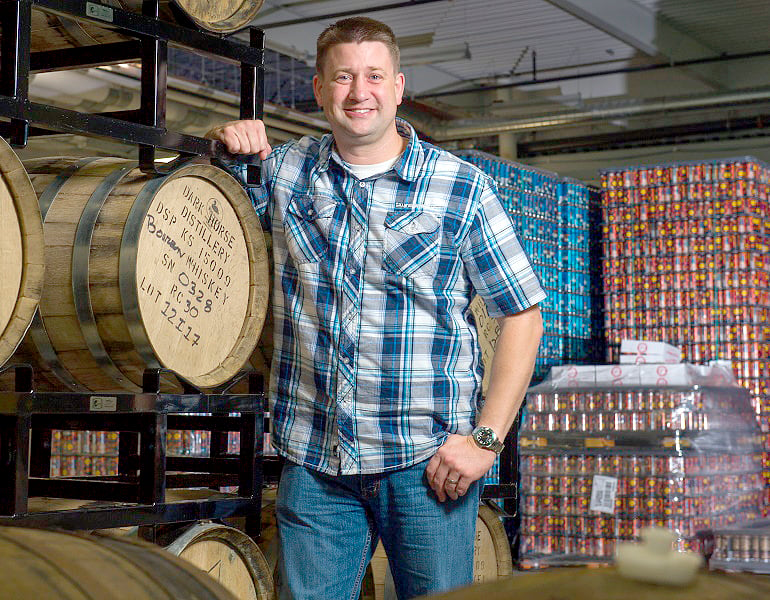
94 Rating – Tallgrass Brewing Co. – Sweet Tooth
Responses from Tallgrass founder and CEO Jeff Gill.
BC: Who came up with this beer’s recipe?
We had a recipe for a Belgian Dark Strong Ale we’d been working on for the last couple of years, but we weren’t satisfied with it. Late in the summer of 2015, we tweaked the recipe and brewed it on the 10-barrel system at our brewpub, the Tallgrass Tap House. That beer, which we called Houndstooth, was very well-received. We continued to look at ways we could make it better, which lead us down the path of trying different adjunct ingredients with our team at the production brewery to give it a fun twist. We ultimately arrived at a salted caramel flavor profile, which tasted the best and had the best potential for a good brand. So, really, it was a collaborative effort between our brewpub and the production brewery.
BC: What’s your favorite aspect of this beer (flavor, aroma, etc.)?
It hits all the right targets in terms of a Belgian Dark Strong Ale — the coppery color, the rich and bready caramel malts and the distinct Belgian characteristics — and the adjunct flavors are present but not cloying. It’s a well-balanced beer.
BC: Where does this beer’s name come from?
When we were developing this beer, everyone loved the way the candy-like sweetness and malty richness played off each other. It’s a real “treat” of a beer, which made us think of the old-time confectionaries with chocolates and colorful candies in the storefront window. Then we latched onto a Willy Wonka-esque theme, and Sweet Tooth was born.
BC: Is this your “desert island beer?”
Yes. I think it’s the best Explorer Series beer we’ve created so far.
BC: Can you describe this beer in 10 words or less?
A beer Oompa Loompas would enjoy after an 18-hour shift.
BC: What’s a good food pairing for this beer?
Grilled pork chops and sweet potatoes for a meal, or with some caramel or toffee ice cream for dessert.
Photo Courtesy of Tallgrass Brewing Co.
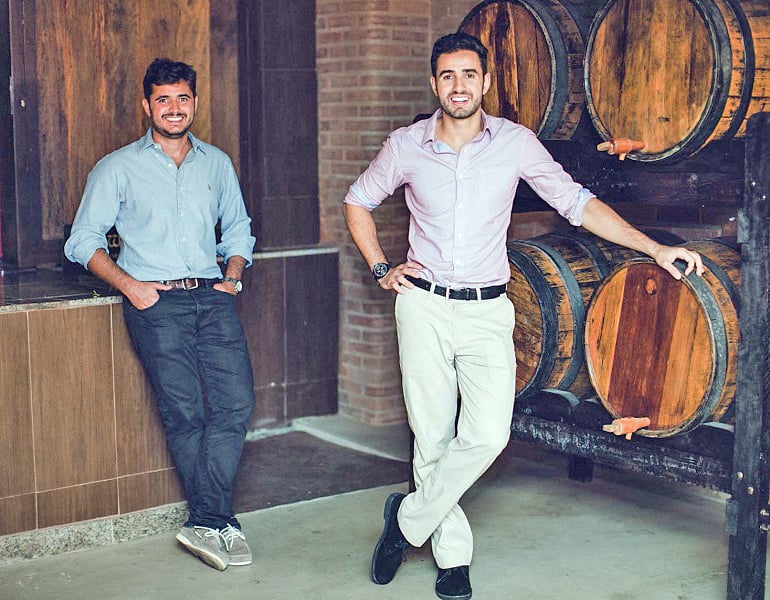
94 Rating – Cervejaria Wäls – Belô Petroleum
Responses from Cervejaria Wäls founders Jose Felipe and Tiago Carneiro.
BC: Who came up with this beer’s recipe?
Jose Felipe: This beer’s recipe came from a homebrewer from south Brazil. His name is Murilo and he start to brew what we know as Petroleum in his mother’s backyard. The first time I tried the beer with my brother Tiago, we immediately decided to release it in the market with our Wäls brand.
BC: What’s your favorite aspect of this beer (flavor, aroma, etc.)?
Jose Felipe: I really enjoy the balance between full body and cocoa aromas. Drinking this beer is like biting into a very special chocolate bar.
BC: Where does this beer’s name come from?
Jose Felipe: Just give a look at this beautiful, pitch black beer… Can you imagine a better name than Petroleum? Darker than anything else I drink and rich in aroma, flavor, body and bitterness, the name says everything.
BC: Is this your “desert island beer?”
Tiago: Ohhh yeah, for sure…. But it would have to be quite a cold desert island!
BC: Can you describe this beer in 10 words or less?
Tiago: Thick as oil, chocolate-like, with bitterness from the darkness.
BC: Do you know a story – or have a personal story – that revolves around this beer?
Jose Felipe : The first time we brewed Petroleum in a 15-barrel batch, we spent almost 24 hours finishing the process. During the lauter, I thought it would be impossible to get the amount necessary to boil the beer. In the meantime, I grabbed some beer and waited for more than 5 hours for the boil to begin. In the end, it was worth it.
BC: What’s a good food pairing for this beer?
Tiago: Pancakes topped with vanilla ice cream, pralines and mint flowers are the best pairing ever for Petroleum. Once you take a bite followed by a sip, you are in heaven.
Photo Courtesy of Cervejaria Wäls
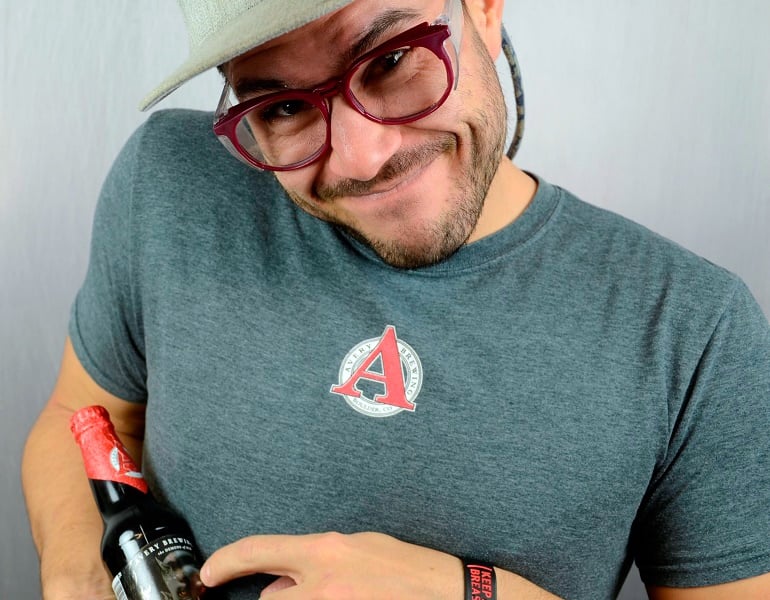
93 Rating – Avery Brewing Co. – Lunctis Viribus
Responses from Avery special projects brewer Leigh Audin.
BC: Who came up with this beer’s recipe?
Nine months ago, we Special Projects brewers made a red sour beer and aged it in fresh Cabernet Sauvignon barrels. We set up blind taste tests for our sensory panel, thinking it’d be delicious and we’d have a new sour beer to bottle. Though the beer had many positive flavor components, it just wasn’t high-caliber enough for us to release as part of our Barrel-Aged Series, so we used this as an opportunity to start a series of blending sessions. From our cellar of 2000 oak barrels, we decided to blend the Cab Sauv sour with a sour aged in Extra Anejo Suerte Tequila barrels. Over two months of blind tasting sessions, we determined that the Tequila barrel-aged sour added great lactic acid and that distinctive herbal Tequila twang. We also found that blending in a wee bit of Eremita IX — a dark sour that’s part of our Tap-Room-Only sour series, Eremita — added more lactic acid and a depth that the other blends simply didn’t have. This blend was ranked #1 by nearly every taster on our panel, which meant it was time to bottle!
BC: What’s your favorite aspect of this beer (flavor, aroma, etc.)?
My favorite aspect of this beer is that it has disparate pieces coming together that equal something greater than the sum of its parts; it embodies the artistry and chaos of sour blending.
BC: Where does this beer’s name come from?
We named the blend Lunctis Viribus, which vaguely (but not really at all) translates from Latin as United Forces. Cabernet Sauvignon and Tequila—united at last!?
BC: Can you describe this beer in 10 words or less?
Oak tannins, richm wine-barrel fruitiness and Tequila-barrel herbaceousness.
Photo Courtesy of Avery Brewing
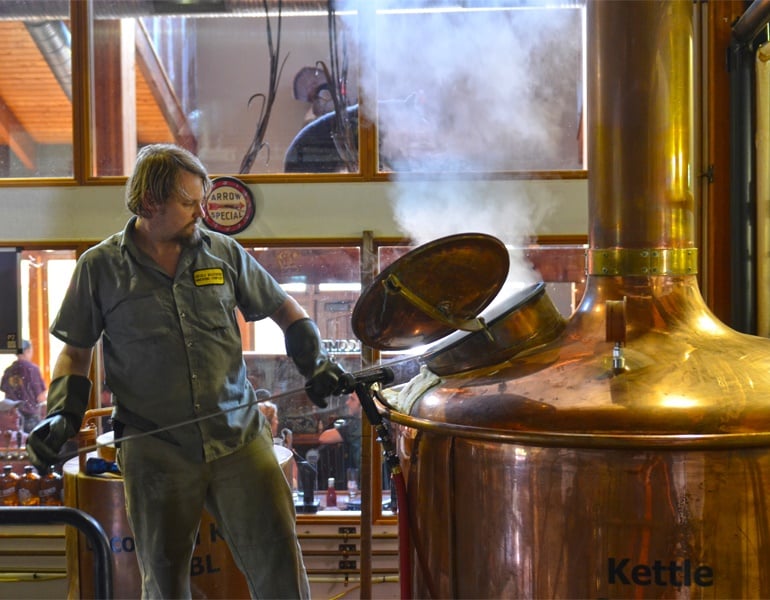
93 Rating – Devils Backbone Brewing Co. – Cran-Gose
Responses from Devils Backbone brewmaster Jason Oliver.
BC: Who came up with this beer’s recipe?
I came up with Cran-Gose’s recipe last spring. It was a beer I had wanted to brew for a while, and I’m glad I finally got around to it
BC: What’s your favorite aspect of this beer (flavor, aroma, etc.)?
I like the delicate and sessionable nature of the Cran Gose.
BC: Is this your “desert island beer?”
It would be if I’m on a hot tropical island.
BC: Can you describe this beer in 10 words or less?
Pinkish hue, light body, subtle fruit, refreshing tart crisp finish.
BC: What’s a good food pairing for this beer?
Raw oysters.
Photo Courtesy of Devils Backbone
92 Rating – Southbound Brewing Co. – Clusterflies
Responses from Southbound brewer Chris Geerlings.
BC: What’s your favorite aspect of this beer (flavor, aroma, etc.)
Clusterflies is a sour saison and was also Southbound’s first barrel-aged beer to be widely released. I love the tartness and also the vinous character from aging the beer in wine barrels. This beer employs an old Belgian tradition of blending old and young beers… 50% of the blend was aged around 18 months in red wine barrels to gain complexity, while the other 50% is a young, kettle-soured saison, which brings about “fresh” tart flavors.
BC: Where does this beer’s name come from?
Clusterflies is a reference to the Phish song “Farmhouse.”
BC: Can you describe this beer in 10 words or less?
Sour, tart, Belgian, brilliant, golden, vinous, barrel-aged and delicious.
BC: Do you know a story – or have a personal story – that revolves around this beer?
The first batch of Clusterflies (the barrel-aged portion) was mashed in as a sour mash more than two years ago — during Valentine’s weekend 2014, in fact. I remember this because my wife Katie and I were staying on Savannah, Georgia’s picturesque River Street that particular weekend, and we were tasked with heading over to the brewery to make sure that all was well with the mash tun temperature!
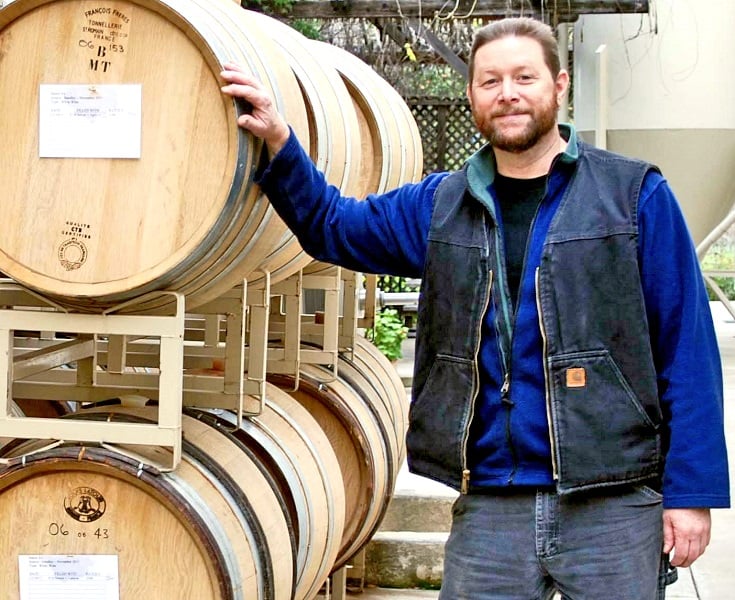
92 Rating – Anderson Valley Brewing Co. – Briney Melon Gose
Responses from Anderson Valley head brewer Fal Allen.
BC: Who came up with this beer’s recipe?
It was a group effort like most of our beers. We try to develop our beers as a team – I think that way you get a better beer that appeals to more people.
BC: What’s your favorite aspect of this beer (flavor, aroma, etc.)?
I like the way the slightly saline & sour Gose plays with the fruitiness of the watermelon
BC: Where does this beer’s name come from?
It’s a Boontling name. Briney is Boontling for the ocean (referring to the slight saltiness of the Gose style).
BC: Is this your “desert island beer?”
It’s definitely up there, but I would have to choose Duvel. It is light, sparkling and refreshing while at the same time being ponderous and a packing in a lot of flavor.
BC: Can you describe this beer in 10 words or less?
Sparkling, refreshing, tart, fruity and thirst-quenching.
BC: What’s a good food pairing for this beer?
I think a silky Brie cheese on freshly baked bread or a strawberry blue cheese salad with fresh wild greens would pair well with Briney Melon.
Photo Courtesy of Anderson Valley Brewing Co.
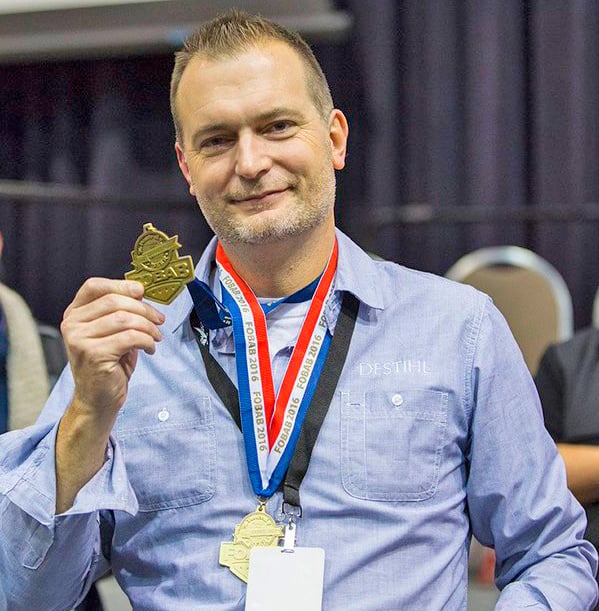
92 Rating – DESTIHL Brewery – Wild Sour Series: Counter ClockWeisse
Responses from DESTIHL founder Matt Potts.
BC: What’s your favorite aspect of this beer (flavor, aroma, etc.)?
Counter ClockWeisse® is so tart and refreshing while still staying true to the Berliner Weisse style at just 3% ABV, which results in the ultimate session beer.
BC: Where does this beer’s name come from?
We named the beer Counter ClockWeisse® because for us at DESTIHL, it was our first kettle sour (where we performed all the souring fairly quickly in a stainless kettle at the beginning of the brewing process), which is the complete reversal from our gameplan with Saint Dekkera® Reserve Sour Ales, which are soured for 1-3 years in oak barrels.
BC: Can you describe this beer in 10 words or less?
Pale, light-bodied, acidic and lemony-tart Berliner-style ale.
BC: Do you know a story – or have a personal story – that revolves around this beer?
Just one interesting thing to note that differentiates this beer and this entire Wild Sour Series is that this kettle sour beer is soured not by a pure pitch of a culture purchased from a lab but by our own indigenous wild mixed culture of lacto & pedio with some funk also contributed by our wild yeasts in that same culture.
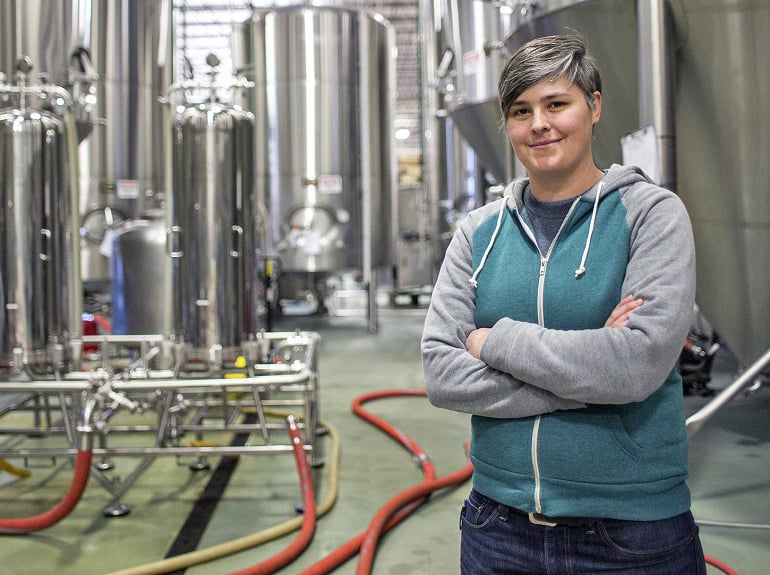
92 Rating – Highland Brewing Co. – Highland IPA
Responses from Highland brewer Hollie Stephenson.
BC: Who came up with this beer’s recipe?
Me!
BC: What’s your favorite aspect of this beer (flavor, aroma, etc.)?
The hops! Specifically the aroma and juiciness from the Citra and the aggressive lemon rind character from the Centennial.
BC: Is this your “desert island beer?”
It would be on the short list, but I couldn’t just have one desert island beer.
BC: Can you describe this beer in 10 words or less?
Orange juice, lemon and pine. A resiny dank sauce.
BC: Do you know a story – or have a personal story – that revolves around this beer?
I left San Diego, the hub of IPAs, a year before we bottled Highland IPA. I was fiending for a fresh, West-Coast style IPA, and I was so stoked to add this one to Highland’s core lineup. Other than drinking it, so far the most satisfying part of having it out there has been having people who “don’t like hops” tell me that our IPA converted them. I think that is so awesome because the hops in Highland IPA are anything but subdued.
BC: What’s a good food pairing for this beer?
I think most food pairs with flavorful, bitter IPAs. Last night I had one with a burger topped with cole slaw, smoked bacon, caramelized onion, cheddar cheese and roasted garlic mayo. It paired with all the components that were acidic, savory, sweet, rich and spicy.
Photo Courtesy of Asheville Citizen Times
92 Rating – Devils Backbone & Wicked Weed – Seven Summits
Responses from Devils Backbone brewmaster Jason Oliver.
BC: Where does this beer’s name come from?
Seven Summits was named to pay homage to the tallest summits from each continent.
BC: Is this your “desert island beer?”
It would be if I was stranded on a cold island in the North Atlantic.
BC: Do you know a story – or have a personal story – that revolves around this beer?
The Seven Summits collaboration was a real adventure in sourcing ingredients from each continent. It was actually fun searching for commercial amounts of the exotic inputs for that beer. Finding a pallet’s worth of fine ground coconut was elusive at first, but now I can pretty much find anything. I discovered some cool suppliers of various food products, which I will definitely use in the future.
BC: What’s a good food pairing for this beer?
Espresso-rubbed flank steak.
Photo Courtesy of Devils Backbone
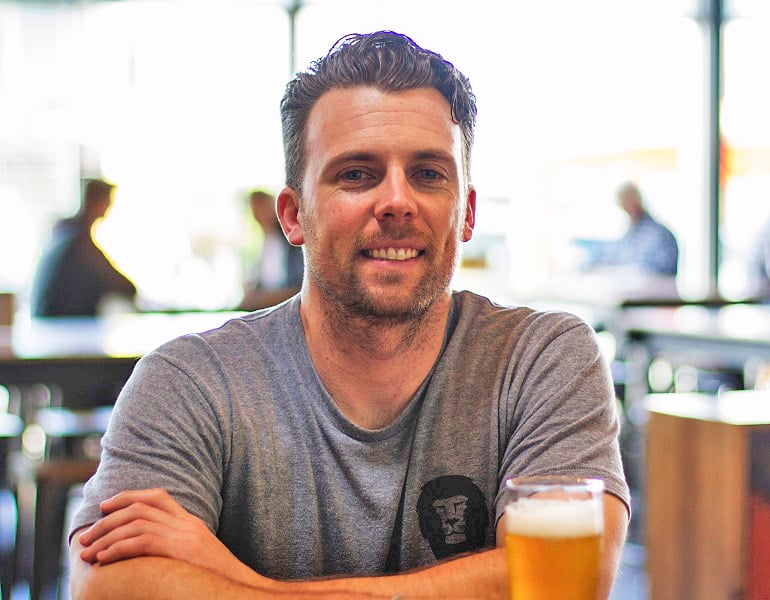
91 Rating – Aslan Brewing Co. – Batch 15 IPA
Responses from Aslan brewmaster Frank Trosset.
BC: Who came up with this beer’s recipe?
The recipe for Batch 15 was formulated by myself, Frank Trosset.
BC: What’s your favorite aspect of this beer (flavor, aroma, etc.)?
The flavor of this beer is what really makes it stand apart. I’m not a fan of Crystal malt in an IPA — I think it can mask some of the hop flavors, especially over time, so we don’t use any of that. That omission leads to pure, unobstructed hop goodness on your palate.
BC: Where does this beer’s name come from?
This recipe was the 15th batch of IPA made in our inaugural year. We felt like we nailed it on our 15th attempt, so the name Batch 15 seemed fitting.
BC: Can you describe this beer in 10 words or less?
A bright, unfiltered hop experience like none other.
Photo Courtesy of Aslan Brewing Co.
91 Rating – Ballast Point Brewing & Spirits – Victory at Sea
Responses from Ballast Point VP of Brewing and Distilling James Murray.
BC: Who came up with this beer’s recipe?
We are fortunate to have a very talented family of employees at Ballast Point. There is no single person responsible for coming up with a recipe. It is truly a collaboration between our brewers, cellarmen, lab team, production team, and sales/marketing team. We sit in our tasting rooms/local pubs and discuss different aromas and flavors that excite us and experiment from there. Once we hone in on a new beer, our team starts working on World Class Execution from all departments.
BC: What’s your favorite aspect of this beer (flavor, aroma, etc.)?
Our Victory at Sea is already a great porter recipe with an added bonus of employing our special blend of coffee. Café Calabria has been a great partner in getting us the freshest coffee (sometimes within an hour), which adds a very distinct flavor/aroma to this already phenomenal beer.
BC: Where does this beer’s name come from?
A lot of amazing things happen over a few pints in our tasting rooms. Coming up with names is one of them.
BC: What’s a good food pairing for this beer?
Barbecue pulled pork sandwich.
Photo Courtesy of Ballast Point
Comments 0
No Readers' Pick yet.