





Charleston’s Burgeoning Craft Beer Scene
 Story by:
Jim Dykstra
Story by:
Jim Dykstra
The city of Charleston was bound to become a craft beer haven. Equal parts college town and gentrified refuge, you get the impression that people come here to spend money – whether they have it or not. And what better way to deflate a bloated wallet than a tour of the city’s ample watering holes?
Our tour starts with a daytime jaunt to Westbrook Brewing, located in Mt. Pleasant, SC, right outside of Charleston. In terms of distribution Westbrook is leading the local pack with a steadily increasing footprint driven by a solid year-round lineup and its yearly crop of Mexican Cake, a riot-inducing Imperial Stout aged on cocoa nibs, vanilla beans, cinnamon sticks and fresh habanero peppers.
Tucked into an industrial enclave, Westbrook’s facility is fairly unassuming. If it weren’t for the Spanish moss, palms and lemongrass growing out front, which they use in their White Thai wheat beer, you’d have no idea you were a stone’s throw away from a juicy Chocolate Raspberry Imperial Stout brewed to celebrate the brewery’s 5th anniversary.
And if you weren’t already holding their dry, nutty Udderly Milk Stout, you might not realize the even larger facility under construction next door is also theirs. Westbrook’s growth has been bolstered by contracts with some of the biggest gypsy brewers in the industry, Stillwater Artisanal Ales and the notorious Evil Twin.
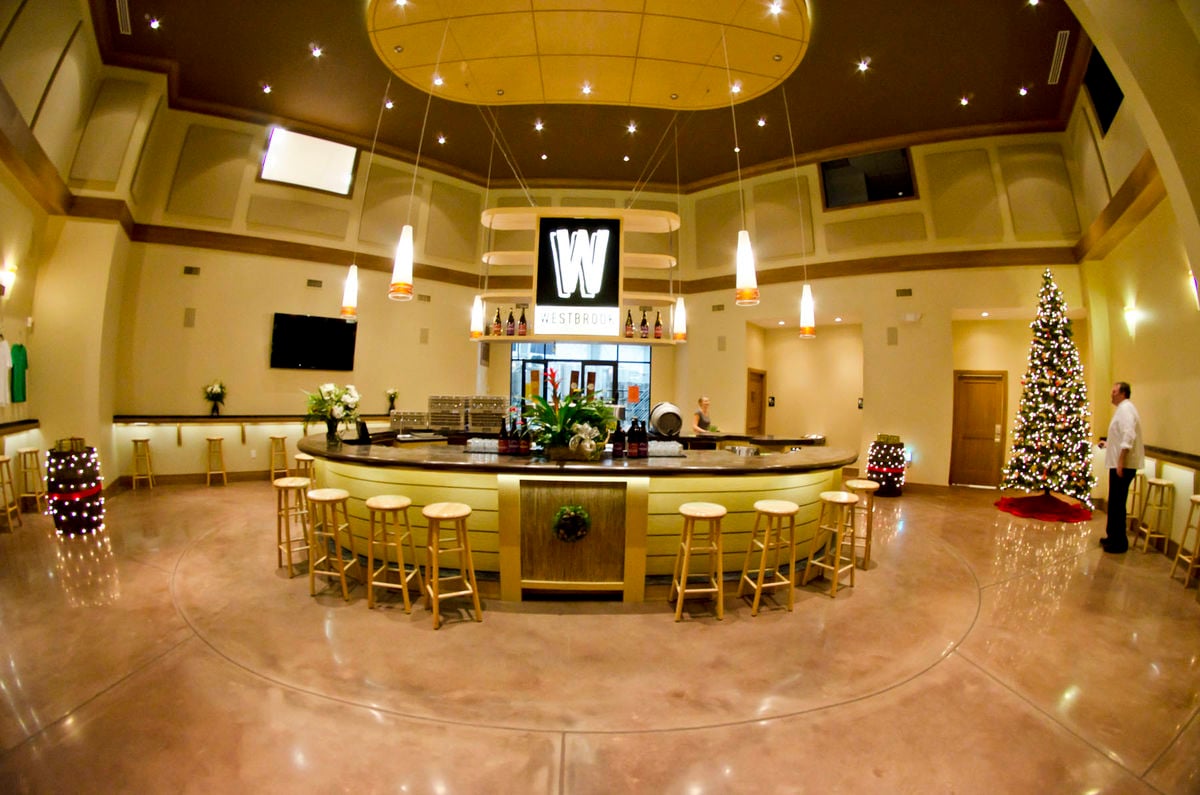
Like most of Charleston’s breweries, Westbrook hasn’t been around long enough to fill the walls with breweriana.
All three brands produce high-quality beer, but while contract brewing is an effective business strategy, it has left Westbrook’s taproom feeling a bit sterile in terms of culture. The walls are bare, and you get the sense that this is a business first and a brewery second. Regardless, their business is making good beer, and in the eyes of the fastidious brewer, sterility is next to godliness.
Photos Courtesy: Westbrook Brewing
 Godliness goes a long way in the Holy City, where law mandates no buildings rise above the array of venerable church steeples dotting the peninsula. Until recently, laws prohibited brewers from making beer above 6 percent ABV, along with serving a full pint. These arcane restrictions were lifted in 2007 and 2013 respectively, paving the way for a rush of breweries.
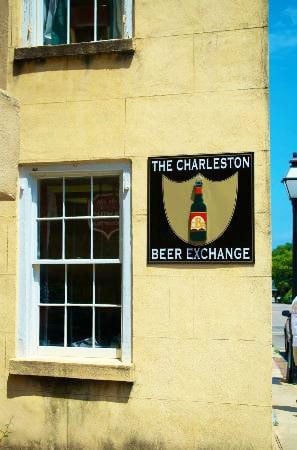
Before we hit the town, we stock up at Charleston’s most respected bottle shop, Charleston Beer Exchange. It’s the size of a large closet, but a brief scan of the carefully curated collection could bolster any craft enthusiast’s cellar.
I pick up a few local bottles, an Oro de Calabaza from Jolly Pumpkin and a Bell’s Expedition Stout, and leave feeling lighter in both wallet and heart. After a quick recharge of coffee and food cart gyro, I’m ready to start my quest for divine libations.
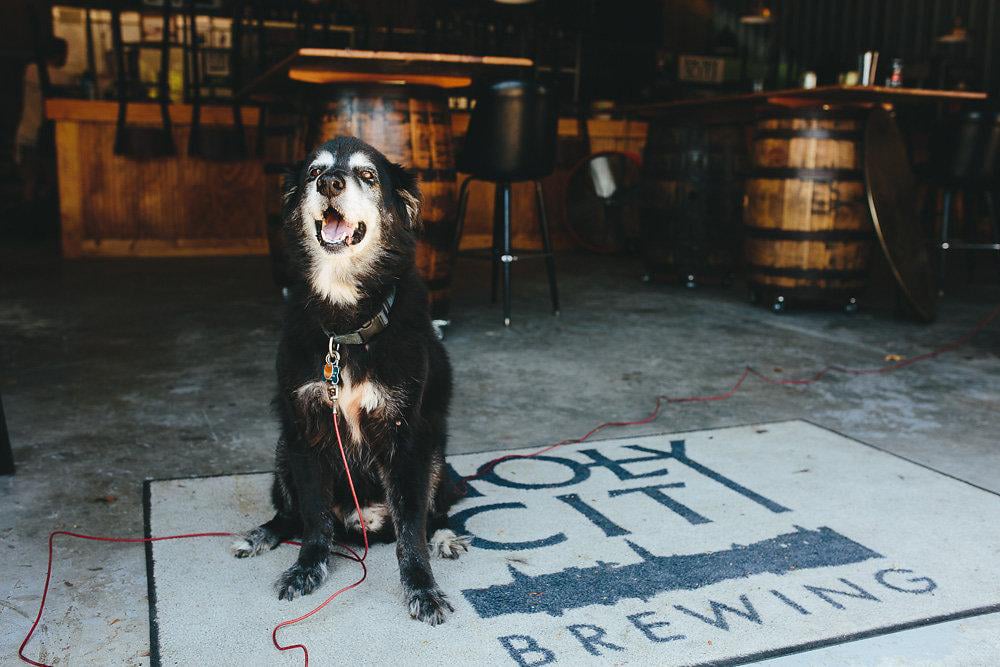
Naturally, it begins at Holy City Brewing. The man behind the beer pulpit pours a Pluff Mud Porter, which took home gold at the 2012 GABF. The silky brown suds make a statement without overwhelming the palate. It is true to form in flavor, with mild chocolate and a hint of roast, yet still refreshing.
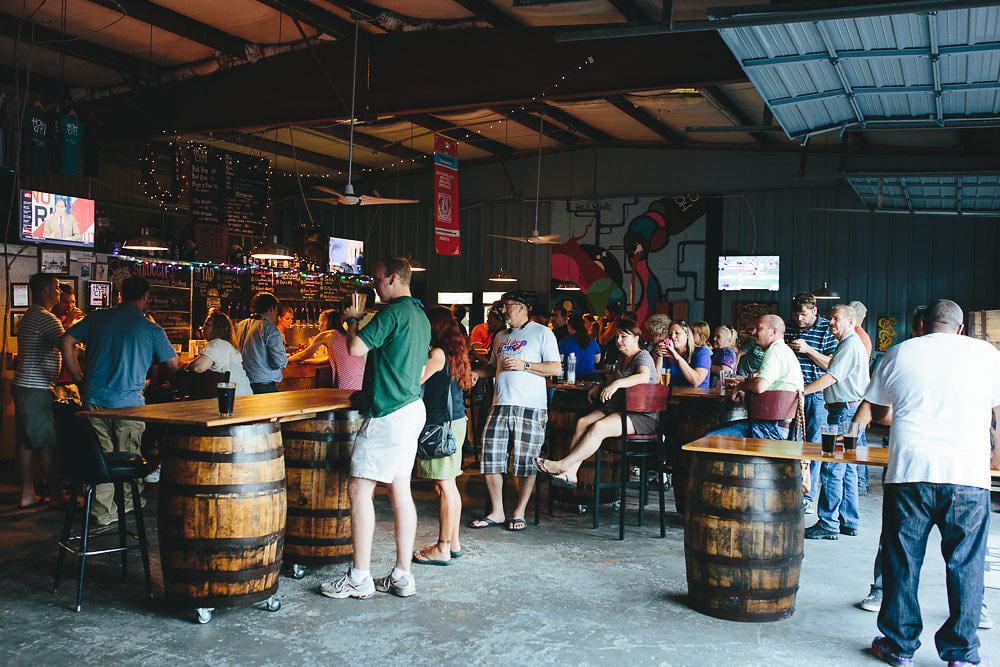
Holy City Brewing’s taproom strikes a fine balance between rustic and modern; and cleanliness without “hospital chic.”
The taproom is refreshing as well. Clad in warm wood and light, a tasteful mix of distractions make for a cozy environment. I could stay awhile, but my guide is eager to carry on.
Freehouse Brewery is right down the road. A 2013 addition to the city’s brewing force, it’s an all-organic facility located right on the Ashley River. The view is as delicious as the ALE Back Pale Ale, an English take on the style that puts balance before hop declarations.
Charleston Beer Exchange Photo Credit: Flickr user Edarke, Bottom: Holy City Brewing
Next up is the nearby COAST Brewing Co. Founded in 2007, it is one of Charleston’s oldest breweries, and is also focused on local, organic ingredients. The taproom is in the same space as the brewery, which adds a certain homespun charm.
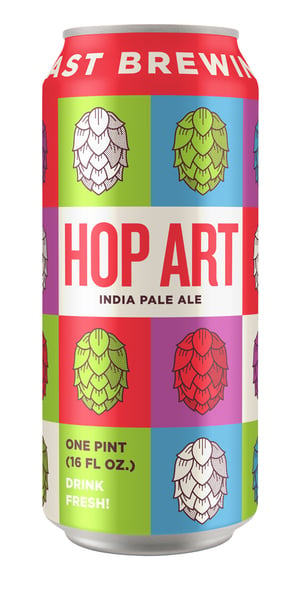 I am struck by the disparity in venue and product – the brewery is quaint, but the can artwork on their products is as sleek and professional as they come. In fact, a firm grasp on the marketing end of beer production is one of the defining features of Charleston’s breweries. Almost without fail, these beers are made to stand out on a shelf. It mirrors the city center itself, where every passing window is calling out to the consumer within, and every consumer is seeking out the perfect product with which to define themselves. I define myself with a HopArt IPA and venture back into a blur of The North Face and flannel, navigating the cobblestones with as much care as I can muster.
A while later, I make my final stop for the night at the relatively ancient Palmetto Brewing Company. This place boasts true history, having been around from the late 1800s until Prohibition, before its resurrection in 1993. Artifacts from the original building adorn the walls, but the beer is thoroughly modern, and after a nitro Espresso Porter, I am thoroughly satisfied.
Yet during my time here, I hardly scratched the surface. Charleston and its surrounding area is home to around a dozen quality breweries, and more are on the horizon. I didn’t have the liver-space for visits to Revelry, Ghost Monkey, Tradesman, or Cooper River brewing companies, amongst others. But that’s a mark of a good beer town. If you can’t drink your way through all of the breweries in a day, it’s worth a trip.
The city is old, but the beer culture is fresh. It’s the best of both worlds.
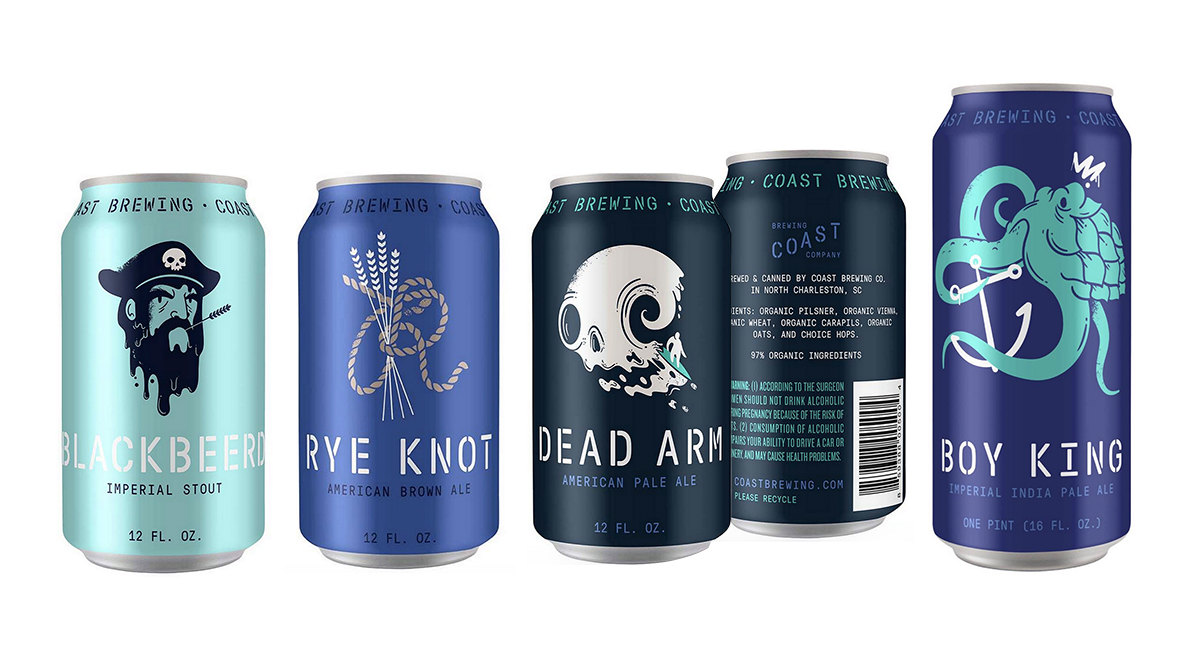
With their attractive packaging theme, Coast Brewing demonstrates the marketing finesse that helps define the region.
Photos Courtesy: Coast Brewing

Conversations (0)
No comments yet.